
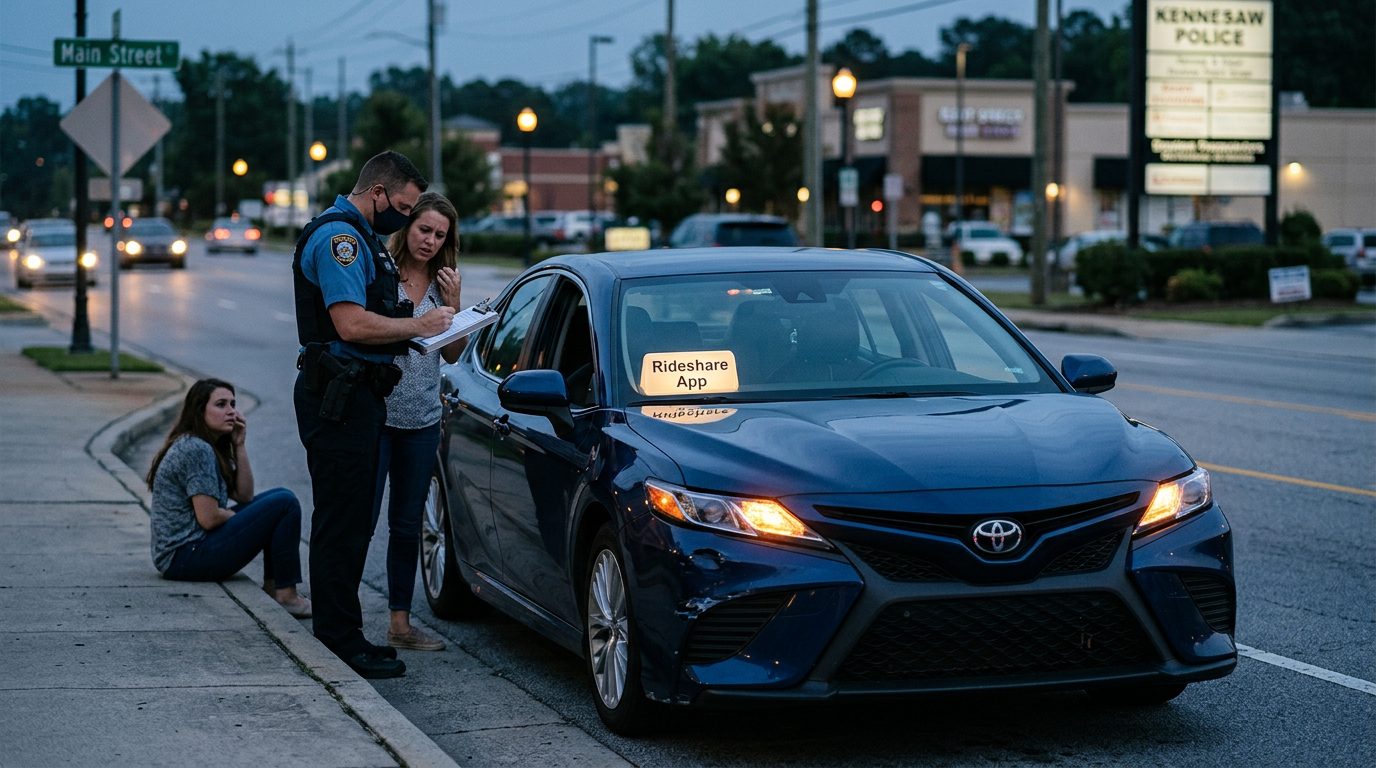
Rideshare Accidents · Kennesaw, Georgia
Hurt in an Uber or Lyft Crash? Understand Your Options Today
Our team helps Kennesaw residents and visitors hurt in rideshare accidents make sense of the next steps, from medical care and evidence to insurance calls and possible claims.
By Peter F. Jaraysi · Published October 24, 2026
Rideshare accidents Kennesaw drivers and riders face can leave you hurt, out of work, and unsure who pays. The short answer is this: a claim may be possible against the at-fault driver, and sometimes against the rideshare company. Which insurance applies depends on whether the driver was logged on and working at the time. Slam Dunk Attorney, based in Duluth, Georgia, represents people hurt in rideshare and other vehicle crashes across metro Atlanta and Georgia. This guide explains the steps that protect your claim and the rules that matter most.
Rideshare Accidents in Kennesaw: Who Is Affected and Why It Matters
A rideshare crash in Kennesaw can injure more people than the car’s passengers. Cobb Parkway, Barrett Parkway, and I-75 are major routes through the city. Crashes on them can involve Uber and Lyft vehicles.
Injured people include passengers, drivers of other cars, pedestrians, and cyclists. Each group asks different questions. A passenger often asks who pays for medical care. A pedestrian asks whether the driver had to stop. A family that lost someone asks what options exist under Georgia law.
Kennesaw sits in Cobb County. The sections below explain how the rules work across Georgia. For the wider picture, read our Georgia rideshare accident guide.
If a rideshare crash in Kennesaw left you hurt, you don't have to sort out the insurance and deadlines alone. Our team can talk through your options in a free case review. Talk it through with our team — the first consultation is free, confidential, and carries no obligation.
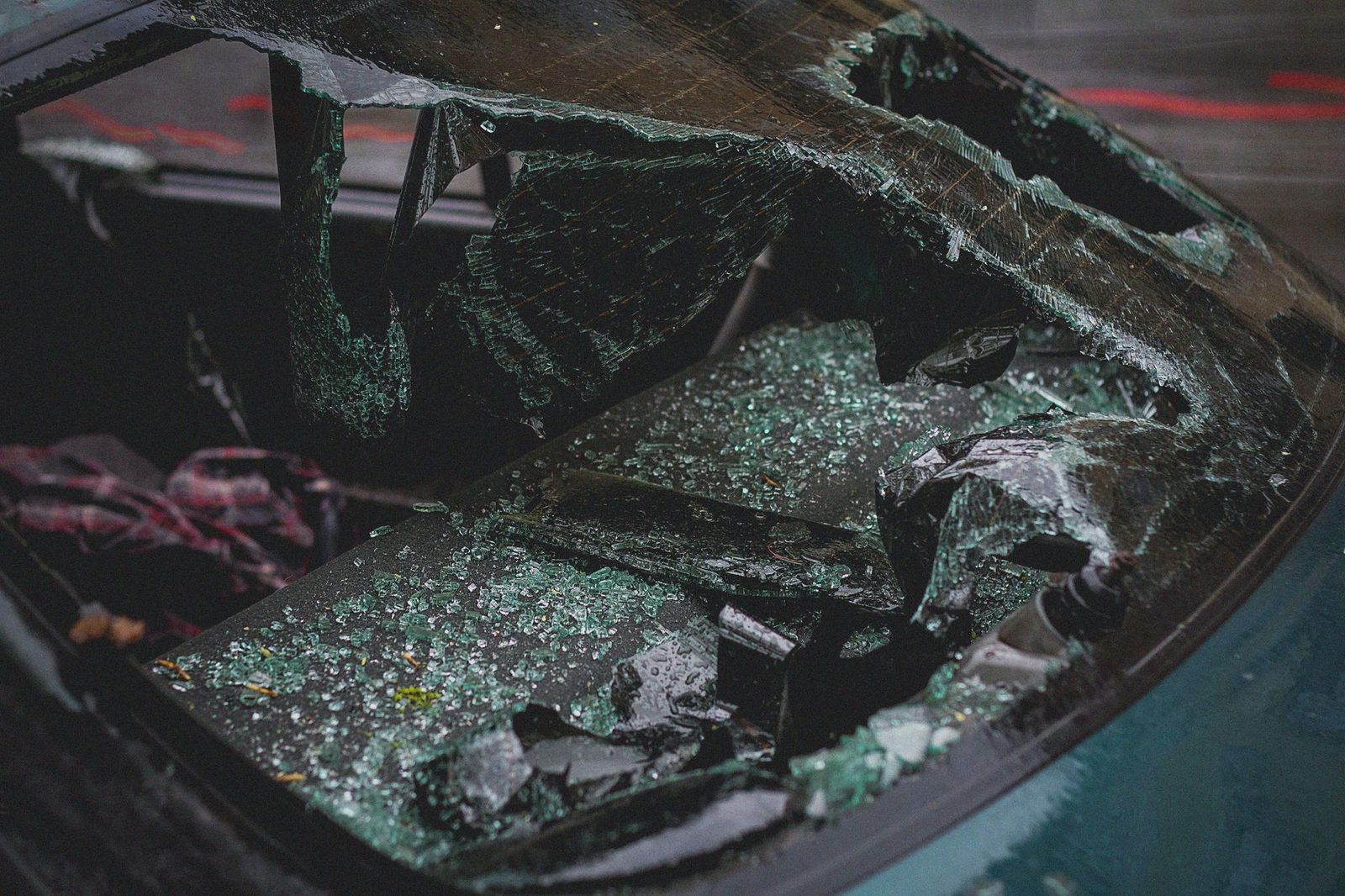
What Happens If You Get Into an Accident in a Rideshare?
Your first priorities are safety, medical care, and a police report. Move to a safe spot if you can, and check everyone for injuries. Call 911 if anyone is hurt.
Then get checked by a medical provider, even if you feel fine. Tell the provider about every symptom, including ones that seem minor. Your medical records become part of your proof later.
Start a simple file right away. Take photos of the scene, both vehicles, and the app screen showing the trip. Write down witness names and phone numbers. Keep records of every treatment visit and every day of missed work.
Be careful with recorded statements. The other driver’s insurer may ask you for one. Ask what the statement is for before you agree. Stick to facts you know, and don’t guess about speed or fault.
Which Insurance Applies? Rideshare Coverage Depends on App Status
Rideshare coverage in Georgia turns largely on what the driver was doing when the crash happened. The statute defines the rideshare period as the time a driver is logged on to the transportation network company’s digital network and available to accept a ride request until the driver is logged off, plus the time a driver accepts a ride request until the trip is complete or the ride ends, whichever is later. O.C.G.A. § 33-1-24 Personal insurers may exclude coverage for losses in that period. O.C.G.A. § 33-1-24 Personal insurers may exclude any and all coverage for losses that occur while a driver is logged on to a rideshare network or while a driver provides rideshare services.
Drivers often move between three states: app off, app on and waiting for a request, and carrying a passenger. Each state can change which policy responds.
Georgia also requires rideshare companies to carry insurance for each contracted driver. That coverage includes personal injury liability and personal injury protection benefits for drivers, passengers, pedestrians, and others. O.C.G.A. § 40-1-193
The company’s coverage does not depend on a personal insurer first denying a claim. That is why early preservation matters.
Georgia also limits when a rideshare company can be liable for a driver’s operation of a personal car. The limit applies only if listed conditions are met, including no negligence by the company. O.C.G.A. § 40-1-201 Which coverage applies depends on the facts of each crash.
Pedestrians, Cyclists, and Other Drivers Hit by Rideshare Vehicles
A Georgia driver must stop for some pedestrians in crosswalks. The driver must stop and stay stopped when a pedestrian is on the driver’s half of the road or approaching within one lane of it. O.C.G.A. § 40-6-91 The same section bars a pedestrian from suddenly stepping into the path of a vehicle too close to stop.
Every driver must also use due care to avoid hitting any pedestrian on a roadway. Drivers must take extra precautions around children and people who appear confused, incapacitated, or intoxicated. O.C.G.A. § 40-6-93
Speed matters too. Higher speeds increase crash severity, according to the Insurance Institute for Highway Safety.
Common questions in these cases include:
- Was the pedestrian in a marked crosswalk?
- Was the driver distracted or using the app?
- Could the driver see the person in time?
These are questions to examine, not conclusions. Pedestrians are covered by the insurance rules described above, and under O.C.G.A. § 40-6-93 every driver must exercise due care to avoid colliding with any pedestrian upon any roadway.
Georgia Fault Rules and Filing Deadlines
Georgia reduces your damages by your share of fault. If you are 50 percent or more responsible, you recover nothing. O.C.G.A. § 51-12-33
Under O.C.G.A. § 51-12-33, the judge reduces the amount of damages otherwise awarded to the plaintiff in proportion to his or her percentage of fault. Each defendant pays only its own apportioned share, not a joint amount. O.C.G.A. § 51-12-33
Georgia generally requires injury lawsuits within two years after the claim arises. O.C.G.A. § 9-3-33 A loss of consortium claim, which covers a spouse’s loss, has four years.
Claims against a city follow a shorter first step. If a city-owned vehicle was involved, you must present a written claim to the city within six months. The claim must state the specific amount of monetary damages sought. O.C.G.A. § 36-33-5
These deadlines are a reason to act early. They do not predict how any claim will end.
Getting the Crash Report and Preserving Key Evidence
Preserve evidence early, because video and trip records can be overwritten or lost. A police crash report can list the drivers, vehicles, and witnesses at the scene. Ask for it and keep the report number.
Other evidence that can disappear quickly includes:
- Dashcam footage from your car or another vehicle
- Traffic camera or business video near the intersection
- Photos of vehicle damage before repairs
- The rideshare trip record showing the driver’s app status
The trip record matters most. A personal insurer can ask the rideshare company, for claims coverage investigation, for the date and times of the accident and the precise log-on and log-off times in the 12 hours preceding and following the accident, and the company must provide them within 15 days. O.C.G.A. § 33-1-24
During a free consultation, we can review which evidence to request and preserve.
Not sure what your next step is?
Talk it through with our team — the first consultation is free, confidential, and carries no obligation.

What a Free Consultation Can Cover and How to Reach Our Team
A consultation is where you talk through your crash, injuries, and questions with our team. The first consultation is free, confidential, and carries no obligation to continue.
Georgia law distinguishes between general damages and special damages. General damages are those the law presumes flow from a wrongful act. Special damages actually flow from the act and must be proved. O.C.G.A. § 51-12-2 Bills, pay records, and work notes help you prove the losses you can document.
Frequently Asked Questions
What happens if you get into an accident in a rideshare?
Get to safety, get medical care, and report the crash to police. Keep photos, witness details, and treatment records.
How long do I have to file a personal injury lawsuit in Georgia?
Georgia generally requires injury lawsuits within two years after the claim arises. O.C.G.A. § 9-3-33
Can I recover if I was partly at fault?
Yes, if your share of fault is less than 50 percent. Your damages are reduced by that share. O.C.G.A. § 51-12-33
Who pays for injuries in an Uber or Lyft accident in Georgia?
Coverage turns on whether the driver was logged on and working when the crash happened.
If a rideshare crash in Kennesaw left you hurt, and you’re deciding what to do next, reach out to us. You can request a free consultation or call for a free case review through our contact page.
Responsible lawyer:
Peter F. Jaraysi, Slam Dunk Attorney, Duluth, Georgia. The firm’s lawyers also include Brian D. Wright. Contact: Slam Dunk Attorney contact page. This page is general information, not legal advice. Nothing on it predicts how any claim will turn out.
How We Can Help After a Rideshare Crash
Focused on Rideshare Cases
Our firm focuses on personal injury matters, including accidents involving Uber and Lyft drivers and passengers across metro Atlanta and Georgia.
Clear, Plain-Language Guidance
We explain your situation in everyday terms so you can make informed decisions at your own pace.
Free, Confidential First Consultation
Your first consultation is free, confidential, and comes with no obligation to continue.
Support You Can Reach
Our attorneys and support staff keep you informed and answer your questions as your case moves forward.
Before You Talk to an Insurance Adjuster
Insurance representatives may contact you soon after a crash. Before giving a recorded statement or signing any paperwork, consider speaking with a lawyer about what you are being asked to agree to.
Steps to Take After a Rideshare Accident
Get to Safety and Medical Care
Move to a safe location if you can, and see a doctor even if your injuries feel minor. Some injuries, such as concussions, may not show symptoms right away.
Report the Crash
Call the police so the crash is documented. Ask for the report number and the responding officer's information.
Document Everything
Take photos of vehicles, injuries, the road, and any signage. Write down the driver's details, the app trip information, and names of any witnesses.
Keep Your Records
Save medical bills, treatment notes, prescriptions, receipts, and missed-work records. Organized records make it easier to review your options.