
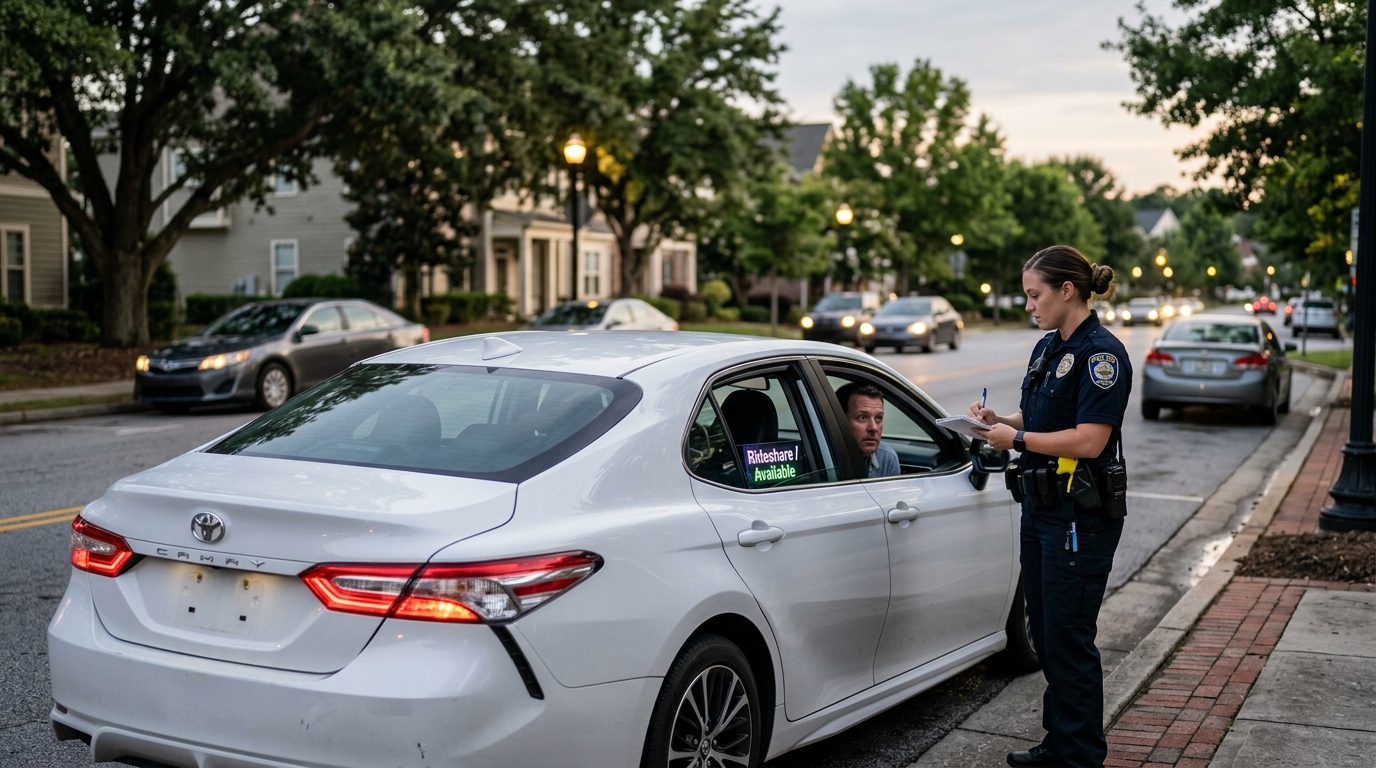
Rideshare Accident Attorneys in Johns Creek, GA
Hurt in an Uber or Lyft Crash in Johns Creek?
Slam Dunk Attorney, based in Duluth, Georgia, represents passengers, drivers, and others injured in rideshare accidents across Johns Creek and metro Atlanta. Your first consultation is free, confidential, and comes with no obligation to continue.
By Peter F. Jaraysi · Published October 24, 2026
Rideshare accidents in Johns Creek involve an Uber or Lyft vehicle while the driver is logged into the app, waiting for a request, or carrying a rider. Whether the app was on at the moment of impact often shapes which insurance may apply. This guide explains that rule in plain terms, plus the steps that protect an injury claim.
Motor vehicle crashes are a serious problem across Georgia. The Insurance Institute for Highway Safety reports 1,403 crash deaths in Georgia in 2024, a rate of 12.5 deaths per 100,000 people. That figure covers all motor vehicle crashes, not only rideshare trips.
Rideshare Accidents in Johns Creek: Who Is Involved
Anyone sharing the road with a rideshare vehicle can be hurt. Passengers, rideshare drivers, occupants of other cars, motorcyclists, cyclists and pedestrians all fall into that group. A crash can involve one vehicle or several, and the other driver may not drive for any app.
Johns Creek sits mostly in north Fulton County, with part of the city in Gwinnett County. Commuters, shoppers and drivers heading toward Alpharetta and Norcross share the same roads. Frequent stops for pickups and drop-offs mean drivers slow, stop and merge, and other motorists have to react quickly.
If you were hurt in a Johns Creek rideshare crash, you may have a claim, and our team can talk through app status and insurance with you in a free, confidential consultation. Talk it through with our team — the first consultation is free, confidential, and carries no obligation.

Busy Johns Creek Corridors and Fast Decisions
Rideshare crashes in Johns Creek often happen where speeds and lanes change quickly. Commuters use GA-400, State Bridge Road, Medlock Bridge Road, Kimball Bridge Road, Abbotts Bridge Road and Old Alabama Road, and each mixes highway speed with turn lanes and shopping traffic.
Sudden lane changes and merges near on-ramps leave little time to react. A driver who stops for a pickup on a busy road may be rear-ended. A driver cutting across lanes to reach a drop-off point may be struck from the side. The stop itself is a common point of conflict. A driver may pull over quickly, check the app for the rider’s location, and pull back into traffic without a clear view. IIHS speed research reports that higher vehicle speeds increase crash severity and the likelihood of serious injuries.
Distracted Driving and App Use Behind the Wheel
App use behind the wheel can pull a driver’s attention away from the road. A rideshare driver may check trip requests, follow navigation, read messages and answer calls while driving. Each alert asks for attention that should stay on traffic. Passengers can add to the load by asking for route changes or talking about the trip.
Phone use behind the wheel can be a factor in some crashes, and how it fits into a claim depends on the facts of each case. Phone records and app activity can show what was happening in the minutes before a crash. Those records are usually gathered through the claim process, so keep the trip details you already have.
Who May Be Responsible When a Rideshare App Is Running
Responsibility for a rideshare crash often turns on app status and the insurance policies that apply. Georgia’s insurance rules for transportation network companies, such as Uber and Lyft, define a service period. It covers the time a driver is logged on and available for ride requests. It also covers the time from accepting a request until the trip is complete or the ride ends, whichever is later. See O.C.G.A. § 33-1-24.
During that period, insurers may exclude coverage under the driver’s personal policy. That means the personal auto policy may not respond to the crash. Rideshare companies must also keep insurance in effect for each contracted driver. That insurance covers personal injury liability and related benefits available to drivers, passengers, pedestrians and others. See O.C.G.A. § 40-1-193.
The company itself is not automatically liable. Those include no negligence by the company itself and background checks at least every two years. See O.C.G.A. § 40-1-201. Which coverage applies depends on the facts of each crash.
Medical Care After a Johns Creek Rideshare Crash
Get a medical evaluation soon after any crash, even when pain seems mild. Some injuries don’t show symptoms right away. Concussions and neck or back injuries can appear later. Early care creates a clear record that links your symptoms to the crash.
Keep every visit summary, prescription, treatment plan and work note. Track missed work and out-of-pocket costs. These records show how an injury changed your daily life.
Serious injuries need careful documentation. Traumatic brain injury, spinal cord injury and paralysis, amputation and severe burns can change a person’s life. The NINDS spinal cord injury overview notes that the spinal cord has three layers of protective tissue, with cerebrospinal fluid around it as a cushion. It also notes that an injury between the C1 and C4 segments can stop breathing.
If a provider treats you under a letter of protection, a promise to be paid from any settlement, Georgia law makes those records open to discovery in a lawsuit. That includes the letter and itemized charges. See O.C.G.A. § 51-12-1.1.
Getting the Crash Report and Protecting Your Claim
Request the crash report from the agency that responded, and save evidence while it’s fresh. In Johns Creek, that may be the Johns Creek Police Department or a county sheriff’s office, depending on where the crash happened. Johns Creek spans Fulton and Gwinnett counties, so the location can change which agency responds.
Save photos of the scene, the vehicles and your injuries. Get witness names and phone numbers. Keep screenshots of your trip, the other driver’s insurance details and your rideshare receipts.
For a coverage investigation, a driver’s personal insurer can ask the rideshare company for log-on and log-off times. The company must respond within 15 days. See O.C.G.A. § 33-1-24.
Two rules shape any claim: time and fault. Georgia generally gives two years for injury to the person, under O.C.G.A. § 9-3-33. Loss of consortium claims have four years.
Fault matters too. Under O.C.G.A. § 51-12-33, damages are reduced by the injured person’s percentage of fault. A person who is 50 percent or more responsible recovers nothing. Each liable person pays only their own share.
Not sure what your next step is?
Talk it through with our team — the first consultation is free, confidential, and carries no obligation.
Rideshare Crash Claims for Passengers, Drivers, Pedestrians and Families
Each person hurt in a rideshare crash has a different path, based on their role. Passengers may have claims against the at-fault driver and, depending on app status, against the rideshare company’s coverage. Seat belt use can matter. Under O.C.G.A. § 40-8-76.1, a failure to wear a seat belt may be considered in a civil action as evidence on negligence and fault. It may also reduce recovery.
A driver hurt while logged on may face the personal-policy exclusion described above. That makes the insurance question central from the start.
Under O.C.G.A. § 40-6-93, every driver must exercise due care to avoid colliding with any pedestrian on a roadway. That duty applies to rideshare drivers too.
If a loved one dies, the surviving spouse or, if there is no spouse, the children may recover the full value of the decedent’s life, as shown by the evidence. See O.C.G.A. § 51-4-2. Where death results from criminal or other negligence, the personal representative may also recover funeral and other necessary expenses. See O.C.G.A. § 51-4-5.
Talk With Our Johns Creek Personal Injury Team
Our team at Slam Dunk Attorney handles rideshare accident claims and other personal injury matters for people in Johns Creek and across Georgia. The firm also handles car, truck, motorcycle, pedestrian, dog bite, premises liability and wrongful death matters. It is based in Duluth, Georgia, and serves nearby communities including Alpharetta, Marietta and Norcross. Peter F. Jaraysi is the responsible lawyer for this page, and Brian D. Wright is another lawyer at the firm.
The first consultation is free, confidential and comes with no obligation to continue.
Questions About Rideshare Crashes in Johns Creek
Does Uber or Lyft insurance cover passengers in Georgia?
Georgia requires rideshare companies to keep insurance in effect for each contracted driver. Whether it applies turns on app status and the specifics of the crash.
How long do I have to file an injury claim in Georgia?
Georgia generally allows two years for injury to the person, under O.C.G.A. § 9-3-33.
What if I was partly at fault?
Georgia reduces damages by your percentage of fault (O.C.G.A. § 51-12-33; Quynn v. Hulsey (2020)). If you are 50 percent or more responsible, you recover nothing.
If you were hurt as a passenger or driver, struck as a pedestrian, or lost a family member in a Johns Creek rideshare crash, you don’t have to sort out app status and insurance alone. Request your free consultation and talk through your next steps with our team.
Attorney advertising. This page is general information, not legal advice, and it predicts or promises no outcome. Responsible lawyer: Peter F. Jaraysi, Slam Dunk Attorney, Duluth, Georgia. Contact: Slam Dunk Attorney contact page.
How our team approaches your rideshare case
Clear answers on insurance
Rideshare crashes can involve more than one insurance policy. We help you understand which coverage may apply to your situation.
Early steps matter
App records, trip details, photos, and witness information can be hard to preserve. Reaching out early helps protect what you may need.
Plain-language guidance
We explain each step of the process in everyday language so you always know what to expect.
Personal, compassionate attention
Recovering from a crash takes time. We listen, answer your questions, and keep you informed.
Fees explained up front
Fees are contingent on a recovery. You may still be responsible for court costs and case expenses, and we will explain these before you decide.
Be careful with insurance calls
Insurance companies may contact you soon after a crash. Before you give a recorded statement or sign any paperwork, consider talking with a lawyer first.
Who we help after a rideshare crash
Rideshare passengers
If you were riding in an Uber or Lyft when a crash happened, our team can help you understand your options and the steps ahead.
Rideshare drivers
Drivers injured while logged into the app or on the road face complicated questions about coverage. We can help you sort them out.
Pedestrians and cyclists
If a rideshare vehicle struck you while you were walking or biking in metro Atlanta, we can review what happened with you.
Families of those who died
When a rideshare crash causes a death, our team handles wrongful death matters with patience and respect for your family.
Talk with a Johns Creek rideshare accident attorney today
Related practice areas
- Rideshare Accidents Lawrenceville GA: Injury Guide