
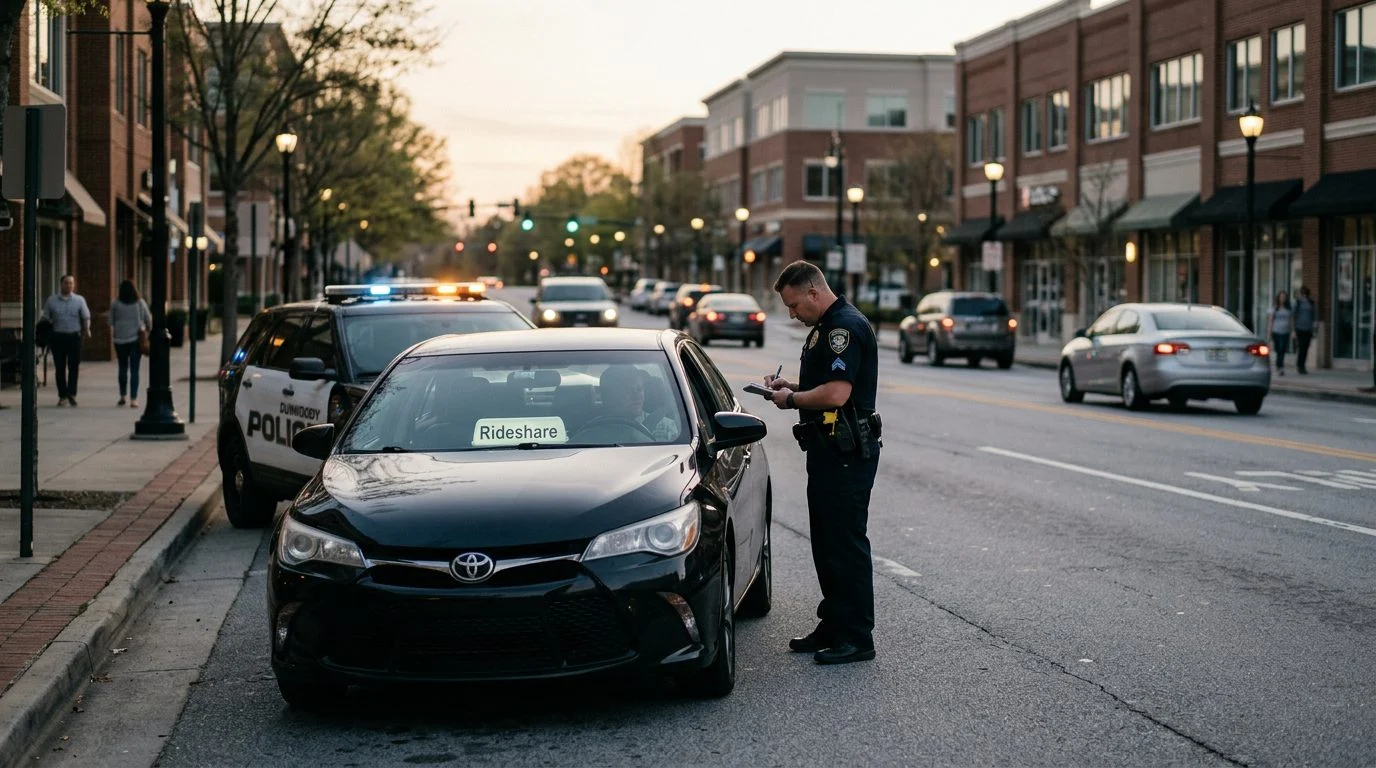
Dunwoody, Georgia | Rideshare Accidents
Hurt in an Uber or Lyft Crash in Dunwoody? Start With Clear Answers
A plain-language guide from our Duluth, Georgia personal injury firm to rideshare claims, insurance questions and the steps to take after a crash.
By Peter F. Jaraysi · Published October 24, 2026
Rideshare accidents Dunwoody riders and drivers face often involve more than one insurer. The app’s status at the moment of a crash can change which coverage applies. This guide explains how Uber and Lyft crashes differ from ordinary car crashes, who may be responsible, and which steps protect an injured person in the first days. Slam Dunk Attorney is a personal injury firm based in Duluth, Georgia. It represents people hurt in rideshare crashes across metro Atlanta and Georgia.
Rideshare Crashes on Dunwoody Roads
A rideshare crash differs from a standard crash because an app, a driver’s work status, and possibly several insurers are all involved.
Ashford Dunwoody Road and Chamblee-Dunwoody Road carry heavy local traffic. The I-285 and GA-400 interchanges near Perimeter Center add more movement, and rideshare cars share those routes with commuters. Local news has reported on rideshare crashes in Dunwoody. In 2018, the Atlanta Journal-Constitution reported on a deadly crash involving an Uber driver that left an injured passenger’s mother with questions.
Under Georgia’s ride share law, the vehicle in these cases is usually a personal passenger car operated by a ride share driver. O.C.G.A. § 40-1-201 So the trip record, the app status, and the driver’s insurance all matter from the first day.
If an Uber or Lyft crash in Dunwoody left you hurt, our team can review whether you may have a claim. Our free first consultation is confidential. Talk it through with our team — the first consultation is free, confidential, and carries no obligation.

Who Gets Hurt in Rideshare Crashes
Passengers, drivers of other vehicles, motorcyclists, pedestrians, and cyclists can all be hurt in a crash involving a rideshare vehicle.
Passengers often suffer injuries from sudden stops, side impacts, and rollovers. People in other cars can be hit at intersections or during highway merges. Georgia law requires every driver to exercise due care to avoid colliding with a pedestrian on the roadway. O.C.G.A. § 40-6-93 Drivers must also take proper precautions around a child or a person who appears confused, incapacitated, or intoxicated.
The risk is real. The Insurance Institute for Highway Safety reports 1,403 motor-vehicle crash deaths in Georgia in 2024, a rate of 12.5 deaths per 100,000 people.
Many people feel shaken after a crash and assume they are fine. A medical exam can find injuries that are not obvious at the scene. Spinal cord injuries are one example. The National Institute of Neurological Disorders and Stroke explains that the spinal cord has three layers of protective tissue, and cerebrospinal fluid surrounds it as a cushion. The same source notes that an injury between C1 and C4 can stop breathing, because those nerves control the diaphragm. Any neck or back pain after a crash deserves prompt medical care.
Who May Be Responsible After a Rideshare Crash
The at-fault driver is the first party to examine, and the app company may also be responsible, depending on the facts.
Fault often comes down to negligent driving, such as distraction, speeding, or impairment. Georgia reduces a claim by the injured person’s own share of fault. Under O.C.G.A. § 51-12-33, the judge reduces damages in proportion to the plaintiff’s fault. A plaintiff who is 50 percent or more responsible recovers no damages (O.C.G.A. § 51-12-33; Quynn v. Hulsey (2020)).
Damages are apportioned to each liable person, and they are not joint. A property owner or another party whose conduct contributed may be part of that picture.
A claim against Uber or Lyft is not automatic. Under O.C.G.A. § 40-1-201, a ride share network service is not liable under any theory, including vicarious liability, for a driver’s operation of a personal passenger car. O.C.G.A. § 40-1-201 reads: “(a) No ride share network service shall be liable under any theory of liability, including, but not limited to, vicarious or product liability, for any injury to persons or damage to property from the operation of a personal passenger car by a ride share driver by reason of owning, operating, or maintaining a digital network or internet network to connect passengers to ride share drivers for the purpose of prearranged transportation for hire or for donation, provided that.” That protection applies only when the requirements listed in O.C.G.A. § 40-1-201 are met. The company must have no negligence or criminal misconduct of its own. It must also run or obtain background checks for each driver at least once every two years.
How Rideshare Insurance Coverage Changes With App Status
Insurance in a rideshare crash can shift depending on whether the driver was logged in to the app and working at the time.
Georgia law allows insurers to exclude coverage under the driver’s own auto policy for any loss while the driver is logged on to a transportation network company’s digital network or providing its services. O.C.G.A. § 33-1-24 A personal policy may also exclude injuries to the driver and others during that window. It may also exclude uninsured and underinsured motorist coverage.
The company’s coverage is a separate question. Under O.C.G.A. § 33-1-24(b)(3), from the time a driver accepts a ride request until the ride is complete, coverage must provide at least $1 million for death, personal injury, and property damage per occurrence. It must also include uninsured and underinsured motorist coverage as required by Code Section 33-7-11, with minimum limits of $300,000 for bodily injuries to or death of all persons in any one accident, a maximum of $100,000 for bodily injuries to or death of one person, and $25,000 for damage to other people’s property, excluding cargo, in any one accident. O.C.G.A. § 40-1-193 Each ride share network service must have for each ride share driver insurance coverage in effect with respect to personal injury liability, property damage liability, and personal injury protection liability benefits, in the same coverage amounts as required by law. That timeline helps show app status.
Passengers may also have health insurance or their own auto coverage that applies. Georgia’s medical expense rules count both the amounts charged and the amounts needed to satisfy those charges under the insurance contract. That is true even when the insurance was not used. O.C.G.A. § 51-12-1.1 Each claim turns on its own injuries and its own coverage.
Georgia Deadlines and Evidence to Protect
Georgia generally gives two years to file a lawsuit for an injury to the person, counted from when the right of action accrues (O.C.G.A. § 9-3-33; Kenneth B. Cameron v. Jmp Pizza, Inc (2026)).
O.C.G.A. § 9-3-33 sets a two-year deadline for actions for injuries to the person, running after the right of action accrues, except as otherwise provided in this article (O.C.G.A. § 9-3-33; Kenneth B. Cameron v. Jmp Pizza, Inc (2026)). It sets four years for actions involving loss of consortium. Waiting can cost you the right to file, so write down the crash date today.
Helpful evidence includes the Dunwoody Police crash report, photos of the vehicles and scene, names of witnesses, medical records, and screenshots of the app’s trip status. Request the report and note its report number, the responding agency, and the date. Some records, such as nearby business video, may be overwritten over time.
Georgia also requires a rideshare driver to keep digital identification on a smartphone while active on the network. If an officer reasonably suspects improper operation, the driver must give that officer access to the phone and the electronic trip record. O.C.G.A. § 40-1-193
Steps to Take After a Dunwoody Rideshare Crash
Get medical care first, even when injuries seem minor, and keep every appointment record. Then take these steps in order.
- Request the police crash report and note the report number, agency, and date.
- Report the crash through the rideshare app’s support channels, and keep any claim number you receive.
- Write down what you remember while it’s fresh, including the route and what the driver was doing.
- Don’t give a recorded statement to an insurance adjuster before you’ve talked with a lawyer.
Common Questions About Rideshare Crashes in Dunwoody
Can I sue Uber if my driver crashes?
Not automatically. Georgia law sets conditions on claims against a rideshare company, so the trip facts matter.
How long do I have to file?
Georgia generally allows two years for an injury lawsuit.
Does my own car insurance cover an Uber or Lyft crash?
It can depend on whether the app was on and a trip was active. Insurers may exclude coverage during that time.
Not sure what your next step is?
Talk it through with our team — the first consultation is free, confidential, and carries no obligation.
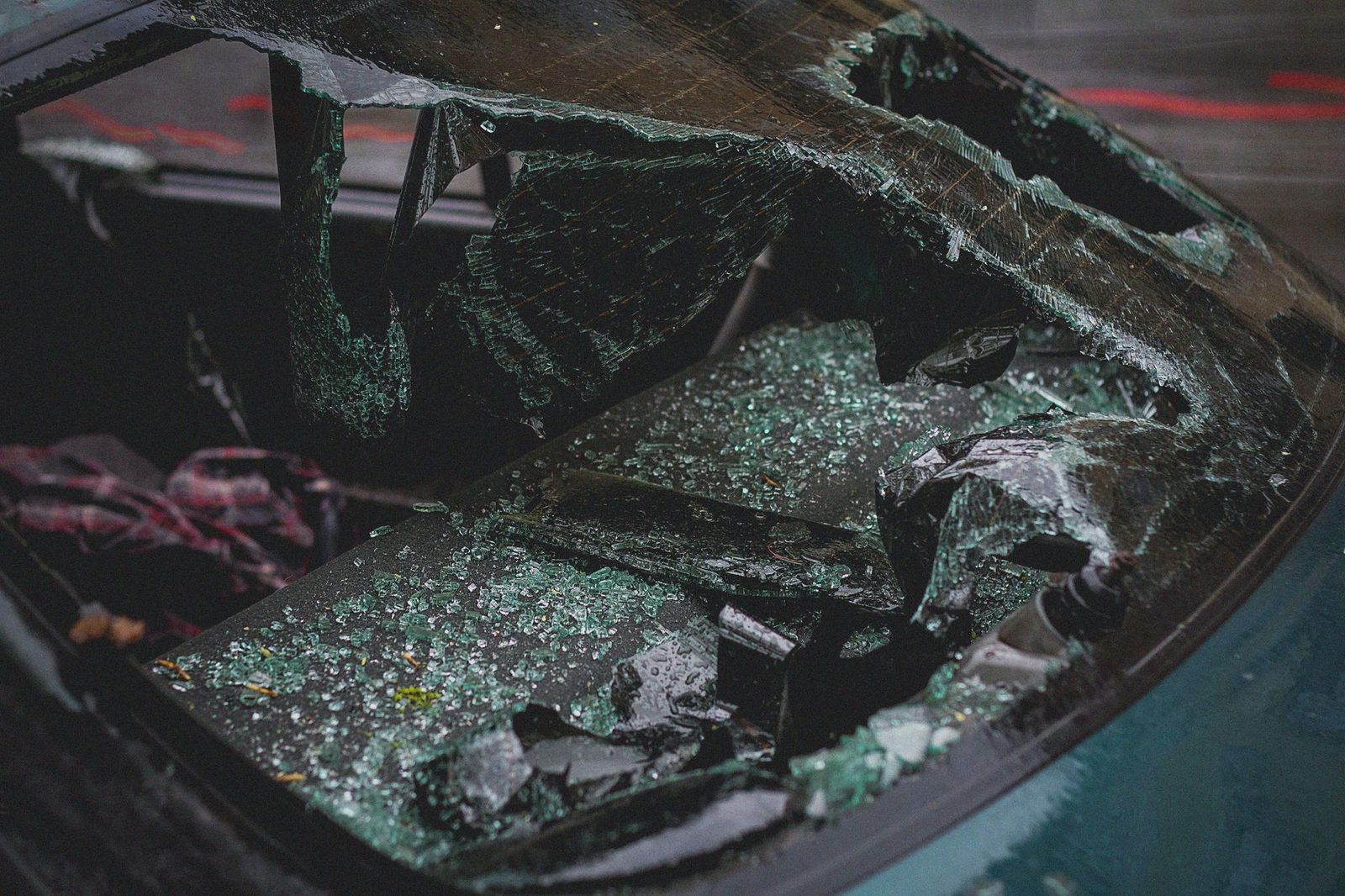
Talk With Our Team About Your Dunwoody Rideshare Crash
If an Uber or Lyft vehicle hurt you in Dunwoody, a short conversation can show whether a claim may be possible.
Maybe your injuries are still being treated, and an adjuster wants a statement soon. Those moments are hard. Slam Dunk Attorney is based in Duluth, Georgia, and our team can review the trip facts, the app status, and the insurance involved in rideshare accidents in Dunwoody. Our free first consultation is confidential and carries no obligation to continue.
Contact our team at Slam Dunk Attorney to ask for a free case review of your rideshare crash.
Responsible lawyer: Peter F. Jaraysi, Slam Dunk Attorney, Duluth, Georgia. Contact information is at https://slamdunkattorney.com/contact-us/. This content is general information about Georgia law and is not advice for your specific case.
How Our Team Can Help
Plain-language guidance
We explain how rideshare crash claims work in Georgia, including the questions insurance companies may raise, in terms you can follow.
Review of your trip facts
Details such as app status, trip stage, the driver's account and the other vehicles involved can affect how a claim is evaluated. We look at the records together with you.
Support for riders and others hurt
Passengers, other drivers and pedestrians can all be affected by a rideshare crash. Our team focuses on helping injured people understand their options.
Free, confidential first consultation
Your initial consultation is free, confidential and comes with no obligation to continue.
Get Medical Care First
Seek medical attention right away, even if your injuries seem minor. Some injuries, including concussions and soft-tissue damage, can appear hours or days later. A prompt medical record protects your health and documents what happened.
Common Questions After a Rideshare Crash
Was the app on?
Whether the driver was logged in, waiting for a request or on an active trip can shape which insurance may apply. Save screenshots of the app if you can.
Who was in the vehicle?
Passengers, drivers of other vehicles and pedestrians may each have different questions about coverage and claims. Write down names and contact details.
What about my own insurance?
Your own auto policy may or may not respond to a rideshare crash. Bring your policy information to your consultation so we can review it with you.
Can I sue Uber or Lyft?
Claims against a rideshare company depend on the facts of the trip and on Georgia law. Our team can review your situation and explain the options that may apply.