
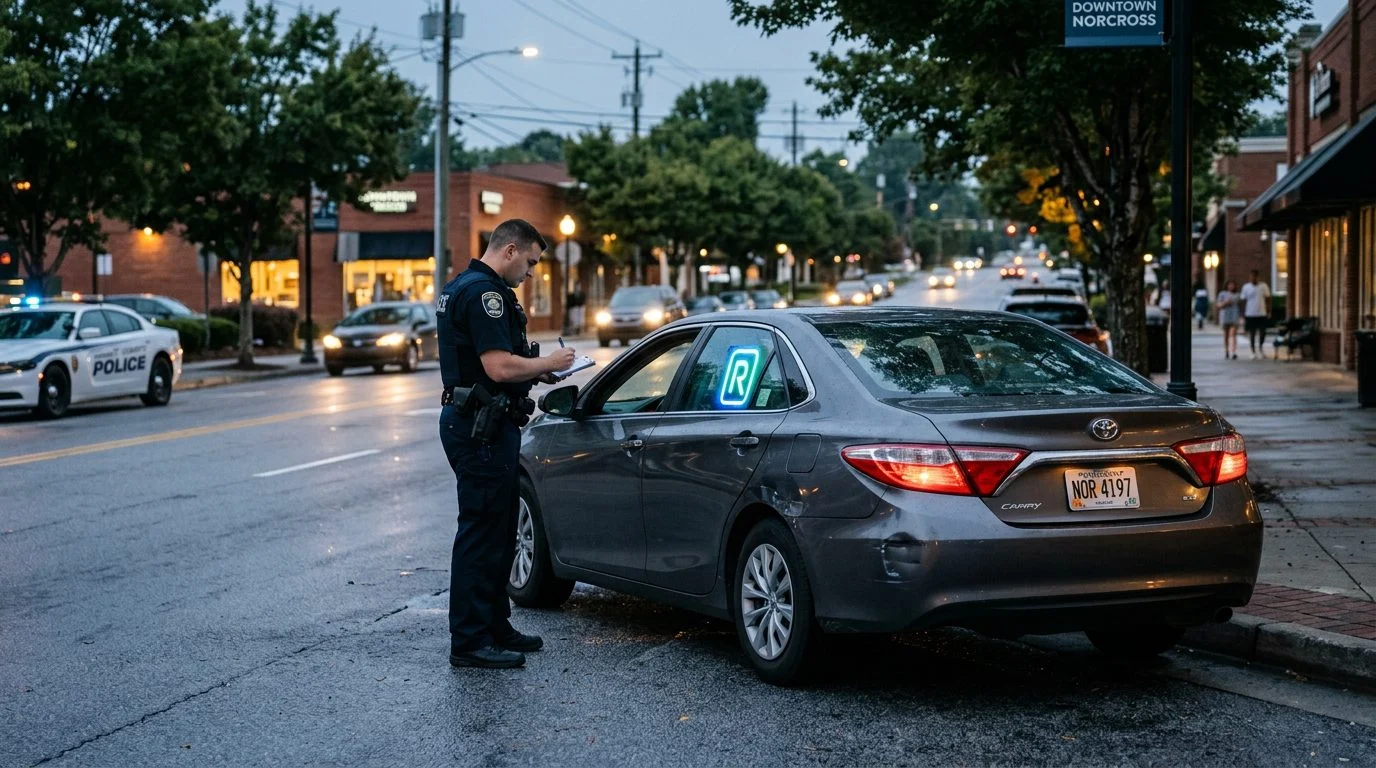
Norcross, GA | Rideshare Accident Injury Guide
Hurt in an Uber or Lyft Crash Near Norcross? Start With a Free Consultation.
Rideshare crashes involve more parties and more paperwork than most car wrecks. Here is how to protect your health, your evidence, and your options.
By Peter F. Jaraysi · Published November 12, 2026
If you were hurt in an Uber or Lyft crash in Norcross, you may have a claim against the driver, the rideshare company, or another party. Who pays depends on what the driver was doing at the time of the crash and on the facts of your case.
This guide explains who can be hurt, how app status affects insurance, which evidence to keep, and when Georgia’s filing deadline applies. Rideshare accidents in Norcross happen on the same busy roads everyone in Gwinnett County drives.
Rideshare Crashes in Norcross: Why Local Roads Matter
Rideshare crashes in Norcross often happen on busy commercial corridors. Traffic moves fast on Jimmy Carter Boulevard, Peachtree Industrial Boulevard and Buford Highway. The I-85 and I-285 access roads carry heavy traffic day and night too.
Collisions involving passenger vehicles have also been reported on Beaver Ruin Road. It is a local corridor where a routine drive can turn into a serious wreck.
Local roads matter for another reason. One crash can involve several drivers, several insurers and the rideshare company. The location and the trip details both help show who was involved. For the statewide picture, read our rideshare accident guide for Georgia.
If you were hurt in a rideshare crash in Norcross, or lost someone in one, we can review your situation in a free, confidential consultation. Talk it through with our team — the first consultation is free, confidential, and carries no obligation.

Who Can Be Hurt in an Uber or Lyft Crash
Several people can be hurt in a rideshare crash, not only the person who booked the ride. Passengers are the most obvious group. A passenger in the back seat may have had no role in the trip and still suffer serious injuries.
The rideshare driver can be hurt too. Many drivers use their own cars for work. A crash during a trip raises questions about workers’ compensation and rideshare coverage.
Drivers and passengers in other cars, pedestrians and cyclists struck by a rideshare vehicle can also have claims. Georgia law requires every driver to exercise due care to avoid colliding with any pedestrian upon any roadway.
When a crash is fatal, family members may have rights of their own. Under O.C.G.A. § 51-4-2, a surviving spouse, or children if there is no surviving spouse, may recover for the homicide of a spouse or parent. The law measures this by the full value of the decedent’s life, as shown by the evidence.
What to Do If Your Uber or Lyft Gets in an Accident
Get medical care first, even if your injuries seem minor. Neck pain and dizziness can appear hours or days later. A prompt exam also creates a medical record that ties your symptoms to the crash.
Call 911 if anyone is hurt. Get the police report number, and write down the other driver’s name, insurer and plate number. If you were a rider, note the driver’s name, the car’s plate and the app’s trip number.
Use the app’s in-app support tools to report the crash to the rideshare company. Save trip details, timestamps and messages. Screenshots can disappear, so capture them early.
Photograph the vehicles, road conditions, traffic signals and visible injuries. Keep every bill, receipt and medical record.
Be careful with recorded statements to any insurance company. Early statements can be used later in your claim. Keep your answers short and accurate until you understand your options.
How App Status at the Time of the Crash Affects Coverage
Insurance for a rideshare crash in Georgia depends heavily on whether the driver was logged on to the app. Georgia law addresses this for transportation network companies such as Uber and Lyft. Under O.C.G.A. § 33-1-24, a personal auto insurer may exclude coverage for a loss that occurs while the driver is logged on or providing services.
That exclusion is one reason trip status matters. A driver with the app off, a driver waiting for a request, a driver heading to a pickup, and a driver carrying a passenger may each sit in a different position. The rideshare company’s coverage and the driver’s personal policy may both come into play.
For claims coverage investigation, the company must provide the driver’s personal vehicle insurer, within 15 days of its request, the date and time of the accident and the driver’s log-on and log-off times for the 12 hours before and after (O.C.G.A. § 33-1-24). The company’s coverage also does not depend on the personal insurer first denying a claim.
Depends on the facts: the coverage in a specific crash turns on trip status, the policies in force and the parties involved.
Injuries That Often Follow a Rideshare Collision
Many rideshare injuries are not obvious right away. Whiplash, neck and back injuries, fractures and concussions can all develop after a crash. Some head injuries show symptoms hours or days later.
Speed matters. The Insurance Institute for Highway Safety reports that higher vehicle speeds increase crash severity and the likelihood of serious injuries. Rideshare cars share the same roads and speeds as other traffic.
Severe crashes can cause catastrophic injuries, including spinal cord injury, paralysis, amputation and severe burns. The National Institute of Neurological Disorders and Stroke explains that the spinal cord has three layers of protective tissue, with cerebrospinal fluid around it as a cushion. Damage to the spinal cord can last, and these injuries often need long-term medical planning.
A medical evaluation after the crash links your symptoms to the collision. Tell the provider exactly how the crash happened and where you feel pain. Keep your appointments, because gaps in treatment can make it harder to connect symptoms to the crash.
Georgia Deadlines and Evidence to Preserve
In most Georgia injury cases, the deadline to file is two years after the right of action accrues (O.C.G.A. § 9-3-33; Kenneth B. Cameron v. Jmp Pizza, Inc (2026)). Injuries to reputation must be brought within one year, and loss of consortium claims within four years. O.C.G.A. § 9-3-33 sets this general rule for injuries to the person. Wrongful death claims have their own timing rules, so families should act promptly.
Under O.C.G.A. § 51-12-2, general damages are those which the law presumes to flow from any tortious act, and they may be recovered without proof of any amount. General damages are those the law presumes to flow from a wrongful act. Special damages actually flow from the act and must be proved, such as bills and lost wages (O.C.G.A. § 51-12-2).
Preserve app screenshots, trip receipts, dashcam or phone video, photos, witness names, and every bill and medical record. Keep a simple daily log of pain, missed work and activities. Over time, it shows how the injury changed your daily life.
Not sure what your next step is?
Talk it through with our team — the first consultation is free, confidential, and carries no obligation.
Who May Be Responsible After a Rideshare Crash
Responsibility can rest with the at-fault driver, the rideshare company, or both. Georgia law sets the rules for how fault is shared.
The rideshare company is not automatically liable. Under O.C.G.A. § 40-1-201, a ride share network service is not liable for a driver’s operation of a personal car. That protection applies only if the service had no negligence or criminal misconduct and met the statute’s conditions, including background checks at least every two years.
Georgia also uses modified comparative fault (O.C.G.A. § 51-12-33; Quynn v. Hulsey (2020)). A court reduces damages in proportion to the injured person’s own fault. A person who is 50 percent or more responsible recovers no damages (O.C.G.A. § 51-12-33). Damages apportioned among liable people are each person’s own liability, not joint liability.
Under O.C.G.A. § 51-12-33, the fault of people not named in a lawsuit is considered if the plaintiff settled with that person or a defending party gives notice not later than 120 days before trial that they were wholly or partially at fault. The trier of fact must consider the fault of all persons or entities who contributed to the alleged injury or damages, regardless of whether they were, or could have been, named as a party to the suit.
Talk With Slam Dunk Attorney About Your Norcross Rideshare Crash
Slam Dunk Attorney is based in Duluth, Georgia. The firm represents people hurt in rideshare, car, truck, motorcycle and pedestrian accidents across metro Atlanta and Georgia, including Norcross. Peter F. Jaraysi, the responsible lawyer for this page, and Brian D. Wright are lawyers at the firm.
Frequently Asked Questions
How long do I have to file a rideshare injury claim in Georgia?
For most injury claims, Georgia generally allows two years from the date of injury (O.C.G.A. § 9-3-33; Kenneth B. Cameron v. Jmp Pizza, Inc (2026)). Wrongful death claims follow their own timing rules.
Can I sue Uber or Lyft after a crash?
It may be possible, but the answer turns on trip status, the policies involved and whether the company was negligent.
What if I was partly at fault?
Georgia reduces your damages by your share of fault. If you are 50 percent or more responsible, you recover nothing (O.C.G.A. § 51-12-33; Quynn v. Hulsey (2020)).
Nearby readers can also review our pages for Kennesaw and Dunwoody.
If you were hurt in a rideshare crash, or lost a loved one in one, reach out for a free, confidential consultation through our contact page. The first consultation carries no obligation to continue.
Disclaimer: This page is general information, not legal advice. Peter F. Jaraysi is the responsible lawyer for this page. Slam Dunk Attorney, Duluth, Georgia. Contact: https://slamdunkattorney.com/contact-us/.
How Our Firm Can Help
Free first consultation
Your first consultation is free, confidential, and comes with no obligation to continue.
Focused on injury cases
We represent people hurt in rideshare, car, truck, and motorcycle accidents, along with other injury matters across metro Atlanta and Georgia.
Attorneys and support staff
Jaraysi and Brian D.
Plain-language answers
We explain the process, what to expect, and what each step means for you, without legal jargon.
Local to Gwinnett County
Our Duluth, Georgia office serves Norcross and nearby communities, including Lawrenceville, Johns Creek, Alpharetta, Marietta, Kennesaw, and Dunwoody.
Be Careful Talking to Insurers
An insurance adjuster may call soon after a crash and ask for a recorded statement. Before you give one, consider speaking with a lawyer about what to say and what to leave out.
What to Do After a Rideshare Crash
Get medical care
Seek medical attention right away, even if your injuries seem minor. Some injuries, including head and back injuries, may not show symptoms for hours or days.
Document the scene
Take photos of vehicles, injuries, road conditions, and any visible signs. Note the time and location, and write down what you remember while it is fresh.
Save your trip details
Screenshot your app trip summary, driver and vehicle details, receipts, and any messages. Rideshare trip records can matter when the question is who was responsible at the time.
Talk with a lawyer
Share what happened with our team for a free, confidential review. We will explain your options and what information will help.