
Pedestrian Accidents
Hit by a Car? Know Your Rights and Recovery Options
If you were injured as a pedestrian in metro Atlanta or Georgia, you may have a claim for damages. Slam Dunk Attorney focuses exclusively on pedestrian accident cases and fights for fair compensation.
By Peter F. Jaraysi · Published September 14, 2026
Pedestrian Accidents: Your Guide to Liability, Claims & Legal Recovery
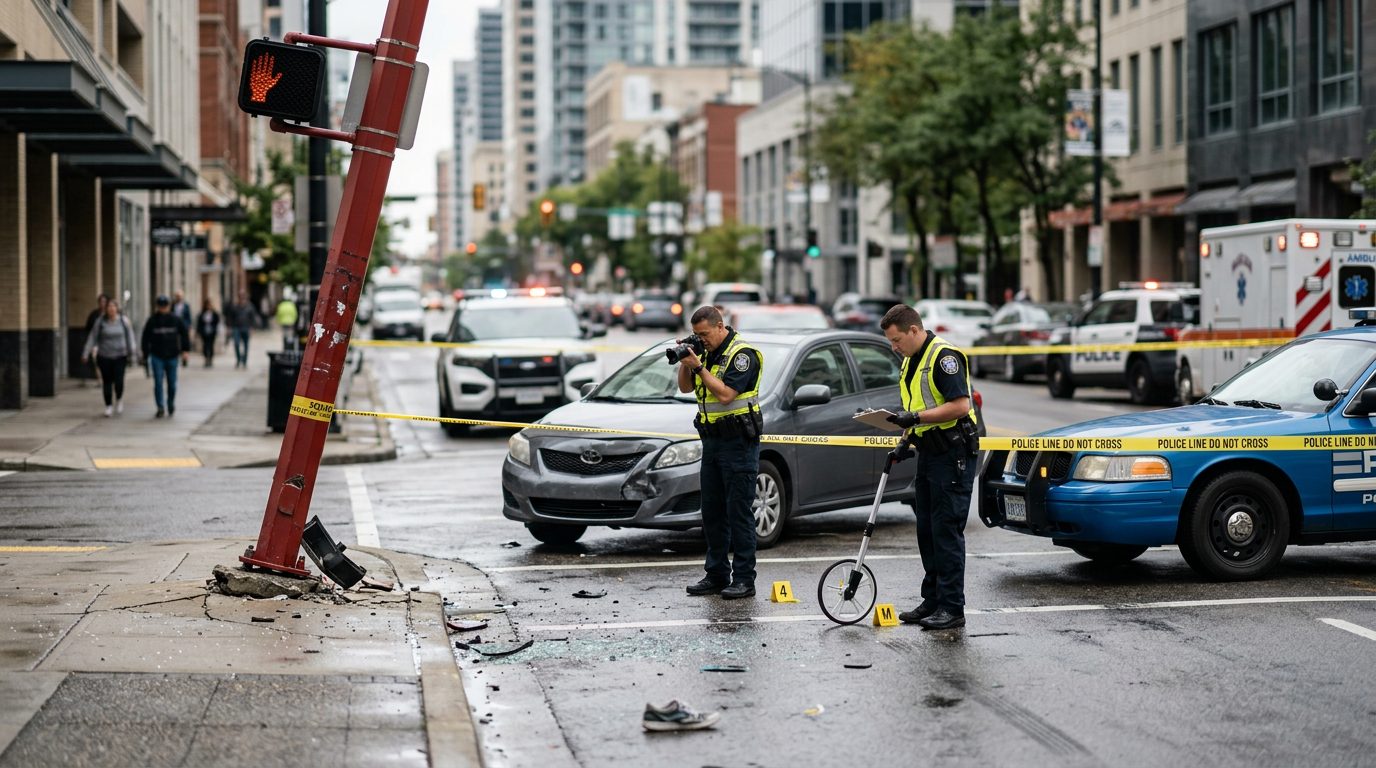
When a vehicle strikes a pedestrian, the injuries are often severe because a person on foot has no protective shell to absorb the impact. Pedestrian accident claims in Georgia can be complex, but an injured pedestrian may recover damages even if partially at fault—thanks to Georgia’s comparative negligence rule (O.C.G.A. § 51-12-33; Quynn v. Hulsey, 310 Ga. 473 (2020)). Understanding how liability works, what damages you can pursue, and why early legal representation matters is essential to protecting your rights and your recovery.

If you were injured as a pedestrian in metro Atlanta or Georgia, you may have a claim for damages. Talk it through with our team — the first consultation is free, confidential, and carries no obligation.
What Is a Pedestrian Accident?
A pedestrian accident occurs when a vehicle strikes a person on foot in a public or private space, causing injury or death. These collisions happen in crosswalks, intersections, parking lots, sidewalks, and residential streets—anywhere a pedestrian and a vehicle occupy the same space at the same time.
Pedestrians are uniquely vulnerable in these accidents. Unlike occupants of a car, truck, or motorcycle, pedestrians have no protective frame, airbags, or crumple zones. When struck, they absorb the full force of the vehicle’s impact, often resulting in severe injuries to the head, spine, limbs, and internal organs. This vulnerability is why pedestrian accident claims demand careful investigation and experienced legal guidance.
Pedestrian accidents differ from the other accident types Slam Dunk Attorney handles. While car and truck accidents involve occupants protected by vehicles, and motorcycle accidents involve riders with limited protection, pedestrian accidents involve someone with no vehicle protection at all. Premises liability and slip-and-fall claims may also involve pedestrians, but those typically arise from unsafe property conditions rather than vehicle collisions. Each accident type has distinct liability rules and injury patterns, and our experience across all of them informs how we approach pedestrian representation.
How Pedestrian Accident Liability Works
In Georgia, drivers have a legal duty of care to pedestrians—even when the pedestrian is jaywalking or partially at fault. This is a fundamental principle that protects injured pedestrians and ensures they have a path to recovery.
Georgia follows a modified comparative negligence rule, which means an injured pedestrian can recover damages even if they were partially responsible for the accident (O.C.G.A. § 51-12-33; Quynn v. Hulsey, 310 Ga. 473 (2020)). However, the pedestrian’s negligence cannot be greater than the driver’s negligence. For example, if you were jaywalking but the driver was speeding and failed to brake, the driver’s negligence may outweigh yours, and you could still recover—though your award would be reduced by your percentage of fault (O.C.G.A. § 51-12-33; Quynn v. Hulsey, 310 Ga. 473 (2020)).
Common driver negligence in pedestrian accidents includes:
- Distracted driving (texting, eating, adjusting controls)
- Speeding or driving too fast for conditions
- Failure to yield at crosswalks or intersections
- Running red lights or stop signs
- Impaired driving (alcohol or drugs)
- Failure to see the pedestrian due to poor visibility or obscured sightlines
Even if a pedestrian contributed to the accident—by not using a crosswalk, wearing dark clothing at night, or being inattentive—the driver may still be liable if the driver was also negligent. The question is not whether the pedestrian was perfect, but whether the driver breached their duty of care.
Property owner liability can also apply in parking lots and private premises. If a property owner failed to maintain safe conditions, failed to warn of hazards, or inadequately secured the property, they may share liability for a pedestrian accident that occurs on their land. This is why pedestrian accident investigations often examine not just the driver’s conduct, but also the condition and security of the accident location.
Common Pedestrian Accident Injuries
Pedestrian accident injuries tend to be severe because of the unprotected nature of the impact. The injuries our attorneys encounter in pedestrian cases include:
- Traumatic brain injury (TBI) and head trauma, ranging from concussions to diffuse axonal injury
- Spinal cord injuries, which can result in partial or complete paralysis
- Broken bones and fractures in the legs, pelvis, ribs, and arms
- Internal organ damage, including injuries to the liver, kidneys, spleen, and lungs
- Soft tissue injuries such as lacerations, contusions, and sprains
- Psychological trauma and post-traumatic stress disorder (PTSD)
- Long-term disability and chronic pain that affects quality of life
According to the Christopher & Dana Reeve Foundation, spinal cord injuries can result in partial or complete loss of motor and sensory function below the injury site. Mayo Clinic notes that even incomplete spinal cord injuries often lead to permanent changes in strength, sensation, and bodily function.
In the pedestrian accident cases our attorneys handle, we see injuries that require years of medical treatment, rehabilitation, and ongoing care. Some clients never fully recover and face permanent disability. This severity is why damages in pedestrian cases can be substantial and why thorough investigation and valuation are critical.
Damages You May Recover in a Pedestrian Accident Claim
Damages in a pedestrian accident claim compensate you for the losses caused by the collision. These include:
- Medical expenses: emergency care, hospitalization, surgery, rehabilitation, physical therapy, and ongoing medical treatment
- Lost wages: income you lost while recovering and unable to work
- Loss of earning capacity: if your injuries permanently reduce your ability to earn income in the future
- Pain and suffering: compensation for physical pain, emotional distress, and reduced quality of life
- Permanent disability or disfigurement: if the accident leaves you with lasting physical changes
- Emotional distress and psychological trauma, including PTSD and depression
- Property damage: damage to personal items like clothing, glasses, or a phone
- Wrongful death damages: if the pedestrian was killed, surviving family members may recover
It’s important to understand that damages vary widely from case to case. No two pedestrian accidents are identical, and the value of your claim depends on the severity of your injuries, the clarity of liability, the defendant’s insurance limits, and other factors specific to your situation.
Steps in a Pedestrian Accident Claim
Understanding the process helps you know what to expect and why timing matters.
Immediate aftermath: After the collision, seek medical attention right away—even if you feel okay, some injuries appear hours or days later. Call the police and report the accident. Gather the names, phone numbers, and email addresses of any witnesses. Take photos of the vehicle, the accident scene, traffic signals, street conditions, and your injuries if visible.
Investigation: The police will create an accident report, which is a key document. An attorney will obtain this report and begin investigating the accident. This includes documenting the scene, obtaining vehicle information and driver details, reviewing medical records, and identifying witnesses who can testify about what they saw.
Demand and negotiation: Your attorney sends a demand letter to the driver’s insurance company, outlining the facts, your injuries, your medical treatment, and the damages you’re seeking. The insurer responds with an offer, a counteroffer, or a denial. Negotiation follows, with the goal of reaching a fair settlement.
Settlement or litigation: Most pedestrian accident claims settle during negotiation. If a fair settlement cannot be reached, your case may proceed to trial, where a judge or jury will decide liability and damages.
Why early legal representation matters: An attorney preserves evidence before it disappears, advises you on what to say (and what not to say) to avoid harming your claim, and ensures you understand your rights. Many injured pedestrians inadvertently weaken their cases by speaking with the driver’s insurance company without legal counsel or by signing documents they don’t fully understand.
Not sure what your next step is?
Talk it through with our team — the first consultation is free, confidential, and carries no obligation.
Insurance and Pedestrian Accidents
The driver’s auto liability insurance typically covers pedestrian injuries. Georgia requires drivers to carry minimum liability coverage, though these minimums may not fully cover severe injuries.
If the at-fault driver lacks sufficient insurance, uninsured motorist (UM) coverage or underinsured motorist (UIM) coverage may apply. UM coverage protects you if the driver has no insurance at all. UIM coverage applies when the driver’s insurance limits are too low to cover your damages. These coverages are often part of your own auto insurance policy, even if you don’t own a vehicle—they’re available to pedestrians in many cases.
Insurance companies often use tactics to minimize your recovery: they downplay the severity of your injuries, dispute liability even when the facts support it, delay payment to pressure settlement, or offer lowball initial offers. An attorney advocates for you and pushes back against these tactics, ensuring the insurer takes your claim seriously and values it fairly.
Why You Need a Pedestrian Accident Attorney
Pedestrian accident claims involve several layers of complexity that make legal representation valuable:
- Liability investigation: Determining who was at fault requires analyzing traffic laws, vehicle dynamics, witness statements, and sometimes expert testimony. A driver’s claim that “I didn’t see the pedestrian” isn’t a legal defense if they were negligent in failing to see you.
- Medical causation: Connecting your injuries to the accident and proving that your treatment was necessary and reasonable.
- Damages calculation: Knowing what your claim is truly worth—medical expenses, lost wages, pain and suffering, and future losses—versus what an insurer initially offers.
- Negotiation leverage: Insurance companies take represented claimants more seriously than unrepresented ones. An attorney’s involvement signals that you’re serious and informed.
- Trial readiness: If settlement fails, you need someone prepared to present your case in court, examine witnesses, and argue your damages to a judge or jury.
- No upfront cost: Contingency fee arrangements mean you pay no legal fees unless you recover damages. You’re not risking money to pursue your claim.
Pedestrian Accidents in Metro Atlanta and Georgia
Pedestrian accidents happen throughout metro Atlanta and Georgia, particularly in high-traffic corridors like I-75, I-285, and major surface streets in Atlanta, Marietta, Alpharetta, and Lawrenceville. Urban and suburban areas with shopping districts, downtown zones, and residential neighborhoods see frequent pedestrian activity and, unfortunately, frequent collisions.
Seasonal factors matter too. Winter weather, holiday traffic congestion, and school zones create additional pedestrian risk. Drivers unfamiliar with an area may be less attentive to pedestrians, and pedestrians distracted by phones or weather may be less aware of vehicles.
Local legal representation matters because an attorney familiar with Georgia courts, local judges, insurance practices, and accident patterns in your area can navigate the claims process more effectively. We understand the metro Atlanta landscape and the specific challenges pedestrians face in our service areas: Duluth, Atlanta, Lawrenceville, Johns Creek, Alpharetta, Marietta, Norcross, Kennesaw, Dunwoody, and throughout Georgia.
What to Do After a Pedestrian Accident
The steps you take immediately after a pedestrian accident can significantly affect your claim:
-
Seek immediate medical care, even if injuries seem minor. Some injuries appear hours or days later, and a medical record created soon after the accident strengthens your claim.
-
Report the accident to police and obtain the police report number. This creates an official record of the collision.
-
Document the scene: Take photos of the vehicle, your injuries, street conditions, traffic signals, and any hazards. Note the date, time, and weather.
-
Collect witness information: Ask anyone who saw the accident for their name, phone number, email, and a brief statement of what they saw.
-
Avoid discussing fault or signing any documents (other than police reports) without legal advice. Don’t post about the accident on social media.
-
Contact an attorney before speaking with the driver’s insurance company. Insurers may try to get you to minimize your injuries or accept blame. An attorney protects you during these conversations.
-
Keep detailed records: Save medical bills, receipts for expenses, documentation of work absences, and a pain journal describing how your injuries affect your daily life.
Have questions about what happened?
Ask our team directly. The first conversation is free, confidential, and there is no obligation to continue.
Frequently Asked Questions About Pedestrian Accidents
Can I recover damages if I was jaywalking when hit by a car?
Yes. Under Georgia’s comparative negligence rule, you can recover even if you were partially at fault, as long as your negligence wasn’t greater than the driver’s (O.C.G.A. § 51-12-33; Quynn v. Hulsey, 310 Ga. 473 (2020)).
What is the statute of limitations for filing a pedestrian accident claim in Georgia?
Georgia’s statute of limitations for personal injury claims is generally two years from the date of injury (O.C.G.A. § 9-3-33; Cameron v. JMP Pizza, Inc. (2026)). Don’t wait; contact an attorney early to preserve evidence and meet deadlines.
What if the driver who hit me was uninsured or underinsured?
Uninsured motorist or underinsured motorist coverage (often part of your own auto insurance) may cover your damages if the at-fault driver lacks sufficient insurance.
Will my case go to trial?
Most pedestrian accident claims settle through negotiation. Trial is pursued only if a fair settlement cannot be reached and your attorney believes litigation is in your best interest.
How much will legal representation cost me?
Contingency fee arrangements mean you pay no upfront legal fees. Your attorney is paid only if you recover damages, and fees come from your recovery.

Contact Slam Dunk Attorney for Your Pedestrian Accident Claim
If you’ve been struck by a vehicle and are facing medical bills, lost income, and uncertainty about your rights, you’re in a position many injured pedestrians face—and many of them reach out to us for guidance. A free consultation with our team can help you understand your situation, your options, and what recovery may look like for you.
Request a free case review today. We serve Duluth, Atlanta, Lawrenceville, Johns Creek, Alpharetta, Marietta, Norcross, Kennesaw, Dunwoody, and throughout Georgia. There’s no obligation, no pressure, and no upfront fees—just straightforward advice from attorneys who’ve handled pedestrian accident claims and understand what you’re facing.
Why Choose Slam Dunk Attorney for Your Pedestrian Accident Case
Focused on Pedestrian Cases
We focus exclusively on pedestrian accidents and other serious injury claims across metro Atlanta and Georgia. Your case gets dedicated attention from someone who understands the unique challenges pedestrians face.
Clear Fee Structure
We work on a contingency basis—no fees unless there is a recovery. You may still owe certain case costs; we'll explain all fees upfront so there are no surprises.
Plain-Language Guidance
We explain the process, your options, and Georgia law in straightforward terms. No legal jargon, no pressure—just honest advice about your claim.
Free Case Review
Call for a free case review. We'll listen to what happened, answer your questions, and tell you what a pedestrian accident claim involves in Georgia.
What to Do After a Pedestrian Accident
Seek Medical Care
Your health comes first. Get evaluated by a doctor even if you feel okay—some injuries appear later. Medical records are also crucial evidence for your claim.
Document the Scene
If you can, take photos of the accident location, vehicle damage, traffic signals, and road conditions. Get names and contact information from witnesses and the driver.
Report to Police
File a police report. Request a copy of the report number so your attorney can obtain the full report, which often contains important details about fault.
Contact Slam Dunk Attorney
Call us for a free case review. The sooner we review your claim, the sooner we can begin protecting your rights and gathering evidence.
Important: Comparative Negligence in Georgia
Georgia law allows recovery even if you were partially at fault—for example, if you were jaywalking when hit (O.C.G.A. § 51-12-33; Quynn v. Hulsey, 310 Ga. 473 (2020)). As long as your negligence was not greater than the driver's, you may still recover damages. This is a complex legal question; let us review the facts of your accident.
Common Questions About Pedestrian Accident Claims
Can I recover if I was partly at fault?
Yes. Georgia's comparative negligence rule means you can recover damages even if you share some responsibility, provided your negligence was not greater than the driver's or property owner's.
What damages can I claim?
Pedestrian accident claims may include medical expenses, lost wages, pain and suffering, and other losses. Each case is unique; we'll evaluate what damages apply to your situation.
Do I have a time limit to file?
Georgia law sets deadlines for filing claims. Time matters. Contact us right away so we can ensure your claim is handled properly and within all applicable timeframes.
What if the driver was uninsured?
You may have other avenues for recovery, such as your own uninsured motorist coverage or a claim against a property owner if the accident occurred on unsafe premises. We'll explore all options.