
Hit-and-Run Pedestrian Accidents in Georgia: Your Rights
When a driver leaves the scene, you still have options. Learn what to do next and how to protect your recovery.
By Peter F. Jaraysi · Published September 25, 2026
Pedestrian Hit-and-Run Accidents in Georgia: What You Need to Know
A hit-and-run pedestrian accident happens when a driver strikes you on foot and leaves the scene without stopping, providing contact information, or offering help. This leaves you injured, often without the driver’s identity—and facing real questions about how you’ll recover damages and medical costs. Georgia law holds that driver responsible regardless of whether they fled, and your own insurance may cover you even if the driver is never found.
If you were struck by a vehicle whose driver left the scene, you likely have questions about what happens next—and you're not alone in facing this sudden, disorienting situation. Reach out to discuss your case. Talk it through with our team — the first consultation is free, confidential, and carries no obligation.

What Is a Hit-and-Run Pedestrian Accident?
A hit-and-run pedestrian accident occurs when a driver strikes a pedestrian and leaves the scene without providing contact information, insurance details, or rendering aid.
Unlike a typical pedestrian accident where the driver stays and exchanges information, a hit-and-run leaves you without the responsible party’s name, phone number, or insurance company. The driver’s departure doesn’t erase their legal obligation to pay for your injuries—it just makes collecting more complicated. You’re left to rely on police investigation, witnesses, surveillance footage, and your own insurance coverage to recover what you’re owed.
Georgia Law on Hit-and-Run Accidents
Under Georgia Code § 40-6-270, any driver involved in an accident must stop, provide their name and contact information, show their driver’s license and insurance, and render reasonable assistance to anyone injured.
When a driver violates this duty and leaves the scene, they face criminal penalties. The severity depends on the injury: a hit-and-run causing minor injury is typically a misdemeanor, while one causing serious injury or death can be charged as a felony. But here’s what matters most to you: the driver’s criminal guilt is separate from their civil liability to you. Even if police never find the driver, or if they’re found but not prosecuted, you still have the right to recover damages through a civil claim. Your recovery doesn’t depend on a criminal conviction.
Immediate Steps After a Hit-and-Run Pedestrian Accident
Seek medical attention first. Even injuries that seem minor can worsen. Get evaluated by a doctor and keep all medical records—they’re essential evidence later.
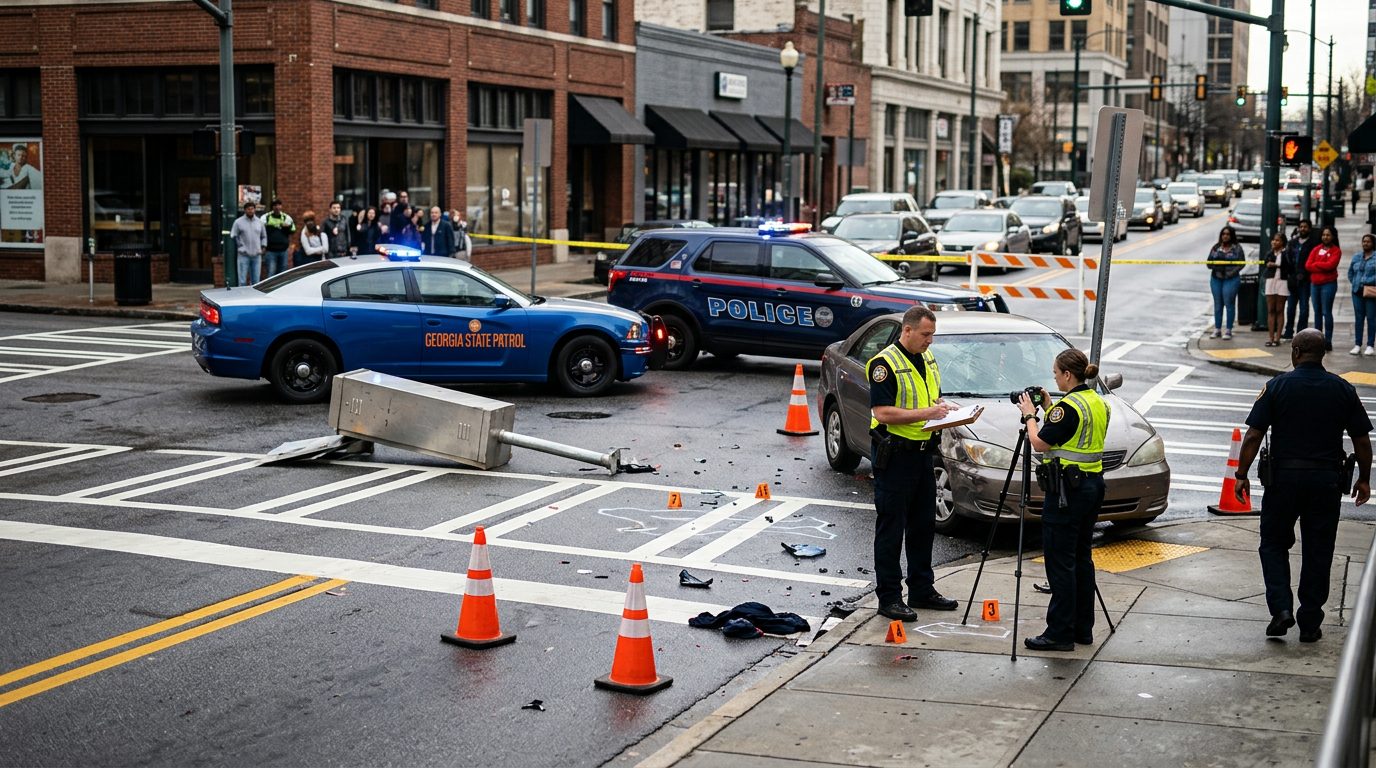
Call the police and file a report. Ask for the report number and get a copy. Police will document the scene, your injuries, witness statements, and any vehicle description. This report becomes the foundation of your claim.
Gather witness information. If anyone saw the accident, get their name, phone number, and a brief account of what they saw. Witness testimony is powerful evidence that the accident happened and wasn’t your fault.
Document the scene yourself. Take photos of your injuries, the road conditions, traffic signals, and nearby buildings (which may have security cameras). Note the vehicle’s color, size, body type, and any visible damage. Record the time of day and direction the vehicle traveled. All of this helps investigators and strengthens your claim.
How Hit-and-Run Claims Work Without Driver Information
When the driver is unknown, your own auto insurance’s uninsured motorist (UM) coverage often covers you. UM coverage protects you against drivers who are uninsured, underinsured, or—in hit-and-run cases—unidentified. Importantly, UM coverage applies even if you were a pedestrian and not in a vehicle at the time.
Your insurance company will investigate using the police report, witness statements, surveillance footage, and medical records. They’ll verify that the accident occurred and that you weren’t at fault. If they’re satisfied, they’ll offer a settlement within your policy limits. Coverage limits and deductibles vary by policy, so review yours carefully or ask your insurance agent to explain what applies.
The police report is critical here. Insurance companies are more likely to approve a claim when a formal police report documents the hit-and-run. Witness statements also carry weight—they corroborate your account when the driver isn’t there to give theirs.
Police Investigation and Finding the Driver
Police will canvass the area for surveillance footage from nearby businesses, traffic cameras, and residential security systems. A clear video of the vehicle and its license plate can lead directly to the driver. Witness descriptions—vehicle color, size, damage, direction of travel—also help narrow the search.
If the driver is found, police may pursue criminal charges, and you can file a civil lawsuit against them. If the driver is never identified, your UM coverage becomes your primary recovery path. Either way, your civil claim proceeds independently of any criminal case.
Not sure what your next step is?
Talk it through with our team — the first consultation is free, confidential, and carries no obligation.
Damages You May Recover in a Hit-and-Run Pedestrian Claim
You can recover compensation for:
- Medical expenses: emergency care, surgery, hospitalization, ongoing treatment, physical therapy, and any future medical needs related to your injuries.
- Lost wages: income you missed while recovering, and loss of earning capacity if your injuries prevent you from working at full capacity in the future.
- Pain and suffering: compensation for physical pain, emotional distress, and reduced quality of life.
- Permanent scarring, disfigurement, or disability: additional damages if injuries leave lasting marks or functional limitations.
Document everything: medical bills, pay stubs, receipts, photographs of injuries, and records of how the accident has affected your daily life. This documentation directly supports the value of your claim.
Challenges Specific to Hit-and-Run Pedestrian Cases
Proving the accident happened and wasn’t your fault is harder without the driver’s statement. You’ll rely on witness testimony, which may be incomplete or inconsistent. Determining the vehicle’s exact make and model from limited information can be difficult. Navigating insurance policy terms and coverage limits adds another layer of complexity.
Time also matters. Georgia’s statute of limitations (the deadline for filing a personal injury claim) creates urgency. The sooner you act, the fresher witness memories are and the more likely surveillance footage is still available.
When to Contact a Pedestrian Accident Attorney
Hit-and-run claims involve multiple moving parts: police investigation, insurance negotiation, evidence gathering, and understanding your coverage. An attorney can handle these complexities on your behalf. They’ll investigate the accident, collect evidence, communicate with your insurance company, and ensure you understand your UM coverage and policy limits. If the driver is found, an attorney can pursue a lawsuit. If settlement negotiations stall, litigation may be necessary.
Many attorneys offer free consultations to discuss your situation with no obligation. This is a good opportunity to ask questions and understand your options.

Frequently Asked Questions
Can I recover damages if the hit-and-run driver is never found?
Yes—your uninsured motorist coverage typically covers you, as long as you have it and meet your policy’s conditions (usually including a police report documenting the hit-and-run).
How long do I have to file a claim after a hit-and-run pedestrian accident in Georgia?
Georgia’s statute of limitations for personal injury claims is generally two years from the date of the accident, so act promptly to preserve evidence and witness testimony.
What if I don’t have uninsured motorist coverage?
Without UM coverage, recovery becomes much harder. Discuss your options with an attorney, as other avenues may exist depending on your situation.
Will the driver face criminal charges if found?
Yes—leaving the scene of an accident causing injury is a crime in Georgia. Criminal prosecution and your civil claim proceed separately.
Should I give a recorded statement to my insurance company?
Consult an attorney before doing so. An attorney can advise you on what to say and protect your interests during the claims process.
If you were struck by a vehicle whose driver left the scene, you’re facing a stressful situation with real financial and health consequences. Many people in your position reach out to discuss what comes next and whether they have a claim. Contact us for a free case review to talk through what happened and explore your options.
Report It Immediately
If you're injured in a hit-and-run, call 911 and file a police report as soon as possible. Document everything you remember about the vehicle and driver. This report is critical to your claim—especially if you need to access uninsured motorist coverage.
What Happens After a Hit-and-Run
Report to Police
File a formal police report documenting the accident, your injuries, and any details about the vehicle or driver. This report creates an official record and is often required by insurance.
Notify Your Insurance
Contact your own auto insurance company promptly. If you have uninsured motorist coverage, it may cover your medical bills, lost wages, and pain and suffering—even if the driver is never found.
Seek Medical Attention
Get examined by a doctor, even if you feel okay. Some injuries appear hours or days later. Medical records also establish the link between the accident and your harm.
Gather Evidence
Collect witness contact information, photos of the scene and your injuries, and any surveillance footage from nearby businesses or traffic cameras.
How Slam Dunk Attorney Can Help
Uninsured Motorist Claims
We handle claims against your own insurance when the hit-and-run driver cannot be identified. We work to maximize your recovery within your policy limits.
Investigation & Evidence
We pursue all available leads—police records, surveillance footage, witness statements—to identify the driver or strengthen your claim.
Insurance Negotiations
We communicate with your insurer on your behalf, ensuring your claim is handled fairly and you understand your rights and options.
Compassionate Guidance
Hit-and-run accidents are frustrating and scary. We listen to your story and guide you through the process with clarity and care.