
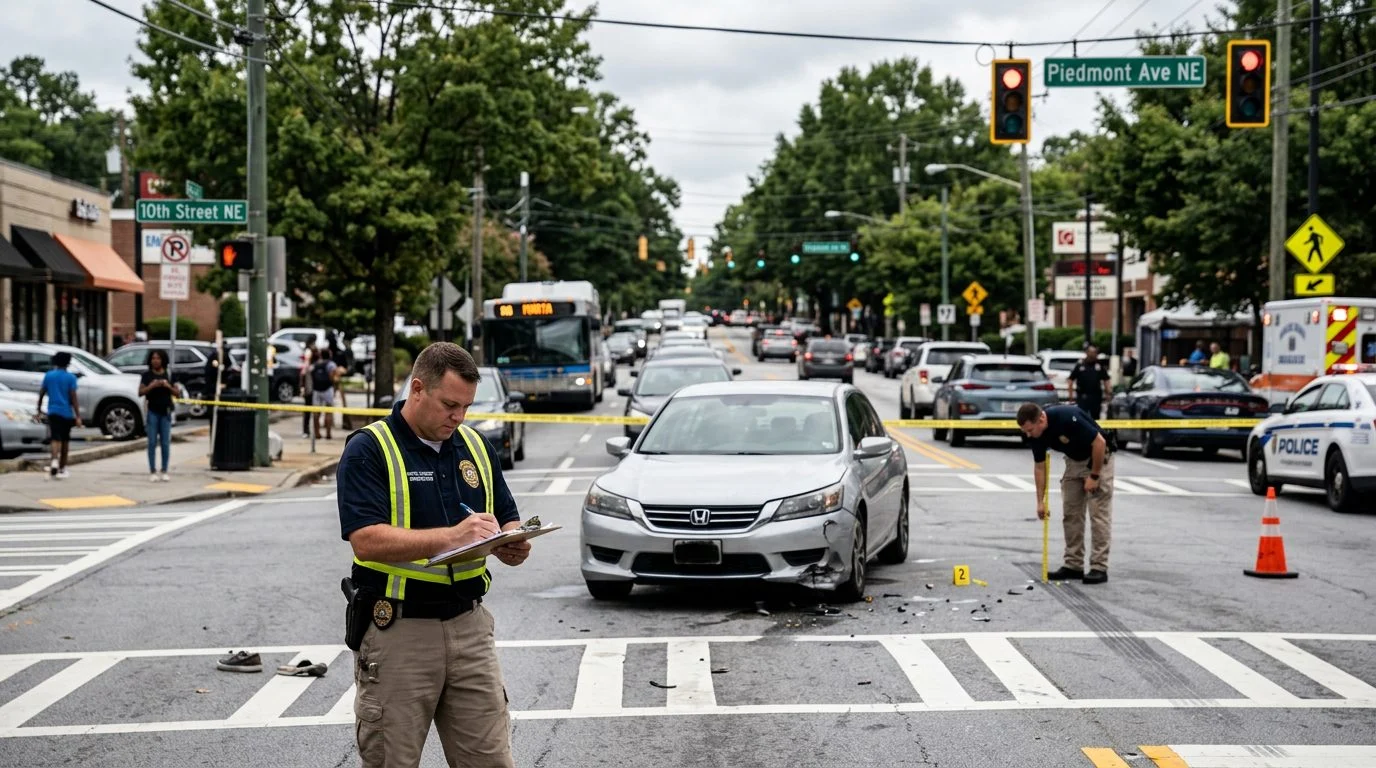
Pedestrian Accidents | Duluth, Georgia and Metro Atlanta
Hurt on Foot? Talk With Our Team About Your Pedestrian Injury Claim
A crash on foot can leave you facing medical bills, lost work and hard questions about what comes next. Here is a plain-language guide to help you think through your options.
By Peter F. Jaraysi · Published November 12, 2026
Georgia Pedestrian Injury Attorney: How to Judge the Fit
If you were hurt as a pedestrian, our team can review the facts of your crash during a free, confidential first consultation with no obligation to continue. It uses Georgia’s rules for pedestrians, filing deadlines, fault, costs, and communication.
If a crash left you or someone you love hurt and facing bills and insurance calls, our team is glad to talk through the facts with you. Talk it through with our team — the first consultation is free, confidential, and carries no obligation.

Why a ranking cannot answer who fits your pedestrian case
A ranking cannot answer this question for you, because the right fit depends on your facts. A lawyer who handles a crosswalk collision in Atlanta may not be the right match for a parking lot crash in Alpharetta with a head injury. Fit comes from how the crash happened, where it happened, and what injuries you have.
You may be reading this while you sort through medical visits, bills, and calls from an insurance company. That is a lot to carry. Some readers are a spouse, an adult child, or a friend trying to help someone who can’t manage these tasks right now. You don’t need to pick a lawyer today to take a useful next step.
If you have questions about your situation, you can start by calling our team for a free, confidential first consultation, with no obligation to continue. Notice how clearly they answer, how well they explain Georgia law, and how they handle timing. Written answers are easier to review later than memory of a phone call.
This page gives you that checklist. It does not name one lawyer as the answer. Your facts, your injuries, and your goals shape what fits.
What makes a pedestrian injury case different
Pedestrian cases differ because a person on foot has almost no protection from a vehicle. Crashes happen in marked crosswalks, at intersections, in parking lots, and along roadways. Who had the right of way often depends on exactly where the person was.
Georgia law sets out several of these rules. A driver must stop and stay stopped to let a pedestrian cross inside a crosswalk. This applies when the pedestrian is on the driver’s half of the road or approaching within one lane of it. See O.C.G.A. § 40-6-91. That same section bars a pedestrian from suddenly leaving a curb into the path of a vehicle that is too close to stop.
A pedestrian crossing a roadway at any point other than within a marked crosswalk or within an unmarked crosswalk at an intersection must yield to vehicles. The exception is when the pedestrian has already entered the road under safe conditions. Between signal-controlled intersections, pedestrians must cross only in a marked crosswalk. See O.C.G.A. § 40-6-92. Every driver must also use due care to avoid hitting a pedestrian. See O.C.G.A. § 40-6-93.
Some crashes lead to a criminal case, such as when the driver leaves the scene. That can change the timeline. Under O.C.G.A. § 9-3-99, the filing clock for a related tort claim is tolled from the date of the alleged crime or the act giving rise to the claim until the prosecution has become final or otherwise terminated. The pause cannot exceed six years, except as otherwise provided in Code Section 9-3-33.1.
Serious injuries such as fractures, head injuries, and spinal injuries often need long-term medical planning. That planning can affect when a claim is ready to move forward.
Questions to ask yourself about an attorney’s experience with pedestrian cases
Start by asking whether pedestrian collisions are a regular part of the attorney’s work. Ask whether they mostly handle other injury types. Look for a plain, direct answer rather than a sales pitch.
Next, ask how the firm investigates. A clear answer covers the scene, traffic and surveillance footage, witness statements, and the police report. Ask who will request footage, how fast they will move, and how they protect evidence that could be lost.
Ask about insurance, too. Minimum limits may not cover serious injuries. Ask how uninsured and underinsured motorist coverage could apply to your situation.
Finally, ask how the attorney explains partial blame. Georgia reduces damages by the injured person’s share of fault. The details are covered below.
Does the attorney handle many pedestrian cases?
Ask how often pedestrian collisions make up their caseload. Look for a direct answer about that type of case.
Can I still have a claim if I was partly at fault?
Georgia reduces damages by your share of fault. A plaintiff who is 50 percent or more responsible cannot recover damages under O.C.G.A. § 51-12-33 (Quynn v. Hulsey (2020)).
Are these questions a way to judge a lawyer?
They help you understand what to expect when you talk with our team about your situation. The answers depend on the facts of each case.
How communication and who you will work with affect your case
Communication shapes how a case feels day to day, so raise it early. Ask how often you will get updates and by what method. Ask who answers the phone when the lawyer is in court or at a deposition. A clear answer tells you whether you’ll reach a real person.
Our firm’s lawyers are Peter F. Jaraysi and Brian D. Wright. Our team includes assistants and office staff. Clients often deal with our team day to day, for medical records, bills, and insurance letters. Ask any firm who handles which tasks, including ours.
A single point of contact helps. Medical offices, insurers, and billing departments send paperwork quickly. One person who tracks each request keeps the file organized. That lowers the chance a letter goes unanswered.
Written next steps matter most when someone decides for another person. If you’re a family member, ask for a written summary after each call. That helps the injured person. It also keeps you informed when you can’t attend every meeting.
How attorney fees and case costs work in Georgia
Many injury firms do not bill by the hour. Instead, the written fee agreement sets out what you pay and when. Ask how any percentage is calculated, and whether it applies before or after expenses. Don’t rely on a verbal summary.
Even under a contingency arrangement, you may still owe court costs and case expenses. These can include filing fees, medical records charges, and fees for outside reports and witnesses. Ask in writing which costs you would owe if there is no recovery.
Ask how costs are paid during the case. Ask whether they are repaid from any recovery, and in what order. Ask what happens to unpaid costs if you end the relationship. Read the agreement before you sign, and keep a copy for your records.
Not sure what your next step is?
Talk it through with our team — the first consultation is free, confidential, and carries no obligation.
Deadlines and fault rules that affect whether you can file
Georgia generally gives two years to file an injury lawsuit (O.C.G.A. § 9-3-33; Kenneth B. Cameron v. Jmp Pizza, Inc (2026)). Under O.C.G.A. § 9-3-33, actions for injuries to the person must be brought within two years after the right of action accrues. Under the same section, actions involving loss of consortium must be brought within four years.
Minors may get more time. Under O.C.G.A. § 9-3-90, a person under 18 when the claim arises has the same time after turning 18 that other persons have. Exceptions set by another section can apply.
Fault rules matter too. Under O.C.G.A. § 51-12-33, if you share some blame, the judge reduces your damages in proportion to your fault. A plaintiff who is 50 percent or more responsible for the injury cannot receive any damages (O.C.G.A. § 51-12-33; Quynn v. Hulsey (2020)).
Waiting can make evidence harder to gather. Video can be overwritten, and witnesses move or forget details. The timing of your first conversation with a lawyer matters. An early talk gives you more time to decide.
What to share with your lawyer and what to keep off social media
Share the full story with any attorney you consider. Include details you think don’t matter. Tell them about prior injuries, past treatment, and ongoing symptoms, even minor ones. Insurers review medical history, and a surprise can hurt a claim.
Honest, complete information helps any lawyer evaluate the case accurately. It also prevents avoidable problems later.
Keep your own records. Save medical bills, discharge papers, photos of the scene and your injuries, and names of witnesses. Write down the police report number. If the driver gave a statement, note what was said and when.
Be careful on social media. Posts about the crash, your activities, or your injuries can be read out of context by the other side. Don’t delete existing posts without first talking to your lawyer. Keep a simple daily log of pain, missed work, and appointments. It gives your lawyer facts instead of guesses.

Talking through your pedestrian injury with the Slam Dunk Attorney team
If you are still deciding, you don’t have to choose today. Many readers are in the middle of treatment. A family member may be in a hospital bed. Someone may be asking who to call next. Those are heavy moments.
Slam Dunk Attorney is based in Duluth, Georgia. The firm represents people hurt in pedestrian accidents and other injury cases across metro Atlanta and Georgia. Our first consultation is free, confidential, and carries no obligation to continue.
If you want to talk through the facts of your crash, contact our team when you’re ready.
Responsible lawyer: Peter F. Jaraysi, Slam Dunk Attorney, Duluth, Georgia. Contact information is on the contact page. This page is general information, not legal advice.
How Our Firm Works With You
Confidential conversations
Share what happened in a private setting. Your first consultation is confidential and comes with no obligation to continue.
Plain-language explanations
We explain the process, the paperwork and each decision in terms you can follow, so you always know where your case stands.
Support from our team
Our lawyers and staff handle the details so you can focus on your recovery and your family.
Rooted in Georgia
Based in Duluth, our firm represents injured people across metro Atlanta and throughout Georgia, including Lawrenceville, Johns Creek, Alpharetta, Marietta, Norcross, Kennesaw and Dunwoody.
Get Medical Care First
Your health comes first. Seeing a doctor promptly after a pedestrian collision protects your well-being and creates a record of your injuries. If you are in severe pain or have trouble breathing, call 911.
Common Pedestrian Injury Situations
Crosswalk and intersection collisions
Drivers who fail to yield, run signals or turn without looking can strike people walking in marked crosswalks and at intersections.
Hit-and-run crashes
When a driver leaves the scene, injured pedestrians may still have options. Our team can review the details of your situation with you.
Rideshare and commercial vehicles
Collisions involving Uber or Lyft drivers, delivery vehicles and trucks can involve more than one party and more than one insurer.
Parking lots and unsafe property
Poor lighting, missing signs, broken walkways and other hazards on someone else's property can lead to serious falls and collisions.