
Pedestrian Accidents | Duluth, Georgia
Hit by a Car as a Pedestrian? Take the Next Step With Clear Guidance
A pedestrian crash can leave you injured, shaken and facing questions you did not expect. Here is a plain-language look at what to do, how fault is discussed, and how our team can help.
By Peter F. Jaraysi · Published November 8, 2026
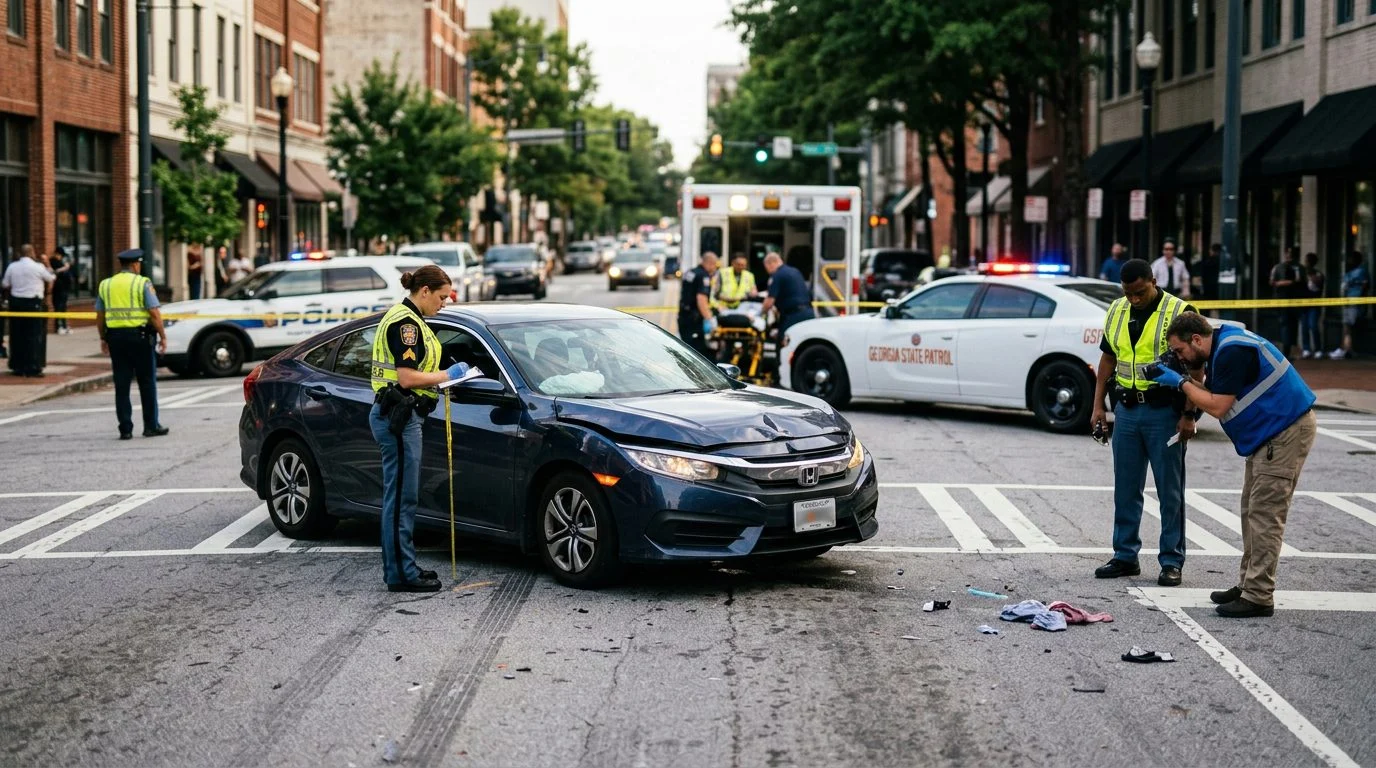
If a car hit you or someone you care about, you may be trying to make sense of it all. The crash is most often called a pedestrian accident, or a pedestrian-vehicle collision. Insurers and courts may also call it a pedestrian-struck claim. The name is a label. It does not decide who was at fault.
What Is It Called When a Car Hits a Pedestrian?
A car that strikes a person on foot is most often called a pedestrian accident. On police reports and insurance forms, the same crash may appear as “car vs. pedestrian” or “pedestrian struck.”
The name matters because it states the basic facts first. A person without a vehicle was hurt by a moving vehicle. Those facts shape every later question about injuries, fault and insurance.
The label does not change the rules. Each pedestrian crash is different, and the details of what happened matter. Check any report carefully. Make sure it lists the time, the location and where each person was when the crash happened.
Who Counts as a Pedestrian Under Georgia Traffic Law?
A pedestrian is a person traveling on foot. That includes someone walking, jogging, or using a wheelchair or other mobility device.
Georgia’s rules focus on where pedestrians cross. A driver must stop and stay stopped for a pedestrian in a crosswalk when the pedestrian is on the driver’s half of the road or close to it. A pedestrian who crosses somewhere else must yield the right of way to vehicles, unless they have already entered the road safely.
Right-of-way rules shape fault. They don’t erase a driver’s duty to watch for people. Georgia law says every driver must exercise due care to avoid colliding with any pedestrian on the roadway.
Who Is at Fault When a Car Hits a Pedestrian?
Fault depends on the facts of each crash. Both drivers and pedestrians have a duty to act with care.
Investigators and insurers often look at speed, distraction, traffic signals, crosswalk timing, and visibility at night. They also ask whether the pedestrian stepped into the road suddenly.
Georgia uses a shared-fault rule. Lawyers call it modified comparative fault. Under Georgia’s apportionment statute, a judge reduces damages in proportion to the injured person’s share of fault. If that share is 50 percent or more, the person may not receive any damages.
The same crash can look different to police, insurers and courts. That is why a single report rarely settles the question.
Common Injuries From Pedestrian Accidents
Pedestrians often report head injuries, broken bones, back and spine injuries, internal injuries and soft tissue damage. A concussion or traumatic brain injury can be easy to miss at the scene.
Some symptoms appear hours or days later. A person may feel they can walk away and still need care. Getting checked soon is the safer choice.
Some crashes cause catastrophic injuries, such as spinal cord injury, amputation or severe burns. These injuries bring long recovery and different legal questions. Each case depends on its own medical picture.
Medical records are the clearest record of what happened to the body. They also show when care began and what doctors found.
What Should Happen Right After a Pedestrian Is Hit?
The driver must stop at the scene. Georgia law requires the driver to stop, give their name, address and registration number, and render reasonable assistance, including transport to care when it is needed or requested. The driver must also remain at the scene until these steps are done.
Georgia also requires the driver to give notice to police or the sheriff when the crash causes injury, death or property damage of $500.00 or more. Knowingly leaving the scene carries serious penalties, including a felony when the crash causes death or serious injury.
The injured person should get medical attention, even if injuries seem minor. Ask for the police report number. The Georgia State Patrol investigates crashes with major injuries, and victims or family members can ask about the status of an investigation through the Georgia Department of Public Safety.
Anyone at the scene can help. Note the vehicle’s make, model and plate. Get witness names and phone numbers. Take photos of the scene and visible injuries. Be careful about describing fault at the scene.
How Insurance Works When a Car Hits a Pedestrian
In many Georgia crashes, the at-fault driver’s liability insurance is the main source for paying injury claims. Questions about auto insurance can be confusing, and the state’s insurance resources explain at-fault liability coverage and minimum limits.
A pedestrian’s own policies may also matter. Health insurance, medical payments coverage or other policies may apply. The terms of each policy control what it pays.
Insurers often ask for a recorded statement soon after a crash. A person can ask what is being asked and what the statement will be used for. It is fair to take time to understand the questions before answering.
Early payment offers also deserve a careful look. Read the terms and check whether the offer covers all the injuries that have been found or may still appear.
Not sure what your next step is?
Talk it through with our team — the first consultation is free, confidential, and carries no obligation.
How Long Does a Pedestrian Accident Claim Take?
The time to resolve a claim varies widely. It depends on injuries, the amount of treatment, disputes over fault and how insurers respond.
Georgia’s injury filing deadline is generally two years from the date of injury. Claims against a city can have a shorter notice step. Georgia law requires a written claim to a city’s governing authority within six months of the event.
Waiting can make evidence harder to gather. Video can be overwritten. Witness memories fade. Vehicle data may change or disappear. Acting early helps keep those records available.
Questions Pedestrians and Drivers Ask After a Crash
What do you do if you hit a pedestrian?
Stop at the scene, stay there, and give your name, address and registration number. Make sure the injured person gets help.
Is a pedestrian always at fault?
No. Fault depends on the facts, and Georgia’s shared-fault rule can reduce a pedestrian’s recovery.
Can a pedestrian have a claim if they were not in a crosswalk?
Location is one factor in fault. It is not an automatic bar to a claim.
Who pays medical bills after a pedestrian is hit?
Liability coverage, the pedestrian’s own policies and the claim process can each play a part. The policy terms and facts decide what applies.

Talk With Our Team About Your Pedestrian Accident
If a car struck someone you love, or you were behind the wheel, you may be dealing with fear, bills and a lot of questions. You don’t have to sort them out alone.
Slam Dunk Attorney is a personal injury firm in Duluth, Georgia, serving metro Atlanta and surrounding areas. We offer a free, confidential first consultation with no obligation to continue, and a free case review by phone. Contact our team to start the conversation.
Attorney advertising. This page is general information, not legal advice, and reading it does not create an attorney-client relationship. Responsible lawyer: Peter F. Jaraysi, Slam Dunk Attorney, Duluth, Georgia. Contact details are on our contact page.
What to Do After a Pedestrian Crash
Get medical care right away
Some injuries, including head and spinal injuries, may not show symptoms until later. A medical evaluation creates a record of your condition from the start.
Report the crash and stay safe
Call 911 if you are able, move to a safe spot if you can, and make sure police complete a report. Stay at the scene if you are physically able to do so.
Document what happened
Write down the date, time and location. Photograph the vehicle, the roadway, any signs or signals, and your injuries. Collect names and contact details for witnesses.
Be careful with insurance calls
An insurance adjuster may ask for a recorded statement soon after the crash. Speaking with a lawyer first can help you understand what to say and what to hold back.
Important: Do Not Rush Into Statements
Early statements to an insurer can be used later to question your account of the crash or your injuries. Before you give a recorded statement or sign any release, consider talking with a lawyer about your situation.
How Our Team Can Help
A confidential first conversation
Tell us what happened in a private, no-pressure conversation. Your first consultation is free and comes with no obligation to continue.
Organized records
We help gather police reports, medical records and other documents so your situation is clearly presented from the start.
Serving metro Atlanta and Georgia
From our Duluth office, we represent injured pedestrians across metro Atlanta and throughout Georgia, including Lawrenceville, Alpharetta, Marietta, Kennesaw and Dunwoody.