
Duluth, Georgia | Pedestrian Accidents Across Metro Atlanta
Pedestrian vs. Vehicle Accidents: Why the Differences Matter
A person on foot has no metal frame around them. Learn how pedestrian accidents differ from other vehicle crashes in Georgia, and how our team can help you understand your options.
By Peter F. Jaraysi · Published November 6, 2026
What Is the Difference Between Pedestrian and Vehicle Accidents?
A pedestrian accident happens when a vehicle strikes a person on foot. A vehicle accident involves two or more vehicles, or a vehicle and a fixed object. That core difference changes how injuries, damage, and fault get examined.
“Car accident” and “car crash” mean the same thing in everyday speech. Most insurers and courts use the terms the same way. A “pedestrian crash” is the same event as a pedestrian accident. A vehicle hits someone walking, running, or using a wheelchair or other mobility device.
The biggest difference is who gets hit. Drivers and passengers sit inside a metal frame with seat belts and airbags. A person on foot has none of that protection. Once you see that, the rest of the differences make sense.
If a crash left you or someone you love hurt and unsure what comes next, you don't have to sort out the insurance calls alone. Reach out for a free case review. Talk it through with our team — the first consultation is free, confidential, and carries no obligation.

How Do Injuries Differ in Pedestrian and Vehicle Accidents?
Pedestrians usually absorb the full force of impact on their own bodies. Common injuries include head and brain injuries, spinal cord and back injuries, and bone fractures. Internal organ damage, soft tissue injuries, facial and dental injuries, and emotional harm also occur.
The Governors Highway Safety Association states that pedestrian crashes can cause serious injuries, including head injuries. It also notes that people outside vehicles are especially vulnerable in collisions (Governors Highway Safety Association).
Vehicle occupants more often hurt their necks and backs. They also get hurt on the steering wheel, dashboard, or airbags. A pedestrian can be thrown onto a hood, windshield, or pavement. That can create a second impact and add to the harm.
Get checked by a medical provider after any collision, even when pain seems mild. Some head and internal injuries may not show symptoms right away. Delay can also make it harder to connect later symptoms to the crash.
How Do Physical Damage and Evidence Differ?
In a vehicle-to-vehicle crash, the main evidence is usually vehicle damage, where each car came to rest, and airbag or event data. Each driver can describe what happened, and those accounts can be compared.
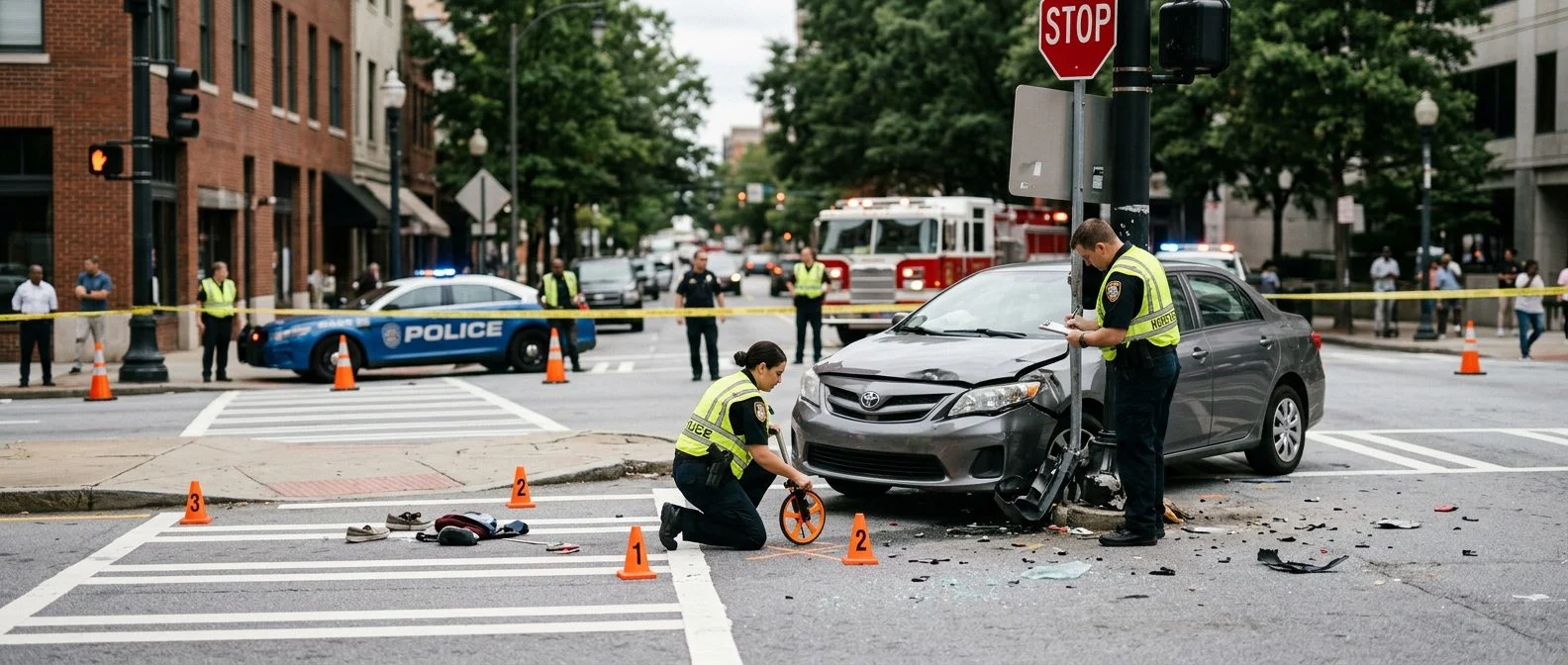
In a pedestrian crash, the physical clues look different. Investigators often study the vehicle’s front end, the spot where the person came to rest, and debris such as shoe or clothing fragments. They also look at the path the vehicle traveled before impact.
Often there is no second driver to compare with. That makes witness statements, traffic camera footage, and nearby business video more important. Footage can be recorded over, so early requests can matter.
The injured person may also have trouble remembering the crash. Head injuries and shock can blur memory. Scene records, police reports, and medical notes often carry much of the story.
How Are Fault and Duty of Care Examined?
Fault in a pedestrian accident depends on the facts of each crash. Georgia law sets duties for both drivers and pedestrians.
Drivers must exercise due care to avoid colliding with any pedestrian on the roadway. They must also take extra precautions when they see a child or a person who seems confused, incapacitated, or intoxicated (O.C.G.A. § 40-6-93).
Drivers must stop and remain stopped for a pedestrian in a crosswalk when that person is on their half of the road or approaching and within one lane of it (O.C.G.A. § 40-6-91). Pedestrians crossing elsewhere must yield to vehicles on the road unless they have already, and under safe conditions, entered the roadway (O.C.G.A. § 40-6-92). The Georgia Department of Transportation also explains these crosswalk rules (Georgia Department of Transportation).
Georgia also reduces damages by the injured person’s share of fault. If that share reaches 50 percent or more, the person recovers no damages (O.C.G.A. § 51-12-33). Common fault questions include crosswalk use, signal timing, distraction, lighting, speed, and whether the driver could have avoided impact.
How Can Insurance and Damages Differ?
Insurance questions in a pedestrian case can differ from a car-to-car claim. A walker is not inside a vehicle, so the answer may depend on which policies apply. Possibilities include the driver’s liability coverage, the pedestrian’s own auto policy, and uninsured motorist coverage.
Georgia law requires auto liability policies to include uninsured motorist terms for certain injuries (O.C.G.A. § 33-7-11). Whether those terms help depends on the policies involved.
General damages are presumed to flow from a wrong and can be recovered without proof of an amount. Special damages actually flow from the wrong and must be proved (O.C.G.A. § 51-12-2). Necessary expenses from an injury, such as medical bills, are a legitimate part of the damages estimate (O.C.G.A. § 51-12-7).
Catastrophic injuries raise questions about future care and lost earning ability. Medical records and the opinions of treating providers help document those needs. An insurance adjuster may call early. A recorded statement given before you understand your injuries can be used later, so get advice before you talk at length.
What Deadlines Apply to Pedestrian Accidents in Georgia?
Georgia generally gives two years to bring an injury lawsuit. Under O.C.G.A. § 9-3-33, actions for injuries to the person must generally be brought within two years after the right of action accrues, except for injuries to reputation (one year) and actions for injuries to the person involving loss of consortium, which must be brought within four years after the right of action accrues.
Other deadlines can apply in specific cases. A claim against a city must first be presented in writing to the city’s governing authority within six months of the event, stating the time, place, and extent of the injury, the negligence that caused it, and the specific amount of money being sought (O.C.G.A. § 36-33-5). That is one reason the calendar matters early.
Pedestrian crashes happen on Atlanta streets, busy corridors, and suburban roads in places like Lawrenceville and Johns Creek. Road layout, signals, and traffic patterns can all become part of the investigation. Speed matters too. The Georgia Department of Driver Services notes that the risk of serious or fatal pedestrian injury rises at higher vehicle speeds (Georgia Department of Driver Services).
Not sure what your next step is?
Talk it through with our team — the first consultation is free, confidential, and carries no obligation.

If You’re Dealing With This Now, Talk With Our Team
You may be recovering from an injury right now. You may be caring for someone who was struck, or you may be stuck with insurance calls and medical bills. Those are heavy things to carry at once.
Slam Dunk Attorney is based in Duluth, Georgia. Our team handles pedestrian, car, and other vehicle accident questions for people across metro Atlanta and Georgia. Reach out through our contact page for a free case review.
The first consultation is free and confidential. It comes without obligation to continue.
Attorney advertising. Responsible lawyer: Peter F. Jaraysi, Slam Dunk Attorney, Duluth, Georgia. Contact: slamdunkattorney.com/contact-us. This general information is not a promise or prediction of any result in your case.
How Pedestrian Cases Differ from Other Vehicle Accidents
Injuries Are Often Severe
A pedestrian struck by a vehicle has little protection. Injuries such as head trauma, broken bones and spinal damage are common and can be long-lasting.
Evidence Is Often Scattered
Crash scenes, witness accounts, traffic camera footage and vehicle data can all be important. Gathering them early helps create a clearer record.
Insurance Questions Can Be Complex
Pedestrian claims may involve more than one insurance policy, including the driver's coverage and sometimes a household or other policy. Our team can help sort through the questions.
Circumstances Vary by Location
Crosswalks, parking lots, intersections, and roads without sidewalks each raise different questions about how the crash happened.
Important: Get Medical Care First
Some pedestrian injuries do not show symptoms right away. Seek medical attention promptly after any collision, even if you feel only shaken or bruised. Keep copies of your medical records and bills.
Steps to Take After a Pedestrian Accident
1. Prioritize Your Health
Get checked by a medical professional as soon as you can, and follow through with recommended care.
2. Document the Scene
If you are able, photograph the location, vehicles, road conditions, and visible injuries. Write down what you remember while it is fresh.
3. Identify Witnesses
Names and phone numbers of people who saw the crash can be valuable later on.
4. Talk with Our Lawyers
Our team can review what happened, explain the process in plain language, and answer your questions at no cost to you.