
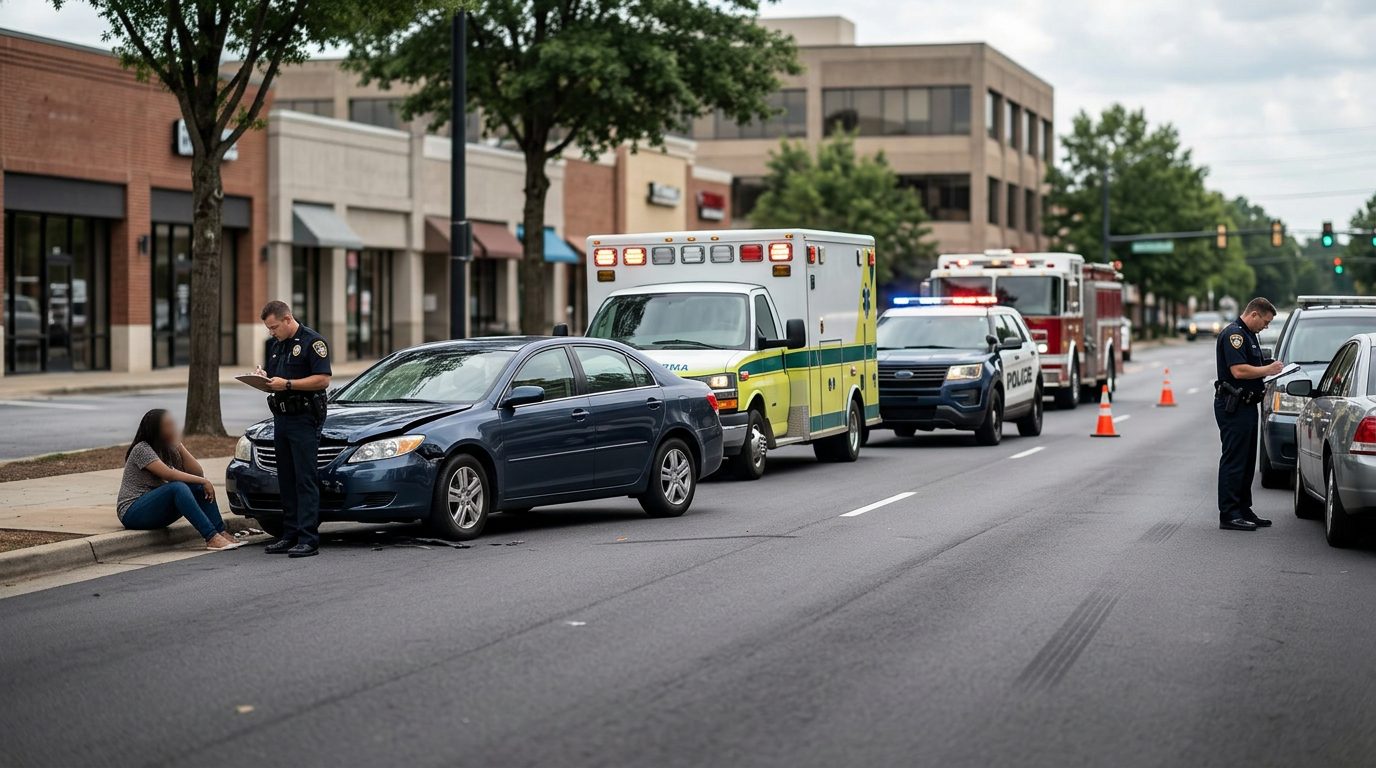
Car Accidents in Georgia
Hit by a Car? Know Your Rights and Next Steps
You may be entitled to recover damages for your injuries and losses. Slam Dunk Attorney is here to help you understand your options.
By Peter F. Jaraysi · Published September 23, 2026
Pedestrian Accident Attorney Georgia: Hit by a Car? Immediate Steps & Your Legal Rights
If you’ve been hit by a car in Georgia, your first priority is safety and medical care. After that, the steps you take—documentation, reporting, and legal guidance—directly affect your ability to recover fair compensation.
This guide walks you through what to do right now, why medical care matters, how insurance claims work in Georgia, and when a pedestrian accident attorney can protect your rights and recovery.
If you've been struck by a vehicle and aren't sure what happens next—or whether you have a claim—reach out to us for a free case review; people in your situation contact us regularly. Talk it through with our team — the first consultation is free, confidential, and carries no obligation.

If You’ve Been Hit by a Car: Immediate Actions
The first hours after being hit by a car are critical for your safety, health, and legal claim.
Move to safety if you can. If you’re in the roadway and able to move, get to the sidewalk or a safe location away from traffic. If you’re seriously injured or unable to move, stay put and call 911 immediately.
Call 911 if you’re injured or the driver fled. Report the accident to police. A police report creates an official record and is essential evidence for your claim. Ask the responding officer for the report number so you can request a copy later.
Do not leave the scene. Georgia law requires drivers and pedestrians involved in an accident to remain at the scene. Leaving constitutes a hit-and-run violation, which can result in criminal charges. Stay until police arrive and take your statement.
Get medical attention immediately, even if injuries seem minor. Adrenaline masks pain. Internal bleeding, spinal damage, and concussions may not be obvious right away. Go to the emergency room or urgent care, or call an ambulance if you can’t move. Medical records created immediately after the accident establish the injury timeline and are critical evidence for your claim.
Document the scene with photos or video. Capture the vehicle’s damage, road conditions, traffic signals, street signs, weather, lighting, and your visible injuries. Take photos of the vehicle’s license plate and the driver’s vehicle. These details support your account of what happened.
Collect driver information. Get the driver’s name, phone number, address, driver’s license number, license plate, vehicle make and model, and insurance company name and policy number. Write it down or photograph their license and insurance card.
Get witness contact information. Ask anyone who saw the accident for their name, phone number, and a brief statement of what they saw. Witness accounts are powerful evidence.
Do not admit fault or sign anything except for police or medical personnel. Don’t apologize, speculate about the accident, or agree with the driver’s version of events. Stick to the facts: where you were, what you were doing, and what you saw.
Why Medical Care Matters—Even When You Feel ‘Okay’
Many pedestrians hit by a car delay or skip medical care because they feel relatively unharmed. This is a serious mistake.
Adrenaline and shock mask pain. In the immediate aftermath of a collision, your body releases adrenaline, which suppresses pain signals. Injuries that feel minor at the scene—or don’t feel present at all—can worsen over hours or days. Internal bleeding, spinal misalignment, and traumatic brain injury (concussion) may have no obvious symptoms at first but can cause lasting harm if untreated.
Medical records are the evidence trail for your claim. Every test, diagnosis, and treatment note creates a documented connection between the accident and your injuries. Insurance companies and courts rely on medical records to determine what injuries you sustained and what treatment you needed. Without contemporaneous medical documentation, it’s harder to prove your injuries are related to the accident.
Delaying care weakens your legal position. If you wait days or weeks to seek treatment, the insurance company will argue that your injuries weren’t serious or weren’t caused by the accident. A pedestrian accident attorney can’t overcome that gap in the record.
Keep all medical records, bills, prescriptions, and receipts. These are the foundation of your claim. They show the scope of your injuries, the cost of treatment, and the duration of your recovery. Follow your doctor’s treatment plan and attend all appointments; missing appointments also gives insurers ammunition to minimize your claim.
Under Georgia law, you’re entitled to recover damages for medical expenses, lost wages, pain and suffering, and permanent disability. But you must have the medical evidence to back up your claim.
What Happens Next: Insurance & Legal Claims
After you’ve received medical care and filed a police report, the insurance claim process begins.
The at-fault driver’s insurance company will contact you. They may call within days asking for a recorded statement. Do not give one without speaking to an attorney first. Insurance adjusters are trained to get you to say things that minimize your injuries or admit partial fault. A pedestrian accident attorney will handle all communication with the insurer on your behalf.
Georgia is a fault-based state. The driver who caused the accident is legally liable for your damages. You have the right to file a claim against the driver’s liability insurance. The insurer must cover your reasonable medical expenses, lost wages, pain and suffering, and other damages caused by the driver’s negligence.
If the driver is uninsured or underinsured, your own coverage may apply. Your auto insurance policy likely includes uninsured motorist (UM) or underinsured motorist (UIM) coverage. If the at-fault driver has no insurance or insufficient coverage, you can file a claim under your own policy. An attorney will ensure you receive the full benefits you’re entitled to.
Insurance companies often offer quick, low settlements. The insurer’s goal is to close your claim cheaply and quickly. An early offer may seem attractive when you’re in pain and facing medical bills. But accepting too soon can leave you uncompensated for future medical needs, ongoing pain, or permanent disability. An attorney will evaluate whether an offer is fair and will negotiate for better terms or pursue a lawsuit if necessary.
How a Pedestrian Accident Attorney Protects You
An experienced pedestrian accident attorney does far more than negotiate with insurance companies. We investigate, gather evidence, and build a case that reflects the true value of your claim.
We investigate the accident independently. We don’t accept the insurance company’s version of events. We examine vehicle speed, traffic signals, driver visibility, road hazards, weather, and lighting. We interview witnesses and obtain the police report. We reconstruct what happened to establish clear liability.
We handle all communication with insurance companies. You focus on healing; we handle the calls, letters, and pressure from adjusters. We protect you from saying anything that could hurt your claim.
We gather medical evidence and expert opinions. We work with your doctors to document the full scope of your injuries. When necessary, we retain medical experts to explain complex injuries, long-term prognosis, and future medical needs. This evidence supports a higher valuation of your claim.
We calculate fair compensation. We account for current and future medical costs, lost income, pain and suffering, scarring or disfigurement, disability, and loss of enjoyment of life. We don’t accept a lowball offer just to settle quickly.
We negotiate or litigate as needed. Most claims settle without trial. But if the insurance company refuses a fair offer, we’re prepared to file a lawsuit and take your case to court.
We work on contingency. You pay no upfront fees. We’re paid only if you recover. You may still owe case costs—investigation, expert fees, court filing fees—but these are typically deducted from your settlement, not paid out of pocket.
What Your Pedestrian Accident Claim Covers
Georgia law allows you to recover damages for all losses caused by the accident. Here’s what’s included:
- Emergency and hospital care: All costs for emergency room treatment, ambulance transport, and hospital admission.
- Ongoing medical treatment: Doctor visits, physical therapy, rehabilitation, imaging, lab work, and other necessary care.
- Medications and medical equipment: Prescriptions, braces, crutches, wheelchairs, or other devices needed for recovery.
- Lost wages: Income you lost while recovering and unable to work.
- Reduced earning capacity: If permanent injury prevents you from returning to your prior job or earning the same income, you can recover the difference over your lifetime.
- Pain and suffering: Compensation for physical pain, emotional distress, anxiety, depression, and loss of enjoyment of life.
- Permanent scarring, disfigurement, or disability: If the accident causes lasting visible injury or functional impairment.
- Transportation costs: Mileage to medical appointments, rideshare costs, or other travel related to treatment.
- Home care or in-home assistance: If you need help with daily activities during recovery.
The total value of your claim depends on the severity of your injuries, the cost of treatment, your age, your occupation, and the long-term impact on your life.
Not sure what your next step is?
Talk it through with our team — the first consultation is free, confidential, and carries no obligation.
The Timeline: What to Expect
Understanding the process and timeline helps you plan your recovery and know what to expect at each stage.
Immediate (first 24–48 hours): Seek medical care, document the scene, report to police, and notify your insurance company. Do not give a recorded statement to the other driver’s insurer without legal counsel.
Short term (days 1–2 weeks): Gather medical records and witness statements. Contact an attorney for a free case review. An attorney can advise you on next steps and protect your rights during the claims process.
Investigation phase (weeks 2–8): Your attorney investigates liability, collects evidence, obtains the police report and medical records, and identifies witnesses. We build a factual record of what happened and who is responsible.
Demand and negotiation (weeks 8–16): Your attorney sends a demand letter to the insurance company outlining your injuries, damages, and the amount you’re seeking. The insurer responds with an offer or counteroffer. We negotiate back and forth to reach a fair settlement.
Settlement or litigation (weeks 16+): If both sides agree on a settlement, your claim resolves and you receive compensation. If the insurer refuses a fair offer, your attorney may file a lawsuit in Georgia court.
Important deadline: Georgia imposes a 2-year statute of limitations for filing a personal injury lawsuit from the date of the accident. If you don’t file within two years, you lose the right to sue. Don’t wait; contact an attorney early to protect your claim.
Common Questions About Pedestrian Accidents in Georgia
What if I was partially at fault (e.g., jaywalking)?
Georgia follows comparative negligence rules. You can still recover damages even if you were partially at fault, but your award is reduced by your percentage of fault. An attorney will argue to minimize your assigned fault and maximize your recovery.
What if the driver doesn’t have insurance?
Your own uninsured motorist (UM) coverage will cover your damages up to your policy limit. An attorney can file a claim against your own insurer and ensure you receive full benefits.
How much is my case worth?
Every case is unique. Value depends on injury severity, medical costs, lost wages, age, occupation, and long-term impact. An attorney will evaluate your specific circumstances and advise you of a realistic range.
Do I have to go to court?
Most pedestrian accident claims settle without trial. However, if the insurance company refuses a fair offer, your attorney will be prepared to litigate to protect your rights.
What if I can’t afford an attorney?
Pedestrian accident attorneys work on contingency: you pay nothing upfront. The firm is paid a percentage of your recovery only if you win or settle. You may still owe case costs (investigation, expert fees, court filing fees), but these are typically deducted from your settlement.
How long does a case take?
Simple cases may settle in 2–4 months. Complex cases with serious injuries or disputed liability may take 6–12 months or longer. Your attorney will keep you informed of progress.
Why Choose Slam Dunk Attorney for Your Pedestrian Accident Case
We’ve represented pedestrian accident victims across metro Atlanta and Georgia for years. Here’s why we’re the right choice:
Focused experience. Pedestrian accidents are our core practice. We don’t handle pedestrian cases as a sideline; we focus on them. We understand the unique challenges pedestrians face and how to build a strong case on your behalf.
Local knowledge. We’re based in Duluth, Georgia, and we know Georgia’s pedestrian accident laws, local court procedures, and how insurance companies operate in your area. This local insight gives us an edge in negotiations and litigation.
Thorough investigation. We don’t accept the insurance company’s version of events. We investigate independently, interview witnesses, review police reports, and gather expert evidence to establish clear liability and prove the full scope of your damages.
Transparent communication. We explain your options in plain language. You’ll know what to expect at every stage, and we’ll answer your questions honestly. No surprises, no jargon.
Compassionate approach. We understand the physical and emotional toll of being hit by a car. We treat clients with respect and urgency, and we advocate fiercely for your rights and recovery.
No upfront costs. We work on contingency so you can focus on healing, not paying legal bills.

Next Steps: Get Your Free Case Review
If you’ve been hit by a car in Georgia, don’t navigate the insurance claim alone. Contact Slam Dunk Attorney today for a free, confidential consultation.
Bring any available documentation: the police report, medical records, photos of the scene or your injuries, insurance information, and witness contact details. We’ll evaluate your case, explain your rights, and discuss your options—with no obligation.
If you decide to move forward, we’ll handle everything while you recover. Request your free case review today.
What to Do Right After a Car Accident
Ensure Safety First
Move to a safe location if possible. Turn on hazard lights, set up warning triangles or flares, and check for injuries. Call 911 if anyone is hurt.
Document the Scene
Take photos of vehicle damage, road conditions, traffic signs, and the accident scene from multiple angles. Get the names, phone numbers, and addresses of witnesses.
Exchange Information
Collect the other driver's name, phone number, address, insurance company, policy number, vehicle make/model, and license plate. Do not admit fault.
Report and Preserve Evidence
File a police report and request a copy. Keep medical records, repair estimates, and all communications related to the accident.
Do Not Delay—Act Quickly
Evidence can disappear, witness memories fade, and Georgia law imposes time limits on filing claims. The sooner you take action, the stronger your position.
Why You Need Legal Representation
Protection Against Insurance Companies
Insurers often minimize payouts. An attorney advocates for fair compensation on your behalf and handles all negotiations.
Proper Claim Documentation
We gather medical records, accident reports, witness statements, and expert testimony to build a strong case.
Understanding Your Damages
You may recover medical expenses, lost wages, vehicle repair or replacement, pain and suffering, and other losses. We help identify what you're owed.
Handling Complexity
Multi-vehicle accidents, comparative fault, uninsured drivers, and serious injuries all require careful legal analysis and strategy.
Common Questions About Car Accident Claims
What if I was partially at fault?
Georgia follows comparative negligence rules. You can still recover damages even if you were partially at fault, but your award is reduced by your percentage of fault. An attorney will work to minimize your assigned fault and maximize your recovery.
What if the other driver has no insurance?
Your own uninsured motorist coverage may apply. We investigate all available sources of recovery, including your policy limits and other potential defendants.
How much is my case worth?
Every accident is different. Compensation depends on the severity of your injuries, medical costs, lost income, and other factors. We evaluate your specific situation during a free consultation.
Do I need an attorney?
While not required, an attorney protects your rights, handles complex negotiations, and ensures you receive fair compensation. Insurance companies have teams of adjusters and lawyers—you should too.
How Slam Dunk Attorney Works
Free Consultation
We listen to your story, answer your questions, and explain your legal options—at no cost and with no obligation.
Investigation & Evidence Gathering
We collect police reports, medical records, witness statements, and expert analysis to build your case.
Negotiation & Settlement
We communicate with insurance companies and opposing counsel to pursue a fair settlement. You stay informed every step of the way.
Litigation if Necessary
If a fair settlement cannot be reached, we are prepared to take your case to trial and advocate for you in court.
Contingency Fee Arrangement
We work on a contingency basis, meaning there are no attorney fees unless there is a recovery. You may still owe case costs such as filing fees, expert witness fees, and court costs. We discuss all costs upfront during your consultation.