
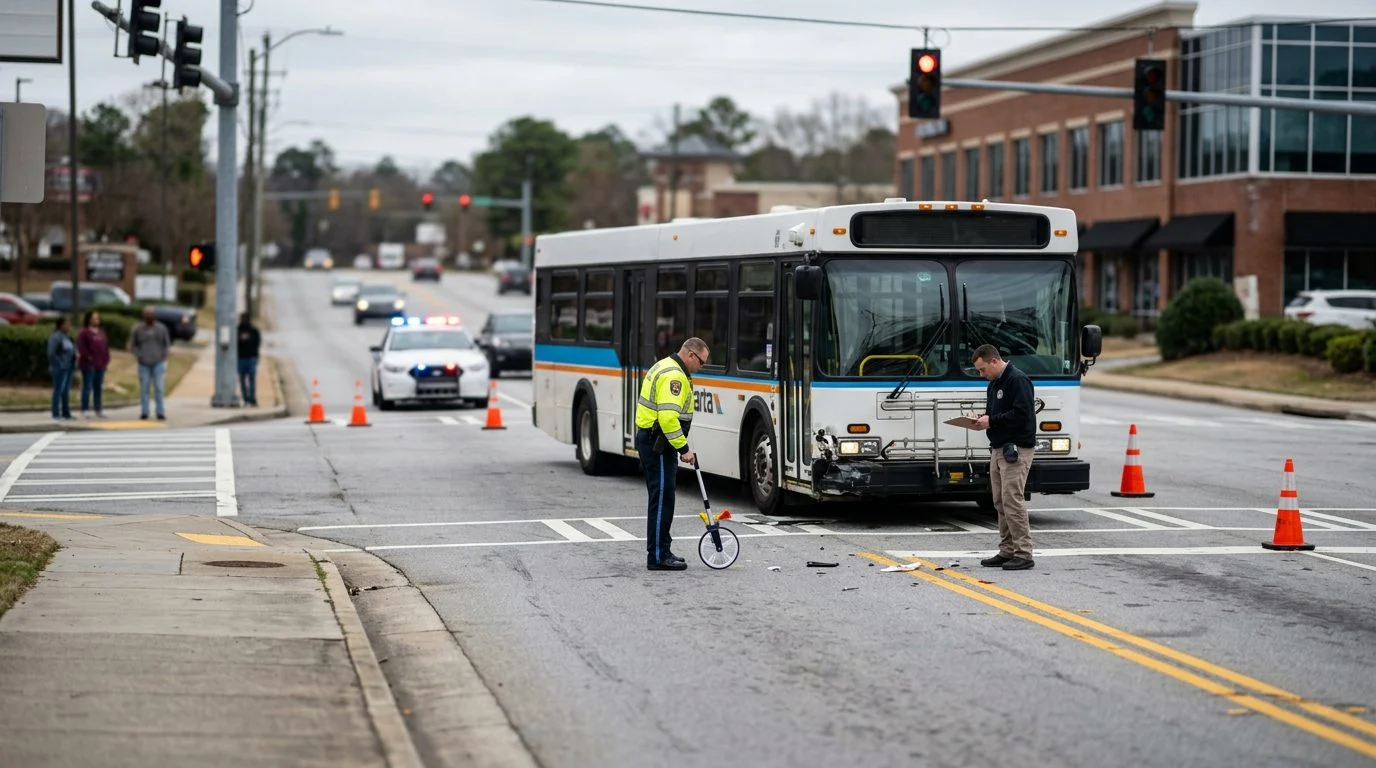
Pedestrian Accidents | Metro Atlanta, Georgia
Hit by a Bus in Atlanta? Get Clear Answers About Your Next Steps
Buses are large, heavy, and often on busy streets. Our team helps injured pedestrians and their families understand their options after a serious crash.
About Slam Dunk Attorney
Duluth, GA
Home base for our firm
Metro Atlanta
Clients we represent across the region
Free
Confidential first consultation
By Peter F. Jaraysi · Published November 14, 2026
Getting hit by a bus while you walk can leave you hurt, out of work, and facing questions you never expected. If you’re an Atlanta pedestrian hit by a vehicle operated by the City or MARTA, you may still have a claim, but the steps differ from a typical car crash.
The short answer: a claim against the City of Atlanta usually requires written notice within six months of the crash, before any lawsuit. Most lawsuits for injuries to a person must be filed within two years. Here is how each step works, in plain language.
What a Claim After Being Hit by a City or MARTA Bus Involves
A claim after a bus strikes a pedestrian is a demand for compensation from the people or agencies responsible for the crash. That can include the bus operator, the transit agency, and the City, depending on who owned and ran the bus.
These cases often involve a pedestrian struck in a marked crosswalk, at an intersection, or at a bus stop. Each location raises its own questions about right of way and what the driver could see.
There are two main paths. The first is a written claim presented to the public entity for review. The second is a lawsuit, which can follow if the claim is not resolved.
Pedestrian crashes can cause serious harm. The Governors Highway Safety Association notes that these crashes can cause serious injuries, including head injuries, and that people outside vehicles are especially vulnerable.
If the crash is fatal, a family member or estate representative may bring the claim. Georgia law also sets out who can sue in a wrongful death case.
If a City of Atlanta or MARTA bus struck you or someone you love, you may have a claim, and you don't have to sort out the deadlines alone. Talk it through with our team — the first consultation is free, confidential, and carries no obligation.
Why Claims Against the City of Atlanta or MARTA Follow Different Rules
Claims against a city usually require written notice before a lawsuit can proceed, and that notice has its own short deadline.
Under O.C.G.A. § 36-33-5, a person with a money damages claim against a municipal corporation for injury must first give notice. The written claim goes to the city’s governing authority within six months of the event. It must state the time, place, and extent of the injury, and the negligence that caused it.
The claim must also state a specific amount of money damages sought. That amount is an offer of compromise, and it does not bind you if the claim is later litigated. The claim must be served on the mayor or the chairperson of the city council or commission. The city must act within 30 days, and the lawsuit clock can pause while a demand waits without action.
MARTA and other public bodies can have their own notice procedures and timelines. Confirm the rules for the specific entity involved.
The general lawsuit deadline still applies. Under O.C.G.A. § 9-3-33, actions for injuries to the person must be brought within two years after the right of action accrues, except that injuries to the reputation must be brought within one year and actions for injuries to the person involving loss of consortium within four years after the right of action accrues.
Government bodies also have immunity rules. Under O.C.G.A. § 50-21-23, the state waives sovereign immunity only within that article’s limits. Checking the legal theory early helps avoid surprises.
What a Claim Can Include
A claim can seek compensation for the harm the crash caused, including medical costs, lost income, and effects on daily life.
- Medical bills. Georgia limits medical damages to the reasonable value of medically necessary care, as the trier of fact decides under O.C.G.A. § 51-12-1.1. Past and future care can include emergency transport, surgery, rehabilitation, and follow-up visits.
- Lost wages. Claims can cover lost income and reduced future earning ability. The decision-maker may reduce future economic losses to present value under O.C.G.A. § 51-12-13.
- Pain and suffering. This covers physical pain, emotional distress, and loss of enjoyment of life.
- Catastrophic injuries. Traumatic brain injury, spinal cord injury, amputation, and severe fractures often need long-term care planning.
- Wrongful death. Where death of a human being results from a crime or from criminal or other negligence, Georgia law lets the personal representative recover funeral, medical, and other necessary expenses. See O.C.G.A. § 51-4-5.
The value of each claim depends on its own medical and financial facts. Every case turns on its own record.
Who Is at Fault When a Bus Hits a Pedestrian?
Fault is decided on the facts, so a bus driver is not automatically responsible just because a pedestrian was struck.
Georgia’s traffic rules set the starting point. Under O.C.G.A. § 40-6-91, the driver of a vehicle shall stop and remain stopped to allow a pedestrian to cross the roadway within a crosswalk when the pedestrian is upon the half of the roadway on which the vehicle is traveling, or is approaching and is within one lane of that half or of the half onto which the vehicle is turning, where ‘half of the roadway’ means all traffic lanes carrying traffic in one direction of travel, and this duty does not apply under the conditions stated in subsection (b) of Code Section 40-6-92. Under O.C.G.A. § 40-6-93, every driver must use due care to avoid hitting a pedestrian. The Georgia Department of Driver Services explains these right-of-way rules at crosswalks.
Georgia also uses comparative negligence (shared fault). Under O.C.G.A. § 51-12-33, damages are reduced in proportion to the injured person’s share of fault. A person who is 50 percent or more responsible cannot recover damages.
Employers can face direct claims too. Under O.C.G.A. § 51-2-2, a person is liable for torts of a servant committed within the scope of the person’s business. The Georgia Supreme Court has also held that an employer can still face claims for its own negligence in Quynn v. Hulsey. Under Munroe v. Universal Health Services, an employer must use ordinary care not to hire or keep an employee it knew or should have known posed a risk of harm.
What to Do Now: Medical Care, Reports, and Evidence
The most useful steps in the first days are getting medical care, reporting the crash, and preserving evidence.
- Get medical attention the same day, even if injuries seem minor. Tell providers the injury came from a bus collision.
- Call 911 and ask for a police report. Write down the bus number, route, direction, and any agency markings.
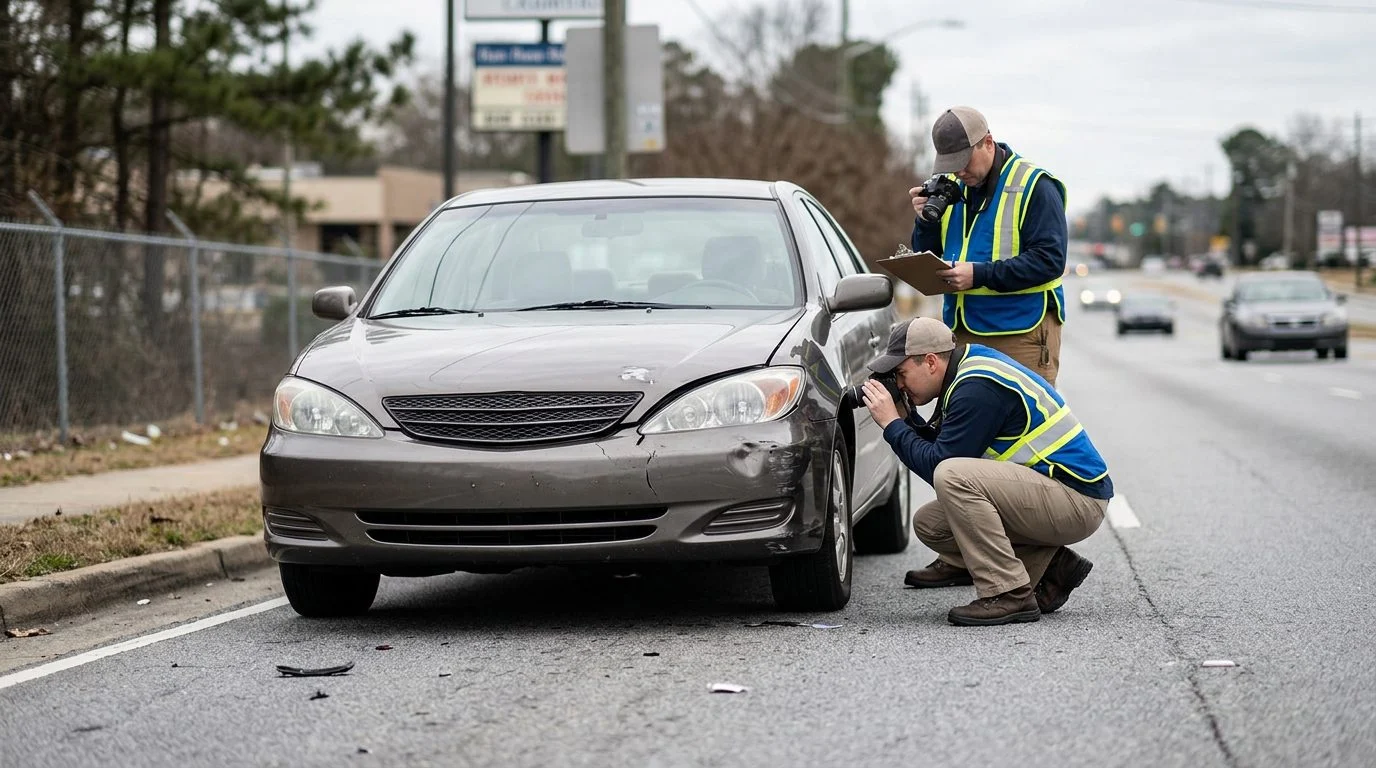
- Photograph the scene. Capture crosswalks, signals, the bus stop, your injuries, and damaged clothing or property.
- Collect witness details. Get names and phone numbers of anyone who saw or recorded the crash.
- Keep every record. Save bills, pay stubs, and receipts. Keep a daily journal of missed work and limits on your activities.
- Be careful with statements. An insurer or agency may ask for a recorded statement quickly. You can ask for time to get advice first.
Video from buses or stations, operator records, and vehicle data often matter most. This evidence can be overwritten or lost, so requesting it early is important.
How a Bus-Pedestrian Claim Typically Moves Forward
A typical claim starts with a free consultation, then written notice, investigation, treatment, and either negotiation or a lawsuit.
- Free first consultation. Review the crash, your injuries, and the deadlines. The consultation is free and confidential, and it comes without obligation to continue.
- Written notice. For a claim against the City, the written claim goes to the governing authority within six months of the crash.
- Investigation. Requests for video, reports, operator and route records, and medical documentation begin.
- Medical treatment to a stable point. Once treatment reaches a stable point, the full claim can be measured more clearly.
- Negotiation or a lawsuit. Talks with the entity’s claims representatives come first. If a fair resolution is not reached, a lawsuit may follow.
Timelines vary with injury severity, the number of parties, and whether a government entity is involved. The firm explains the expected steps for each case.
Not sure what your next step is?
Talk it through with our team — the first consultation is free, confidential, and carries no obligation.
Why Injured Pedestrians Contact Slam Dunk Attorney
Slam Dunk Attorney is a personal injury firm based in Duluth, Georgia. It represents people hurt in pedestrian, car, truck, motorcycle, and rideshare accidents, as well as dog bites, unsafe property injuries, nursing home abuse, catastrophic injuries, and wrongful death, across metro Atlanta and Georgia.
Peter F. Jaraysi is the responsible lawyer for this page. Brian D. Wright is also one of the firm’s lawyers. Our team includes support staff who help manage each matter.
The firm represents injured people in Atlanta, Lawrenceville, Johns Creek, Alpharetta, Marietta, Norcross, Kennesaw, and Dunwoody, and across Georgia. The first consultation is free and confidential, and it comes without obligation to continue.
The firm does not advertise case results. Every claim turns on its own facts, so results can’t be predicted from a web page.
Responsible lawyer: Peter F. Jaraysi, Slam Dunk Attorney, Duluth, Georgia. Contact the firm through its contact page. This page is attorney advertising.

Common Questions About Bus-Pedestrian Claims
Most questions come down to fault, deadlines, and cost.
Is a driver always at fault when a pedestrian is hit?
Fault is decided on the facts, not assumed. Georgia reduces damages by the injured person’s share of fault.
How much time do I have to file?
Most injury lawsuits in Georgia must be filed within two years. A claim against the City of Atlanta first needs written notice within six months.
Can I talk to the bus company’s insurer myself?
You can, but early statements can be used later. Getting advice before a recorded statement is a common step.
What does a first consultation cost?
It is free and confidential, and it comes without obligation to continue.
Do I need a lawyer if my injuries seem minor?
Injuries can worsen over time. A short review can clarify deadlines and options.
If a City of Atlanta or MARTA bus struck you or someone you love, you may have a claim, and you don’t have to work through the deadlines alone. Request a free consultation and our team will walk you through your options in plain language.
How Our Firm Approaches Bus Pedestrian Claims
Careful review of the crash
We look at the police report, the bus route, the driver's log, and any available video to understand how the collision happened.
Attention to public and private operators
Crashes involving MARTA, city buses, school buses, and charter or tour buses can involve different owners, insurers, and procedures. We account for those differences from the start.
Focus on your recovery
Serious injuries need time and care. We work to keep the claim process manageable so you can concentrate on getting better.
Plain-language communication
You will get straightforward answers about where your case stands, without legal jargon that leaves you guessing.
Be Careful With Early Calls
Insurance adjusters for a bus company or a public transit agency may contact you quickly. Before you give a recorded statement or sign any paperwork, talk with a lawyer about what you are being asked to do.
Steps That Can Help Protect Your Claim
Get medical care
Even if you feel shaken rather than badly hurt, a medical evaluation creates a record of your injuries and protects your health.
Note what you can
Write down the bus number, route, time, location, and the names or badge numbers of any witnesses. Photos of the scene and your injuries can also help.
Save your records
Keep medical bills, prescriptions, receipts for out-of-pocket costs, and notes about missed work or daily limits caused by your injuries.
Talk with our team
Contact Slam Dunk Attorney for a free, confidential first consultation. We will explain your options and what information will be most useful.