
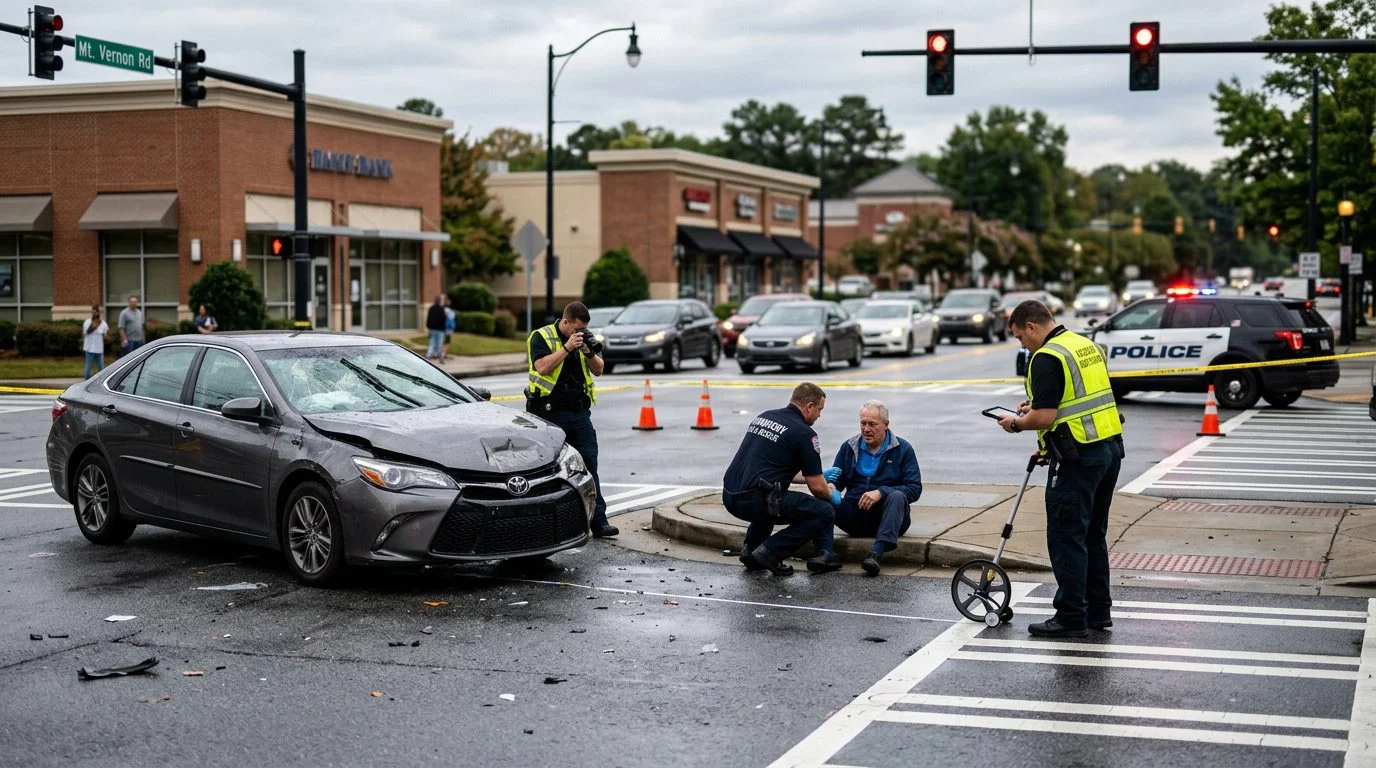
Pedestrian Accidents in Dunwoody
Hit by a car? Know your rights and next steps.
When a pedestrian is struck, injuries and medical bills pile up fast. Slam Dunk Attorney is here to help you understand what happened and what comes next.
By Peter F. Jaraysi · Published September 21, 2026
Pedestrian Accidents in Dunwoody: What to Do After Being Hit
When a vehicle strikes you on a Dunwoody street, your immediate safety and the decisions you make in the first hours can determine whether you recover the full value of your claim. Georgia law gives you the right to pursue damages from the driver who hit you, even if you bear some responsibility for the accident. This guide walks you through what happens after impact, how liability works in Dunwoody pedestrian accidents, and why getting legal guidance early protects your rights.
If you've been struck by a vehicle in Dunwoody and aren't sure what your claim is worth or what happens next, call us for a free case review—people in exactly your situation reach out to us every week. Talk it through with our team — the first consultation is free, confidential, and carries no obligation.
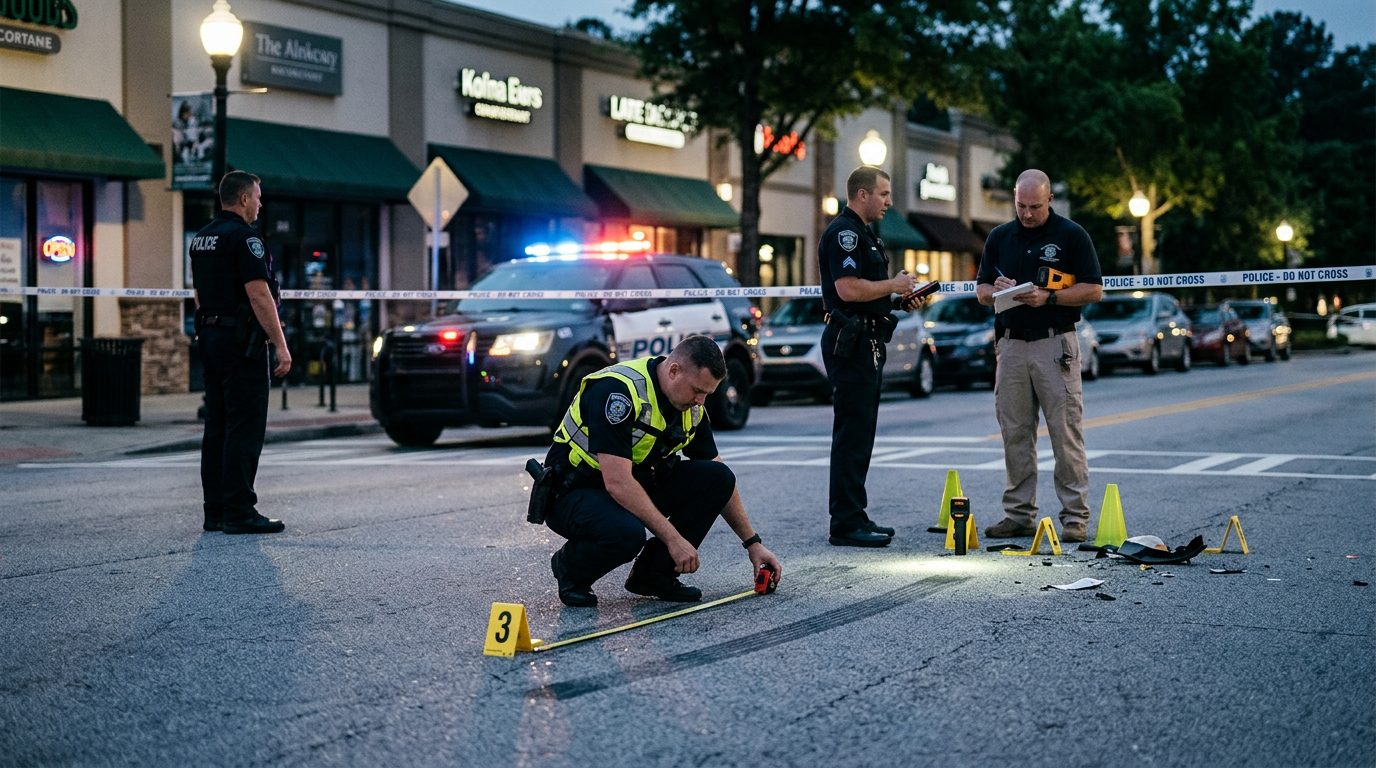
Pedestrian Accidents in Dunwoody: Your Rights After Being Hit
Pedestrians in Dunwoody face real danger on busy corridors like Perimeter Center, Chamblee Dunwoody Road, and around mixed-use shopping and office districts where vehicle traffic is heavy and pedestrian crossings frequent. Under Georgia law, drivers have a legal duty to exercise reasonable care to avoid striking pedestrians—including yielding the right of way in crosswalks, watching for pedestrians in parking lots, and slowing down in areas where foot traffic is foreseeable.
Dunwoody’s intersection patterns and mid-block crossing points create scenarios where pedestrian accidents happen: a driver fails to yield at a marked crosswalk; a vehicle exits a parking lot without checking for pedestrians; a speeding car strikes someone crossing legally at a signal. In each case, the driver’s failure to exercise reasonable care can make them liable for your injuries.
Georgia follows a modified comparative negligence rule, which means you can recover damages even if you were partially at fault for the accident—as long as your negligence was not greater than the driver’s. This is a critical protection: if you stepped off the curb without looking but the driver was speeding and didn’t brake, you may still have a valid claim. Many injured pedestrians wrongly believe any shared fault bars recovery; it doesn’t.
What Happens Immediately After a Pedestrian Accident in Dunwoody
Your first priority after being struck is safety and medical care. Move to a safe location if you can do so without worsening your injuries, and call 911 immediately. Police will document the scene and create an official report—this report becomes central evidence in your claim.
While waiting for emergency responders, if you’re able, take photos and videos of the accident scene: the vehicle involved, the road conditions, traffic signals, crosswalk markings, skid marks, and your injuries. Get the driver’s name, phone number, address, vehicle make and model, license plate number, and insurance information. Ask nearby witnesses for their contact information; their accounts often prove critical when the driver disputes fault.
When police arrive, be honest about what happened, but don’t apologize, speculate about fault, or make statements like “I should have looked both ways” or “It’s my fault.” Stick to factual details: where you were, what you were doing, what you saw the vehicle do. Police reports can be misread or misremembered; keep your own written account of the accident while it’s fresh.
Seek medical attention even if you feel fine. Pedestrian injuries—fractures, head trauma, spinal injuries, internal bleeding—can develop or worsen over hours or days. A medical record created immediately after the accident documents your injuries and links them directly to the collision. This creates a clear chain of evidence that protects your claim.
Preserve all evidence: keep the police report number, photos, witness names and numbers, medical records, receipts for treatment, and any communications with the driver or their insurance company. Don’t post about the accident on social media, and don’t discuss it with the driver’s insurance company without legal guidance.
Liability in Dunwoody Pedestrian Accidents
Fault in a pedestrian accident turns on whether the driver breached their duty of care. Common breaches include:
- Failure to yield at a crosswalk – A driver must yield to a pedestrian lawfully in a crosswalk, whether marked or unmarked.
- Distracted driving – Texting, eating, adjusting a GPS, or other inattention that prevents the driver from seeing you.
- Speeding – Driving too fast to stop safely, especially in residential or mixed-use areas where pedestrians are foreseeable.
- Impaired driving – Alcohol or drug impairment that slows reaction time and judgment.
- Failure to maintain control – Brake failure, mechanical defect, or reckless maneuvers that put pedestrians at risk.
Evidence of liability includes the police report, traffic camera footage (many Dunwoody intersections and shopping centers have surveillance), witness statements, photos of the scene, and expert analysis of vehicle damage and impact dynamics.
Property owners can also be liable if the accident occurred on their premises—a parking lot, shopping center, or private driveway—and they failed to maintain safe conditions, warn of hazards, or provide adequate lighting or traffic control. This is called premises liability, and it expands your potential sources of recovery.
Your own comparative fault—jaywalking, distracted walking, or not using a crosswalk—doesn’t eliminate your claim under Georgia law, but it may reduce your recovery proportionally. An attorney helps you navigate these arguments and ensure the other side doesn’t overstate your role in the accident.
Injuries and Damages in Pedestrian Accidents
Pedestrians struck by vehicles often suffer severe injuries because they lack the protective shell of a car. Common injuries include fractures of the legs, pelvis, or ribs; traumatic brain injuries ranging from concussion to permanent cognitive damage; spinal cord injuries that cause paralysis or chronic pain; and internal injuries like organ damage or bleeding.
Medical documentation is essential. Seek immediate emergency care, follow up with specialists as needed, and keep detailed records of every treatment, medication, and therapy. Your medical records become the foundation of your damages claim.
Damages in a pedestrian accident claim fall into two categories:
Economic damages are quantifiable financial losses: medical bills, emergency room and hospital costs, surgery, physical therapy, prescription medications, lost wages while you recover, rehabilitation, assistive devices, and anticipated future medical care. These damages are straightforward to calculate—they’re documented in bills and pay stubs.
Non-economic damages compensate for pain and suffering, emotional distress, loss of enjoyment of life, scarring or disfigurement, and reduced quality of life. These are harder to quantify but often represent the largest portion of a pedestrian’s recovery. An attorney helps translate your suffering into a fair dollar value.
Why does timing matter? Early legal guidance ensures your medical treatment aligns with your claim, protects you from accepting a lowball settlement before you understand the full scope of your injuries, and preserves evidence before it degrades or disappears.
Insurance Claims and Settlement Negotiations
After a pedestrian accident, the at-fault driver’s liability insurance company will likely contact you. Their job is to minimize what they pay. They may pressure you to settle quickly, downplay your injuries, or argue comparative fault to reduce their payout.
If the driver lacks insurance or carries insufficient coverage, your own auto insurance policy may include uninsured or underinsured motorist (UM/UIM) coverage. This coverage protects you by covering damages the at-fault driver’s insurance won’t pay. Check your policy to understand your UM/UIM limits.
Insurance companies often undervalue pedestrian claims by claiming injuries are minor, disputing medical causation, or inflating your share of fault. A fair settlement reflects the true cost of your medical care, your lost income, and fair compensation for your pain and suffering. Don’t accept a first offer without understanding what your claim is truly worth.
When settlement negotiations stall or the insurer’s offer is unreasonably low, litigation may become necessary. Your attorney will file a lawsuit, conduct discovery (gathering evidence from the other side), and prepare for trial if a fair settlement isn’t reached.
Not sure what your next step is?
Talk it through with our team — the first consultation is free, confidential, and carries no obligation.
Why Legal Representation Matters for Dunwoody Pedestrian Accidents
Navigating liability and comparative fault arguments alone is difficult. Insurance companies have teams of adjusters and attorneys; you shouldn’t face them without representation. An experienced attorney:
- Gathers and preserves critical evidence—police reports, surveillance footage, expert analysis—before it’s lost or destroyed.
- Calculates the true value of your claim, including future medical needs and long-term impacts on your quality of life.
- Handles all communication with insurance companies, shielding you from pressure tactics and lowball offers.
- Negotiates aggressively for a fair settlement or prepares your case for trial.
- Protects your legal rights and ensures the statute of limitations doesn’t pass without action.
In the pedestrian accident cases our attorneys handle, early legal guidance often reveals evidence and damages that the injured person wouldn’t have discovered alone—and it prevents costly mistakes that reduce recovery.
Next Steps: Getting Help After a Pedestrian Accident in Dunwoody
Timing is critical. Georgia’s statute of limitations requires you to file a lawsuit within a set timeframe; evidence degrades, memories fade, and witnesses become harder to locate as time passes. The sooner you act, the stronger your claim.
Bring to your first consultation: the police report, photos you took at the scene, medical records and bills, insurance information, and any written statements from witnesses. You don’t need to have everything perfectly organized—we’ll help you gather what’s needed.
A free case review gives you clarity on your rights, the value of your claim, and what to expect next. There’s no upfront cost and no obligation. We work on contingency, meaning you pay us only if we recover damages for you.
Frequently Asked Questions
What should I do if I can’t remember all the details of the accident?
Write down what you do remember as soon as possible, and let your attorney know what’s unclear—police reports, witness statements, and medical records often fill in gaps.
Can I still file a claim if I was partially at fault?
Yes, under Georgia’s modified comparative negligence rule, you can recover damages as long as your negligence wasn’t greater than the driver’s.
How long do I have to file a pedestrian accident lawsuit in Georgia?
Georgia law sets strict deadlines for personal injury claims; don’t delay—contact an attorney immediately to protect your rights.
What if the driver who hit me doesn’t have insurance?
Your own uninsured motorist coverage may cover your damages; your attorney will investigate all available sources of recovery.
Will my case go to trial?
Most pedestrian accident cases settle, but your attorney will prepare for trial if the insurance company refuses a fair offer.
If you’ve been struck by a vehicle in Dunwoody and aren’t sure what your claim is worth or what happens next, call us for a free case review—people in exactly your situation reach out to us every week. Request a free consultation or call Slam Dunk Attorney today to protect your rights.
Why choose Slam Dunk Attorney for your pedestrian accident claim
Focused on pedestrian and accident law
We focus exclusively on personal injury cases—car accidents, pedestrian collisions, and related claims. That focus means we know the details that matter in your case.
We handle the paperwork and the process
Police reports, insurance correspondence, medical records, and settlement negotiations—we manage it all so you can focus on healing.
We work on a contingency basis
You pay no attorney fees unless there is a recovery in your case. You may still be responsible for case costs and expenses. We discuss all fees and costs upfront.
Serving Dunwoody and metro Atlanta
Based in Duluth, Georgia, we represent pedestrians injured across the Atlanta area and throughout Georgia.
What to do after a pedestrian accident
Seek medical attention first
Your health comes first. Even if you feel okay, some injuries appear later. A medical record also creates an important link between the accident and your injuries.
Document the scene and gather information
If you are able, take photos of the accident scene, vehicle damage, traffic signals, and street conditions. Get the driver's name, phone number, insurance details, and license plate. Write down the names and contact info of any witnesses.
Report the accident to police
Call or visit the Dunwoody Police Department to file a report. A police report creates an official record and often includes witness statements and the officer's observations.
Contact us for a free case review
Call Slam Dunk Attorney to discuss what happened. We'll explain your options and answer your questions—at no cost and with no obligation.
Don't delay—time matters
Evidence fades, memories blur, and there are legal deadlines that apply to pedestrian accident claims. The sooner you reach out, the sooner we can preserve evidence and protect your rights.
Common questions about pedestrian accidents
What if I can't remember all the details?
Write down what you do remember as soon as possible, and let your attorney know what's unclear. Police reports, witness statements, and medical records often fill in the gaps.
Can I still file a claim if I was partially at fault?
Georgia law allows recovery even if you share some responsibility for the accident. The amount may be reduced based on your degree of fault, but you may still have a valid claim.
What damages can I recover?
Pedestrian accident claims typically cover medical expenses, lost wages, pain and suffering, and other losses tied to your injuries. We evaluate your specific situation to identify all applicable damages.
How long does a pedestrian accident case take?
Every case is different. Some settle quickly; others require more time to investigate, negotiate, or prepare for trial. We keep you informed every step of the way.