
Nursing Home Abuse | Georgia
Understanding Nursing Home Neglect Claims in Georgia
Many families reach this question during a hard time, when a loved one's care has fallen short and the next steps are unclear. Here is a plain-language look at what shapes these cases.
By Peter F. Jaraysi · Published November 20, 2026
If a parent or loved one was hurt or died in a care facility, you may be asking how much you can get for suing a nursing home for neglect. The short answer is that one single figure doesn’t fit every family. A claim’s value depends on the harm, the medical course, and what the records show.
Georgia law gives a framework for building that value. The sections below walk through the parts that matter most, so you know what to ask and what to gather.
Why There Is No Single Number for a Nursing Home Neglect Claim
Each claim is valued on its own facts, so an average from someone else’s case can’t tell you what yours is worth. Online lists often quote “average” settlements. Those figures reflect other families’ injuries, records, and facilities, not yours.
Start with the resident’s injuries and how they changed over time. Then look at how long the harm lasted, what medical care it required, and what the records show about how it happened. Each piece can shift the picture.
Georgia law also splits losses into two groups. General damages are harms the law presumes flow from a wrongful act, and they can be recovered without proof of an exact amount. Special damages actually flow from the act and must be proved. O.C.G.A. § 51-12-2 draws that line.
If your parent was hurt or died in a care facility, you don't have to sort out the options alone. Our team can talk through what happened and which records may help, free and confidentially. Talk it through with our team — the first consultation is free, confidential, and carries no obligation.
What Damages Are Available in a Georgia Nursing Home Neglect Case?
A neglect claim seeks compensation for the harm the neglect caused. That harm generally falls into money losses and losses that are harder to put on a bill.
Money losses include hospital and doctor bills, rehabilitation, medications, and the cost of future care. In Georgia civil actions to recover damages for injury or death to a person, special damages for medical and healthcare expenses are limited to the reasonable value of medically necessary care, treatment, or services. O.C.G.A. § 51-12-1.1 sets out that limit.
Other harms include pain, fear, and loss of dignity. Georgia’s rule is that damages compensate for an injury, and where the injury can be estimated in money, that estimate is the measure. O.C.G.A. § 51-12-4 states that rule, but it adds that if an injury is small or the mitigating circumstances are strong, only nominal damages are given.
Keep the purpose in mind. Compensation aims to make up for what the resident lost. It is not a reward for the facility’s conduct. Families who keep bills, care notes, and written messages give the discussion firmer footing.
How Injury Severity and Documented Harm Affect a Claim
The more serious and lasting the harm, the more records a claim needs to show it. Federal rules give each resident the right to be free from abuse, neglect, and exploitation. 42 C.F.R. § 483.12 sets out that right. Georgia also requires care that is adequate, appropriate, and given with reasonable care and skill. O.C.G.A. § 31-8-108 states that each resident shall receive care, treatment, and services which are adequate and appropriate.
Common neglect-related harms include pressure sores (bedsores), infections, falls and fractures, dehydration and malnutrition, and medication errors. Many of these start small and grow serious when they go unnoticed. Read more about bedsores and infections and falls and fractures.
Severity matters most when harm is permanent. Catastrophic injuries such as spinal cord injury, paralysis, traumatic brain injury, amputation, and severe burns often create ongoing care needs. Those needs show up over time in treating doctors’ notes, therapy records, and bills for equipment and home care. CMS nursing homes guidance explains that federal requirements set the standards used to assess a facility’s compliance. For a broader view, see the nursing home abuse and catastrophic injuries pages.
Wrongful Death Claims When a Resident Has Died
When a resident dies because of neglect, Georgia allows a wrongful death claim. It is a different path from a claim for a resident who is still living, and it is brought by the family.
A surviving spouse may recover for the death of a spouse. If there is no surviving spouse, a child or children may recover. The recovery is the full value of the decedent’s life, as shown by the evidence. O.C.G.A. § 51-4-2 sets out this rule, and it also says a surviving spouse receives no less than one-third of the recovery.
When death results from criminal or other negligence, the personal representative may recover funeral, medical, and other necessary expenses. O.C.G.A. § 51-4-5 states that rule.
Families are often grieving while they try to understand what happened. Who may bring the claim turns on family details, which is why a careful review helps. Learn more about wrongful death claims.
When Punitive Damages Come Into the Discussion
Punitive damages are awarded only in certain cases, and only when a strict standard of proof is met. Georgia law allows them only where it is proven by clear and convincing evidence that the defendant showed willful misconduct, malice, fraud, wantonness, oppression, or an entire want of care that raises the presumption of conscious indifference to consequences. O.C.G.A. § 51-12-5.1 sets that standard.
Punitive damages are not compensation. The statute says they are awarded solely to punish, penalize, or deter the defendant. They must also be specifically requested in the complaint, the document that starts the lawsuit.
Whether punitive damages apply turns on the specific conduct and evidence. Not every neglect case involves that level of conduct. Federal rules also prohibit restraints used for discipline or convenience that the resident’s medical symptoms don’t require. 42 C.F.R. § 483.12 covers that rule. Families concerned about physical restraint can read about restraint abuse.
What Evidence Shapes the Value of a Neglect Claim
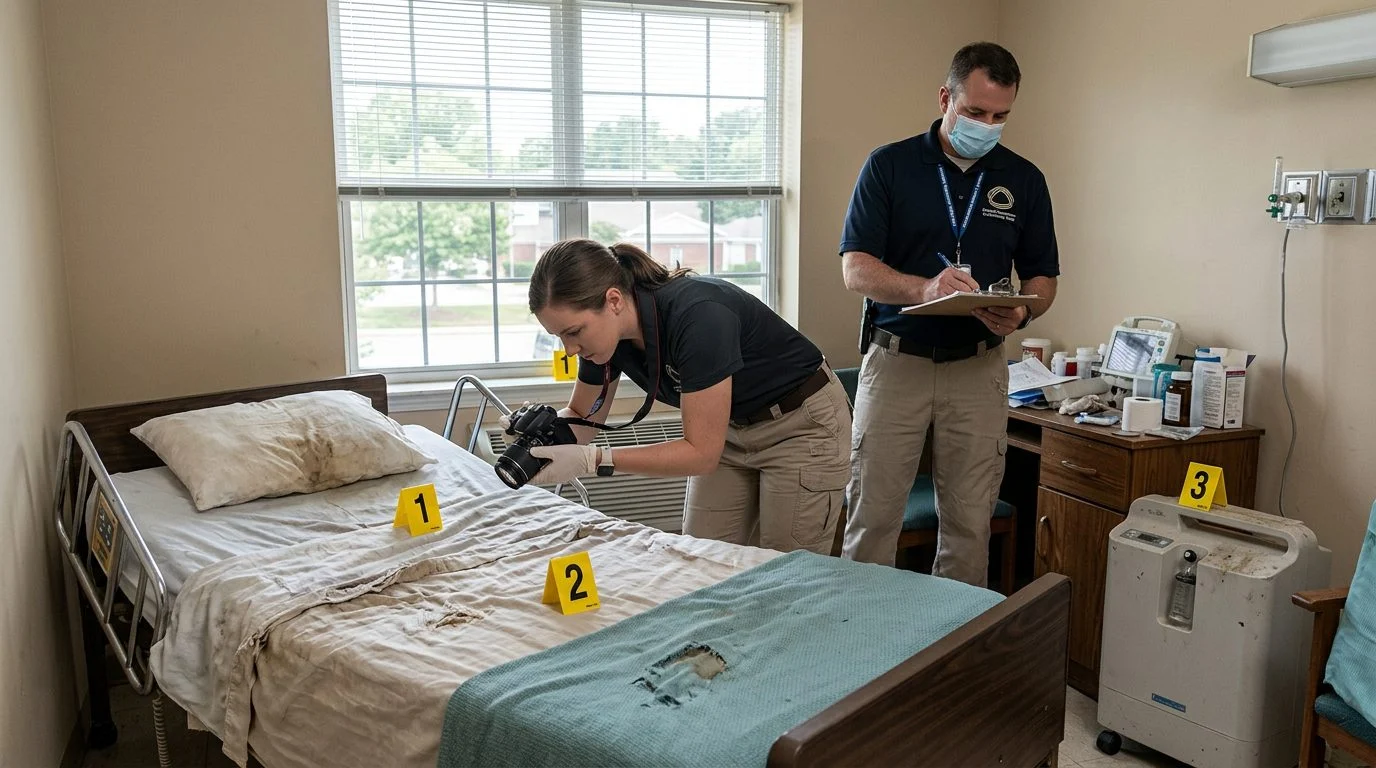
The records a family gathers early often shape how a claim is measured. Useful items include medical records, care plans, medication administration records, incident and fall reports, staffing information, photographs, and written messages with the facility.
Georgia gives families a way to request records. A provider must furnish a requested record within 30 days of the request, with the required authorization. O.C.G.A. § 31-33-2 sets out those rules. For a deceased patient, the executor or administrator comes first if one is appointed, then the surviving spouse, then any surviving child, then any parent.
Timing matters too. Georgia generally requires a personal-injury lawsuit to be filed within two years, so early action helps. O.C.G.A. § 9-3-33 states that general rule. A person can also sue a facility for violating a resident’s rights without first using administrative relief. O.C.G.A. § 31-8-126 provides that cause of action.
A facility may argue that the resident or family shares the blame. Under O.C.G.A. § 51-12-33, damages are reduced by the plaintiff’s percentage of fault. A plaintiff who is 50 percent or more responsible is not entitled to any damages. Concerns about care can also go to the Georgia Department of Community Health complaint process.
Not sure what your next step is?
Talk it through with our team — the first consultation is free, confidential, and carries no obligation.
Common Questions About Suing a Nursing Home in Georgia
Whether a claim makes sense depends on the facts, the harm, and the evidence. These short answers cover two common questions.
Is a wrongful death lawsuit worth it?
Whether it makes sense depends on the harm, the records, and your family’s situation. A consultation is a good place to review those details with our team.
How much money can you get if you sue a nursing home?
No amount can be predicted in advance. Each claim is evaluated on its own records, and the path can take time and vary from case to case.

Talk With Our Team About Your Family’s Situation
You may be sitting beside a parent who is recovering from a new injury. Or you may be trying to understand an incident report that raised more questions than it answered. You don’t have to work out the options alone. Our team can talk through what happened and which records may help. Contact Slam Dunk Attorney to start that conversation. The initial consultation is free, confidential, and without obligation to continue.
Responsible lawyer: Peter F. Jaraysi, Slam Dunk Attorney, Duluth, Georgia. This page offers general information, not a promise of any result. The firm handles matters in Georgia. Contact details are on the contact page.
How our team can help your family
Compassionate listening
We understand that a loved one's injury or decline is painful to discuss. We take time to hear what your family has observed.
Review of records
We look at the medical, care, and facility records that relate to your loved one's situation so you can see what is documented.
Plain-language answers
We explain the process in everyday terms, so you know what to expect before you decide on any next step.
Confidential conversations
What you share with our team stays private as you consider your options.
Start documenting now
Keep copies of medical records, care plans, and bills, and write down dates and changes you notice in your loved one's condition. Your first consultation with our team is free, confidential, and carries no obligation to continue.
What a review of your family's situation may consider
Medical and facility records
Charts, incident reports, and treatment notes can show how a resident's condition changed over time.
The resident's condition
Injuries, infections, weight loss, and other changes are reviewed in the context of the care provided.
A clear timeline
Dates of visits, complaints, and changes in care help build a picture of what happened and when.
Your family's goals
Every family's priorities are different, and we discuss what matters most to you before deciding anything.