
Nursing Home Abuse | Georgia
Concerned About a Loved One's Care in a Georgia Nursing Home?
Our Duluth, Georgia team helps families understand what happened, what records matter, and what options may be available. Your first consultation is free, confidential, and comes with no obligation to continue.
By Peter F. Jaraysi · Published November 6, 2026
How Long Do You Have to File a Nursing Home Abuse Claim in Georgia?
For most nursing home abuse and neglect claims involving injury, Georgia gives you two years. Under Georgia’s injury filing deadline, actions for injuries to the person must be brought within two years after the right of action accrues.
The clock generally starts when the right to sue arises, and that date is often tied to when the harm happened. The exact start date can shift with the facts, so the dates in your loved one’s records matter a great deal.
Families often ask about one claim, but there can be more than one. A resident’s own injury claim and a wrongful death claim are separate claims. Each one can have its own timing rules, so it helps to name both early.
Treat the deadline as urgent. Records can be hard to obtain, staff members change jobs, and memories fade. The sooner you collect and preserve what you have, the easier it is to document what happened.
If a loved one in a Georgia nursing home has been harmed and the deadline is weighing on you, you don't have to sort it out alone. We can talk through your situation in a free, confidential first consultation. Talk it through with our team — the first consultation is free, confidential, and carries no obligation.

When the Deadline Can Be Shorter, Longer, or Different
Some claims run on a shorter clock. If the facility is run by a state government entity, written notice of the claim may be required first. Under Georgia’s state claim notice rule, notice must be given within 12 months of the date the loss was discovered or should have been discovered.
That notice must go in writing by certified mail, statutory overnight delivery, or personal delivery to the Department of Administrative Services. A lawsuit against the state cannot start until the department denies the claim or more than 90 days pass without action, whichever comes first.
Some people get extra time. Under Georgia’s disability and minors rule, a person who is legally incompetent because of intellectual disability or mental illness when the claim arises gets the same time after that disability is removed. A person under 18 gets the same time after turning 18, with some exceptions the statute describes.
Waiting carries real risk. The longer you wait, the harder it can be to gather records, locate witnesses, and document the resident’s condition over time.
What the Free Consultation Is and Who It Is For
The first consultation is free, confidential, and comes with no obligation to continue. It gives you a chance to talk through the facts before you decide anything.
It fits two kinds of people. One is a resident who was harmed and wants to understand their options. The other is a family member who has noticed signs of abuse or neglect and needs answers about timing and next steps.
The consultation is a conversation, not a promise. No one can predict how a claim will turn out, and a good first meeting focuses on clear information.
Bring your questions about the deadline, the facility, and which records to gather. You can then decide, on your own schedule, whether to move forward.
What the Free Consultation Covers
The consultation starts with the basic facts. These include the resident’s name and age, the facility’s name and location, when care began, and what change in condition first raised concern.
Next, the attorney works through a timeline. Key dates, such as when an injury happened or was discovered, drive the filing deadline, so they get the most attention.
The review then looks at the type of claim that may fit. Options can include negligence in nursing home care, or a wrongful death claim if a resident has died.
You’ll also learn what evidence to protect right away. That includes medical records, discharge papers, incident reports, dated photos, and messages with staff.
Residents have a legal right to their records. Under Georgia’s nursing home resident rights law, a resident can inspect and receive a copy of medical records unless medically contraindicated. The facility may charge a reasonable fee that does not exceed actual cost.
A separate track exists for reporting poor care. The Georgia Department of Community Health accepts complaints about Georgia-licensed nursing facilities online, by telephone, or by fax. A regulator complaint and a lawsuit are different steps, and the consultation can explain how they relate.
What to Expect After You Reach Out: Steps and Timeline
Step 1: Share the situation. Describe the resident’s situation in your own words. You don’t need a complete file to begin.
Step 2: Gather what you already have. Collect a list of dates, staff names, the care plan, and any letters or bills before the meeting. Missing items are fine; the list simply helps.
Step 3: Review at the consultation. The attorney reviews the facts with you and explains which deadline appears to apply.
Step 4: Decide on next steps. If you choose to move forward, the firm works on records requests and evidence preservation. Records requests take time, and the schedule depends on the facility and the records involved.
Step 5: Negotiations or court. Settlement talks or litigation follow only if the claim proceeds. Timing depends on the case and the court’s schedule, and no timeline is promised.
Signs of Nursing Home Abuse and What to Bring to the Call
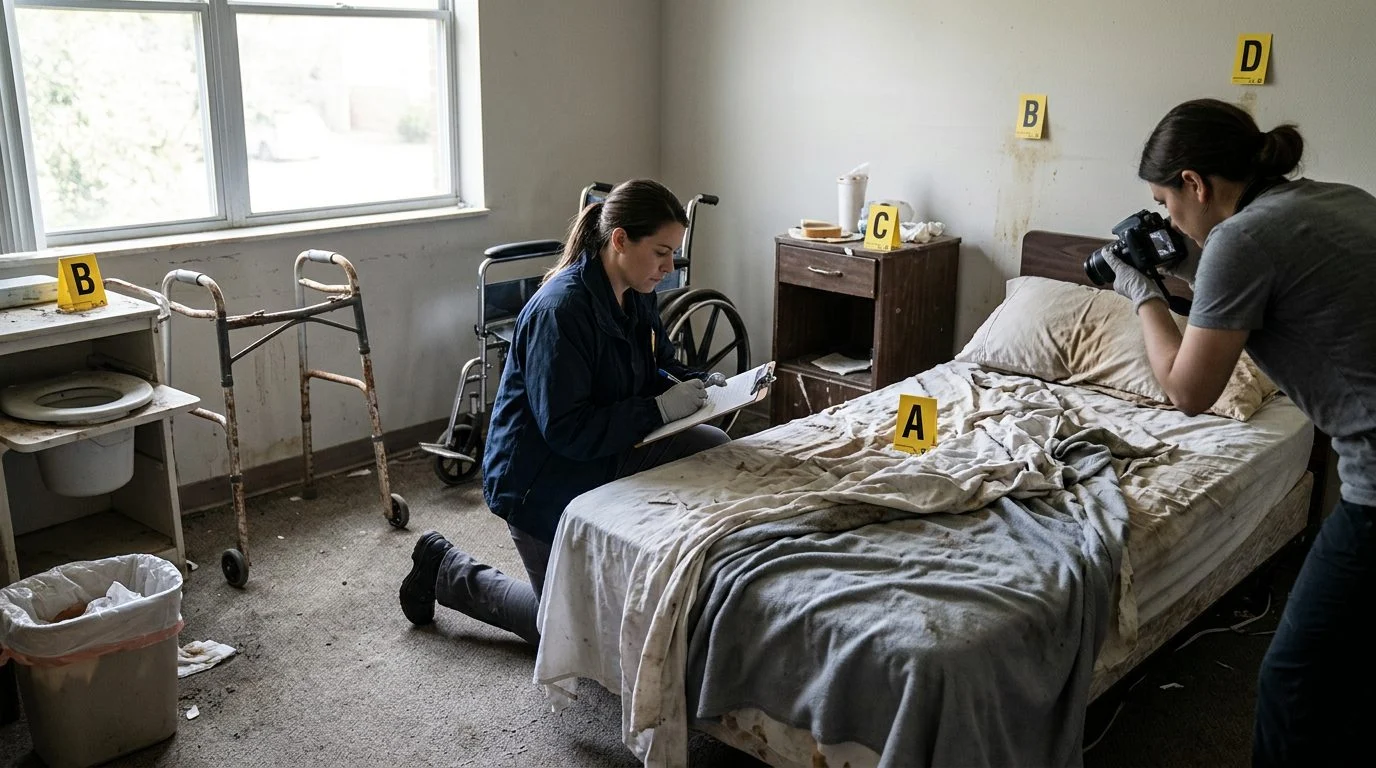
Families often notice warning signs first. Common ones include pressure sores, unexplained bruises or fractures, repeated falls, dehydration or weight loss, medication errors, infections, and sudden changes in mood or behavior.
A sign alone does not prove abuse. Records and a clear timeline connect a condition to the facility’s care. Information about nursing home requirements from CMS is published on the agency’s public website.
Bring these items to the call when you can:
- Admission paperwork and the care plan
- Medical records, discharge papers, and bills
- Incident reports or letters from the facility
- Photos with dates
- A log of visits, calls, and conversations with staff
- Names of staff involved
Keep originals. Don’t alter, rewrite, or discard anything related to the resident’s care.
Not sure what your next step is?
Talk it through with our team — the first consultation is free, confidential, and carries no obligation.
Why Families Contact Slam Dunk Attorney
Slam Dunk Attorney represents people hurt in car, truck, motorcycle, and rideshare accidents, dog bites, unsafe properties, nursing home abuse, catastrophic injuries, and wrongful death. The firm serves metro Atlanta and Georgia from its base in Duluth, Georgia.
Peter F. Jaraysi is the responsible lawyer for this page. Our lawyers, including Brian D. Wright, work with our team to explain deadlines and next steps in plain language.
Our approach is straightforward. We explain the timing rules, tell you what we can and cannot promise, and respect that the decision is yours.
We do not claim outcomes or results for any matter. Every case turns on its own facts, and we’ll review yours with you directly.
Frequently Asked Questions About Nursing Home Abuse Claim Deadlines
Is nursing home abuse hard to prove?
Proof usually rests on records and timelines. The consultation is where we review what evidence exists and what is still needed.
What is the deadline for elder abuse in Georgia?
Georgia’s general injury deadline is two years. Notice rules and tolling can change the timing in some cases.
How long does a nursing home abuse case take?
Timing varies with the case and the court’s schedule. No timeline can be promised.
Does the free consultation cost anything?
The first consultation is free and confidential, with no obligation to continue.
Can a family member start the process?
For a wrongful death claim, Georgia law names the surviving spouse or children first. If no one else can sue, the personal representative of the estate may bring the action for the next of kin.
If your loved one was harmed in a Georgia nursing home and the dates are weighing on you, you don’t have to work out the deadline alone. Contact our team for your free, confidential first consultation.
Why Families Start With a Free Consultation
Free first consultation
We review your situation at no cost so you can decide what to do next.
Confidential and no obligation
Sharing your concerns does not commit you to hiring us or continuing with a claim.
Review of records and timelines
We look at the facts, care notes, and documents that are available and explain what may still be needed.
Focus on the resident and family
We take the time to listen, answer questions in plain language, and keep your family's needs at the center.
Act Sooner Rather Than Later
Incident reports, care logs, and witness recollections can become harder to obtain as time passes. If you have concerns about a resident's safety, talk with us early so we can review what is still available.
Warning Signs Families Often Notice
Unexplained injuries
Bruises, cuts, fractures, or burns that the facility cannot clearly explain deserve a closer look.
Bedsores or dehydration
Pressure sores, weight loss, or dehydration can signal that basic care was missed.
Falls and medication problems
Repeated falls, missed or incorrect medications, and sudden changes in alertness are worth documenting and reviewing.
Withdrawal or fear
A resident who seems frightened, withdrawn, or reluctant to speak about staff may be telling you something important.