
Nursing Home Abuse | Georgia
Concerned About a Loved One in a Georgia Nursing Home? Here's How to Report It
You can raise a concern with the right agency, and many accept reports without your name. Learn what to do, what to include, and when to call for help right away.
By Peter F. Jaraysi · Published October 30, 2026
You can often report a nursing home in Georgia without giving your name. The agency you contact decides how it handles your identity, so ask about its policy before you share details. This guide explains where to report, what anonymity does and doesn’t protect, what to write down first, and what happens after a report.
Why Reporting a Nursing Home Feels So Hard
Many people who search for how to anonymously report a nursing home are worried about a parent, spouse, or friend. You may have seen a bruise you can’t explain, a loved one who has lost weight, or a resident who suddenly seems afraid of a caregiver.
Fear of retaliation is common. You may worry that staff will treat your loved one worse if they learn you complained. Those worries make sense.
Wanting to stay anonymous is a reasonable concern. Still, the answer depends on which office receives your report. Some offices take unsigned reports. Others need a name and a way to reach you so they can ask questions.
This guide covers the steps in order. First comes safety. Next comes which Georgia agency handles which problem, then how anonymity works, what to document, and what follows a report.
If you're worried about a parent in a Georgia facility and don't know what to do next, our team is ready to talk. Your first consultation is free, confidential, and without obligation. Talk it through with our team — the first consultation is free, confidential, and carries no obligation.
What to Do First if the Resident Is in Immediate Danger
If a resident is hurt, in danger, or needs emergency care, call 911 first. Georgia’s Department of Human Services reporting page says to call 911 for immediate danger.
Get the resident medical attention. Keep hospital notes, discharge papers, and medication lists. Reporting to an agency doesn’t replace emergency help. You can call 911 and file a report on the same day.
You also have the right to your loved one’s medical records. Under O.C.G.A. § 31-8-108, a resident may inspect and receive a copy of the records. O.C.G.A. § 31-8-108 reads: “Each resident shall have access to all information in the medical records of the resident and shall be permitted to inspect and receive a copy of such records unless medically contraindicated.” The facility may charge a reasonable fee, not more than its actual cost.
Who Do You Report a Nursing Home to in Georgia?
Georgia Adult Protective Services takes reports of suspected abuse, neglect, or exploitation of older adults and disabled adults. The Georgia.gov elder abuse page explains how these reports reach that office and how referrals are handled.
The Georgia Department of Community Health oversees licensed facilities. Its long-term care page covers facility oversight, inspections, and how people can raise concerns about resident safety or care. Use this office for concerns about how a licensed facility is run.
The Long-Term Care Ombudsman program advocates for residents. It can help resolve concerns with the facility directly.
Call law enforcement for crimes such as assault or theft. The Georgia Attorney General’s Medicaid Fraud Control Unit handles suspected billing or fraud problems.
For a broader view of which Georgia laws bar abuse, neglect, and exploitation, the Georgia Bureau of Investigation’s elder abuse law comparison is a useful reference.
Can You Really Report Anonymously?
Many agencies accept reports without a name. Anonymous and confidential mean different things, though. An anonymous report means the agency doesn’t know who you are. A confidential report means the agency knows, but keeps your identity private.
Anonymity has a cost. Investigators can’t call you back with questions if they don’t have a way to reach you. That can slow the review.
Consider giving a callback number or email, even if you want privacy. Ask the agency how it protects the identity of people who report. Then decide what you’re comfortable sharing.
Details can also point to you. If only one family member visits on Sunday mornings, a specific bruise report may reveal who called. Weigh what you share before you speak.
Families often worry about whether a loved one in a nursing home is safe from abuse, neglect, and exploitation. Under O.C.G.A. § 31-8-126, any person harmed because a long-term care facility violated or failed to provide a resident right under Georgia’s residents’ rights law may sue the facility for damages. If you fear retaliation, say so when you report and ask what the agency will do about it.
How to Report Neglect or Abuse Effectively
Write down facts before you call. A clear, dated record makes a report easier for an investigator to act on.
Include the resident’s full name and room number. Note dates, times, and what you saw or heard. List any staff names you know.
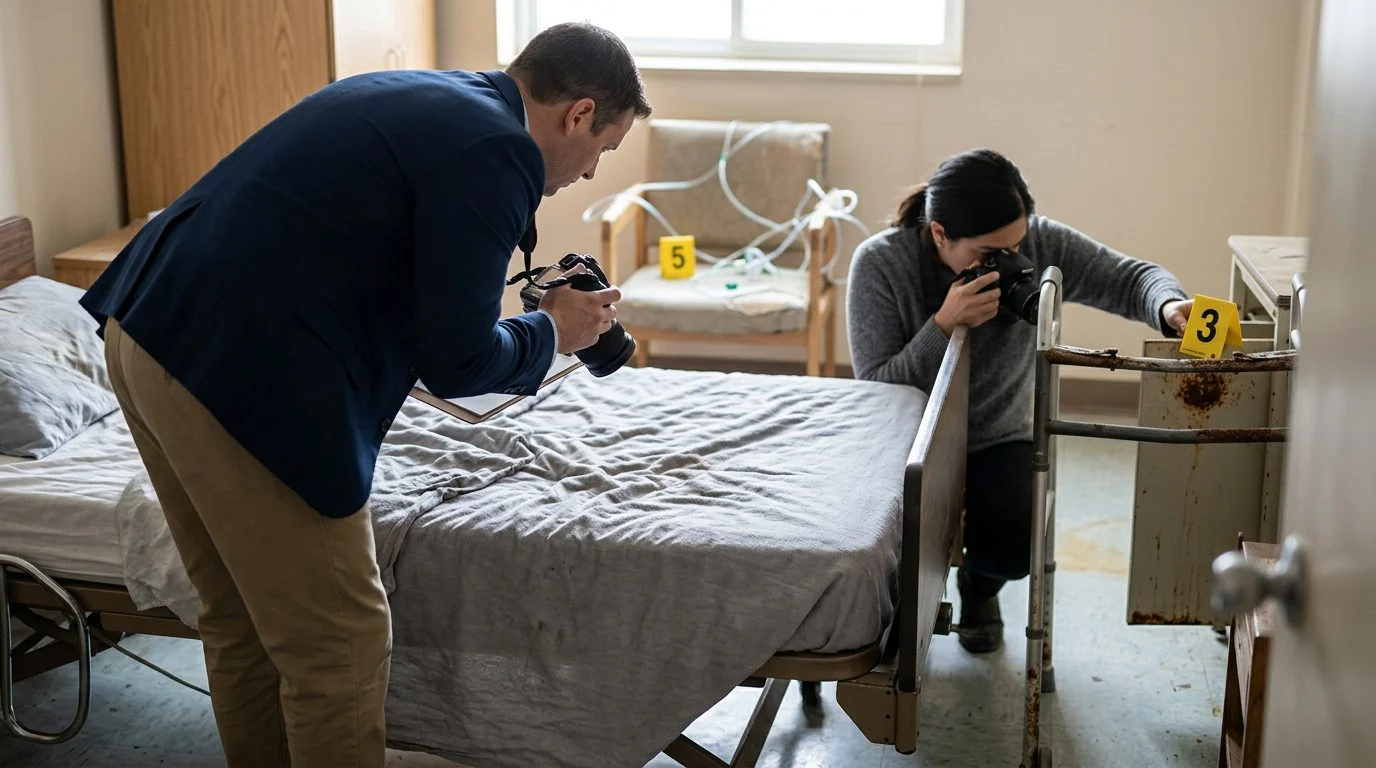
Record physical signs. These include bedsores, weight loss, soiled bedding, missed medications, and unexplained bruises. Take photos when it is safe and allowed.
Keep a simple log of every visit, call, and conversation with staff. Write the date and what was said.
Describe facts plainly. Stick to what you saw or were told directly. Avoid guessing about motives, because guesses can weaken an otherwise strong report.
Before you hang up, ask for a reference or case number. Write down the name of the person who took your report.
Signs of Abuse and Neglect, Including in Residents With Dementia
Common warning signs include unexplained injuries, sudden withdrawal, fear of certain staff, poor hygiene, dehydration, and unexplained changes in money or belongings. A change in behavior can matter as much as a visible injury.
Residents with dementia may not be able to explain what happened to them. That makes outside observation and written notes especially important. Your log may be the clearest record available.
For more detail, read our supporting articles on the relationship between dementia and elder abuse and on six signs of abuse in people with dementia.
Not sure what your next step is?
Talk it through with our team — the first consultation is free, confidential, and carries no obligation.

What Happens After You Report, and When to Talk With a Lawyer
After a report, the agency may review the complaint, inspect the facility, and interview staff and residents. It may also issue citations. Under O.C.G.A. § 31-8-126, the state may impose civil penalties on a facility for repeated violations under the same license within 12 months. The penalty can be up to $75.00 per violation for each day it continues, with a maximum of $2,500.00 per violation.
An agency report is not a legal claim for money. A claim for compensation is a separate process, and it has its own deadlines. Under O.C.G.A. § 9-3-33, a Georgia personal-injury lawsuit must generally be filed within two years after the right of action accrues, except that actions for injuries to the person involving loss of consortium must be brought within four years after the right of action accrues.
Families facing serious injury, a catastrophic harm, or a death in a facility often have questions about legal options alongside the agency process. Those questions are worth asking early.
Can I report a nursing home without giving my name?
Many Georgia agencies accept reports without a name. Ask the agency how it handles anonymous reports before you give details.
Should I call 911 or report to an agency?
Call 911 for immediate danger or a medical emergency. You can report to an agency as well, and the two steps can happen at the same time.
What should I write down before I report?
Write down the resident’s name and room, dates and times, what you saw or heard, and any staff names. Keep a call log and ask for a reference number.
Slam Dunk Attorney is based in Duluth, Georgia. Peter F. Jaraysi is the responsible lawyer for this page. If you’re weighing your options, you can contact our team. Your first consultation is free, confidential, and without obligation.
If someone is in immediate danger, call 911
For an injury, a medical emergency, or any situation where a resident is at risk right now, call 911 first. You can report the concern to a state agency afterward, or at the same time.
How to Report a Concern, Step by Step
1. Write down what you saw
Note the date, time, resident's name, the facility name and address, and the staff members involved. Describe injuries, bruising, unexplained changes, missing items, or neglect in plain words.
2. Gather supporting details
Save photos, texts, emails, medical notes, or billing records if you have them. Keep originals and do not alter them. Record names of anyone else who witnessed the problem.
3. Ask about anonymous reporting
Before you share your name, ask the agency how it handles anonymous reports and what it needs from you to follow up. Many agencies accept reports without a name, but they may ask for contact details to investigate.
4. Keep a record of your report
Write down the date, the person you spoke with, and any case or reference number you receive. Keep a copy of anything you submit in writing, and note any follow-up you receive.
What Helps a Report Move Forward
Specific facts
Dates, names, and clear descriptions of what happened make it easier for investigators to act.
Prompt reporting
Reporting soon after you notice a concern helps preserve details and gives the facility less opportunity to change records.
Your privacy
Ask how your identity is protected, and whether the agency will share your information with the facility.
Care for the resident
Keep visiting when it is safe, speak with your loved one about their experience, and watch for changes in health or mood.