
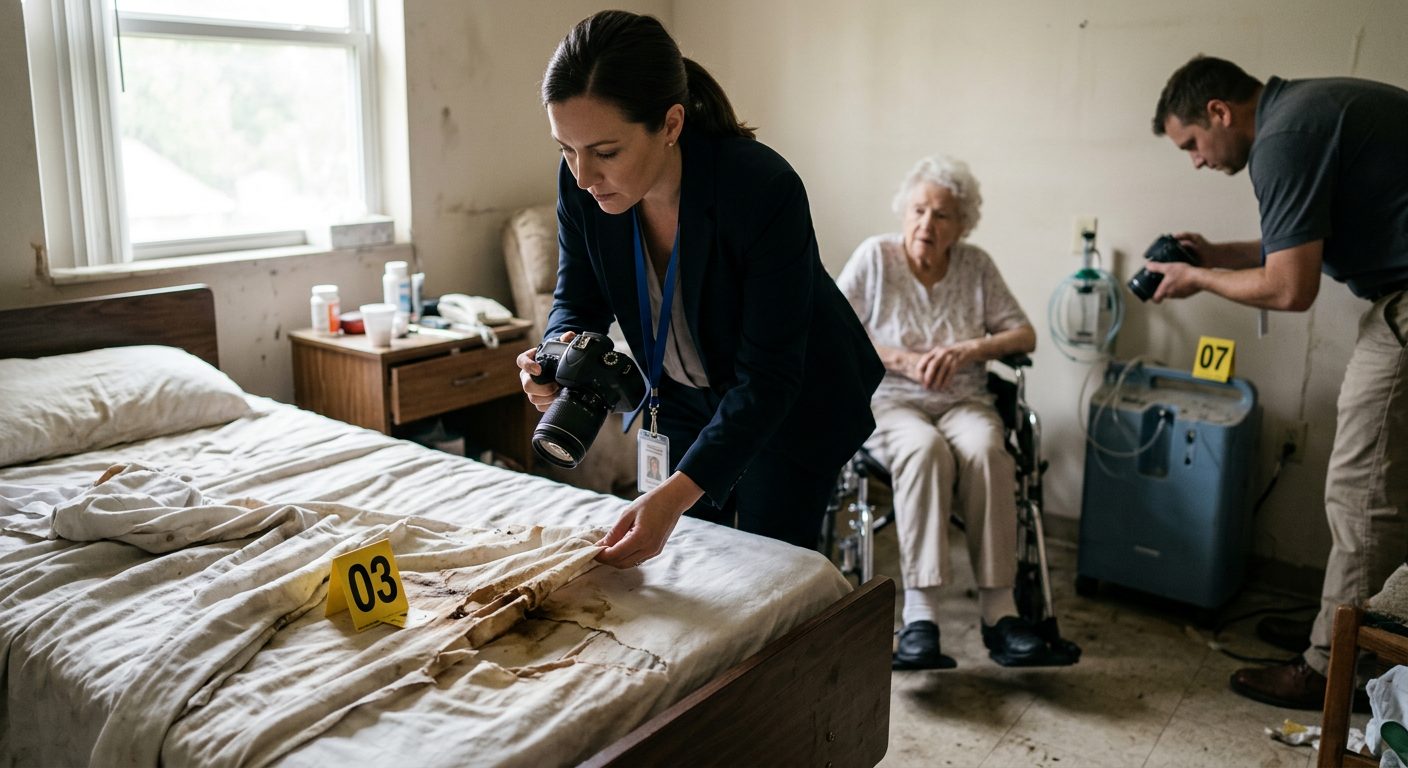
Nursing Home Abuse | Georgia
How to Sue a Nursing Home for Neglect in Georgia
A plain-language guide for families who suspect a loved one was neglected in a nursing home, and what to do next.
Why families start with a free consultation
Confidential first conversation
Share what you have seen in a private setting. Your information stays confidential.
Clear answers in plain language
We explain the process step by step so you can make informed decisions for your family.
Care for your family's needs
Nursing home neglect affects the whole family. Our team takes the time to listen to your concerns.
Serving Georgia families
Slam Dunk Attorney represents people across metro Atlanta and Georgia, including Duluth, Lawrenceville, Marietta, Alpharetta and Dunwoody.
By Peter F. Jaraysi · Published October 24, 2026
Knowing how to sue a nursing home for neglect in Georgia starts with one question: did the facility fail to give your loved one reasonable care? If it did, and that failure caused harm, a claim may be possible. This guide walks through the steps in plain language, from protecting the resident to the filing deadline. It explains the framework, but every claim depends on its own facts and records.
What Counts as Nursing Home Neglect Under Georgia Law?
Nursing home neglect is a failure to give a resident the care a reasonable facility would give in similar circumstances. Georgia law says each resident must receive care that is adequate and appropriate, given with reasonable care and skill and in line with applicable laws and regulations (O.C.G.A. § 31-8-108). Georgia defines ordinary negligence as the absence of ordinary diligence, meaning the care an ordinarily prudent person would take in similar circumstances (Georgia ordinary negligence statute).
Neglect is different from intentional abuse. Neglect means a failure to provide needed care, such as fluids, repositioning, medication, or supervision. Abuse usually involves a deliberate act. One case can include both, and what matters most is what happened and what it caused.
Common examples include bedsores (pressure ulcers) that develop or get worse, unexplained falls, dehydration or malnutrition, medication errors, and untreated infections. A missed scheduled turn is one simple example. Neglect often traces back to staffing levels or training, not only to one worker’s mistake.
If you're worried about a parent or spouse in a nursing home right now, you don't have to sort out the legal questions alone; call us for a free case review. Talk it through with our team — the first consultation is free, confidential, and carries no obligation.
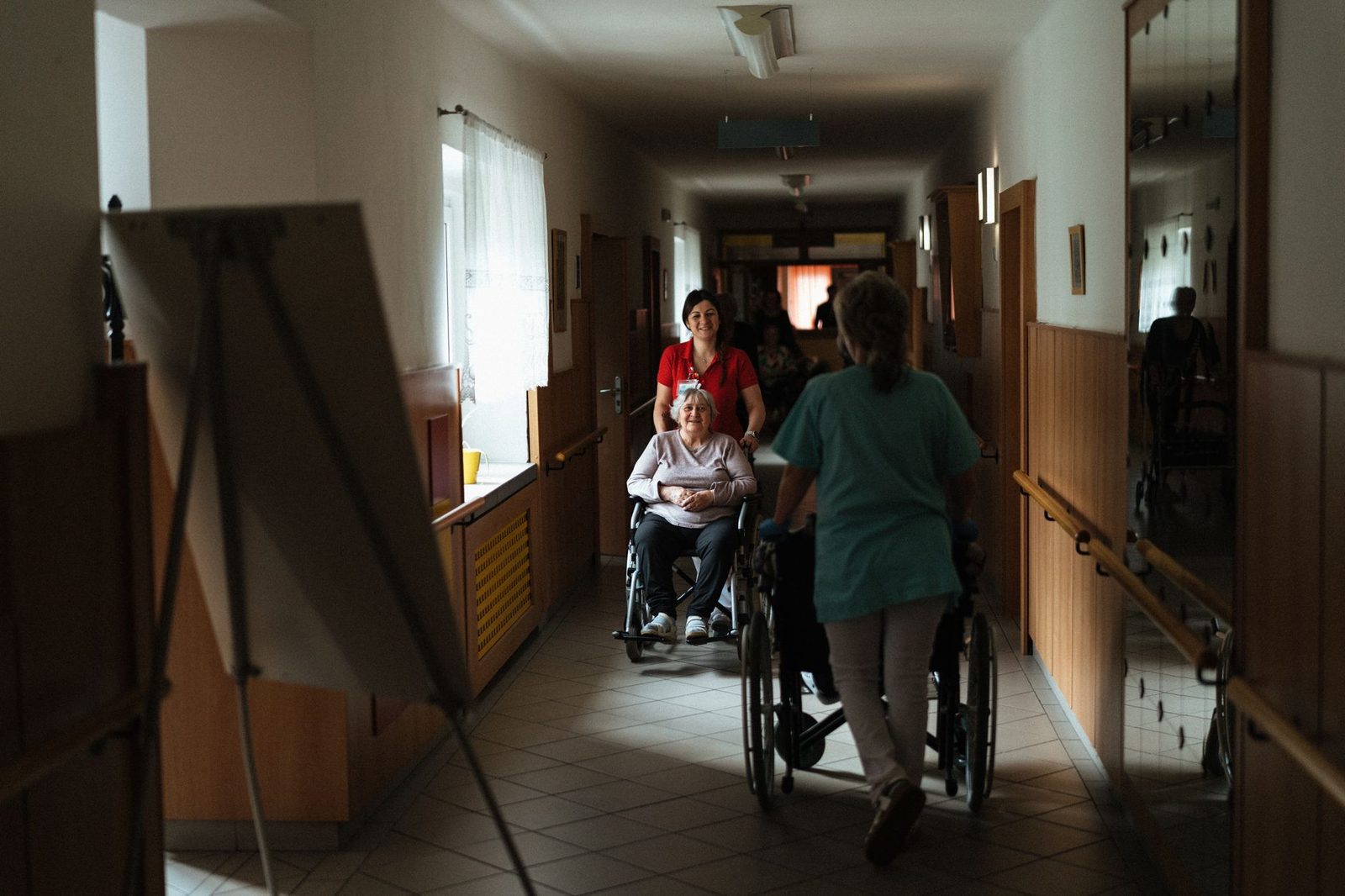
Can You Sue a Nursing Home for Neglect?
Yes, a person harmed by neglect may bring a claim against the facility. Georgia law gives a person harmed by a long-term care facility’s failure to provide a right under the statute a cause of action for damages and other relief the court considers proper (O.C.G.A. § 31-8-126). The statute also says no one is barred from suing for failing to use administrative relief first.
More than the facility itself can be involved. The company that runs the building, a management company, or a staffing agency may share responsibility, depending on who hired, directed, or controlled the care. Georgia law makes a person answer for torts committed by a servant within the scope of the business (O.C.G.A. § 51-2-2). An employer can also answer for a contractor’s negligence in certain cases, including when it keeps control over how the work is done (O.C.G.A. § 51-2-5).
Who files, and in what role, turns on the facts and on Georgia procedure. A resident who can act for themselves may bring the claim. A family member or personal representative may need to act for a resident who has died. Our guide on who can be responsible goes deeper.
Step 1: Protect Your Loved One and Write Down What You Observe
The first step is your loved one’s safety and medical care. The second is a written record of what you see.
If you suspect an injury or infection, get urgent medical care for the resident right away. Don’t delay treatment while you think about a legal step.
Keep a dated log. Note visits, changes in appearance or eating, falls, new bruises, and what staff say about an injury. Write down each explanation and who gave it. A log kept close to the event is harder to dispute than memory.
Ask for the resident’s records in writing. A resident may inspect and receive a copy of medical records unless medically contraindicated, and the facility may charge a reasonable fee that does not exceed actual cost (O.C.G.A. § 31-8-108). The same section says a significant change in health status must be reported to persons the resident chooses within a reasonable time.
Read any papers before you sign them. Admission packets and new releases can include clauses about disputes. You can also report concerns to the state. The Georgia Department of Community Health accepts complaints about a Georgia-licensed facility online, by telephone, or by fax (Georgia HFRD complaint page).
Step 2: Gather the Evidence That Supports a Neglect Claim
Strong neglect claims rest on records that show what care was ordered, what was given, and what changed.
Start with medical records, including nursing notes, physician orders, lab results, and medication administration records. Medication administration records show whether doses were given on time. Care plans and staffing schedules can show whether care was documented and whether staffing matched the resident’s needs.
Add dated photographs of injuries, bedsores, or unsafe room conditions. Write down statements from other residents, visitors, and staff while memories are fresh. If the resident was moved to a hospital or another provider, request those records too.
Questions about the quality of care in a nursing home are common, and our team is glad to talk through them. A medical professional’s review of the records can help connect a gap in care to the harm. That link is often the hardest part to prove.
What Must Be Proven: The Four Elements of Negligence
Duty means the facility owed the resident care once the resident was admitted. Breach means the facility fell short of ordinary diligence, such as missing scheduled turns before a bedsore formed.
Causation means the breach directly led to the injury or decline. This is often the most contested element, because the facility may argue the harm had other causes. Damages means measurable harm, such as physical injury, worsened health, pain, or death.
The strength of each element depends on the records. A clear chart can make a gap easier to see, while missing records can make it harder to prove.
How Long Do You Have to Sue a Nursing Home in Georgia?
Georgia generally requires an action for injuries to the person to be brought within two years after the right of action accrues (O.C.G.A. § 9-3-33). Loss of consortium claims under the same section have a four-year period.
Every case depends on its own facts, including questions about timing. The statute begins with the words “except as otherwise provided,” so other rules can apply. Waiting can close off options, so timing matters from the start.
Claims after a death follow separate rules, and those dates should be reviewed early. A deadline is a reason to get legal information soon, not a reason to panic. Careful records made now help whatever comes next.
Not sure what your next step is?
Talk it through with our team — the first consultation is free, confidential, and carries no obligation.
How a Nursing Home Neglect Lawsuit Moves Forward
A neglect lawsuit usually moves through investigation, a filed complaint, discovery, settlement talks or mediation, and, if needed, trial.
- Investigation: Records are requested and reviewed before anything is filed.
- Complaint: A case is filed in the appropriate Georgia court, which starts the formal process.
- Discovery: Both sides exchange records and written questions. Staff and treating providers may be deposed.
- Settlement or mediation: Many cases reach resolution at this stage, before trial.
- Trial: This happens only if no settlement is reached. Outcomes are uncertain and cannot be predicted in advance.
Timelines vary with how complex the records are, how many parties are involved, and the court’s schedule. No one can set a firm timeline at the start.
What Compensation May Cover in a Nursing Home Neglect Case
Compensation can cover the losses Georgia law recognizes, and each category must be supported by the facts.
Georgia law separates general damages from special damages. Special damages actually flow from the act and must be proved (O.C.G.A. § 51-12-2).
Special damages in a neglect case often include medical bills for treatment caused by the neglect, such as hospitalization, wound care, and rehabilitation. They can also include the cost of added care that the injury made necessary.
When a resident has died, Georgia law allows a surviving spouse, or if there is no surviving spouse, a child or children, to recover for the death of the spouse or parent the full value of the life of the decedent, as shown by the evidence (O.C.G.A. § 51-4-2). No compensation amount can be promised in advance.
What Costs and Fees Should You Expect Before You Decide?
The firm offers a free first consultation that is confidential and carries no obligation to continue.
Legal cases can involve court filing fees, records costs, and fees for medical professionals who review records. The client may still be responsible for court costs and case expenses. Ask how fees and costs are handled, and get the terms in writing before you commit to anything.
Quick Answers to Common Questions
How long do I have to sue a nursing home in Georgia?
Georgia generally allows two years from the date the right of action accrues for injuries to the person (O.C.G.A. § 9-3-33; Kenneth B. Cameron v. Jmp Pizza, Inc (2026)).
Can a family member sue after a resident dies?
Possibly. Wrongful death claims follow separate rules, so the facts and dates matter.
Who can be held responsible?
The facility, its operator, or a management or staffing company may share responsibility, depending on who controlled the care.
Talk Through Your Loved One’s Situation With Our Team
If you’re worried about a parent or spouse in a nursing home, you’re likely deciding what to do while also managing their care. Maybe a parent has unexplained bruises, a new bedsore, or has stopped eating. Maybe a spouse was moved to another room without explanation.
Those moments carry fear, and deciding on legal action can feel heavy on top of everything else. If you’re facing that choice now, you don’t have to work through it alone. Request a free consultation with our team, and we’ll talk through what you’ve seen.
This page is general information, not legal advice. The responsible lawyer for this page is Peter F. Jaraysi of Slam Dunk Attorney, Duluth, Georgia. Contact details are on our contact page.
What to do if you suspect neglect
Document what you see
Write down dates, injuries, changes in condition, and the names of staff involved. Photos of bedsores, bruises or unsafe conditions can be helpful.
Keep records together
Save care plans, billing statements, medication logs, incident reports and any messages with the facility in one place.
Report your concerns
Notify the facility administrator in writing and keep a copy. Ask for your loved one's medical and care records.
Talk with our lawyers
A free consultation can help you understand your options, the information that matters, and the next steps for your family.
Act early to protect the evidence
Records can be changed, lost or discarded over time, and memories fade. If you are concerned about a loved one's care, gather what you can now and speak with our team as soon as possible.
Have questions about a nursing home in Georgia? Talk with our team.
Related practice areas
- Who Can Be Held Liable for Nursing Home Abuse in Georgia?
- Pedestrian Hit by Car Compensation in Georgia