
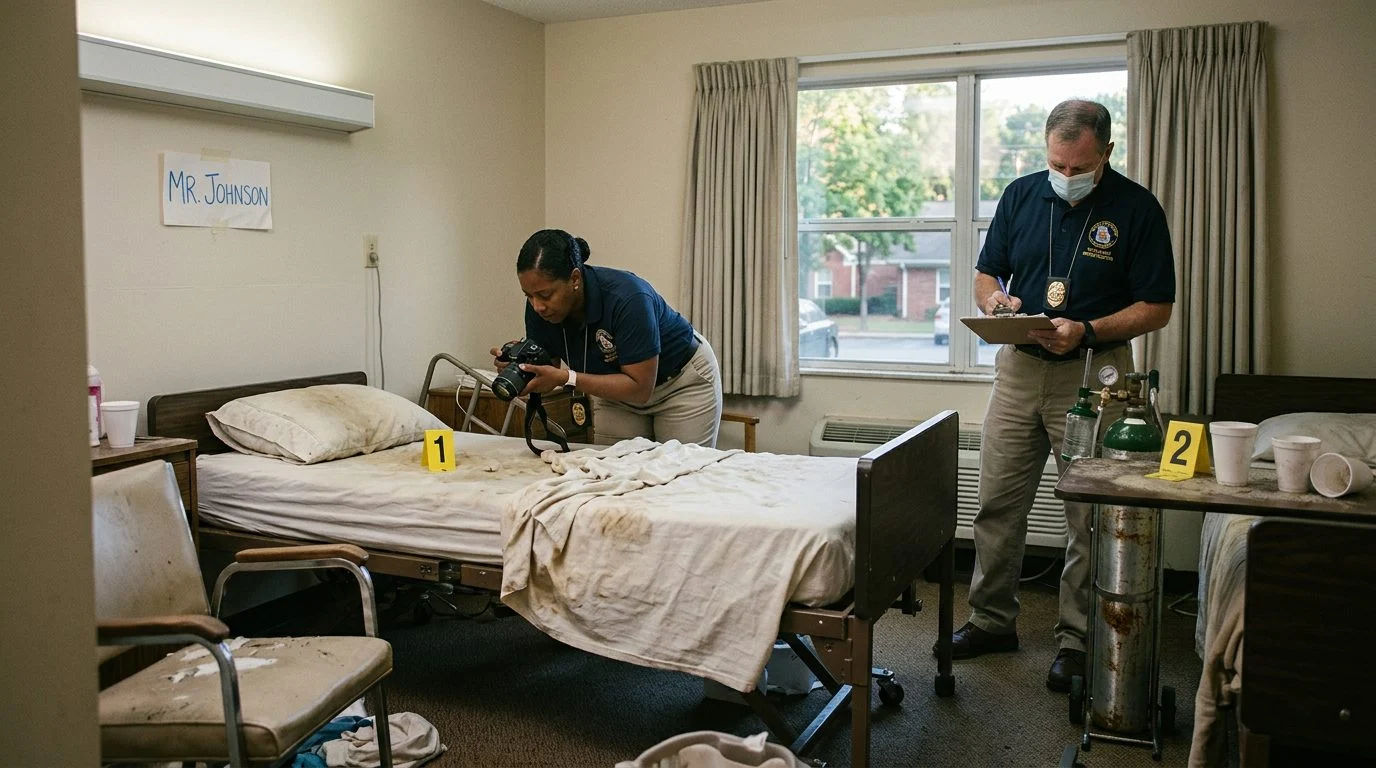
Nursing Home Abuse | Duluth, Georgia
Worried About a Loved One in a Georgia Nursing Home? Here's How to Speak Up
Learn where to report concerns, what details to write down, and how a lawyer can help your family protect a resident while the facts are reviewed.
By Peter F. Jaraysi · Published November 18, 2026
Watching a parent or loved one struggle in a nursing home can leave you uneasy, especially when something seems wrong and no one explains it. You can file a complaint against a Georgia nursing home with the state’s Healthcare Facility Regulation Division (HFRD) by phone, online, or by fax. A complaint is a report to the state, and you don’t need to prove what happened to make one.
This guide covers who handles these complaints, what to have ready, how to keep records, and how a state complaint differs from a legal claim.
Why a family member might need to file a complaint
A complaint is a report to the state about a facility’s care or conditions, and you can file one when you’re worried. Many families first notice something small. A fall nobody explained, new bedsores, weight loss, a medication that seems wrong, or a parent who has grown withdrawn can all be reasons to speak up.
Those changes can have many causes. A complaint doesn’t ask you to know what happened or why. It asks the state to look. Federal rules say residents have the right to be free from abuse, neglect, and exploitation, as the federal nursing home abuse rule explains.
A complaint is also separate from a personal legal claim. Filing with the state doesn’t start a lawsuit, and a lawsuit doesn’t replace a state review. Each one does a different job. The state inspects and decides what follows.
If you're worried about a family member in a Georgia nursing home, you don't have to work through the next steps alone, and our team is ready to talk. Talk it through with our team — the first consultation is free, confidential, and carries no obligation.
Who oversees nursing homes in Georgia
The Georgia Department of Community Health, through its Healthcare Facility Regulation Division (HFRD), oversees Georgia-licensed nursing homes and handles complaints about them. The department explains its nursing home oversight and inspections on its long-term care facilities page.
Two roles are worth knowing. HFRD inspects facilities and enforces licensing standards. The Long-Term Care Ombudsman Program is a separate program that advocates for residents of long-term care facilities and works on their concerns and rights. You can contact either one, or both, depending on what you’ve seen.
What is reportable in a nursing home
Any concern about a resident’s safety or care is worth reporting to HFRD. You don’t need to be certain before you call. The rules focus most on abuse, neglect, and exploitation.
Common concerns include suspected abuse or neglect, unexplained injuries, repeated falls, bedsores, medication problems, poor hygiene or nutrition, unsafe living conditions, and not enough staff to meet a resident’s needs.
Federal rules define neglect as the failure of the facility, its employees or service providers to provide goods and services a resident needs to avoid physical harm, pain, mental anguish, or emotional distress. You can read both definitions in the federal definitions rule. They define immediate jeopardy as a situation in which the provider’s noncompliance with one or more requirements of participation has caused, or is likely to cause, serious injury, harm, impairment, or death. You can read both definitions in the federal definitions rule.
Immediate danger comes first. If a resident is in danger right now, call 911, then report the concern to HFRD.
Describe what you saw or were told in plain facts. “I found her on the floor at 3 a.m.” helps more than a guess about cause or intent.
How to file an HFRD complaint, step by step
You can file with HFRD online, by telephone, or by fax. The HFRD complaint page lists the toll-free line as 800-878-6442 and the fax as (404) 657-8935.
Step one: choose the method that fits you. A phone call lets you speak with someone right away. An online form or a fax gives you a written copy of what you reported.
Step two: give the facility’s name and address, the resident’s name, and a clear description of the concern. Be specific about dates, places, and what you observed. “She had a bruise on her left arm on Tuesday” helps more than “They don’t take care of her.”
Step three: ask for a reference or tracking number if one is given. Write down the date, the time, and the name of the staff member who took your report.
Georgia law says a report about suspected abuse, neglect, or exploitation of an elder or disabled adult may be made by oral or written communication. The report should include the person’s name and address, and the nature and extent of the injury or condition. See O.C.G.A. § 30-5-4.
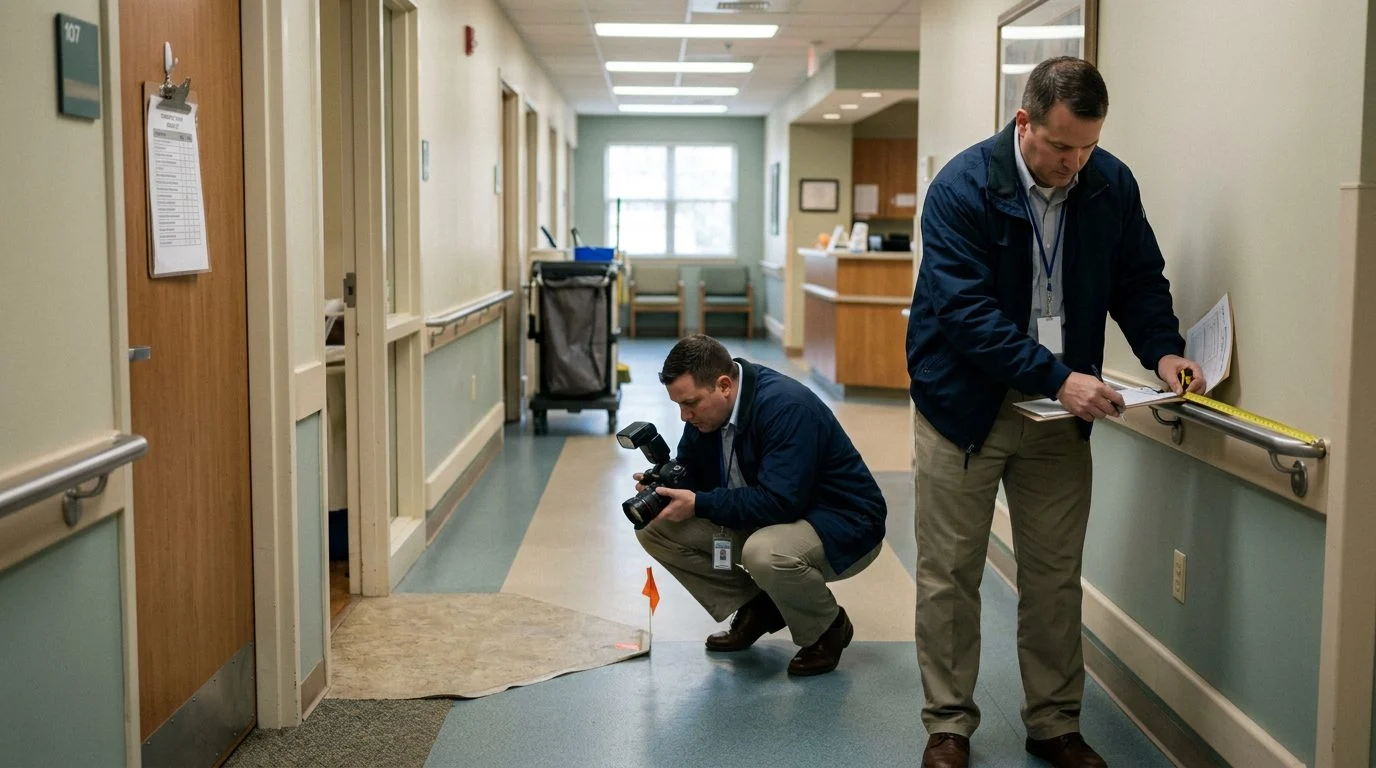
What to have ready before you call or write
Have the resident’s full name, the facility’s name and address, and the room or unit if you know it. These details help the state find the right records.
Next, build a short timeline. List each date, what you saw or heard, and who was involved. Include changes in the resident’s condition, such as new injuries, weight loss, or a shift in medications. Note any diagnosis or treatment you know about.
Gather documents you already hold, such as care plan notes, incident or discharge papers, and photographs. Keep the originals somewhere safe and work from copies.
Access matters too. Under O.C.G.A. § 31-8-108, a resident has access to all information in their medical records. The resident may inspect and receive a copy unless medically contraindicated. The facility may charge a reasonable fee, and that fee cannot exceed actual cost.
After you report: keep a written record
Write down every contact. Record the date, the method, who you spoke with, what you reported, and any reference number. Keep copies of anything you sent in writing, and save any letters or notices from the state or the facility.
Keep a simple daily log of the resident’s condition. Note new injuries, medication changes, meals, visits, and calls with staff. A log shows patterns that a single phone call can miss.
Federal rules place duties on the facility, too. The facility must report alleged abuse, neglect, exploitation, or mistreatment to its administrator and other officials, including the State Survey Agency and adult protective services where state law provides. That report is due immediately, and no later than 2 hours after the allegation is made, if the events involve abuse or result in serious bodily injury. Otherwise it is due within 24 hours. The facility must also investigate thoroughly and prevent further potential harm while the investigation is in progress. The federal nursing home abuse rule sets out these steps.
Not sure what your next step is?
Talk it through with our team — the first consultation is free, confidential, and carries no obligation.
Timing and when a complaint is not the only step
A state complaint and a personal legal claim are separate. One does not replace the other.
Georgia law says actions for injuries to the person must generally be brought within two years after the right of action accrues, except for actions for injuries involving loss of consortium, which must be brought within four years, under O.C.G.A. § 9-3-33.
Under O.C.G.A. § 31-8-126, a person harmed because a long-term care facility violated or failed to provide a right under that article may sue the facility for damages and other relief. The law also says that failing to use administrative relief first does not bar that action.
If a resident has died and no person is entitled to bring a wrongful death action under O.C.G.A. §§ 51-4-2 or 51-4-4, Georgia’s wrongful death statute, O.C.G.A. § 51-4-5, lets the administrator or executor bring an action for the benefit of the next of kin.
Common questions
Is a complaint to HFRD the same as a lawsuit?
No. A complaint asks the state to inspect and enforce standards, while a lawsuit asks a court for damages.
Do I need proof before I file?
No. You report what you saw or were told, and the state reviews the facts.
Do I need a lawyer to file with HFRD?
No. A person who believes a facility gave poor care may file directly with HFRD.
Talk with Slam Dunk Attorney about your family’s situation
If you’re worried about someone you love in a nursing home, you may be carrying this decision alone. You may not yet know whether a state complaint, a legal claim, or both fit your family’s situation. That’s a hard place to be.
Slam Dunk Attorney is a personal injury law firm based in Duluth, Georgia. It handles nursing home abuse matters, along with car, truck, and other injury claims in metro Atlanta and across Georgia.
The initial consultation is free, confidential, and carries no obligation to continue.
If you want to talk through what you’ve seen, contact Slam Dunk Attorney and our team will listen.
Responsible lawyer: Peter F. Jaraysi, Slam Dunk Attorney, Duluth, Georgia. This page is general information, not legal advice, and it does not promise or predict any result. Contact details are on the contact page.
How Slam Dunk Attorney Can Help
Focused on Protecting Residents
Our firm focuses on nursing home abuse and neglect matters across metro Atlanta and Georgia, and we work to keep your loved one's safety at the center of every decision.
Organizing Your Records
We help you gather care plans, medical records, incident notes, photos and messages so the important details are clear and easy to follow.
Plain-Language Guidance
We explain your options in everyday terms, so you know what each step involves before you decide what to do next.
Compassionate, Confidential Conversations
We understand how stressful it is to see a family member struggle. Your first conversation with our team is handled with care and privacy.
Keep a Record as You Go
Write down dates, names of staff, and what you observed or were told, and keep copies of every letter, care plan and bill. A state complaint and a legal claim are separate steps, and a lawyer can explain how they may fit together.
Your Next Steps
Write Down What You Noticed
Note the date, time, any injuries or changes in condition, and the names of staff involved. Specific details make a report easier to review.
Gather Your Documents
Collect medical records, the resident's care plan, billing statements, and any messages you have exchanged with the facility.
Talk With a Lawyer
A lawyer can explain your options alongside a state complaint, from protecting your loved one's care to understanding what comes next.