
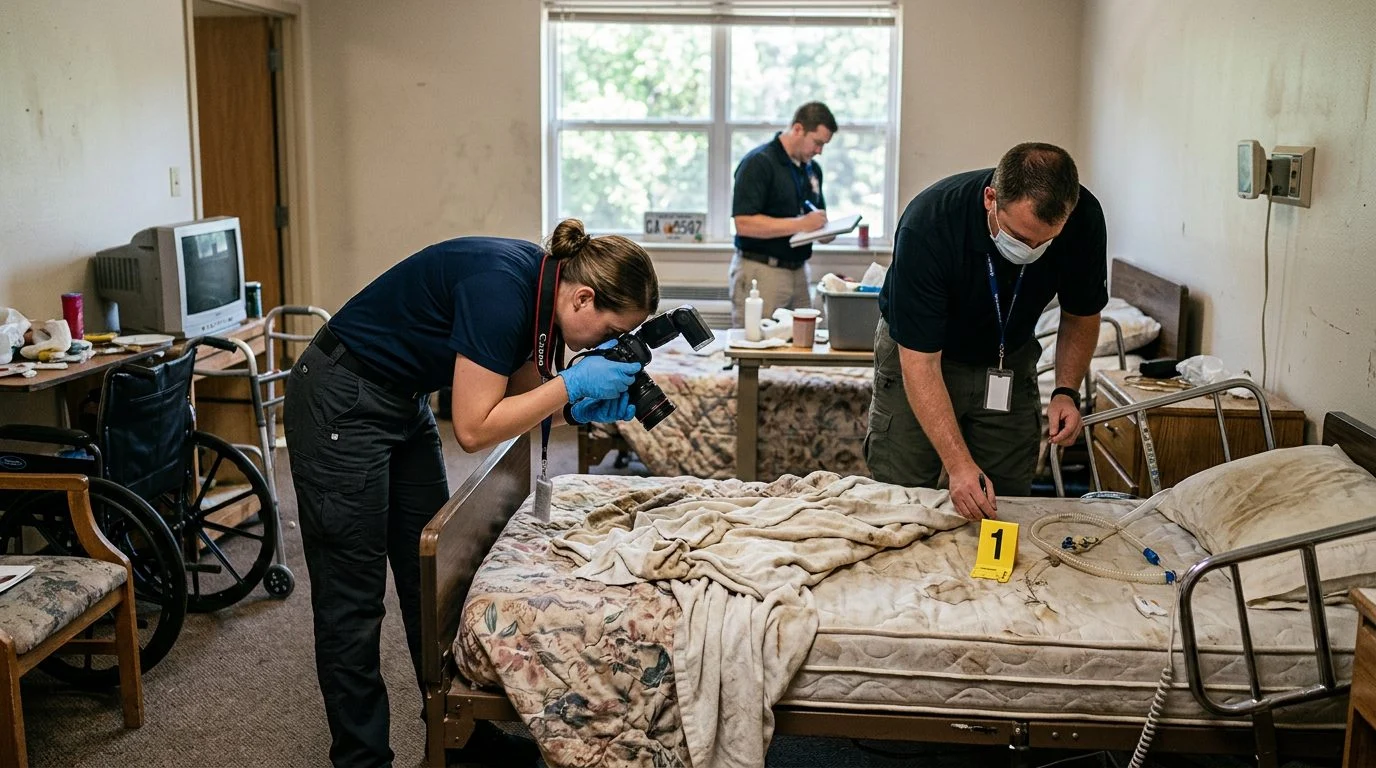
Nursing Home Abuse | Duluth, Georgia
Proving Nursing Home Negligence in Georgia: What Families Should Know
A nursing home failure can leave a loved one hurt and families searching for answers. Here is how these claims are built and where our team can help you start.
By Peter F. Jaraysi · Published November 12, 2026
Short answer: proving nursing home negligence takes careful, detailed evidence
Yes, it can be hard. In Georgia, the key records usually sit with the nursing home, and proof is built from many pieces rather than one document. A clear timeline and careful records do most of the work.
If you are worried about a parent or relative in a nursing home, you may feel stuck. Your loved one may not be able to describe what happened. Many families start with only a few signs: a new bedsore, an unexplained bruise, a fall no one explained, or a sudden drop in weight or appetite.
Proof usually builds over time. It draws on facility records, medical records, photos, personal notes and witness accounts, all arranged into one timeline. No outcome can be predicted from general information, because every situation is different. You don’t need every piece at once. Most families gather information in stages. The goal is to write down what you see, keep what you receive, and understand which facts matter under Georgia law. The sections below explain each step.
If a loved one's care in Duluth or metro Atlanta has you worried, our team can talk through what you've noticed. You don't have to sort out the records alone. Talk it through with our team — the first consultation is free, confidential, and carries no obligation.
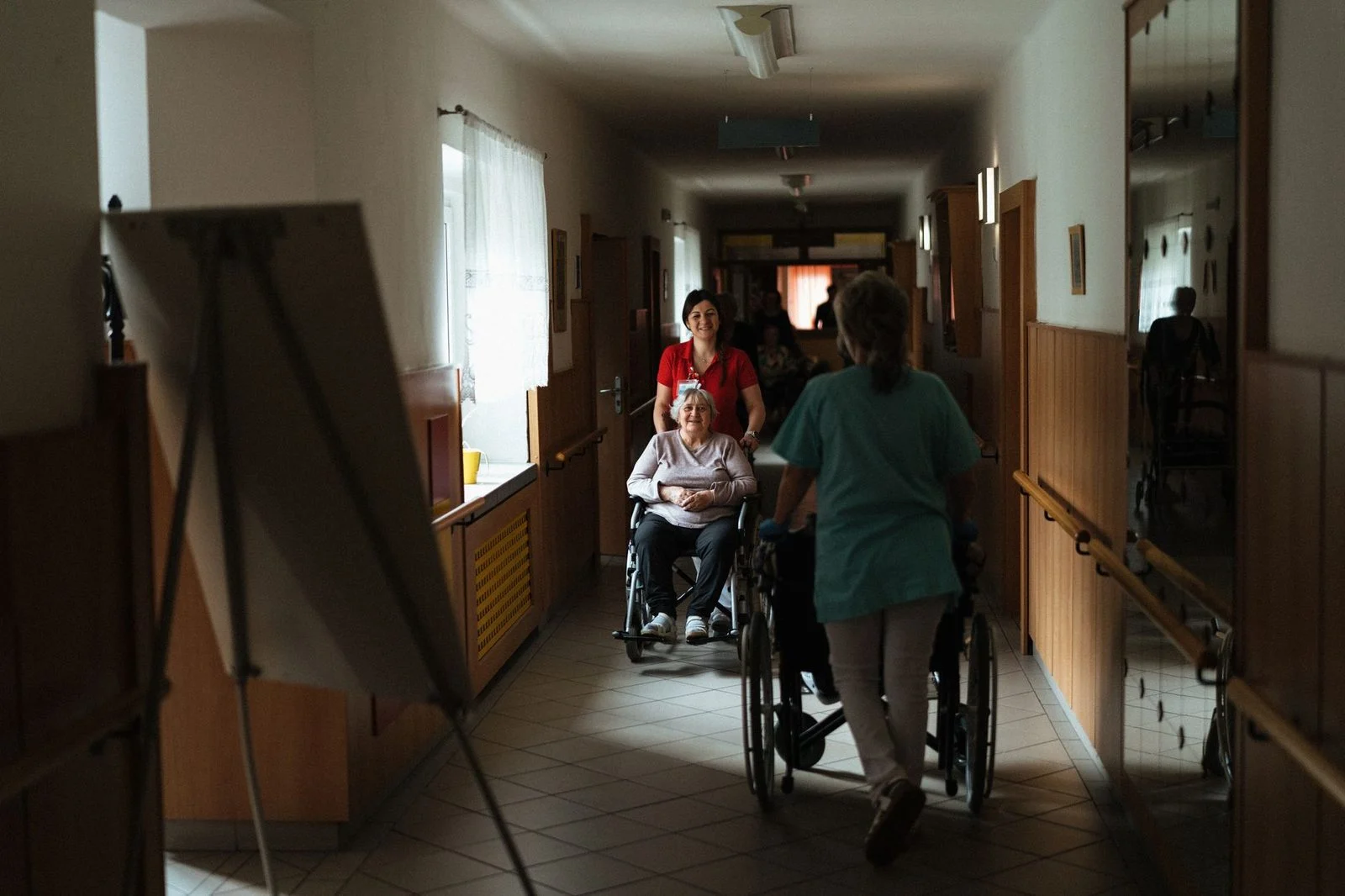
What counts as nursing home negligence
Nursing home negligence is care that falls below what a reasonably careful facility would provide, and that causes harm. Georgia law says each resident must receive care “with reasonable care and skill” and in compliance with applicable laws and regulations (O.C.G.A. § 31-8-108). Under Georgia’s general negligence rule, the absence of ordinary diligence is ordinary negligence (O.C.G.A. § 51-1-2).
Common examples include:
- Bedsores from missed repositioning
- Falls during transfers that no one supervised
- Dehydration or poor nutrition
- Medication errors
- Infections that were not treated
- Injuries the facility cannot clearly explain
Federal rules also protect residents.
Neglect often shows up as a pattern. One missed turn may be a single mistake. The same resident with repeated bedsores over several weeks, across different shifts, points to a larger problem. Patterns matter because they show whether the problem was ongoing.
The firm handles nursing home abuse matters as part of its practice. For more background, see our nursing home abuse guide.
The four things you generally must prove
Injury claims often turn on questions about who was responsible for what happened and how the injury affected the person.
Duty. The facility owed the resident care once it accepted the resident. Georgia law requires that care be given with reasonable care and skill (O.C.G.A. § 31-8-108).
Breach. The facility or its staff failed to meet that standard. Proof here usually comes from the chart: what was ordered, what was done, and what was missed. Georgia law also makes a person liable for torts committed by a servant within the scope of the person’s business (O.C.G.A. § 51-2-2). That means the facility can answer for its staff’s conduct on the job.
Causation. The breach directly led to the injury or decline. This is the link between the missed care and the harm.
Damages. The resident suffered measurable harm, such as medical costs, pain, or loss of function. In a wrongful death case, the family’s losses are part of the picture. Under O.C.G.A. § 51-12-2, special damages must be proved before they can be recovered.
Each element needs its own proof. A strong timeline can show duty and breach, but causation and damages often need medical review and billing records.
Medical and facility records: where most proof starts
Medical and facility records are usually the first place to look. Georgia law gives residents access to their medical records. Under O.C.G.A. § 31-8-108, a resident may inspect and receive a copy of the records unless medically contraindicated. The facility may charge a reasonable copying fee, but it cannot exceed actual cost.
Records that often matter include:
- Care plans
- Medication administration records
- Nursing notes
- Incident and fall reports
- Wound and weight charts
- Admission and discharge paperwork
Look for specific problems as you read. Gaps in charting can matter. So can changes in condition that were never written down. Repeated incidents and mismatches between the care plan and what actually happened also stand out.
Records often need to be compared with hospital and outside medical records. That comparison shows what changed and when. Request procedures can differ by facility, so it helps to start early and keep a written record of each request.
Photographs, notes and timelines the family can keep
Dated photographs can show what a resident’s condition looked like at a given time. Photograph bedsores, bruises, room conditions and missing equipment such as call buttons or bed rails. Write down the date and time each photo was taken.
Keep a simple daily log of your visits. Note changes in mood, eating, mobility and anything staff or the resident tells you. Write each entry the same day when you can. Small details fade quickly.
A timeline is one of the most useful tools for showing causation. It links facility events to medical treatment. For example, a fall reported by staff on one day, followed by an emergency room visit that same night, tells a clear story. Each event should have a record behind it.
Keep original documents in the form you received them. Do not alter or annotate them. Avoid posting photos or details about the resident on social media. Public posts can create privacy problems and can be used against your claim.
Witness statements, staff accounts, and regulatory records
Witness statements can confirm what happened. Useful witnesses include family members, visitors, other residents’ families, and former staff. The resident may also be able to describe events. Write each statement down soon after the events, while details are still fresh.
State records also matter. Georgia’s Healthcare Facility Regulation Division handles complaints about licensed nursing facilities. A person may file a complaint online, by telephone, or by fax (Georgia Department of Community Health complaint page).
Federal standards give a clear measuring stick. The CMS nursing homes guidance explains the federal requirements and survey protocols used to assess facilities and identify deficiencies. Comparing what happened to these standards can show where care fell short.
Prior problems can help show a pattern. If the same type of harm appears in multiple records or complaints, that pattern can support the claim. Keep copies of anything you receive about past complaints or citations.
Not sure what your next step is?
Talk it through with our team — the first consultation is free, confidential, and carries no obligation.
Causation and damages: often the hardest link to show
Causation is often the hardest part to prove. Facilities may argue that age or an underlying illness caused the decline. Proof must separate harm caused by missed care from harm that would have happened anyway.
Qualified medical reviewers can compare the care that was given with what the standard required. They can also explain how the harm developed over time. Georgia has a specific filing rule here.
Damages need documentation too. Medical bills, treatment records and records of functional decline all help. Under O.C.G.A. § 51-12-1.1, medical expenses are limited to the reasonable value of medically necessary care, treatment or services.
Georgia also apportions fault. Under O.C.G.A. § 51-12-33, the fact-finder considers the fault of everyone who contributed to the harm, and damages can be reduced by the plaintiff’s own share of fault. A plaintiff who is 50 percent or more responsible cannot recover damages.
Frequently asked questions
Is it hard to sue a nursing home for negligence?
It can be. The claim relies on records, witness accounts and medical review. Legal deadlines also apply, so gathering information early matters.
What are the four proofs of negligence?
They are duty, breach, causation and damages. Each one needs its own evidence, and all four must be shown.
What are the chances of winning a lawsuit against a nursing home?
Results depend on the evidence in each case, so no general percentage applies. Our team can review your situation and explain what the records may show.
The facility may charge a copying fee, but it cannot exceed actual cost.
Does a nursing home have to answer for what its staff do?
Under Georgia law, a person is liable for torts committed by a servant within the scope of the person’s business. The details depend on the facts of each case.
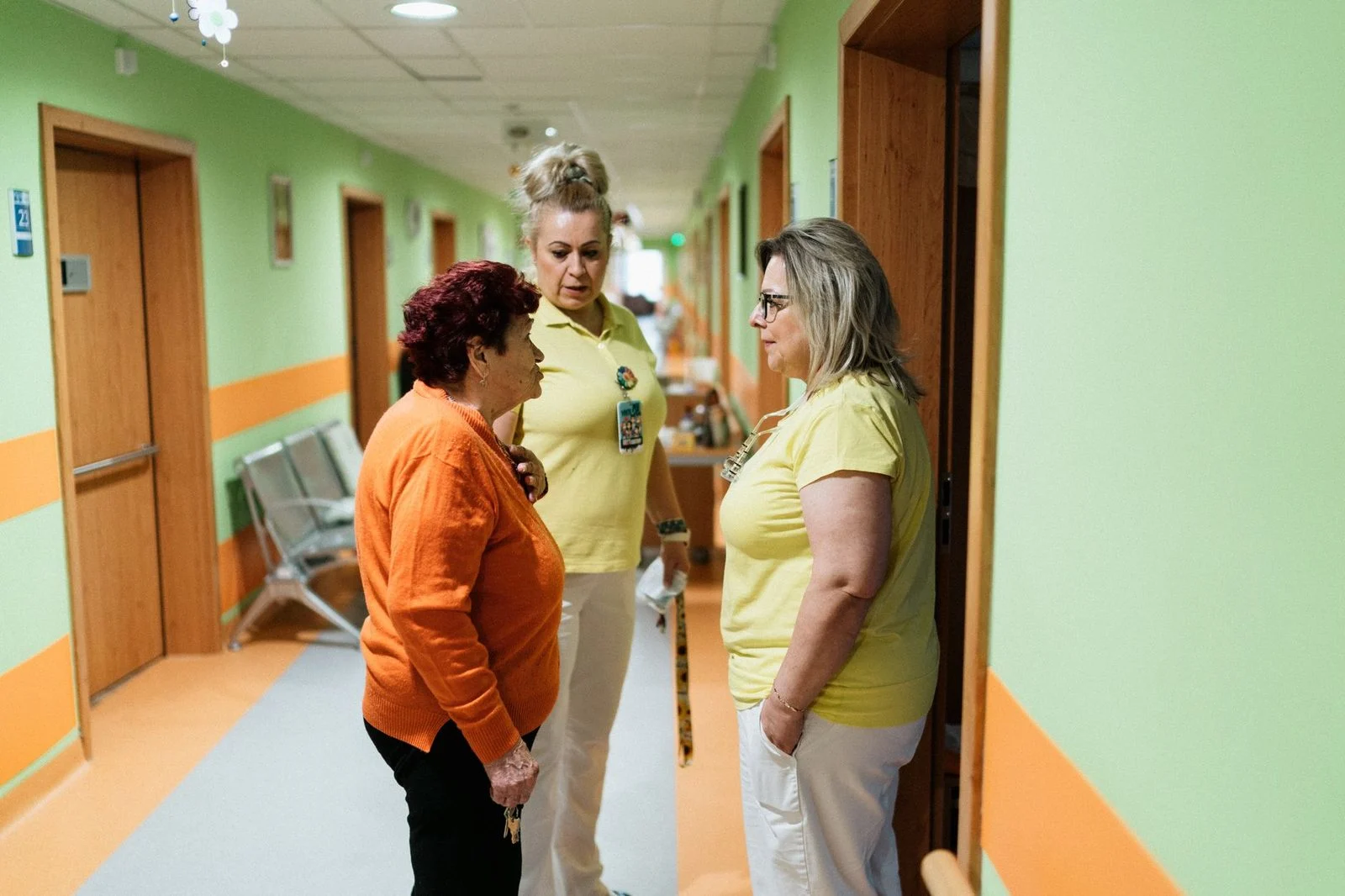
Talk with our team about what you are seeing
If you are reading this because something about a loved one’s care feels wrong, you are not alone in feeling unsure. The records are held by the facility, not by you. Deciding what to do next can feel overwhelming, especially when the person you’re worried about can’t explain what happened.
Maybe you’ve noticed bedsores that appeared without explanation, repeated falls, or a sudden decline in health. You may be asking whether the facility’s records can show what caused it. Our team can help you think through those questions.
You can request a free, confidential initial consultation with no obligation to continue. Bring any dated notes, records and photographs you have gathered. You can contact our team here.
Responsible attorney: Peter F. Jaraysi, Slam Dunk Attorney, Duluth, Georgia. This page is attorney advertising and provides general information, not legal advice.
How Our Team Approaches Nursing Home Cases
Careful record review
We look closely at medical charts, care plans, medication logs and incident reports to understand what happened and when.
Family and witness accounts
Statements from relatives, caregivers and others who saw your loved one's condition can add important context to the record.
Respect for your family
We understand that a loved one's care is personal. We handle each case with patience, sensitivity and honesty.
Plain-language communication
We explain legal terms, the steps involved and what to expect, so you can make informed decisions at your own pace.
Act Early to Preserve Evidence
Facility records, staffing schedules and video footage can be changed or lost over time. Talking with a lawyer early gives your family a better chance to gather and protect the information that matters.
Common Proof Challenges in Nursing Home Cases
Medical records
Charts, nursing notes and hospital records often show a change in condition, a missed treatment or a delayed response.
Staffing and care logs
Schedules, sign-in sheets and care documentation can show whether the facility had enough trained staff on duty.
Independent medical review
A qualified medical reviewer can help explain whether the care provided met accepted standards and how the harm occurred.
Witness statements
Staff, visitors and other residents may have observed warning signs, injuries or conditions that were never documented.