

Personal Injury Guide | Duluth, Georgia
Negligence vs. Liability: What's the Difference?
A plain-language explanation of two legal terms that come up after car, truck, motorcycle, rideshare and other injury accidents across metro Atlanta and Georgia.
By Peter F. Jaraysi · Published October 22, 2026
What is the difference between negligence and liability? Negligence is careless conduct, meaning a failure to use the care a reasonable person would use in the same situation. Liability is the legal responsibility that follows when someone must answer for the harm. After an injury in Duluth, Atlanta, or elsewhere in Georgia, people often use these words interchangeably. They mean different things, and the difference shapes how an injury claim is examined.
The Short Answer: Negligence Is a Failure of Care, Liability Is Legal Responsibility
Negligence describes conduct that falls short of reasonable care. Georgia’s statute defines ordinary diligence as the care that ordinarily prudent people use under similar circumstances. Its absence is ordinary negligence (O.C.G.A. § 51-1-2).
That is a question about what someone did or failed to do. Liability asks a different question: who must answer for the harm?
Think of a driver who runs a red light. The driver’s carelessness is negligence. Whether that driver, or anyone else, is legally responsible for the injuries depends on how the claim is proven. A court or jury decides liability after looking at the facts.
Injury stories often use the words “negligent” and “liable” together, which can make them seem interchangeable. They answer different questions, and keeping them apart makes the rest of a claim easier to follow.
If a fall, bite, or other accident left you hurt and unsure who must answer for it, our team can talk it through in a free first consultation. Talk it through with our team — the first consultation is free, confidential, and carries no obligation.
The Four Elements a Negligence Claim Must Show
Duty means the defendant owed the injured person a legal duty of care. That duty depends on the relationship and the setting. A driver owes other drivers and pedestrians reasonable care on the road. A business owes customers reasonable care on its premises.
Breach means the defendant failed to meet that duty. It acted unreasonably, or it failed to act when it should have.
Causation means the breach caused the injury. Courts look for a clear link between the failure and the harm. Lawyers often call this proximate cause.
Damages means the injured person suffered real harm. Common examples include medical bills, lost wages, and pain and suffering.
That’s why early records, photos, and witness names matter so much.
How Liability Is Assigned, Including Routes Other Than Negligence
Negligence is a common basis for injury liability, but it isn’t the only one. The legal basis is identified case by case.
Georgia’s dog bite statute is one example. Under O.C.G.A. § 51-2-7, an owner or keeper of a vicious or dangerous animal may be liable. That applies when careless management or letting the animal run loose injures someone who didn’t provoke it. Proof can be simpler when a local leash ordinance applies and the animal wasn’t on a leash.
Employers can also answer for workers’ conduct. Under O.C.G.A. § 51-2-2, a person is liable for torts committed by a servant in the prosecution and within the scope of his business. One party answers for another’s conduct on the job.
Some legal rules hold a party responsible without proof of carelessness. This is often called strict liability. Which rule applies turns on the type of claim and the facts.
How the Difference Works on a Property in Georgia
A property owner’s duty to invited visitors is set out in O.C.G.A. § 51-3-1. The owner must use ordinary care in keeping the premises and approaches safe. A Georgia Court of Appeals decision, Holston v. Aboebarensi, quotes this same statute.
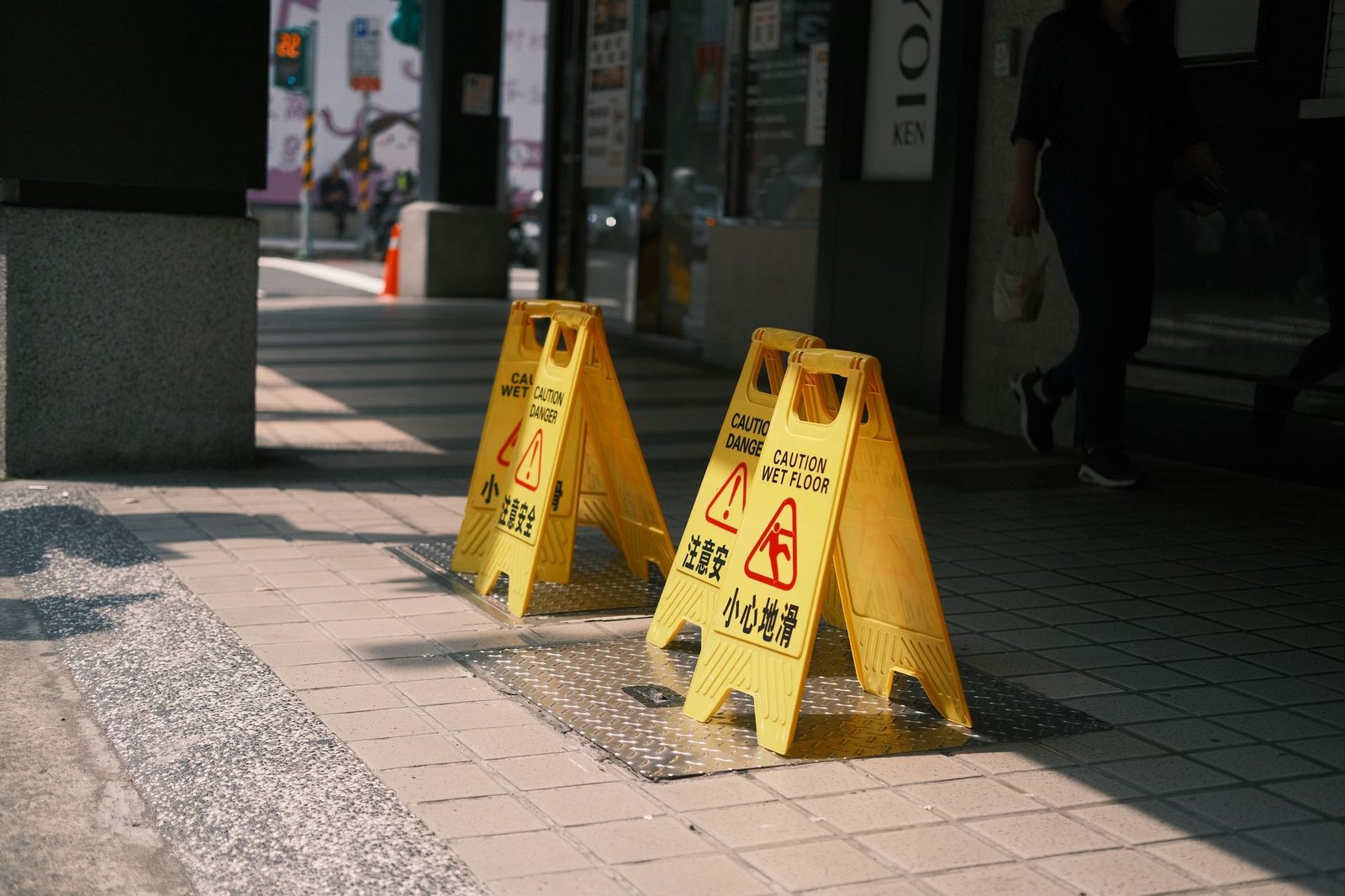
Here’s a simple example. A customer slips on a wet floor the store knew about or should have found. The negligence question is whether the store kept the floor reasonably safe or warned customers. The liability question is whether the store must answer for the injury under that statute.
The same framework applies to negligent security. Under O.C.G.A. § 51-3-51, a plaintiff must prove, among other things, that the third person’s conduct was reasonably foreseeable because the owner or occupier had a particularized warning of imminent wrongful conduct by a third person, or reasonably should have known of it based on prior substantially similar wrongful conduct that the owner or occupier actually knew about and that happened on the premises, on adjoining property or within 500 yards of the premises, or was committed by the same third person (if the owner or occupier knew or should have known, by clear and convincing evidence, that this person was or would be on the premises). The owner must also have failed to use ordinary care to fix a specific, known physical condition. Owners are not required to use extraordinary care against third-party crime (O.C.G.A. § 51-3-55).
Rental property raises the same questions. Rental property raises similar questions, but O.C.G.A. § 51-3-55 says no owner or occupier shall be required to exercise extraordinary care to keep persons safe from wrongful conduct by a third person.
The negligence analysis asks what was done or left undone. The liability analysis asks who must answer for it.
How Georgia’s Comparative Fault Rule Affects the Picture
Georgia uses a modified comparative fault rule. Under O.C.G.A. § 51-12-33, if the injured person is partly responsible, damages are reduced in proportion to that person’s percentage of fault, and the injured person can’t receive any damages if 50 percent or more responsible. The Georgia Supreme Court’s decision in Quynn v. Hulsey quotes this rule.
The statute also sets a threshold. The plaintiff is not entitled to receive any damages if the plaintiff is 50 percent or more responsible for the injury (O.C.G.A. § 51-12-33; Quynn v. Hulsey, 310 Ga. 473 (2020)). Below that line, recovery is reduced by the plaintiff’s share of fault.
Fault can be shared among others too. The trier of fact must consider the fault of all persons or entities who contributed to the injury, whether or not they were named as parties. Damages apportioned to each liable person are that person’s own liability, not joint liability.
A related rule appears in O.C.G.A. § 51-11-7. If the plaintiff, by ordinary care, could have avoided the consequences of the defendant’s negligence, the plaintiff is not entitled to recover.
Fault is decided on the facts of each case. Early records and witness information often matter, because they show what happened when it happened.

Talking Through Your Situation With Our Team
If you’re reading this after a fall, a dog bite, or an assault on a poorly secured property, you may be hurt and worried about bills. You may also be trying to make sense of a loss involving someone you love. You don’t have to sort out every legal term today.
Common Questions
What is the difference between negligence and liability?
Negligence is the careless conduct itself. Liability is the legal responsibility for the harm that conduct causes.
Does Georgia reduce damages if the injured person was partly at fault?
Yes. Damages are reduced by the injured person’s share of fault. Recovery ends if that share is 50 percent or more (O.C.G.A. § 51-12-33; Quynn v. Hulsey, 310 Ga. 473 (2020)).
Can someone be liable without being negligent?
Yes. Georgia law can assign responsibility on other grounds, such as an employer answering for an employee’s work conduct.
If a fall, bite, or other accident left you hurt and unsure who must answer for it, our team can talk it through in a free first consultation. The consultation is confidential and carries no obligation to continue. Contact Slam Dunk Attorney to get started.
Disclaimer: This page is general information, not legal advice. Slam Dunk Attorney is based in Duluth, Georgia. Responsible lawyer: Peter F. Jaraysi. Contact: slamdunkattorney.com/contact-us.
Key Terms at a Glance
Negligence
The careless conduct itself, such as failing to pay attention, failing to follow safety rules, or failing to keep a property safe.
Liability
The legal responsibility for the harm that the careless conduct causes.
Harm
The injuries, losses and hardships a person experiences because of an incident.
Shared Fault
More than one person may contribute to an accident, and fault can be divided among them.
Important: Take Your Situation Seriously
Legal terms like these can affect how an injury claim is evaluated. Because every situation is different, general information cannot replace advice about your own facts.
Where These Terms Often Come Up
Car and Truck Accidents
Questions about driver conduct, traffic rules and who is responsible for a collision are common after crashes on metro Atlanta roads.
Motorcycle and Pedestrian Accidents
Riders and pedestrians are often seriously hurt, and the facts surrounding the incident shape the discussion of responsibility.
Premises and Negligent Security
Property owners and managers have duties to keep their spaces reasonably safe, and those duties are central to many slip and fall and assault claims.
Nursing Homes and Rideshare Trips
Care facilities, rideshare drivers and rideshare companies may each raise different questions about conduct and responsibility.