
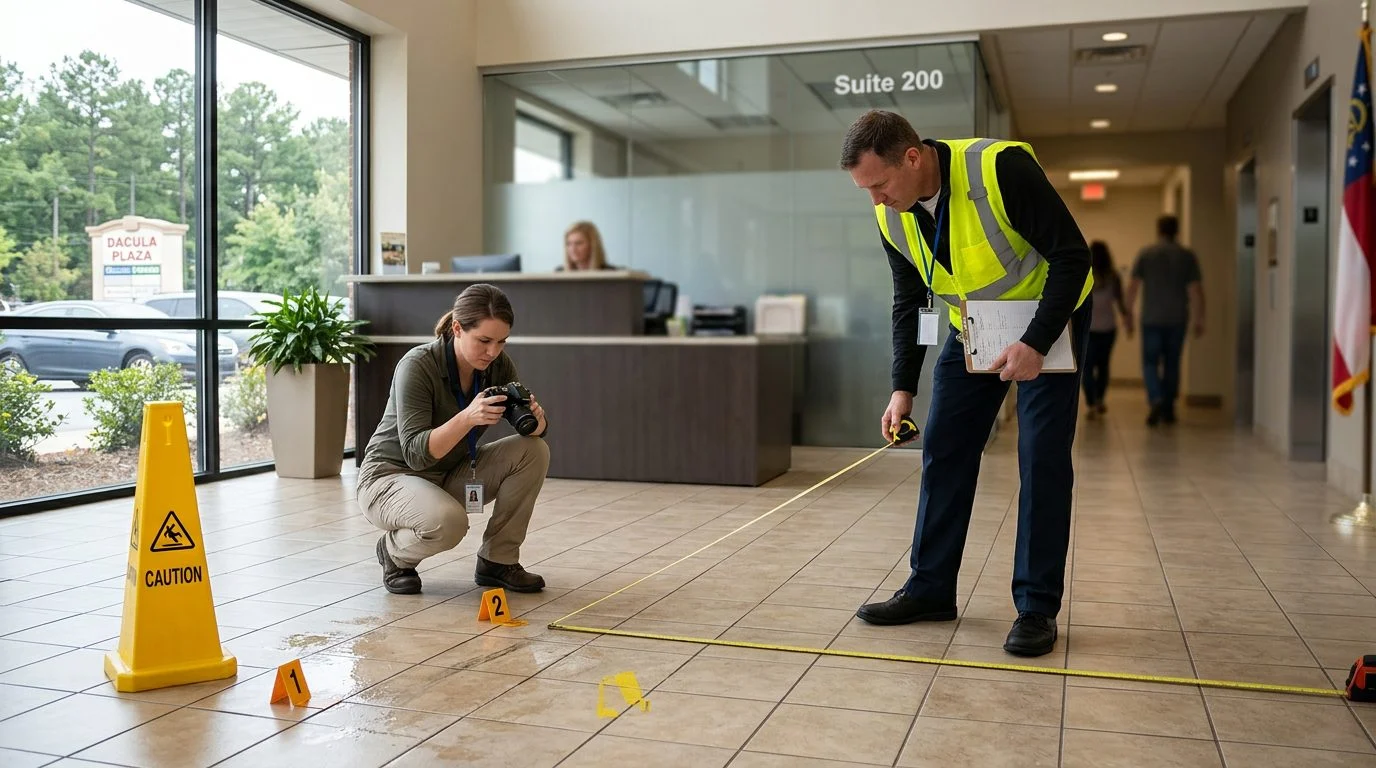
Premises Liability | Duluth, Georgia
When an Unsafe Property Causes Injury, Who May Be Responsible?
Owners, managers, and others who control a property can each play a role. Here is how to start sorting out the questions that matter most after an injury.
By Peter F. Jaraysi · Published November 11, 2026
Premises liability Dacula questions often start with one event: a fall on an icy walkway, a snowy parking lot, or a wet entrance. Premises liability is the area of personal injury law about injuries caused by unsafe conditions on property. Whether a property owner or occupier is responsible depends on the facts. This guide explains the general Georgia framework in plain language. It is general information, not advice about your situation.
What Premises Liability Means in Georgia
Premises liability is a claim against the person who owns, runs, or controls a property when a hazard there causes an injury. That person is called the owner or occupier.
Georgia’s main rule for visitors is in O.C.G.A. § 51-3-1. It says an owner or occupier who invites people onto its land for a lawful purpose may be liable for injuries caused by a failure to use ordinary care in keeping the premises and approaches safe. Whether liability exists depends on the facts of each case, and exceptions may apply.
In insurance terms, a premises claim may be handled under the liability coverage on a property owner’s policy. What that policy covers depends on its specific terms and the facts of the incident. A lawyer can review those questions with you.
If you slipped on ice in Dacula and still aren't sure who may be responsible, you don't have to sort that out alone. Our team can talk it through with you. Talk it through with our team — the first consultation is free, confidential, and carries no obligation.

How a Fall on Ice or Snow on a Walkway Is Analyzed
A fall on ice or snow is generally reviewed under the premises rule described above. How that rule applies depends on the facts. Ice and snow are possible hazards that may be relevant to a fall. Whether any hazard was a factor, and who was responsible for it, are questions for the facts of your case.
Questions that may come up include:
- When did the ice or snow form, and how long was it there?
- Was the patch visible to a careful visitor?
- Was there a warning sign, cone, or mat nearby?
- Was the area salted, plowed, or checked that day?
- Did the owner or a worker know about the condition before the fall?
Each answer may matter, and each depends on what records and witnesses show. Your own answers may change the analysis, so review them with a lawyer.
Who May Be Responsible for an Icy Walkway in Dacula
Responsibility for an icy walkway may rest with whoever controlled that area at the time. That person is not always the building’s owner.
Possible parties include the property owner, a business or tenant that occupies the space, a property management company, and a contractor hired to remove snow or ice. Who controlled what often depends on leases, contracts, and how the area was maintained. Those are facts to review, not assumptions to make.
Falls in Dacula can happen on shopping center walkways, apartment sidewalks, parking lots, and office building entrances. Control questions may arise in each of these places. Don’t assume any one party is responsible. Whether any party is responsible depends on the facts.
If a city or county may own or control the walkway, a separate notice rule may apply. Under O.C.G.A. § 36-33-5, a claim against a municipal corporation generally must be presented in writing to its governing authority within six months of the event the claim is based on. Whether that rule applies depends on who owns or controls the property.
Examples of Premises Liability Cases
Common examples include a slip and fall on untreated ice or snow, a trip over a broken step, a poorly lit walkway, an unmarked wet floor, and a hazard in a shared area of an apartment complex. These are general illustrations only. Whether any example fits your situation depends on the facts.
Negligent security is a separate category. It may apply when an assault happens on property, and it follows its own rules. Under O.C.G.A. § 51-3-53, the negligent-security article generally provides the exclusive remedy for negligent security against owners or occupiers. O.C.G.A. § 51-3-54 lists situations where an owner or occupier is not liable for negligent security, such as an injury to a person who was on the premises as a trespasser. Because these rules differ, a slip on ice and an assault should be reviewed separately.
Are Premises Liability Cases Hard to Win?
Premises cases can involve disputed facts, questions about what the owner knew, and defenses raised by the other side. How difficult a case is depends on its facts. No outcome can be promised, and this page does not describe results or success rates.
The other side may argue that the injured person shared some fault. Georgia’s rule on that is in O.C.G.A. § 51-12-33. It generally reduces damages in proportion to the injured person’s percentage of fault (O.C.G.A. § 51-12-33). It also states that a person who is 50 percent or more responsible for the injury or damages claimed is not entitled to receive damages. How that applies depends on the facts, and exceptions may apply.
When more than one person is at fault, the same statute says each person’s share is that person’s own liability, not joint liability. How that works in a given case depends on the facts. Talk with a lawyer about these rules before drawing conclusions from general descriptions.
Time Limits for a Premises Liability Claim in Georgia
Georgia generally allows two years to file a lawsuit for injuries to a person (O.C.G.A. § 9-3-33; Kenneth B. Cameron v. Jmp Pizza, Inc (2026)). That rule is in O.C.G.A. § 9-3-33. The same section says some claims follow different periods, such as certain loss of consortium claims, which carry four years. Exceptions exist, and when the period starts depends on the facts.
Claims against government entities can follow notice rules that come before a lawsuit. For the state, O.C.G.A. § 50-21-26 may require written notice within 12 months of when the loss was discovered or should have been discovered.
Because deadlines depend on the facts, the party involved, and the type of claim, review your own deadline with a lawyer. Don’t rely on this general summary for it.
Not sure what your next step is?
Talk it through with our team — the first consultation is free, confidential, and carries no obligation.
Documenting the Scene and Your Care
Many people keep notes and records of what happened and the care they received. Keeping them is a personal choice. Which items matter depends on your facts.
Common items include photos of the spot and any sign or missing sign, the date and time, notes on the weather that day, names and contact details of witnesses, and any incident report you were given. Medical records document the care you received.
Records document what happened and what care followed. Whether they bear on fault or damages depends on the facts. Ask a lawyer which records are relevant to your situation.
Talk Through Your Fall With Peter F. Jaraysi
If you slipped on ice or snow and want to know who may be responsible, a lawyer can help you think it through. Peter F. Jaraysi is the lawyer responsible for this page. Our team supports the firm’s office work. The firm is based in Duluth, Georgia.
Does a fall in a parking lot fall under premises liability Dacula rules?
It may, if the lot is owned, occupied, or controlled by someone who invited visitors there. The answer depends on the facts, so review it with a lawyer.
Can I still pursue a claim if I was partly at fault?
Georgia’s comparative fault rule may reduce damages by your share of fault, and a 50 percent or higher share may bar recovery. Exceptions may apply, so ask a lawyer about your facts.
Does this page tell me what my case is worth?
No. This page is general information. It does not estimate value or predict any result.
The firm offers a free first consultation that is confidential and carries no obligation to continue. If your fall happened on a Dacula walkway, parking lot, or entrance, reach out through the firm’s contact page to talk through your own facts with Peter F. Jaraysi.
Disclaimer: This page is general information, not legal advice about your situation. It does not promise or predict any outcome, and no result can be promised. Peter F. Jaraysi is the responsible lawyer for this page. The firm is based in Duluth, Georgia, and its contact details are on its website contact page. Attorney advertising.
Parties Often Examined in a Premises Claim
Property Owners
The person or company that owns the land or building may be part of the review, especially when a known hazard was not addressed.
Property Managers
Management companies that maintain, inspect, or repair a property may share responsibility for conditions under their control.
Security Contractors
When an injury involves an assault or inadequate protection, the security provider and the property controlling it may both be examined.
Hosts and Rental Operators
Short-term and vacation rental hosts, along with the platforms and managers involved, may be part of a claim where a rental property was unsafe.
Protect Your Evidence Early
Photos of the hazard, the location, your injuries, and any warning signs can be valuable. Write down what you remember while it is fresh, and keep any receipts or incident reports you receive.
Situations We Commonly Review
Slip and Fall
Wet floors, uneven surfaces, poor lighting, and missing warning signs can all lead to serious injuries in stores, offices, and apartments.
Parking Lot Injuries
Potholes, broken lighting, and icy or poorly maintained lots may raise questions about who controlled the property.
Negligent Security
Injuries caused by criminal activity may involve questions about whether reasonable security measures were in place.
Short-Term Rental Injuries
Broken railings, hot tubs, stairs, and other hazards at rental homes can cause injuries to guests and visitors.