
Premises Liability
Preserve Your Evidence: A Guide to Documenting Premises Liability Claims
What you photograph, record, and save in the hours and days after an injury can make the difference in your case. Learn what matters most.
By Peter F. Jaraysi · Published September 25, 2026
Premises Liability Evidence: What to Document & Preserve
The stronger and more complete your evidence collection immediately after an injury on someone else’s property, the clearer the picture of what happened—and the stronger your potential claim. Premises liability requires proof that the property owner or manager knew (or should have known) of a dangerous condition and failed to fix it or warn visitors. Evidence is how you demonstrate that responsibility. Here’s what to collect, preserve, and document right away.
If you've been injured on someone else's property and aren't sure what to do next, reach out—people in your situation contact us regularly to understand their options. Talk it through with our team — the first consultation is free, confidential, and carries no obligation.
Why Evidence Matters in Premises Liability Cases
Premises liability law holds property owners accountable when their negligence causes injury. Under Georgia negligence law, you must prove three things: the owner had a duty to keep the property safe, they breached that duty by ignoring a hazard, and that breach caused your injury.
Evidence is what builds that proof. Without it, your claim rests only on your word. With it, you have a documented record that corroborates your account and shows what the owner knew or should have known. The sooner you collect evidence, the more reliable it is—conditions change, hazards disappear, and memories fade.
Evidence at the Scene: What to Document Immediately
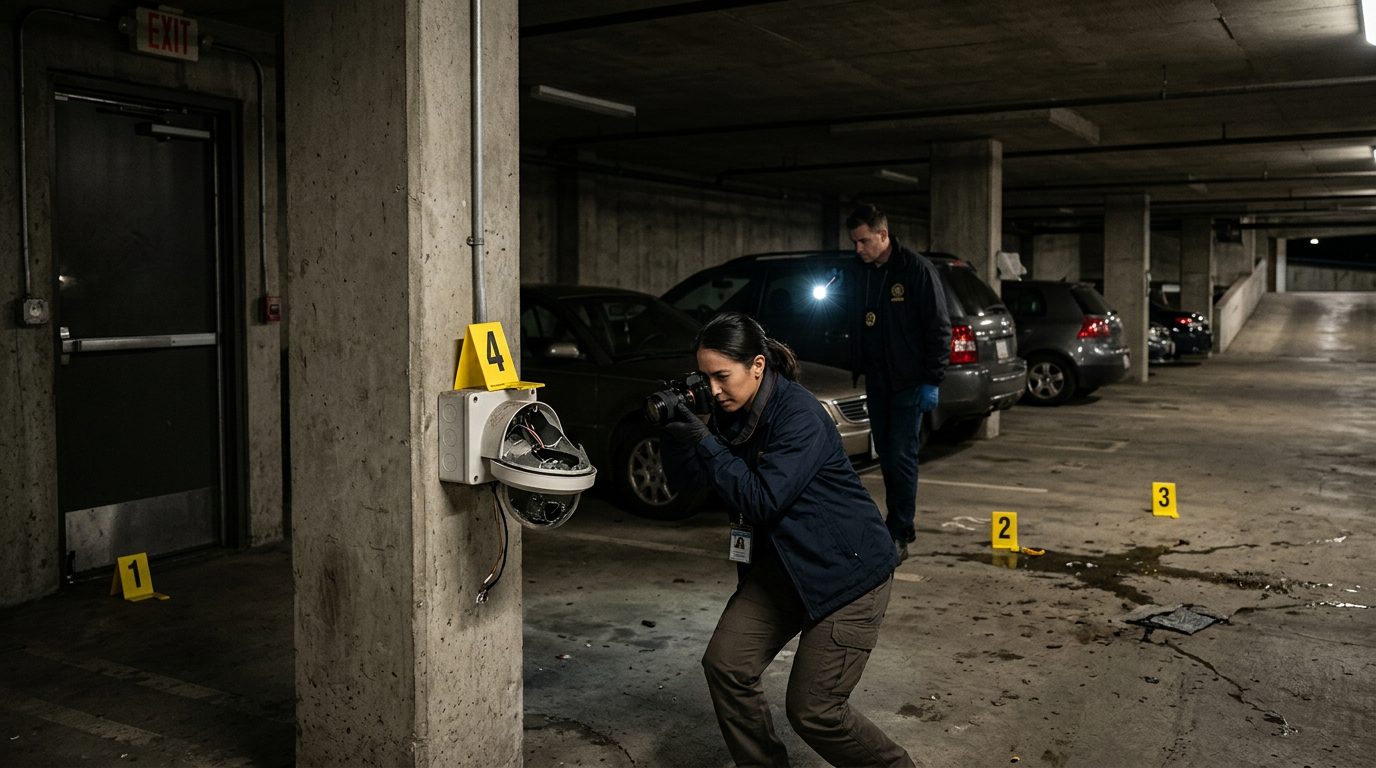
Photograph and video the hazard itself from multiple angles before it’s altered or removed. Take pictures of the wet floor, broken step, poor lighting, debris, or other condition that caused your fall. Include wide shots showing the surrounding area and context—the entrance, walkway, or store layout. If your phone’s camera timestamps photos, that’s helpful; note the date and time manually if it doesn’t.
Document environmental conditions too: Was it raining? What time of day was it? How bright or dim was the lighting? These details matter because they show whether the hazard was obvious or hidden. Proper documentation of walkway conditions and slip-resistance factors is important for establishing how hazards contribute to fall injuries.
Photograph any warning signs—or the absence of them. If there’s no wet-floor sign near a puddle, or no handrail on a broken step, that’s evidence the owner failed to warn or protect visitors.
If it’s safe and you’re able, take a photo or brief video of yourself at the scene showing your physical condition immediately after the fall. Don’t move the hazard or clean up unless you must for safety.
Medical Records and Documentation
Seek medical attention promptly and keep every record, test result, and treatment note. Medical records create a contemporaneous (official, dated) account of your injuries tied to the exact date and location of the fall. They also establish the causal link between the hazard and your harm—a critical element in premises liability.
Don’t delay care thinking you’re “fine.” Injuries often worsen over hours or days, and delaying treatment weakens the connection between the fall and your medical condition in the eyes of an insurance adjuster or court.
Keep records of all follow-up care: doctor visits, physical therapy, imaging (X-rays, MRI), medications, and ongoing symptoms. Document time missed from work or normal activities due to your injury. These records show the extent and duration of harm caused by the owner’s negligence.
Witness Statements and Contact Information
Collect names, phone numbers, and email addresses of anyone who saw the fall or the hazardous condition before you fell. Witness accounts are often more credible than your own recollection alone, especially if the other person has no stake in the outcome.
Ask each witness to describe what they saw, when they saw it, and whether they heard any prior complaints or warnings about the hazard. If someone says “I’ve almost tripped there twice” or “The manager knows that light is broken,” that’s powerful evidence the owner knew of the danger.
Request written statements if possible—even informal notes. A text or email from a witness saying “I saw you slip on that wet floor” is valuable documentation. If you can’t get written statements immediately, detailed notes of what each person told you (with dates) are better than nothing.
Property Records and Maintenance History
Request incident reports filed with the property owner or manager at the time of your fall. Many businesses file these internally; your attorney can later demand them through the legal discovery process.
Ask about maintenance logs, cleaning schedules, and inspection records for the area where you fell. If the owner claims “we clean hourly,” but logs show cleaning only once a day, that’s evidence of negligence. If records show no inspections at all, that’s evidence too.
Prior complaints or incident reports from other visitors who fell or were injured in the same spot are gold-standard evidence. They prove the owner knew (or should have known) the hazard existed. Security camera footage showing the condition before and after your fall can be critical, but property owners don’t always preserve it—acting quickly to request preservation in writing is essential.
Not sure what your next step is?
Talk it through with our team — the first consultation is free, confidential, and carries no obligation.
Communication Records
Preserve emails, text messages, or letters from the property owner, their manager, or their insurance company. Keep records of any conversations about the incident, including the date, time, and what was said. Write down names of people you spoke with.
Do not delete, alter, or modify any communications. Insurance companies and attorneys scrutinize what was said and when. An email from the owner saying “We’ve been meaning to fix that step” is direct evidence of knowledge and negligence.
Expert Evidence and Inspection Reports
Professional inspections of the property may reveal code violations or unsafe conditions that establish negligence. Expert testimony on industry standards for property maintenance and safety can show what a reasonable owner should have done to prevent your injury.
In some cases, accident reconstruction or biomechanical analysis helps explain how the hazard caused your fall. These are typically gathered later with attorney guidance, not immediately after the incident. Your job at the scene is to preserve the raw evidence; your attorney will bring in experts to interpret it.
Your Own Records and Timeline
Write down your account of the incident as soon as possible while details are fresh. Document the date, time, location, and what you were doing. Note any pain, symptoms, or limitations you experienced immediately after the fall.
Keep a journal of your recovery and any ongoing effects: pain levels, mobility issues, missed work, medical appointments, and how the injury affects your daily life. This contemporaneous record is far more credible than trying to recall details months later.
What Happens to Evidence in a Premises Liability Claim
Your attorney will use evidence to build a factual foundation for your claim. During the discovery process, evidence is shared with the property owner’s insurance company and legal team. Strong, well-documented evidence can lead to settlement discussions; weak or incomplete evidence may require litigation to resolve.
The property owner’s legal team will also gather evidence—often evidence that supports their defense. Acting quickly to preserve your evidence matters because the owner has no incentive to preserve evidence that makes them look negligent.
Common Mistakes in Evidence Collection
Don’t wait to document the scene. Conditions change, hazards are removed or repaired, and the property owner may clean or alter the area. The sooner you photograph and describe what you saw, the better.
Don’t leave without witness information. Once people scatter, they’re hard to find. Get names, phone numbers, and email addresses before anyone leaves.
Don’t delay medical care. Waiting weakens the causal link between the fall and your injuries. Seek treatment promptly and follow through on all recommended care.
Don’t discuss the incident on social media or in casual conversation in ways that can be misinterpreted. Insurance adjusters and opposing counsel monitor social media and may use your posts against you.
Don’t assume the property owner will preserve evidence. They often don’t. If you believe security footage exists, request preservation in writing as soon as possible.
If you've been injured on someone else's property and aren't sure what to do next, reach out—people in your situation contact us regularly to understand their options. Talk it through with our team — the first consultation is free, confidential, and carries no obligation.
Next Steps: Getting Help With Your Evidence
An attorney experienced in premises liability can advise you on what evidence is most important in your specific situation and how to preserve it properly. Legal guidance helps ensure evidence is presented effectively and nothing critical is lost or overlooked.
Your attorney can also issue preservation letters and subpoenas to obtain records the property owner might otherwise destroy. This is especially important for security camera footage, maintenance logs, and incident reports.
FAQ
What’s the most important evidence in a premises liability case?
Medical records linking your injury to the date and location, plus photographs of the hazard itself and witness statements corroborating your account.
How long do I have to collect evidence after a slip and fall?
Start immediately—the sooner you document the scene and gather witness information, the fresher and more reliable the evidence. Don’t wait days or weeks.
Can I get security camera footage from a store after I fall?
Your attorney can request it through the legal process, but the property owner isn’t required to preserve it unless notified in writing. Request preservation right away if you believe footage exists.
What if I didn’t take photos at the scene?
Photographs are valuable but not the only evidence. Medical records, witness statements, maintenance logs, and prior incident reports can still support your claim. An attorney can assess what you have.
Do I need an expert to prove premises liability?
Not always. Strong scene evidence, medical records, and witness testimony may be enough. Experts are often helpful but are typically brought in later with attorney guidance, not immediately.
If you’ve been injured on someone else’s property and aren’t sure what to do next, reach out—people in your situation contact us regularly to understand their options. We can review what evidence you’ve collected, advise you on next steps, and help you preserve what matters most.
Critical Evidence to Collect at the Scene
Photograph the Hazard
Take clear, well-lit photos of the condition that caused your injury—the wet floor, broken step, poor lighting, or debris. Capture wide shots showing the location and close-ups of the specific hazard. Date and time stamps help.
Document Your Injury
Photograph visible injuries (bruises, cuts, swelling) as soon as possible and again over the following days as they evolve. These images connect your harm directly to the incident.
Gather Witness Information
Get the full names, phone numbers, and email addresses of anyone who saw the hazard or your fall. Ask what they observed and write it down on the spot if possible.
Preserve Scene Details
Note the date, time, weather, lighting conditions, and any signage (or lack of it). If the property was closed or under maintenance, document that too. Write down everything while it's fresh.
Medical and Administrative Records That Strengthen Your Claim
Seek Medical Attention Promptly
Visit a doctor or emergency room and be specific about how and where you were injured. Medical records create an official, dated link between your injury and the incident.
Keep All Medical Documentation
Retain bills, test results, imaging reports, prescriptions, and therapy notes. These records prove the extent of your harm and ongoing treatment.
Maintain an Incident Report
If the property owner or manager filed a report, request a copy. If not, document your own account in writing as soon as possible, including what happened and who was present.
Save Communications
Keep emails, text messages, and letters between you and the property owner, manager, or their insurance company. These can show what they knew and when.
Act Quickly—Evidence Fades
Property conditions change, witnesses move away or forget details, and security footage is often overwritten within days or weeks. The sooner you document and preserve evidence, the stronger your record becomes. Don't wait.
What Happens to Evidence Over Time
Security Footage
Most properties recycle video every 7–30 days. Request footage immediately and ask the property to preserve it. A written preservation notice can help protect it from being overwritten.
Witness Memories
People forget details quickly. Contact witnesses within days, not weeks. Written or recorded statements made soon after the incident are far more reliable than recollections months later.
Scene Conditions
Hazards are often repaired or cleaned up fast—sometimes to hide liability. Your photos taken at the scene are irreplaceable proof of what caused your fall.
Your Own Records
Keep a journal of your recovery, pain levels, missed work, and treatment. Contemporaneous notes are more credible than memories reconstructed later.
Why Professional Guidance Matters
We Know What Insurers and Courts Require
Not all evidence carries equal weight. We understand which documents, photos, and statements will actually move your case forward and which details matter most to decision-makers.
We Help You Avoid Common Mistakes
Missteps in how you document or communicate can hurt your claim. We guide you on what to say, what to preserve, and what to avoid.
We Act Before Evidence Disappears
We can send formal preservation notices to property owners and managers, ensuring security footage and records aren't destroyed. Time is critical.
We Organize and Present Your Evidence
Raw photos and notes are a start. We compile, organize, and present evidence in a way that tells a clear, compelling story to insurers and, if needed, a jury.
Don't Navigate This Alone
Premises liability cases turn on evidence—and evidence is fragile. The decisions you make in the first hours and days can determine the outcome of your claim. Let us handle the strategy while you focus on healing.