
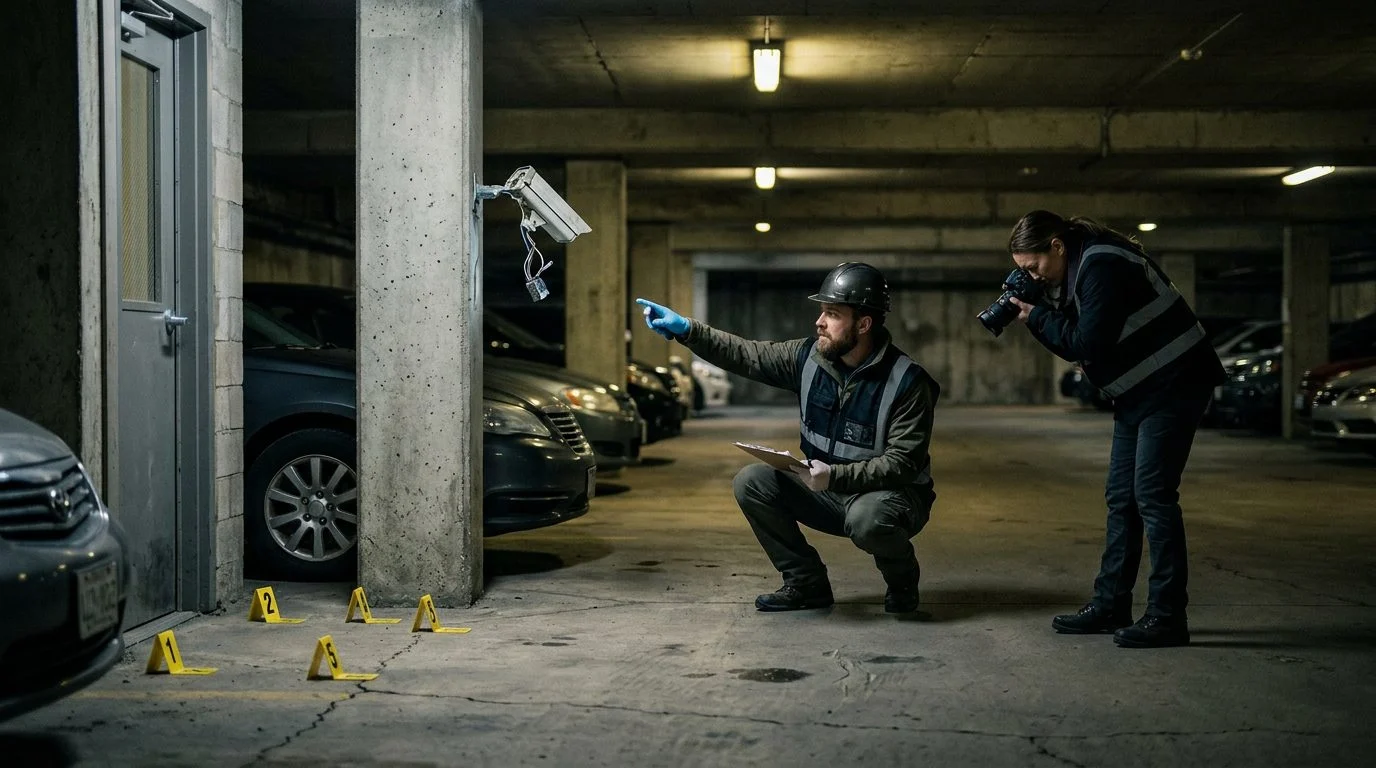
Premises Liability | Duluth, Georgia
Injured on Someone Else's Property? Understand Your Negligent Security Options
Plain-language guidance from Slam Dunk Attorney, a personal injury practice based in Duluth, Georgia, that represents people injured in premises liability cases across metro Atlanta and Georgia.
By Peter F. Jaraysi · Published October 16, 2026
If you are looking for an Atlanta premises liability lawyer, you may first want a simpler answer: does a homeowner’s policy cover someone hurt on your property? The honest answer is that it depends on the facts, the injury, and the policy’s wording. This guide explains how Georgia’s negligent security and premises rules generally work, so you can ask better questions. It is general information, not legal advice, and it does not say whether a claim exists.
Why a Guest’s Injury Raises a Homeowner’s Insurance Question
When a guest is hurt on your property, insurance can quickly become part of the conversation. Some injuries come from ordinary hazards, such as a loose stair rail or a wet floor. Others follow a third person’s criminal act, such as an assault in a parking lot, a shared hallway, or a rental’s common area. Either way, the owner or household may be asked whether a liability policy applies.
Whether any policy or claim applies depends on the facts. This page covers general concepts only. It does not review your policy or predict how any insurer will respond. Most people in this position face three choices: notify the insurer, speak with a lawyer, or do both. A lawyer can help you think through how each step may fit your situation.
Keep a simple written record of what happened, who was there, and what you have received from others. A record helps you keep track of facts. It does not decide who is at fault.
What Negligent Security Means in Georgia
Negligent security is a claim that an owner or occupier failed to keep the premises safe from the wrongful conduct of third persons. Whether a claim under O.C.G.A. § 51-3-50 applies depends on the facts of each case, and exceptions may apply. Consult a lawyer about your own situation.
O.C.G.A. § 51-3-1 may be relevant to the duty an owner owes, depending on the facts of your case. Consult a lawyer about your situation. It describes liability for failing to use ordinary care in keeping premises and approaches safe. How that duty applies depends on the facts, the relationship between the parties, and whether an exception applies.
Whether an owner must use extraordinary care against third-party crime under O.C.G.A. § 51-3-55 depends on the facts, and exceptions may apply. Consult a lawyer about your situation. A trier of fact (the judge or jury that decides the facts) may consider the security measures in place, whether more measures were practical, and whether they would have prevented the injury.
Foreseeability is central. Under O.C.G.A. § 51-3-51, the elements an invitee must establish depend on the facts of each case, and exceptions may apply. Consult a lawyer about your situation. That can turn on prior, substantially similar incidents the owner actually knew about. Possible hazards that may be relevant include poor lighting, broken locks, prior incidents, and guard presence. None of these alone establishes liability.
Is Premises Liability a Negligence Claim?
Premises liability claims are generally analyzed under negligence principles: duty, breach, causation, and damages. The first question is what duty the owner owed this particular visitor. That depends on the visitor’s status.
Whether a person is an invitee depends on the facts of each case. O.C.G.A. § 51-3-1 addresses this topic, and you should consult a lawyer about your situation. A licensee goes onto the property merely for their own interests, convenience, or gratification. Under O.C.G.A. § 51-3-2, an owner’s duty to a licensee may be limited, depending on the facts of each case and subject to possible exceptions. Consult a lawyer about your situation. A licensee’s negligent security claim may involve additional proof requirements under O.C.G.A. § 51-3-52, depending on the facts. Consult a lawyer about your situation.
A trespasser is treated differently. O.C.G.A. § 51-3-54 addresses certain circumstances that may limit an owner’s liability in negligent security cases, depending on the facts and subject to exceptions. Consult a lawyer about your situation. Other exceptions may apply, so status questions need a careful review of the facts.
Status is a fact question. It turns on why the person was there and what the owner permitted. A lawyer can explain how these rules may apply to the facts you have.
Can a Homeowner’s Policy Respond to a Guest’s Injury?
A homeowner’s policy may include personal liability coverage for bodily injury to others. Whether it responds depends on the policy’s wording.
Policies differ. Terms, definitions, exclusions, and limits can all affect the answer. Some policies treat business activities, rentals, certain animals, and intentional acts differently from ordinary household situations. Whether any of these apply to your situation depends on the specific policy language and the facts.
Start with your declarations page, which often lists your policy’s limits and covered persons. Then read the liability section and any exclusions. Keep copies of the policy and any letters you receive from an insurer.
This page does not state how any insurer will respond to a claim. How an insurer responds depends on the policy, the facts, and the claim as presented. A lawyer can review the policy with you and explain whether coverage questions may apply.
How Georgia’s Negligence and Fault Rules May Apply
Georgia may divide fault among several people. How it does so depends on the facts of each case.
Under O.C.G.A. § 51-12-33, how fault is allocated, and whether any award is affected, depends on the facts of each case and may be subject to exceptions. Consult a lawyer about your situation. How fault is apportioned among liable parties depends on the facts of each case and may be subject to exceptions. Consult a lawyer about your situation. Under O.C.G.A. § 51-3-56, fault in a negligent security case may be apportioned among the owner, the third person whose conduct caused the injury, and others to whom fault may apply, depending on the facts and subject to exceptions. Consult a lawyer about your situation.
The statute also addresses a plaintiff who is found 50 percent or more responsible for the injury (O.C.G.A. § 51-12-33; Quynn v. Hulsey, 310 Ga. 473 (2020)). Whether that rule applies, and whether any exceptions apply, depends on the facts of each case, so please consult a lawyer about your own situation. See O.C.G.A. § 51-12-33; how this statute applies depends on the facts of each case, so consult a lawyer about your own situation. That rule depends on the facts, and exceptions may apply. Whether it matters in any case is a question for a lawyer who reviews the details.
Are Premises Liability Cases Hard to Win?
They can be complex, but no one can predict how any particular case will turn out.
Complexity usually comes from the facts. Questions about who was on the property, why they were there, what security was in place, and what happened before the incident may all matter. The answers depend on the evidence that exists. Showing that an owner owed a duty does not by itself decide any recovery. Liability, causation, and damages are separate questions, and each depends on the facts. No result is assured.
The security-related provisions in O.C.G.A. § 51-3-55 may show how much fact-finding a case can involve, and how they apply depends on the facts of each case. Whether additional measures were practical, and whether they would have prevented the injury, are questions the facts decide.
Reading this guide will not tell you what your situation is worth or whether it will succeed. It can help you prepare questions. A lawyer can review your facts and explain what they may mean for you.
Not sure what your next step is?
Talk it through with our team — the first consultation is free, confidential, and carries no obligation.
What to Look for When Choosing an Atlanta Premises Liability Lawyer
When you contact our office, feel free to ask clear questions about the matters we handle, who will work on your case, and how fees and case costs are explained. The answers can help you decide what to do next.
- Which types of injury cases does the lawyer handle?
- Who will work on my matter day to day, and who is the responsible lawyer?
- How are fees explained, and are the terms in a written fee agreement?
- Will I be responsible for court costs and case expenses, and when?
Read the written fee agreement carefully before signing. Court costs and case expenses may be owed by the client under the agreement, so ask about them before you decide. Slam Dunk Attorney is based in Duluth, Georgia, and handles premises liability and negligent security matters among its injury practice areas. Its team includes support staff, and Peter F. Jaraysi is the lawyer.
Frequently asked questions
Is there a best Atlanta premises liability lawyer for negligent security cases?
This page does not rank or compare lawyers. The right fit depends on your questions and the written terms you review.
Can a homeowner’s policy cover an injury to a guest?
It may, depending on the policy’s wording, exclusions, and limits. Ask a lawyer to review your own policy.
Can an owner be responsible for a third person’s crime?
Georgia law may allow it in some cases, depending on foreseeability and the facts.
What does the free consultation include?
The first consultation is free, confidential, and carries no obligation to continue.
Talk With Peter F. Jaraysi About Your Situation
If a guest was hurt on your property, you may be unsure whether to call your insurer, a lawyer, or both. You don’t have to sort out the policy questions and Georgia’s rules on your own. Our team offers a free first consultation, confidential and with no obligation to continue. Contact Slam Dunk Attorney to ask for a free case review.
This page is general information, not legal advice, and no outcome is assured. Reading it does not create an attorney-client relationship. The responsible lawyer for this page is Peter F. Jaraysi of Slam Dunk Attorney, based in Duluth, Georgia. Contact details are on the contact page.
How Our Team Can Help You Get Started
Listen First
Our team takes time to understand what happened, where it happened, and how it has affected your life.
Organize Your Information
We can help you think through the records, reports, and details connected to your incident so you can discuss them clearly.
Confidential Conversations
Your first consultation is free, confidential, and comes with no obligation to continue.
Serving Metro Atlanta and Georgia
We represent people injured in Atlanta, Lawrenceville, Johns Creek, Alpharetta, Marietta, Norcross, Kennesaw, Dunwoody, and communities across Georgia.
Deadlines Can Matter
Legal deadlines for injury claims may apply, and how they apply depends on the facts of your situation and on any exceptions that may apply. Consult a lawyer about your own case as soon as you are able to do so.
Common Questions About Negligent Security Claims
What Is Negligent Security?
Negligent security generally refers to situations where a property owner or manager may have failed to take reasonable steps to protect people from foreseeable criminal acts. Whether this applies to your case depends on the facts.
Who May Be Responsible?
Responsibility can involve property owners, managers, tenants, or security contractors. Who may be liable depends on the property, the control each party had, and the circumstances of the incident.
What Documentation May Be Relevant?
Medical records document your care. Incident reports, photos, and witness information may also be relevant. How any item is used depends on the facts of your case.
Is There a Fee to Talk With Us?
Our initial consultation is free, confidential, and comes with no obligation to continue. Any fee terms are set out in a written fee agreement, which we review with you.