
Premises Liability | Duluth, Georgia
Hurt on Someone Else's Property? You Don't Have to Figure Out Your Options Alone
Slam Dunk Attorney represents people injured by unsafe conditions on property across metro Atlanta and Georgia, including Lawrenceville, Johns Creek, Alpharetta, Marietta, Norcross, Kennesaw and Dunwoody. Here is a plain-language guide to how premises liability cases work.
By Peter F. Jaraysi · Published October 24, 2026
What Is Premises Liability Litigation? A Plain-Language Guide for Georgia
Premises liability litigation is a lawsuit that asks a court to hold a property owner or occupier responsible for an injury caused by an unsafe condition on the property. It usually comes after a claim for payment has not been resolved.
If you were hurt on someone else’s property, or you are looking into this for a family member, the legal terms can feel heavy. This guide explains the core ideas under Georgia law in everyday language. It is general information, not legal advice, and outcomes depend on the facts of each case.
If you were hurt on someone else's property, or you are looking into this for a family member, you don't have to sort out the next steps alone. Our team offers a free, confidential initial consultation with no obligation to continue. Talk it through with our team — the first consultation is free, confidential, and carries no obligation.

What premises liability litigation means
Premises liability is a legal claim that a property owner or occupier is responsible for injuries caused by unsafe conditions on the property. Litigation is the lawsuit that follows when that claim is not resolved another way.
The two terms are often mixed up. A premises liability claim is the demand for payment. The injured person, or a lawyer acting for them, asks the owner’s insurance company to cover medical bills, lost income, and other losses.
Premises liability litigation starts when a lawsuit is filed in court. At that point, the case follows formal rules. Each side can request documents, ask written questions, and question witnesses under oath. A judge sets deadlines for each step.
Many cases settle before a trial. Filing a lawsuit does not mean a trial will happen. It means the case has moved into the court system, where the rules are set and enforced.
Georgia handles these cases under general negligence rules. The key question is whether the owner used the care the law requires. Ordinary diligence is the care that ordinarily prudent people use in similar circumstances. Failing to use that care is called ordinary negligence (O.C.G.A. § 51-1-2).
How premises liability differs from a slip and fall
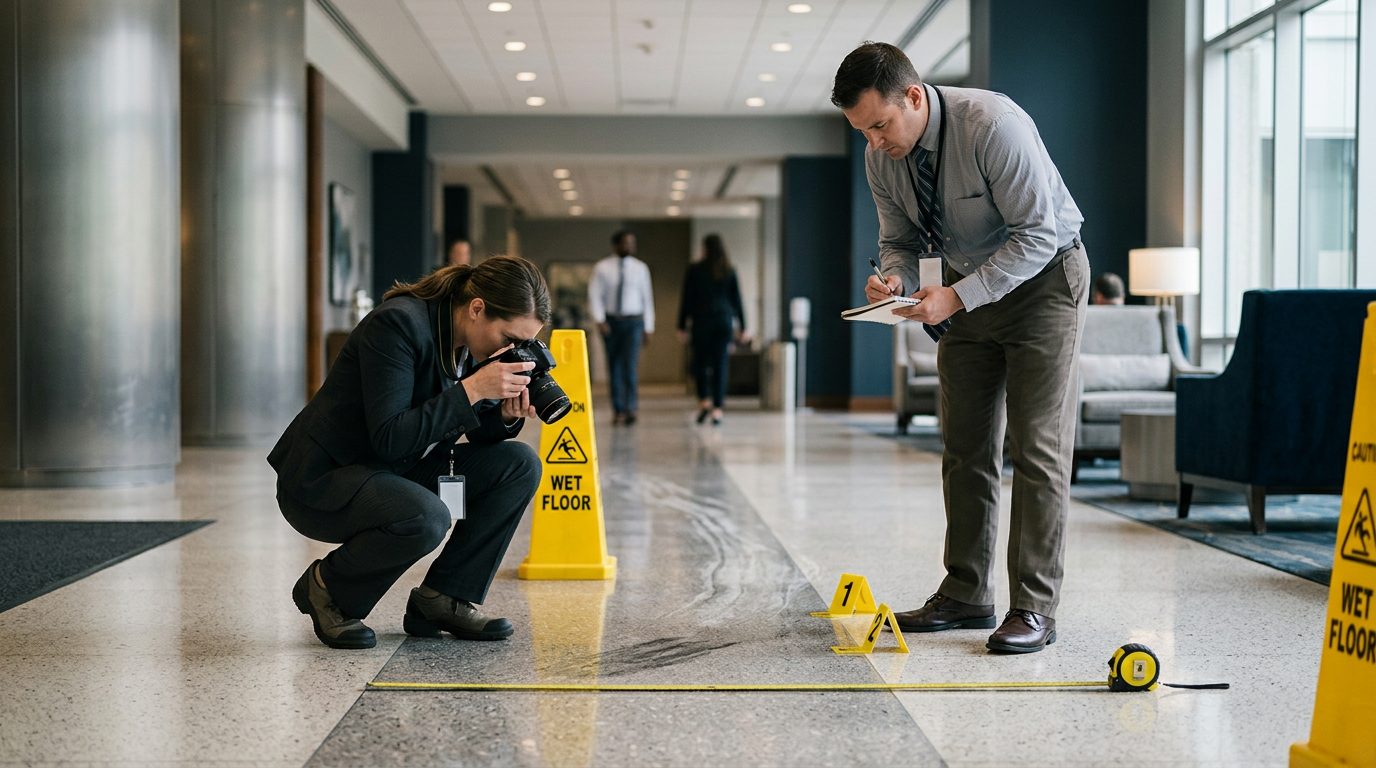
A slip and fall is one type of premises liability case, not a separate legal category. The same legal ideas apply whether someone slips on a wet floor, trips on torn carpet, or is hit by an object that fell from a shelf.
Other incidents follow the same legal path. These include falls on broken stairs, injuries from a loose railing, a collapsing deck, or a sign that blows down in a storm. Each case asks the same core questions.
Was there a dangerous condition? Did the owner know about it, or should it have found it with reasonable care? Did the condition cause the injury?
The label matters less than the facts. A fall on a freshly mopped floor with no warning sign raises different questions than a fall on a spill that stayed on the floor for an hour. In these cases, early evidence often matters most. Photos, the time of day, incident reports, and witness names can all help show what happened.
The duty a property owner owes in Georgia
A property owner in Georgia must use ordinary care to keep the premises and its approaches safe for people invited there. The main rule is in O.C.G.A. § 51-3-1. An owner or occupier who invites or leads others onto the property for a lawful purpose can be liable for injuries caused by a failure to use ordinary care (O.C.G.A. § 51-3-1).
The duty depends on the visitor’s status. An invitee is a customer, a guest, or someone invited for a lawful purpose, such as a shopper or a guest in a rental home.
A licensee is a person who goes on the property only for their own interests, convenience, or gratification, with no contract with the owner. Under Georgia law, an owner is liable to a licensee only for willful or wanton injury (O.C.G.A. § 51-3-2). A trespasser is on the property without permission.
Control matters too. An owner may not be the only party with responsibility for an area. Georgia law says a landlord that has fully parted with possession and the right of possession is not responsible to third persons for damages resulting from the negligence or illegal use of the premises by the tenant. The landlord remains responsible for defective construction or for failing to keep the premises in repair (O.C.G.A. § 44-7-14).
Common examples of premises liability cases
Premises claims come from many everyday places. Common examples include:
- Icy or wet walkways, parking lots, and store floors that were not cleaned or marked.
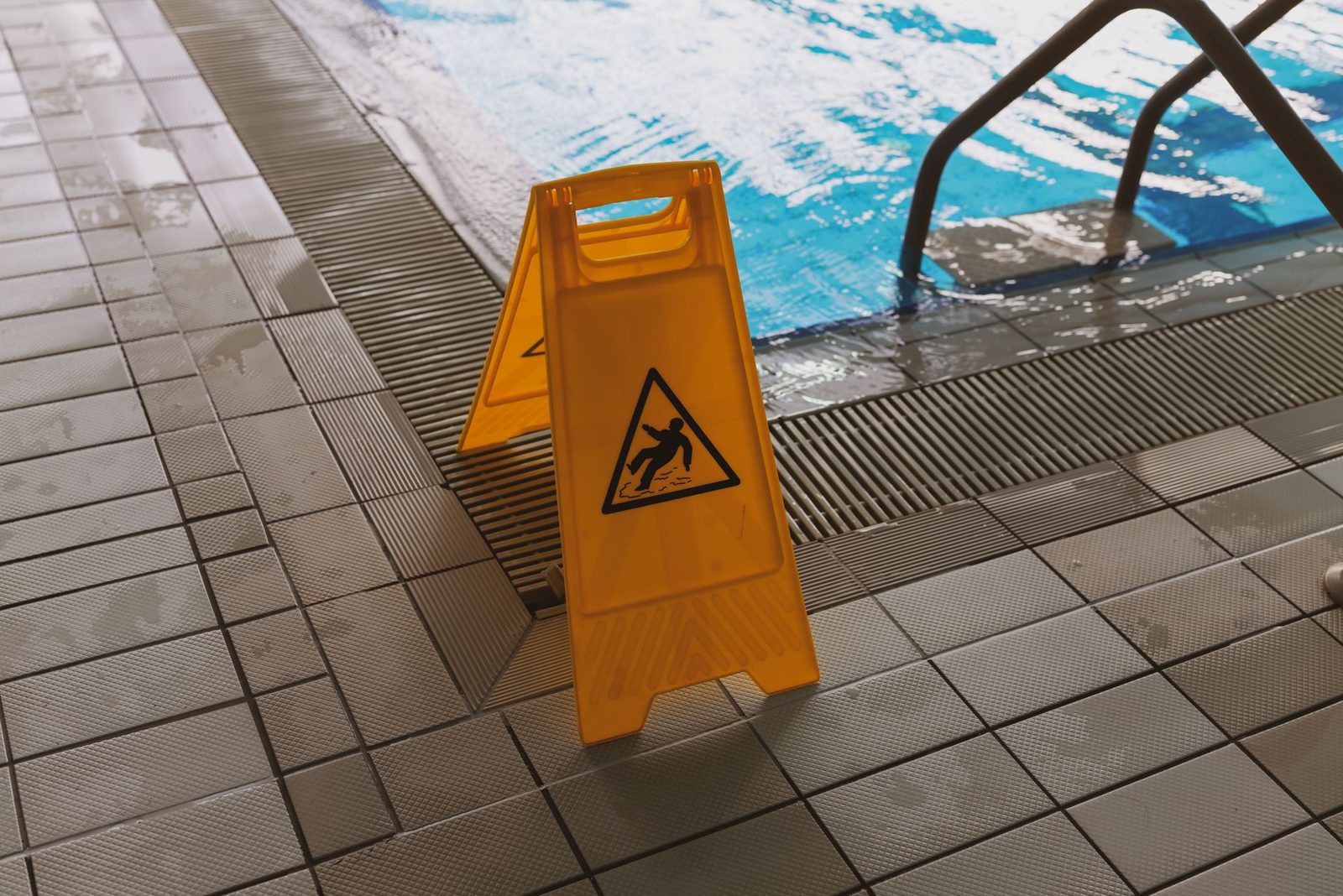
- Broken stairs, loose handrails, damaged flooring, and unsafe pool or deck areas.
- Poor lighting or missing security where crimes were foreseeable. These fall under negligent security.
- Unsafe conditions at short-term and vacation rentals booked through Airbnb or VRBO, where the host or manager knew or should have known of the hazard.
Negligent security cases have their own framework. Except as provided in Code Section 51-3-54, an owner can be liable only if the plaintiff proves, among other things, that the third person’s wrongful conduct was reasonably foreseeable.
The law also says an owner is not required to use extraordinary care against wrongful conduct by others. An owner also does not have to take on the duties of government for law enforcement (O.C.G.A. § 51-3-55). Negligent security claims often turn on what security measures existed and whether more would have prevented the harm.
What a plaintiff generally has to show
Each premises liability case depends on its own facts, so the details of a particular incident matter. The owner owed a duty. The owner broke that duty. The broken duty caused the injury. The injured person suffered real losses.
Knowledge is often the central question. Did the owner actually know about the hazard? If not, had it been there long enough that the owner should have found it? A spill that sat on the floor for an hour is different from one that appeared a second before the fall.
Georgia also uses a modified comparative fault rule. Fault can be shared between the injured person and the owner. The judge reduces the damages in proportion to the injured person’s percentage of fault (O.C.G.A. § 51-12-33).
A plaintiff who is 50 percent or more responsible for the injury cannot receive any damages under the same statute (O.C.G.A. § 51-12-33; Quynn v. Hulsey (2020)). Partial fault lowers the award. It is the 50 percent line that bars recovery.
When several parties share fault, each one is liable only for its own percentage. The statute says these damages are not joint liability and are not subject to contribution.
Not sure what your next step is?
Talk it through with our team — the first consultation is free, confidential, and carries no obligation.
How a premises liability case moves through the legal system
Most cases begin with the injury, not the courthouse. The typical path runs from the scene, to the medical care, to the insurance claim, and then to a lawsuit if the claim stalls.
Early steps often include:
- Documenting the scene with photos, witness names, and the exact location and time.
- Preserving evidence, such as footwear, clothing, incident reports, and maintenance records. Store video can be recorded over on a schedule.
- Getting medical care and keeping every record.
- Presenting the insurance claim and a demand for payment.
- Filing a complaint in court if the claim is not resolved.
- Discovery, where each side exchanges documents and answers questions.
- Mediation or settlement talks, which can happen at any stage.
- Trial, if the case does not settle.
The time a case takes varies. Complexity, the seriousness of the injuries, and whether the parties negotiate or go to trial all affect the timeline.
Deadlines matter. Under Georgia law, actions for injuries to the person must generally be brought within two years after the right of action accrues (O.C.G.A. § 9-3-33). Other deadlines can apply in some situations, so timing should be checked early.
Who pays: premises liability insurance explained
Premises claims are usually paid through liability insurance held by the owner. Many property owners carry homeowner’s or commercial general liability insurance, and that coverage is often how these claims are paid.
Every policy has a limit. The policy limit is the most the insurer will pay under that policy. A rental owner may carry more than one policy, so the number and type of policies can matter. The policy terms decide what is covered.
Usually, the injured person first deals with the owner’s insurance company. The insurer investigates and may make an offer. An adjuster works for the insurer, not for the injured person. If the claim is not resolved, a lawsuit may follow.
Are premises liability cases hard to win?
The answer turns on the evidence. Key factors include proof of the hazard, proof that the owner knew or should have known about it, the injured person’s own conduct, and medical records that link the injury to the event.
No lawyer can predict how a particular case will turn out. Past results do not decide future ones, and each case has its own facts.
Frequently asked questions
What is premises liability litigation?
It is a lawsuit asking a court to hold a property owner responsible for an injury caused by an unsafe condition on the property.
Is a slip and fall the same as premises liability?
A slip and fall is one type of premises liability case. The same legal rules apply to both.
How long do I have to file a lawsuit in Georgia?
For most injury lawsuits, the general deadline is two years from the date of injury (O.C.G.A. § 9-3-33; Kenneth B. Cameron v. Jmp Pizza, Inc (2026)).
Can I still recover if I was partly at fault?
Yes, but your damages are reduced by your share of fault (O.C.G.A. § 51-12-33; Quynn v. Hulsey (2020)). If you are 50 percent or more responsible, you cannot recover.
If you were hurt on a property, or you are helping a family member through a fall or injury, the bills and questions can pile up quickly. Our team offers a free, confidential initial consultation with no obligation to continue, and it is a good place to start your questions. Peter F. Jaraysi is the responsible lawyer for this page.
Disclaimer: This page is general information, not legal advice. Responsible lawyer: Peter F. Jaraysi, Slam Dunk Attorney, Duluth, Georgia. Contact us at slamdunkattorney.com/contact-us.
How We Can Help
Plain-Language Answers
We explain the legal process in everyday terms so you know what to expect at each step.
Confidential Conversations
Your free first consultation is confidential and comes with no obligation to continue.
Support for You and Your Family
Our team, including the firm's lawyers and support staff, works with injured people and the families who stand beside them.
Serving Metro Atlanta and Georgia
Based in Duluth, Georgia, we represent people across metro Atlanta and throughout the state.
Protect Your Health and Your Records
Get medical attention for your injuries, even if they seem minor at first. Keep photos of the hazard, the location and your injuries, and write down what happened while the details are fresh. These steps can help document your situation.
Common Premises Liability Situations
Slip and Fall
Wet floors, uneven flooring, icy walkways and poorly maintained stairs can cause serious injuries in stores, restaurants and office buildings.
Negligent Security
Some injuries happen when property owners fail to provide reasonable security, such as adequate lighting, locks or security personnel.
Short-Term and Vacation Rentals
Injuries at Airbnb, VRBO and other short-term rentals can result from broken railings, pool hazards, faulty wiring or other unsafe conditions.
Apartments and Commercial Properties
Hazards in apartment complexes, parking decks, shopping centers and other properties can injure visitors, tenants and guests.
Talk With Our Team About Your Situation. Your First Consultation Is Free.
Related practice areas
- Premises Liability Lawyer in Georgia: Injured on Someone Else’s Property
- Premises Liability in Atlanta
- Premises Liability in Lawrenceville
- Truck Accidents Marietta: What Georgia Victims Should Know