
Premises Liability
Commercial Premises Liability: When Landlords and Tenants Share Responsibility
If you were injured on commercial property in Georgia, both the landlord and tenant may be liable. We help you understand who is responsible and pursue fair compensation.
By Peter F. Jaraysi · Published September 30, 2026
Commercial Premises Liability: Tenant and Landlord Responsibility in Georgia
When someone is injured on commercial property in Georgia, the question of who’s legally responsible isn’t always straightforward. Georgia law recognizes distinct duties for landlords and tenants based on who controlled the area where the injury happened and who knew (or should have known) about the hazard. Understanding this split responsibility—and when both parties might share liability—is essential if you or someone else has been hurt on commercial property.
If you've been injured on commercial property in Georgia and aren't sure who bears responsibility, reach out—people in your situation contact us regularly to understand their options. Talk it through with our team — the first consultation is free, confidential, and carries no obligation.
What Is Commercial Premises Liability in Georgia?
Commercial premises liability is the legal duty of property owners and occupants to keep their spaces reasonably safe for employees, customers, and visitors. This applies to offices, retail stores, warehouses, mixed-use buildings, and any other commercial space where people work or conduct business. In Georgia, both landlords and tenants can owe this duty, depending on who controlled the area and knew about (or should have discovered) the hazard that caused the injury.
When someone is injured on commercial property, a premises liability claim can be brought against the landlord, the tenant, or sometimes both parties. The key is understanding Georgia’s framework for dividing responsibility between them.
Landlord Responsibilities Under Georgia Law
A landlord in Georgia retains certain duties even when they’ve leased the property to a tenant. These duties center on the areas and systems the landlord controls.
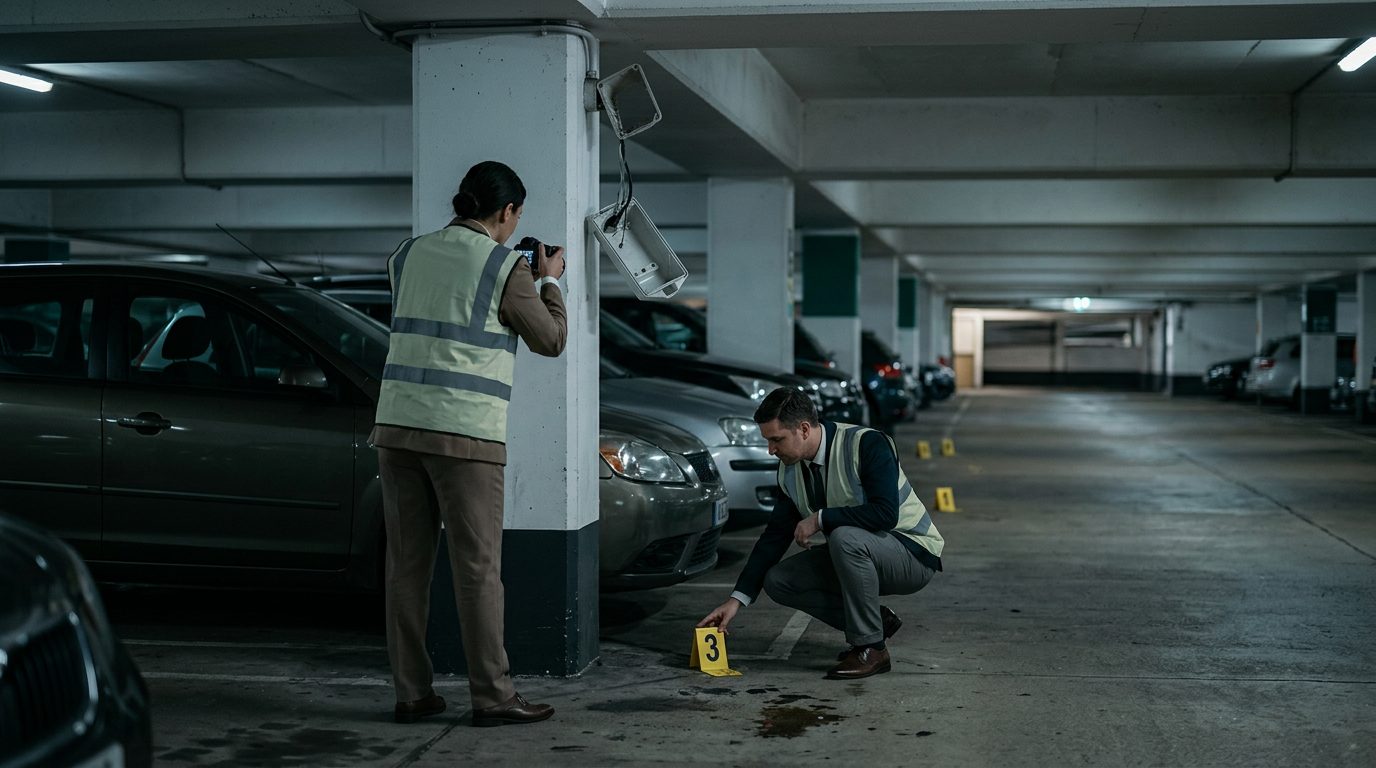
Common areas are the landlord’s primary responsibility. Hallways, parking lots, entrances, stairwells, lobbies, and shared restrooms fall under the landlord’s duty of care. If someone slips on a wet floor in a common hallway or trips on a broken step in a shared stairwell, the landlord is typically liable for failure to maintain or warn of the hazard.
Structural integrity and building systems remain the landlord’s responsibility. The roof, foundation, electrical systems, plumbing, HVAC, and load-bearing walls must be maintained in safe condition. If a ceiling collapses or an electrical panel malfunctions, causing injury, the landlord bears liability.
Building code compliance is another landlord duty. Georgia requires commercial buildings to meet safety codes covering fire exits, emergency lighting, handrails, and other structural safeguards. Violation of these codes can establish negligence.
Disclosure and warning are critical. A landlord must disclose known dangerous conditions to tenants and warn visitors of hazards in landlord-controlled areas. If a landlord knows a parking lot is poorly lit and doesn’t warn tenants or visitors, that failure can create liability.
Importantly, under Georgia law, a landlord cannot contract away liability for gross negligence or willful misconduct, even through indemnification clauses in commercial leases. This means a landlord remains responsible for their own serious negligence regardless of what the lease says.
Tenant Responsibilities Under Georgia Law
A tenant controls the day-to-day operations and maintenance of the leased space. This control creates corresponding legal duties.
Interior maintenance and operations are the tenant’s responsibility. A retail tenant must maintain safe flooring, remove hazards from the sales floor, and ensure adequate lighting. An office tenant must maintain their suite, repair broken fixtures, and keep walkways clear. If a customer trips on merchandise left in a retail aisle or slips on a spill the tenant failed to clean, the tenant is liable.
Hazards created by the tenant’s business are the tenant’s liability. If a tenant’s operations create dust, chemicals, or other hazards, the tenant must warn of and control those hazards. If a tenant fails to secure heavy merchandise and it falls on a customer, the tenant is liable.
Duty to warn applies to the tenant’s space. A tenant must warn of known hazards within the leased area. If a tenant knows a door sticks or a step is uneven, they must warn employees and visitors or repair the hazard.
Lease compliance is a tenant obligation. Tenants must follow the terms of their lease regarding maintenance and repairs. If the lease requires the tenant to maintain the HVAC system and the tenant fails to do so, causing injury, the tenant bears liability.
How Liability Is Divided: Control and Knowledge
Georgia courts focus on two key factors: control and knowledge. Who controlled the area where the injury occurred? Who knew (or should have known) about the hazard?
Control matters most. If the injury occurred in a common area—a parking lot, lobby, or shared hallway—the landlord typically controls that space and bears liability. If the injury occurred inside the tenant’s leased space—the retail floor, office interior, or tenant-controlled storage area—the tenant typically controls that space and bears liability.
Knowledge creates liability. If either party knew about a hazard and failed to warn or repair it, that party is liable. If a landlord knew a parking lot light was broken and didn’t fix it or warn of the dark area, the landlord is liable. If a tenant knew a shelf was unstable and didn’t secure it or warn customers, the tenant is liable.
Both parties may share liability if both had knowledge and control. For example, if a tenant’s operations created a spill in a common hallway and the landlord failed to inspect and clean it, both may share responsibility.
Lease terms can allocate responsibility between parties, but they cannot eliminate liability for gross negligence or willful misconduct. A lease might say the tenant is responsible for all repairs, but if the landlord knew of a structural defect and deliberately concealed it, the landlord remains liable.
Common Scenarios and Liability Questions
Slip and fall in a common area: A customer slips on a wet floor in the building’s lobby. The landlord is usually liable if they failed to maintain the floor, failed to inspect and discover the hazard, or failed to warn of it.
Slip and fall in the tenant’s retail space: A customer slips on merchandise or a spill inside a retail store. The tenant is usually liable because the tenant controls the retail floor and should have maintained it or warned of the hazard.
Injury from a building defect: A customer is struck by falling ceiling tile in a common hallway, or a visitor is shocked by a faulty electrical outlet in a shared restroom. The landlord is liable because structural defects and building systems are the landlord’s responsibility.
Injury from the tenant’s business activity: Unsecured merchandise falls on a customer in a retail space, or inadequate lighting in a tenant’s office causes someone to trip. The tenant is liable because the tenant’s operations and maintenance of the leased space are the tenant’s responsibility.
Injury from third-party conduct: An assault or theft occurs on the property. Liability depends on whether the landlord or tenant should have provided security. If the property is in a high-crime area and the landlord knew it but provided no security measures, the landlord may be liable. If the tenant’s business operations created a security risk the tenant failed to address, the tenant may be liable.
Injury from environmental hazards: Mold grows in a building, or asbestos is present. If the hazard is structural (the building envelope allows water intrusion), the landlord is liable. If the hazard was caused by the tenant’s use (excessive moisture from the tenant’s operations), the tenant is liable.
Not sure what your next step is?
Talk it through with our team — the first consultation is free, confidential, and carries no obligation.
Georgia’s Duty to Warn and Inspect
Both landlords and tenants must warn of known hazards. But Georgia law goes further: both parties have a duty to inspect premises for hazards that should have been discovered through reasonable inspection.
A landlord must inspect common areas regularly. If a reasonable inspection would have discovered a broken stair, wet floor, or burned-out light, the landlord’s failure to inspect can constitute negligence even if the landlord didn’t know about the hazard.
A tenant must inspect the leased space. If a reasonable inspection would have found a spill, broken fixture, or unsecured merchandise, the tenant’s failure to inspect is negligence.
Warning must be adequate. A vague or inadequate warning may not satisfy the duty to warn. A small sign in a corner of a parking lot may not adequately warn of a pothole. A warning must be reasonably likely to reach and alert the affected person.
Insurance and Indemnification in Commercial Leases
Commercial leases often include indemnification clauses that attempt to shift liability from one party to the other. Georgia recognizes indemnity agreements, but with important limits.
Under Georgia law, indemnity cannot protect a party from liability for its own gross negligence or willful misconduct. This means a landlord cannot use an indemnity clause to make a tenant pay for the landlord’s own serious negligence.
Insurance requirements in commercial leases typically allocate coverage. Tenants usually carry general liability insurance covering injuries caused by the tenant’s operations. Landlords usually carry property insurance covering structural damage and liability for common areas. Both parties should verify that insurance limits are adequate and that coverage actually applies to the types of injuries that might occur.
What to Do If You’re Injured on Commercial Property in Georgia
If you’re injured on commercial property, take these steps to protect your claim:
Document the scene. Take photos and video of the hazard, the area where you fell or were struck, and the overall condition of the space. Note the exact location within the building and the date and time.
Report the injury immediately. Tell the property manager, tenant business owner, or landlord. Ask for a written incident report and keep a copy.
Identify witnesses. Collect the names and contact information of anyone who saw what happened.
Seek medical attention. Get treated and keep all medical records. Medical documentation is critical to proving your injury.
Preserve evidence. Keep the clothing and shoes you were wearing, and preserve any object involved in the incident (a broken step, a defective product, etc.).
Do not sign waivers or settlements without understanding your rights. Property owners and tenants sometimes ask injured parties to sign releases. Don’t sign anything without understanding what you’re giving up.
Consult an attorney before the statute of limitations expires. Georgia imposes time limits on filing injury claims. Early legal review can preserve evidence, identify all liable parties, and ensure your claim is filed before the deadline.
When to Seek Legal Guidance
Commercial premises liability cases are often complex. Multiple parties may share responsibility. Insurance coverage and policy limits affect what compensation may be available. Georgia law imposes strict time limits on filing injury claims, and evidence can disappear quickly if not preserved.
An attorney experienced in premises liability can review the lease, examine insurance policies, investigate the scene, and determine which parties bear responsibility. Early legal guidance ensures that evidence is preserved, all liable parties are identified, and your claim is filed within Georgia’s deadline.
FAQ
Can both a landlord and tenant be liable for the same injury on commercial property in Georgia?
Yes. If both had knowledge of or control over the hazard, Georgia courts may hold both parties jointly liable.
What is the statute of limitations for filing a commercial premises liability claim in Georgia?
Georgia generally allows two years from the date of injury to file a personal injury claim; however, specific deadlines may apply depending on the circumstances, so early consultation is essential.
Can a commercial lease indemnification clause protect a landlord from all liability?
No. Georgia law prohibits indemnity clauses from protecting a party from liability for its own gross negligence or willful misconduct.
What counts as adequate warning of a hazard on commercial property?
A warning must be reasonably likely to reach and alert the affected person. A small sign in an obscure location may not be adequate; the warning must be visible and clear.
Who is responsible for injuries caused by poor lighting in a commercial building?
If the poor lighting is in a common area or a structural issue, the landlord is typically responsible. If the poor lighting is in the tenant’s leased space, the tenant is responsible.
If you’ve been injured on commercial property in Georgia and aren’t sure whether the landlord, tenant, or both bear responsibility, the situation is likely more complex than it first appears. People in your position reach out to us regularly to understand who may be liable and what steps to take next. Contact us for a free consultation to discuss your specific circumstances and explore your options.
Know Your Timeline
Georgia generally allows two years from the date of injury to file a commercial premises liability claim. Waiting too long can cost you the right to pursue compensation.
Landlord and Tenant Liability in Georgia
When Both Parties May Be Liable
If both the landlord and tenant had knowledge of or control over a hazard—such as a wet floor, broken railing, or inadequate lighting—Georgia courts may hold both jointly liable for your injury.
Landlord Duties
Landlords are responsible for maintaining common areas and disclosing known hazards to tenants. They must ensure the property meets basic safety standards, even when a tenant operates a business there.
Tenant Duties
Tenants who control day-to-day operations must maintain safe conditions in areas under their control and warn visitors of hazards they know about or should know about.
Shared Responsibility
Responsibility often overlaps. A poorly maintained stairwell, inadequate security, or failure to clean up spills may involve both parties' negligence.
How We Help You Navigate Commercial Premises Claims
Identify All Liable Parties
We investigate the property, lease terms, and maintenance records to determine whether the landlord, tenant, or both bear responsibility for your injury.
Build Your Case
We gather evidence—photos, maintenance logs, witness statements, and expert reports—to show how negligence caused your injury.
Clear Communication
We explain your rights and options in plain language, so you understand what happened and what comes next.
Focused Advocacy
We pursue fair compensation for your medical bills, lost wages, pain and suffering, and other damages you've incurred.
Common Commercial Premises Injuries We Handle
Slip and Fall
Wet floors, spilled merchandise, or poor housekeeping in retail or office spaces can lead to serious injuries. We determine who failed to maintain safe conditions.
Inadequate Security
If you were assaulted or robbed on commercial property due to negligent security, the landlord or tenant may be liable for failing to provide adequate protection.
Structural Hazards
Broken railings, unstable flooring, falling debris, or poor lighting can cause severe injuries. We identify maintenance failures by both parties.
Unsafe Conditions
Exposed electrical wiring, blocked exits, chemical spills, or other hazards create liability when either party knew or should have known about them.
About Fees and Costs
We work on a contingency basis—there are no attorney fees unless there is a recovery. However, you may still be responsible for case costs and expenses, such as investigation fees, expert reports, and court filing fees, which are separate from attorney fees.