
Nursing Home Abuse | Metro Atlanta and Georgia
Suing a Nursing Home in Georgia: What Makes These Cases Hard
Families often ask whether a claim like this can succeed. Here is how these cases are built, what they require, and how our team can help you take the first step.
By Peter F. Jaraysi · Published November 15, 2026
A nursing home lawsuit is hard to win when the proof is thin. It becomes easier when records clearly show what went wrong and how it caused harm. Many families first ask, How hard is it to win a lawsuit against a nursing home? No reliable percentage answers that question for any one case. This page explains the factors that shape these claims in Georgia, so you can see what lies ahead. For an overview of the practice area, read our nursing home abuse guide.
Why nursing home lawsuits feel so hard to bring
Nursing home cases are hard to start because the key records sit with the facility. The process also moves slowly. Many families learn something went wrong only after a fall, an infection or a sudden decline. Then they must learn a new system while caring for someone they love.
If a parent, spouse or relative lives in a facility, you may be asking whether a lawsuit is even realistic. That question deserves a clear answer based on specific facts. General information can’t predict how one case will end.
Courts and insurers focus on a few core questions. Did the facility fall short of reasonable care? Did that failure cause the harm? Can the losses be proven? Are there defenses, and are the time limits still open? The sections below walk through each one.
If someone you love was hurt or neglected in a Georgia nursing home, you don't have to sort out the facts alone. Our team can talk them through with you. Talk it through with our team — the first consultation is free, confidential, and carries no obligation.

What a court looks at in a nursing home case
A court first asks whether the facility failed to give reasonable care. Georgia law says each resident must receive care that is adequate and appropriate. That care must be given with reasonable care and skill and in line with applicable laws and regulations.
Negligence is simple at its core. Georgia describes ordinary negligence as the absence of the care an ordinarily prudent person would use in similar circumstances (Georgia ordinary diligence rule). In a facility, that can mean poor supervision, medication errors, weight loss, missed fall prevention or untreated wounds.
Causation comes next. The harm must be tied to the facility’s conduct. Facilities often argue that a decline came from age or an existing illness. Care plans, staffing records and medical charts usually decide how well that argument holds up.
Damages come last. General damages are presumed to flow from a wrong, so they don’t need proof of an exact amount. Special damages, such as bills, must be proven (Georgia damages rules). Medical expenses are limited to the reasonable value of medically necessary care (medical expense limits).
How long does a nursing home lawsuit take?
Georgia generally gives two years to file a lawsuit for injuries to a person (Georgia injury deadline). Loss of consortium claims have four years. The clock starts when the right of action accrues, and that date turns on the facts.
The timeline usually includes investigation, collecting medical and facility records, and exchanging information. Some claims resolve quickly. Others take longer. Serious injuries and deaths often need more time for medical review. No timeline can be promised at the start.
Bring discharge papers, dates and any letters from the facility to a consultation. Those details help review the time limit early.
Does the type of abuse or neglect matter?
Yes. The type of harm shapes the proof you need. These cases can involve physical abuse, bedsores, falls, medication errors, dehydration, malnutrition and financial exploitation. Each one is proven in its own way.
Federal standards define abuse to include conduct that causes physical harm, pain or mental anguish (CMS abuse definitions). Neglect cases often rely on a pattern in the chart. Repeated falls, wounds that worsen or missed care plan items can tell the story. A single incident can matter, but a pattern often matters more.
Every injury situation is different, and the facts of each case shape which questions apply. The evidence and legal theories differ, so the claim must be built around the facts. If restraints are a concern, read our restraint abuse guide.
Can a nursing home case be resolved without going to court?
Yes. Many civil claims resolve through negotiation or mediation before trial, though some do go to trial. The path turns on the evidence, the injuries, the insurance position and the court’s rulings.
A settlement is a negotiated agreement. Read what any offer covers, including any release of future claims, before you accept it.
Fault can also reduce what a family recovers. If the person bringing the claim is partly at fault, Georgia reduces damages in proportion to that share (fault reduction rule). If that person is 50 percent or more responsible, no damages are recoverable (50 percent bar).
Cases can also end because of missed deadlines or thin proof. That is why early review matters.
Injuries, emotional harm and what to document
Harms in these cases range from pressure injuries and falls to catastrophic injuries. Those include spinal cord injury, traumatic brain injury, severe burns and amputation. These injuries often need long medical review and ongoing care planning.
Emotional harm can be part of a claim in some situations. Georgia law says that when the entire injury is to peace, happiness or feelings, jurors set the measure of damages, and punitive damages are not awarded in that kind of action (emotional injury damages). Learn more in our emotional distress guide.
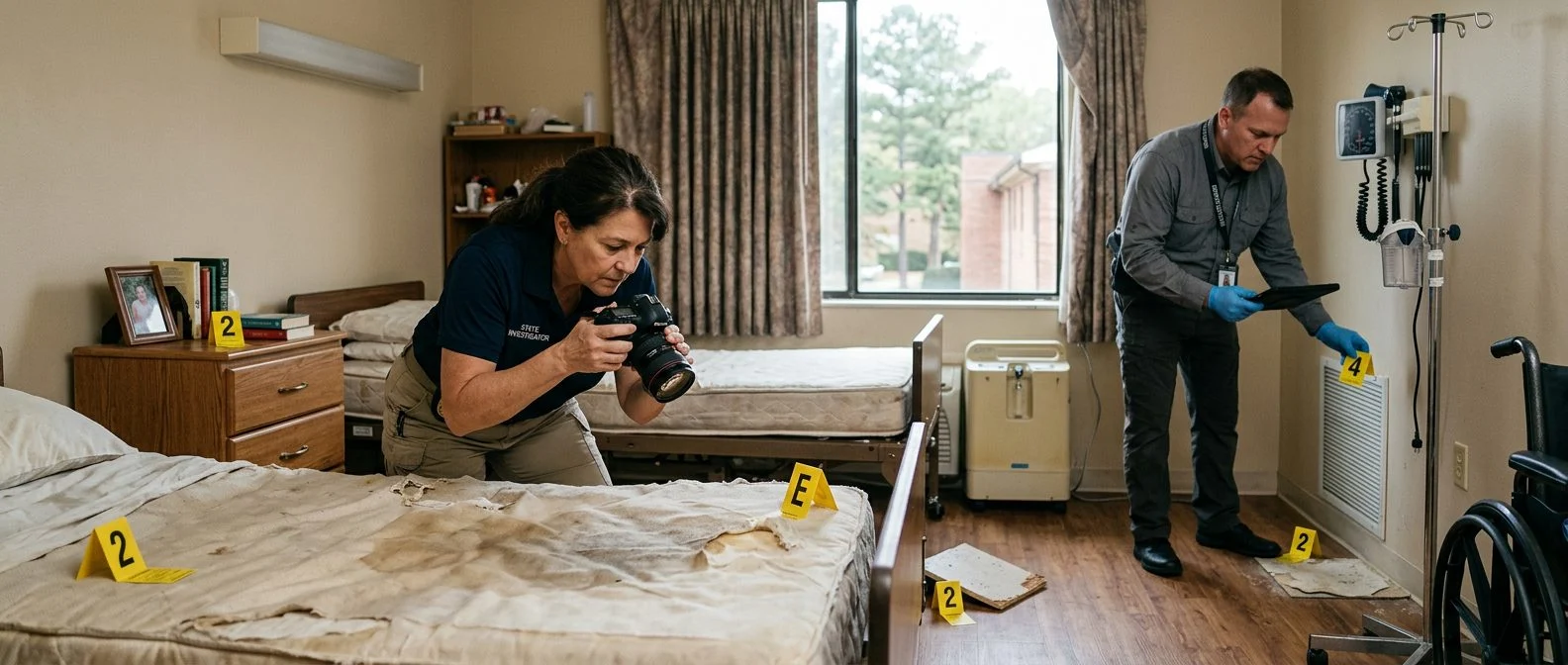
Start gathering records now. Keep photos of injuries with dates. Save incident reports, care plans, medication lists and visitor notes. Write down dates and conversations with staff. Georgia lets residents inspect and copy their records, and a facility may charge a fee no higher than actual cost (resident records rights). Don’t sign facility forms until you understand them.
Concerns about care can also go to state regulators. Georgia’s Healthcare Facility Regulation Division accepts complaints online, by telephone or by fax (Georgia complaint process).
Not sure what your next step is?
Talk it through with our team — the first consultation is free, confidential, and carries no obligation.
Talking through your situation with Slam Dunk Attorney
If a parent or relative in a Georgia nursing home has been hurt, neglected or has died, you may be working out next steps while handling daily care. You don’t have to map out every option at once.
For families of a resident who has died, Georgia law lets a surviving spouse recover the full value of the decedent’s life, as shown by the evidence. If there is no surviving spouse, a child or children may recover (wrongful death recovery). The personal representative may also recover funeral, medical and other necessary expenses (personal representative recovery).
Our first consultation is free, confidential and comes with no obligation to continue. If a case moves forward, the client may still be responsible for court costs and case expenses.
If someone you love was hurt or has died in a Georgia nursing home, reach out to our team and talk through the facts with us.

Choosing the right type of lawyer for a nursing home claim
Nursing home claims involve medical records, facility rules and insurance issues. That mix is why the choice of counsel matters. Our guide on what type of lawyer you need covers the help these claims often require.
When you contact us, ask how we handle these cases. Ask who would work on your file and how fees and case costs are explained.
How hard is it to win a lawsuit against a nursing home?
The answer turns on proof of unreasonable care, a link to the harm, provable losses and timely filing. No reliable percentage predicts a specific case.
How long do I have to file?
Georgia generally allows two years for injury claims. The clock starts when the right of action accrues.
Can a nursing home case settle without a trial?
Yes. Many civil claims resolve through negotiation or mediation, though some go to trial.
Can a family sue after a resident dies?
Yes. Georgia wrongful death law lets certain family members recover, as shown by the evidence.
Disclaimer: This is general information, not legal advice, and no outcome is predicted here. Peter F. Jaraysi is the responsible lawyer for this page at Slam Dunk Attorney in Duluth, Georgia. Contact details are on our contact page.
What Shapes a Nursing Home Case
Proof of Unreasonable Care
The central question is whether the facility failed to provide the level of care a resident was owed, and whether that failure caused harm.
Documented Losses
Medical bills, treatment needs, and the impact on the resident and family must be recorded and explained clearly.
Careful Timing
Georgia has filing rules for these claims, so early review of the facts matters.
Start Keeping Records Now
Write down what you observed, save photos of injuries or conditions, and keep copies of admission papers, care plans, and billing statements. Do not sign releases or settlement papers before getting advice about your situation.
Evidence That Often Matters
Medical Records
Hospital, emergency, and physician notes can show when a problem began and how it was treated.
Facility Records
Care plans, medication logs, incident reports, and nursing notes can reveal gaps in supervision or treatment.
Staffing Information
Shift schedules and staffing levels may help show whether the facility had enough trained people to meet residents' needs.
Witness Accounts
Statements from family, visitors, and staff can add detail about what happened and when.