
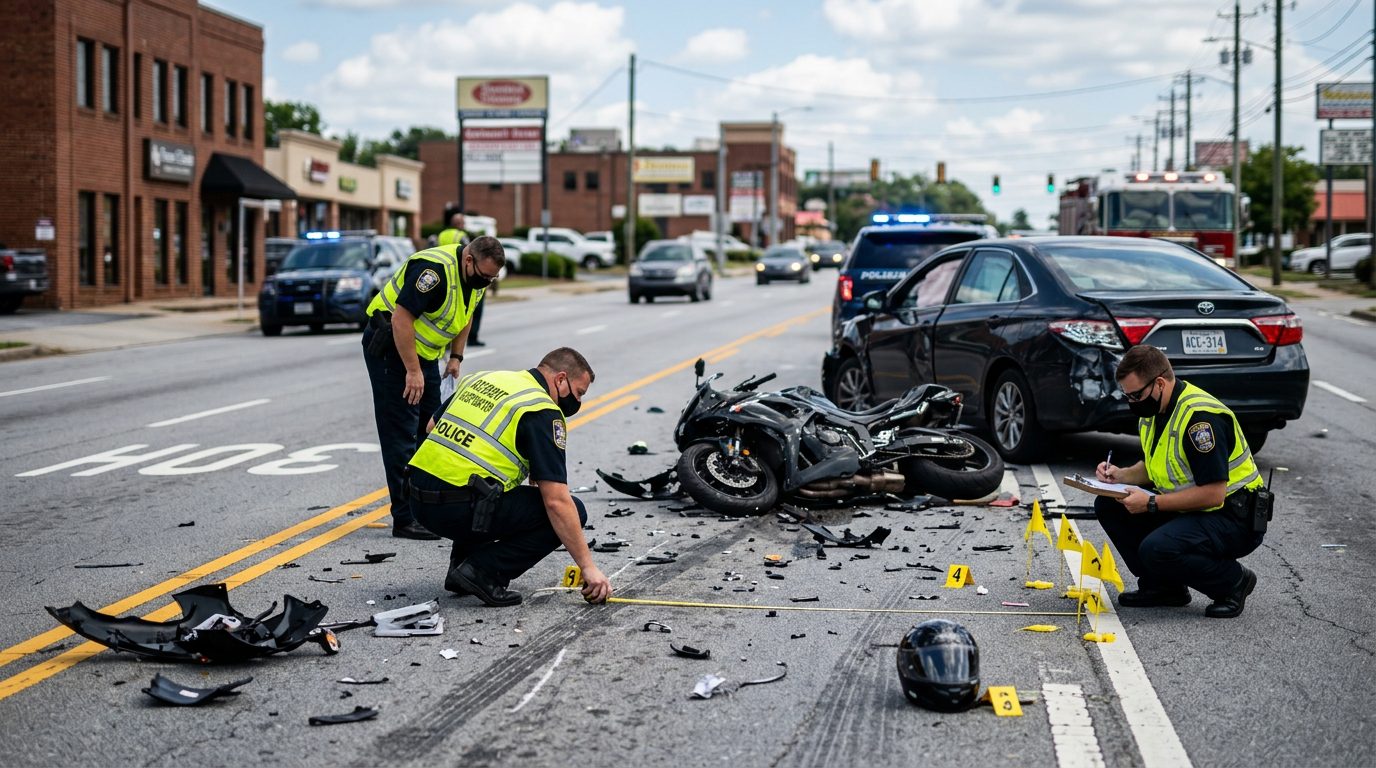
Gwinnett County | Motorcycle Accidents
Hurt in a Motorcycle Crash? Here Are Your Next Steps
Plain-language guidance from Slam Dunk Attorney, a Duluth, Georgia personal injury firm that represents injured riders across Gwinnett County, metro Atlanta and Georgia.
By Peter F. Jaraysi · Published October 22, 2026
If you were hurt in a motorcycle crash in Gwinnett County, get medical care now, protect the evidence, be careful with the insurer, and keep Georgia’s filing deadlines in mind. Insurers often try to shift blame onto riders, and Georgia’s fault rules can reduce or block a claim when they succeed.
Readers who type “top motorcycle accident attorney in Gwinnett County” usually want one clear thing: a plan. This guide explains that plan in plain language. Slam Dunk Attorney is based in Duluth, Georgia.
Why a Gwinnett County Motorcycle Crash Claim Often Starts With Blame
Many motorcycle claims start with a fault argument. The insurer wants to show the rider played a part in the crash, because any share of fault it assigns can lower what it may owe.
Picture the scene. You’re on a Gwinnett County road. A driver pulls out, changes lanes, or turns across your path. Days later, an adjuster calls and asks how fast you were going. That question can feel like an accusation.
Many riders feel they must prove they’re innocent right away. That pressure is understandable. But the early days are when evidence can go missing and early statements get misread.
Here’s what most riders worry about: being blamed simply for riding. In reality, the answer turns on what happened. Lane position, speed, signals, road conditions, and the other driver’s choices all matter.
This guide covers how Georgia’s fault rule works, how to handle insurer calls, which evidence matters, and when the filing deadline applies. It promises no particular result. It gives you a clear order of steps.
If a crash left you hurt and an adjuster is already asking about the rider's role, you don't have to sort that out alone. We're glad to talk with you about your options. Talk it through with our team — the first consultation is free, confidential, and carries no obligation.

How Georgia’s Comparative Fault Rule Can Affect a Rider’s Claim
Georgia reduces your recovery by your share of fault, and you recover nothing if you are 50 percent or more responsible (O.C.G.A. § 51-12-33; Quynn v. Hulsey, 310 Ga. 473 (2020)).
Georgia uses modified comparative fault, which means shared fault with a cutoff. Under O.C.G.A. § 51-12-33, the jury sets the injured person’s percentage of fault. The judge then reduces the damages in proportion to that share.
The cutoff is the part riders most need to understand. The same statute says a plaintiff who is 50 percent or more responsible for the injury or damages claimed is not entitled to receive any damages (O.C.G.A. § 51-12-33; Quynn v. Hulsey, 310 Ga. 473 (2020)). Under O.C.G.A. § 51-12-33, the judge reduces the damages otherwise awarded to the plaintiff in proportion to his or her percentage of fault, and the plaintiff is not entitled to receive any damages if the plaintiff is 50 percent or more responsible for the injury or damages claimed. A rider found 50 percent at fault would recover nothing.
The statute also says the jury weighs the fault of everyone who contributed to the injury. Each liable person then pays its own share, not a joint share.
This is where the insurer’s argument matters. Blame over lane position or speed feeds the percentage, so the details of the crash carry real weight. Georgia’s right-of-way rules can help show who had the duty to yield in many crashes.
How this rule plays out in your case depends on the facts.
Steps to Take Right After a Motorcycle Crash
Get medical care right away, keep the records, and document the scene while it’s fresh.
Get checked, even if you feel fine. Adrenaline can mask pain. A spinal cord injury can affect motor, sensory and autonomic function, according to the Christopher & Dana Reeve Foundation. Keep every visit note, bill, and prescription receipt.
Get the police report. Ask the responding agency for the crash report and request a copy. Note the report number and the officer’s name.
Photograph everything. Take pictures of the scene, your motorcycle, the other vehicles, road conditions, skid marks, traffic signs, and any visible injuries. Shoot from several angles.
Collect witness details. Get names and phone numbers from anyone who saw the crash. Memories fade, so ask now.
Write it down. Record the time, the location, the weather, and what you remember, in your own words. Then start a simple log of missed work, pain, and limits on daily tasks.
Handling Calls and Statements From the Insurance Adjuster
Keep calls short, stick to facts you know, and talk with a lawyer before giving a recorded statement or accepting an offer.
An adjuster works for the insurance company. That company decides what it will pay. A call from an adjuster is not a neutral check-in, even when the tone is friendly.
Be factual. If you don’t know something, say so. Don’t guess at speed, distance, or who had the light. Early guesses can be quoted back to you later.
Don’t describe your injuries as minor before you’ve been evaluated. A casual “I’m fine” on a recorded line can be used against you if symptoms appear later.
Before you give a recorded statement, consider speaking with Slam Dunk Attorney. A lawyer can explain what is being asked and why it matters. Early offers often arrive quickly. Before you accept one, contact Slam Dunk Attorney to understand what you would be agreeing to, including any release you sign.
Evidence That Shapes Fault in a Motorcycle Crash
The records that matter most are the crash report, photos, medical records, repair estimates, witness details, and any video of the crash.
Start with your gear. Georgia law requires riders to wear protective headgear that meets state standards. A motorcycle without a windshield requires an approved eye-protective device, under O.C.G.A. § 40-6-315. O.C.G.A. § 40-6-315 reads: “(b) No person shall operate or ride upon a motorcycle if the motorcycle is not equipped with a windshield unless he or she is wearing an eye-protective device of a type approved by the commissioner of public safety.” Keep your helmet, jacket, gloves, and boots, because damaged gear can show how the crash happened.
Don’t repair or sell the motorcycle until you’ve talked with Slam Dunk Attorney about preserving it. Repair shops and insurers can change or discard parts quickly. Save the phone you used at the scene, and note the time of any call or message.
A lawyer can send written requests asking other parties to keep their records. This is often needed early.
For background, the Governor’s Office of Highway Safety publishes a factsheet covering Georgia motorcycle crash data, licensing and equipment rules, and lane-use restrictions.
Evidence helps show how a crash happened. It does not decide the outcome by itself.
The Two-Year Deadline for Georgia Motorcycle Accident Claims
Georgia generally gives you two years to bring a personal injury action, so track that clock first (O.C.G.A. § 9-3-33; Cameron v. JMP Pizza, Inc. (2026)).
Under O.C.G.A. § 9-3-33, actions for injuries to the person must be brought within two years after the right of action accrues. A claim for loss of consortium, such as a spouse’s claim, has four years under the same statute.
Other deadlines can be shorter. If someone has a claim for money damages against a city for injuries to person or property, O.C.G.A. § 36-33-5 requires a written claim to the city’s governing authority within six months of the event. Courts cannot hear the case until that claim has been presented.
If the State of Georgia may be involved, O.C.G.A. § 50-21-26 requires written notice within 12 months of when the loss was discovered or should have been discovered. No lawsuit can go forward until timely notice has been presented, and then only after the Department of Administrative Services has denied the claim or more than 90 days have elapsed after the notice was presented, whichever occurs first.
Write the crash date down today. Put it on your calendar, and bring it to any conversation with a lawyer.
Not sure what your next step is?
Talk it through with our team — the first consultation is free, confidential, and carries no obligation.
What a First Conversation With This Firm Looks Like
A first conversation with Slam Dunk Attorney is a free, confidential consultation, and it carries no obligation to continue.
Bring the basics. Share the crash date, the location, your injuries, any insurer contact details, and any police report number. Also bring a list of the medical providers you’ve seen.
The firm can then explain which options fit the facts you describe. It can explain how Georgia’s fault rule, filing deadlines, and notice rules may apply to your situation. You decide what, if anything, to do next.
Our team includes our lawyers, Peter F. Jaraysi and Brian D. Wright, along with office staff. Our lawyers and team can answer your questions about the process.
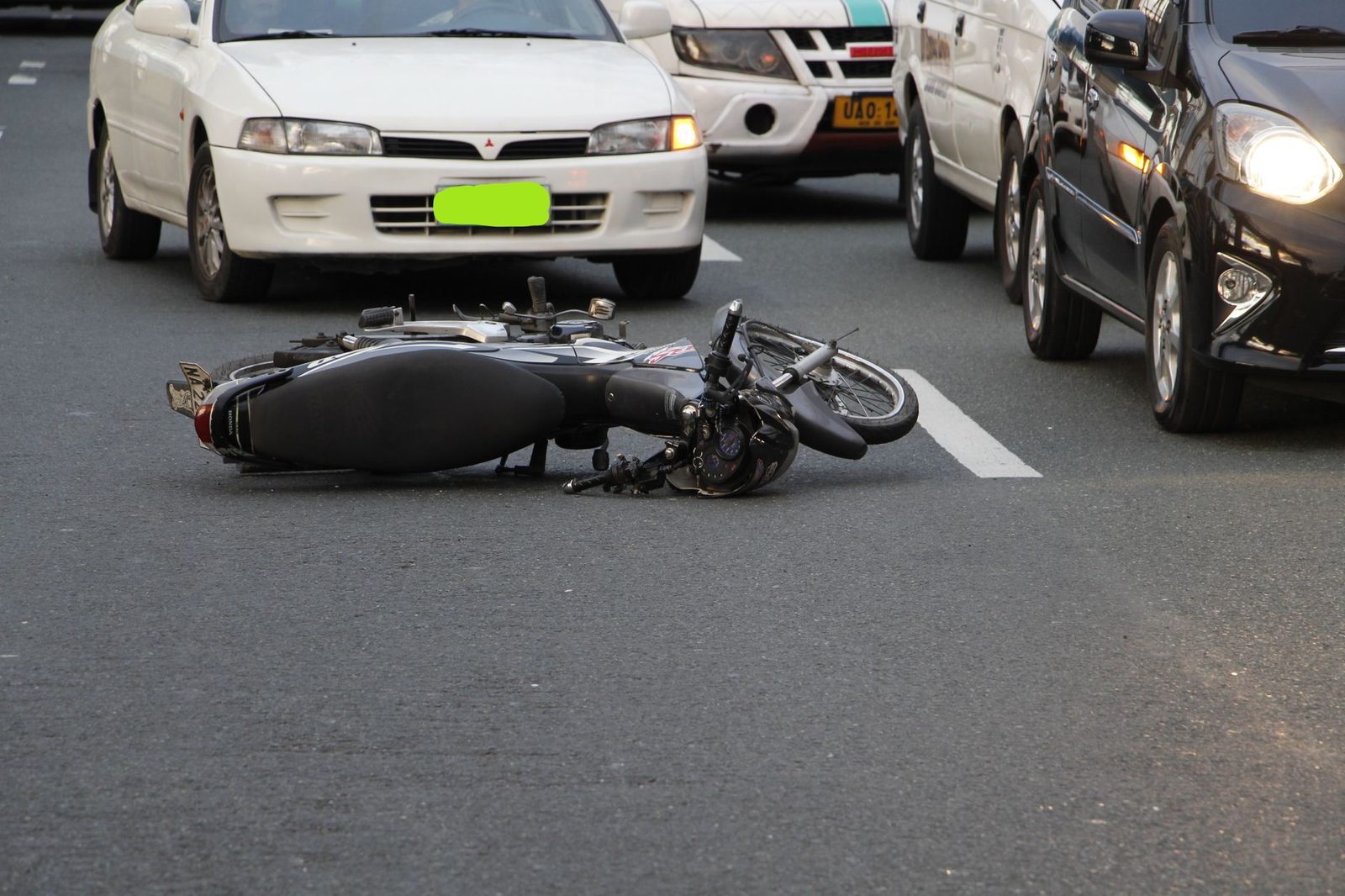
If You Were Hurt in a Motorcycle Crash in Gwinnett County
If you were hurt in a motorcycle crash in Gwinnett County, you may have a claim, and you don’t have to deal with the insurer alone.
Frequently asked questions
Can I still recover if I was partly at fault?
Georgia reduces your recovery by your share of fault. Under O.C.G.A. § 51-12-33, you recover nothing if you are 50 percent or more responsible.
How long do I have to file a claim?
For most injury claims, Georgia generally allows two years, under O.C.G.A. § 9-3-33. Claims involving cities or the state can have shorter notice deadlines.
Do I have to give a recorded statement?
It’s wise to talk with Slam Dunk Attorney before giving a recorded statement to an insurer.
Under O.C.G.A. § 40-6-315, riders must wear protective headgear that meets state standards.
If a crash left you hurt and an adjuster is already asking about the rider’s role, you don’t have to sort it out alone. You can request a free consultation and talk through what applies to your situation.
Disclaimer: This page is general information, not legal advice, and no outcome is promised. The responsible lawyer for this page is Peter F. Jaraysi of Slam Dunk Attorney, Duluth, Georgia. Contact the firm through the contact page.
Steps to Take After a Motorcycle Crash
Get medical care
Even if you feel you have only minor injuries, see a doctor promptly. Some injuries, such as head and spinal injuries, may not show symptoms right away.
Document the scene
If you are able, take photos of the vehicles, roadway, road conditions, visible injuries and any traffic signs or signals. Write down what you remember while it is fresh.
Keep your records
Save medical bills, repair estimates, the police report number, and notes about missed work and daily limitations. Organized records make your situation easier to explain.
Talk with a lawyer
Our team can review what happened, explain your options in plain language and help you understand the next steps for your situation.
Why Start with a Free Consultation
Free first consultation
Your first consultation is free, confidential and comes with no obligation to continue.
Local focus
Our team represents riders in Gwinnett County, Lawrenceville, Norcross, Johns Creek and across metro Atlanta.
Plain-language answers
We explain your questions clearly so you can make informed decisions at your own pace.
Support for you and your family
We understand that a serious crash affects your health, your work and your loved ones, and we take the time to listen.
Be Careful with Insurance Calls
Insurance adjusters may contact you quickly and ask for a recorded statement. Before you give a statement or sign any release or settlement paper, talk with a lawyer about what you are being asked to do.