
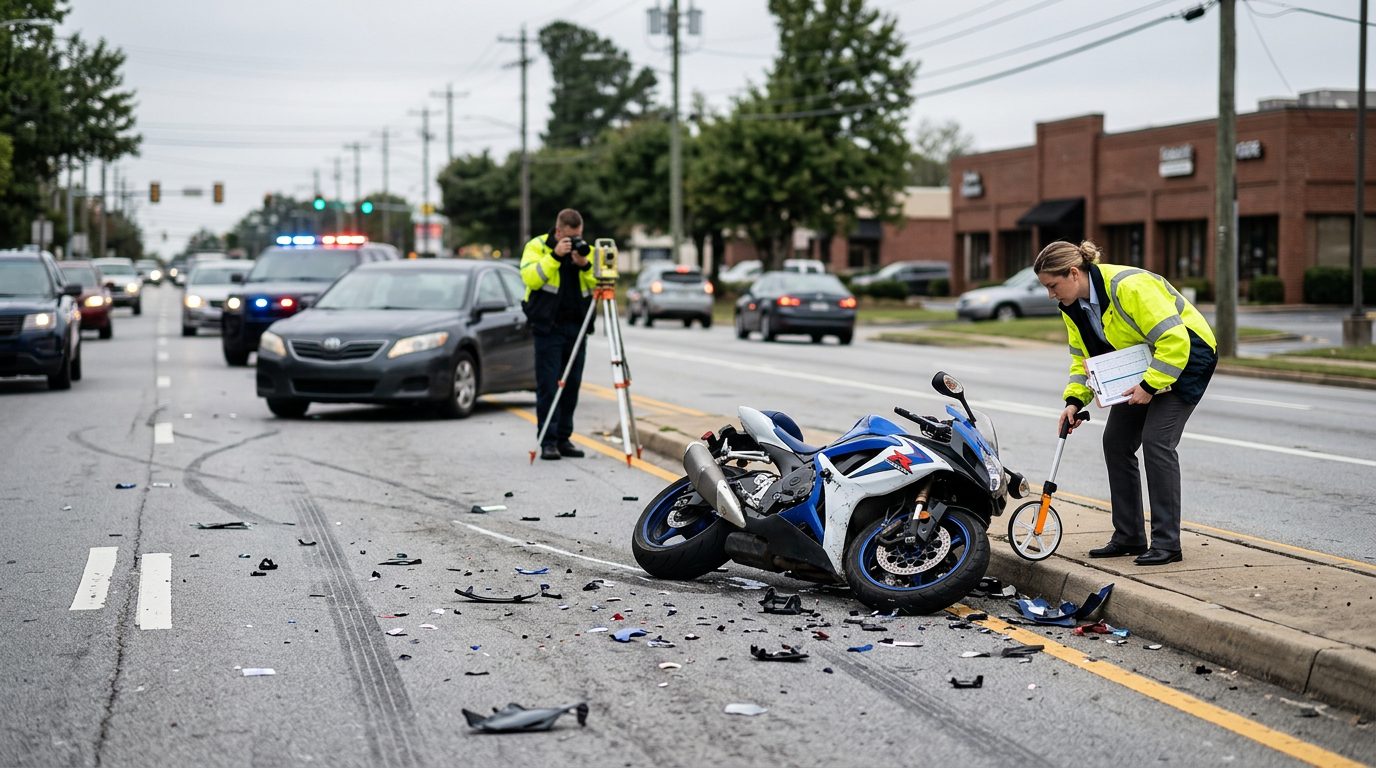
Motorcycle Accidents | Duluth, Georgia
Hurt in a Motorcycle Crash? Understand What Shapes Your Case
Plain-language answers from a Duluth personal injury firm that represents riders and their families across metro Atlanta and Georgia.
By Peter F. Jaraysi · Published October 23, 2026
The Short Answer: Odds Depend on How the Question Is Measured
The odds of having a motorcycle accident depend on what you measure: miles ridden, motorcycles registered, or riders over a year. Crash risk is usually written as a rate, which compares crashes to a base amount of riding or riders. Each base answers a different question, so the same data can look very different.
Three bases come up most often. Per mile traveled asks how many crashes happen for each mile ridden. Per registered motorcycle asks how many crashes involve each bike on the road. Per rider asks how likely an individual rider is to crash in a year. A daily commuter and a weekend rider can face very different numbers, even when the yearly totals look close.
If a crash has left you or someone you love hurt and facing medical bills and time off work, our team at Slam Dunk Attorney is glad to talk it through in a free, confidential first consultation. Talk it through with our team — the first consultation is free, confidential, and carries no obligation.

How Motorcycle Crash Rates Are Measured
Crash rates need an exposure number, meaning the amount of riding or driving that could lead to a crash. Two common exposure measures are vehicle miles traveled and motor vehicle registrations. Miles traveled shows how much road use there is. Registrations show how many vehicles are on the road.
Motorcycles are a small share of registered vehicles. Yet per mile traveled, they carry a much higher crash risk than passenger cars. The Insurance Institute for Highway Safety tracks general motorcycle crash risk and helmet effectiveness.
Georgia publishes its own numbers. The Georgia 2019 motorcycle safety facts sheet from the Department of Driver Services reports motorcyclist fatalities and a statewide crash rate. Crash reports matter too. The Georgia Uniform Vehicle Accident Report guidance explains how crashes are recorded. State officials use that crash data to analyze traffic hazards and to resolve legal matters.
What National and Georgia Crash Data Generally Show
Motorcyclists are among the most vulnerable road users per mile traveled. Motorcycle crash research, including the Insurance Institute for Highway Safety work, treats riders as highly exposed on the road.
Georgia figures change from year to year. The newest Department of Driver Services and state crash reports are the best place to find current numbers. Each report names the year it covers.
National averages describe a large group of riders. They do not predict what will happen to any one rider. A low average does not make your ride safe. A high average does not make a crash certain.
Factors That Raise or Lower a Rider’s Exposure
Training, sobriety, rest, road conditions, and other drivers all shape a rider’s exposure. Some of these you control. Others you can only watch for.
Training matters. A basic rider course builds skills for braking, swerving, and slow-speed control. A less experienced rider has less room for error in heavy traffic.
Impairment raises risk fast. Alcohol, drugs, and fatigue slow reaction time. Long rides in heat or late at night can wear a rider down, even when the rider feels fine.
Other drivers are a major threat. A driver may not see a motorcycle at all. Left-turn collisions happen when a driver turns across a rider’s path. Lane change collisions happen when a driver moves into a lane where a rider is traveling.
Road conditions add risk. Potholes, gravel, wet pavement, and construction zones can all cause a loss of control. Busy metro Atlanta corridors mix stop-and-go traffic, merging lanes, and fast trucks. Low light and rain reduce what drivers can see.
Why a Crash Often Means More Serious Injury for a Rider
A rider has far less protection than someone inside an enclosed vehicle. There is no steel frame, airbag, or door. When a motorcycle goes down, the rider often slides or strikes the pavement, a curb, a guardrail, or another vehicle. The same impact that shakes a car occupant can cause serious harm to a rider.
Common injuries include road rash, which is skin damage from sliding on pavement. Riders also suffer fractures, head injuries, and spinal injuries. Some of these injuries can have lasting effects.
Georgia law sets rules for gear. Under O.C.G.A. § 40-6-315, no one may ride a motorcycle without protective headgear that meets state standards. O.C.G.A. § 40-6-315 reads: “(b) No person shall operate or ride upon a motorcycle if the motorcycle is not equipped with a windshield unless he or she is wearing an eye-protective device of a type approved by the commissioner of public safety.” O.C.G.A. § 40-6-315 reads: “(a) No person shall operate or ride upon a motorcycle unless he or she is wearing protective headgear which complies with standards established by the commissioner of public safety.” The same section requires an approved eye-protective device on a motorcycle that has no windshield. O.C.G.A. § 40-6-315 reads: “(b) No person shall operate or ride upon a motorcycle if the motorcycle is not equipped with a windshield unless he or she is wearing an eye-protective device of a type approved by the commissioner of public safety.”
Gear reduces some injuries. It does not prevent crashes. Good protection helps a rider come through a crash with less harm, but it does not stop a driver from turning into your path.
What to Do If You or a Loved One Was Hurt
Get medical care soon after a crash, even if injuries seem minor. Some injuries, including head injuries, may not cause clear symptoms right away.
If it is safe, document the scene. Photograph the vehicles, the road, and visible injuries. Write down witness names and phone numbers. Keep records of medical visits, notes on time missed from work, and receipts for out-of-pocket costs.
Request the official crash report. Georgia’s crash report guidance explains how the information is recorded, so the report can be a useful starting point.
Be careful with insurance adjusters. An adjuster works for the insurance company. Understand your options before you give a recorded statement.
Fault can affect what you recover. Under O.C.G.A. § 51-12-33, damages are reduced in proportion to the injured person’s share of fault. In an action for injury to person or property, a plaintiff who is 50 percent or more responsible for the injury or damages claimed is not entitled to receive any damages.
Common Questions
Is a helmet required in Georgia?
Yes. Georgia law requires riders to wear protective headgear that meets state standards.
Can I still recover if I was partly at fault?
Georgia reduces damages by your share of fault. If you are 50 percent or more responsible, you recover no damages (O.C.G.A. § 51-12-33; Quynn v. Hulsey (2020)).
How long do I have to file a lawsuit?
Georgia sets a filing deadline for injury claims, so timing matters early. Our team can explain which deadline may apply to your situation.
Not sure what your next step is?
Talk it through with our team — the first consultation is free, confidential, and carries no obligation.
Talk With Our Team About a Motorcycle Crash Injury
If a crash has already happened, you don’t have to sort out the next steps alone. Many riders and family members are still weighing medical bills, insurance calls, and missed paychecks. Slam Dunk Attorney, based in Duluth, Georgia, represents people hurt in motorcycle crashes across metro Atlanta and Georgia. Our team offers a free first consultation that is confidential and carries no obligation to continue.
This page is general information, not legal advice, and reading it does not create an attorney-client relationship. Every case turns on its own facts. The responsible lawyer for this page is Peter F. Jaraysi of Slam Dunk Attorney, Duluth, Georgia. Contact details are on the contact page.
How Our Team Approaches Motorcycle Cases
A Close Look at the Facts
We review the crash report, photos, medical records and insurance correspondence to understand what happened and who was involved.
Questions About Gear and Fault
Protective gear, road conditions and each driver's actions can all matter. We explain how these issues may apply to your situation.
Attention to Your Recovery
Serious injuries can affect your health, work and daily life. We keep your medical needs and your goals at the center of the conversation.
Clear Communication
You will hear plainly what we know, what we do not yet know and what the next steps could be.
Be Careful With Insurance Calls
Insurance adjusters may ask for a recorded statement soon after a crash. Speaking with a lawyer before you give one can help you understand your options.
Common Questions Riders Ask
Who pays my medical bills?
Payment sources depend on your policies, the at-fault party's coverage and the details of your injuries. We review these options with you at your consultation.
What if I was partly at fault?
Georgia's comparative fault rules can affect a claim, so the specifics of your crash matter. We walk through how they might apply to you.
Does the other driver's insurer owe me something?
Insurers evaluate claims in their own way. Our team can explain what the insurer is saying and why it matters before you respond.
What happens at a free consultation?
You can share your story and ask questions. The first consultation is confidential, and there is no obligation to continue.
Your First Consultation Is Free, Confidential and Comes With No Obligation
Related practice areas
- Semi Truck Accident Lawyer Duluth GA: Can You Sue?