

Motorcycle Accidents
Uninsured Motorist Coverage for Motorcycle Accidents
Protect yourself when the other driver has no insurance. Learn what UM/UIM coverage means for your claim and your recovery.
By Peter F. Jaraysi · Published September 25, 2026
Uninsured & Underinsured Motorist Coverage for Motorcycle Accidents in Georgia
Uninsured motorist (UM) coverage protects you when hit by a driver with no insurance, while underinsured motorist (UIM) coverage applies when the at-fault driver’s insurance limits are too low to cover your damages. These are separate protections that sit apart from your liability or collision coverage—and they’re especially critical for motorcycle riders, whose injuries tend to be severe and expensive.
Under Georgia law, insurers generally must offer both UM and UIM coverage to policyholders, though you can decline them in writing. Whether you have this protection, and how it applies, depends on the facts and on your policy, so consult a lawyer about your own situation. Understanding what it covers, how it works, and what to do after an accident can mean the difference between recovering your losses and facing them alone.
If you’re dealing with an uninsured or underinsured driver after a motorcycle accident, you may have a claim through your own policy. Talk it through with our team — the first consultation is free, confidential, and carries no obligation.
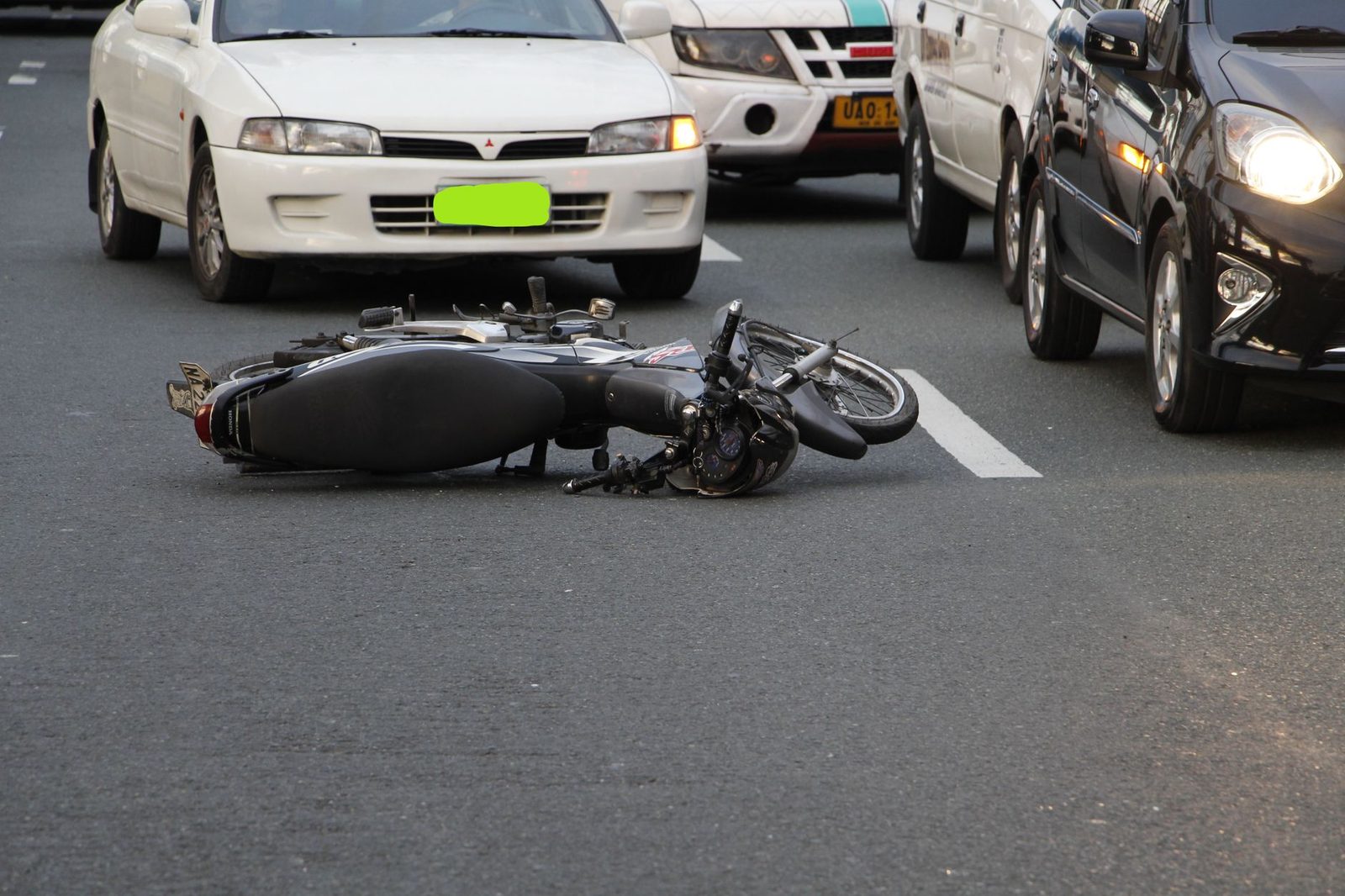
What Is Uninsured and Underinsured Motorist Coverage?
UM coverage pays your medical bills, lost wages, pain and suffering, and other damages when an uninsured driver causes your accident. UIM coverage does the same thing, but applies when the at-fault driver has insurance—just not enough of it.
Think of it this way: liability coverage is what you carry to pay for damage you cause to others. Collision coverage pays to fix your motorcycle if you hit something. UM/UIM coverage, by contrast, protects you when someone else causes an accident and either has no insurance or not enough insurance to cover your injuries.
These coverages operate as a safety net. They’re paid by your insurance company, not the other driver’s. That means you don’t have to chase down an uninsured driver or wait for their insurer to process a claim—you file with your own insurer, and how your claim is handled depends on your policy and the facts of your case, so consult a lawyer about your own situation.
Why Uninsured Motorist Coverage Matters for Motorcycle Riders
Motorcycle accidents frequently result in severe injuries with substantial medical costs, making UM/UIM coverage essential when the at-fault driver lacks adequate insurance. A motorcycle rider has no protective shell, airbags, or crumple zones. Impact injuries, road rash, broken bones, spinal cord damage, and traumatic brain injury are common in even moderate-speed collisions.
Medical costs from a serious motorcycle accident can add up quickly, and that’s before lost wages, ongoing care, or pain and suffering. If the driver who hit you has no insurance or minimal coverage, you face a stark choice: cover those costs yourself, or go without.
Uninsured drivers are more common than many riders realize.
Without UM/UIM coverage, you’d have to sue the uninsured driver directly—a costly, time-consuming process with no guarantee of recovery, especially if that driver has few assets. With UM/UIM, your own insurer steps in and covers your damages up to your policy limits.
The same logic applies to underinsured situations. A driver with a $25,000 liability limit might cause a motorcycle accident that results in $150,000 in medical expenses and lost wages. Their insurer pays $25,000. Your UIM coverage bridges the gap, paying the remaining $125,000 (minus your deductible, up to your UIM limit).
Georgia’s Uninsured and Underinsured Motorist Requirements
Georgia law requires all auto insurers to offer UM and UIM coverage to every policyholder, though you can decline both in writing. This is codified in O.C.G.A. § 34-34-3.1, which sets out the insurer’s duty to make the offer clear and to document your decision if you choose to decline.
Most motorcycle riders should not decline this coverage. The cost is modest—often just a few dollars per month—and the protection is substantial. If you’ve already declined it, you may be able to add it back to your policy by contacting your insurer.
Georgia does not set a single mandatory limit for UM/UIM coverage. Instead, insurers typically offer limits that match or fall below your liability limits. For example, if your liability coverage is $100,000 per person, your UM/UIM might be $100,000 per person as well. You can often request higher limits for an additional premium.
Stacking—combining UM/UIM limits across multiple vehicles or policies—is permitted in Georgia under certain conditions, though the rules are complex and depend on your specific policy language. If you own multiple motorcycles or vehicles, ask your insurer whether you can stack coverage; this can significantly increase your protection.
What Uninsured Motorist Coverage Covers
UM/UIM coverage pays for medical expenses, lost wages, pain and suffering, permanent disability, and wrongful death benefits resulting from the accident. Here’s what that includes in practice:
- Medical expenses: emergency room visits, surgery, hospitalization, physical therapy, prescription medications, and ongoing treatment.
- Lost wages: income you lost while recovering from your injuries, and in severe cases, loss of earning capacity (the reduction in your lifetime earning potential due to permanent disability).
- Pain and suffering: compensation for physical pain, emotional distress, and reduced quality of life.
- Permanent disability or disfigurement: additional damages if the accident leaves you with lasting scars, limited mobility, or chronic pain.
- Wrongful death benefits: if the accident kills you, your family may file a UM/UIM claim for funeral expenses, lost financial support, and loss of companionship.
Motorcycle repair or replacement is not covered by UM/UIM alone. For that, you need collision coverage, which is separate. Some riders mistakenly believe UM/UIM will pay to fix their bike—it won’t. Collision coverage does that job.
What Uninsured Motorist Coverage Does Not Cover
UM/UIM coverage does not cover damage to your motorcycle (unless you also have collision coverage), injuries you cause to others, or accidents where you bear fault. Here are the key exclusions:
- Motorcycle damage: UM/UIM is for your injuries and losses, not property damage to your bike. You need collision coverage for that.
- Injuries you cause to others: UM/UIM protects you, not people you injure. That’s what your liability coverage is for.
- Intentional acts: if the other driver intentionally hit you (rather than negligently causing an accident), UM/UIM may not apply. Your policy language will specify.
- Accidents where you’re at fault: if you caused the accident, UM/UIM doesn’t cover your own injuries. (This rule varies slightly by policy; some policies apply comparative fault, meaning you can recover a reduced amount if you’re partially at fault.)
- Hit-and-run accidents: this is tricky. Some UM policies cover hit-and-run injuries if you have collision coverage and can show you were hit; others require proof that the other vehicle was uninsured. Check your policy or ask your insurer.
Not sure what your next step is?
Talk it through with our team — the first consultation is free, confidential, and carries no obligation.
How to File an Uninsured Motorist Claim After a Motorcycle Accident
Start by reporting the accident to police and obtaining a report number, then notify your own insurance company promptly and gather all evidence that the other driver was uninsured or underinsured. Here’s the step-by-step process:
-
Call police and get a report number. Even if the accident seems minor, a police report creates an official record and helps your insurer verify the other driver’s lack of insurance.
-
Document the scene. Take photos of your motorcycle, your injuries, the accident location, road conditions, and any visible damage to the other vehicle. Get the other driver’s name, phone number, address, and license plate if possible.
-
Notify your insurer. Call your insurance company as soon as you can—ideally within 24 hours. Provide your policy number and a brief description of what happened. Don’t admit fault or speculate about the accident.
-
Gather medical records and bills. Seek medical attention right away, even if you think your injuries are minor. Motorcycle injuries can worsen over time. Keep all medical records, bills, receipts for medications, and documentation of lost wages.
-
Provide proof of the other driver’s insurance status. Your insurer will investigate whether the other driver had insurance. You can help by providing the police report, any written statements from witnesses, and information about the other driver’s vehicle.
-
Submit your claim. Your insurer will ask you to complete a formal claim form. Be thorough and honest. Include all medical bills, wage loss documentation, and photos of your injuries and the accident scene.
-
Review the insurer’s offer or denial. Your insurer will investigate and either make you an offer to settle your claim or deny it. If you disagree with the offer, you have the right to dispute it.
Uninsured Motorist Claims vs. Underinsured Motorist Claims
A UM claim applies when the other driver has zero insurance or is a hit-and-run; a UIM claim applies when the other driver’s insurance exists but limits are too low. The process differs slightly for each.
In a UM claim, you file directly with your own insurer. Your insurer investigates whether the other driver was truly uninsured. If so, your UM coverage applies, and your insurer pays your damages up to your UM limit (minus your deductible).
In a UIM claim, you must first exhaust the at-fault driver’s insurance policy. Here’s how it works: the at-fault driver’s insurer pays up to their policy limit. Then, you file a UIM claim with your insurer for the remaining damages. Your insurer pays the difference, up to your UIM limit.
For example: you’re hit by a driver at fault for a $100,000 accident. Their insurer has a $50,000 limit and pays $50,000. Your UIM limit is $100,000. You file a UIM claim with your insurer for the remaining $50,000 (minus your deductible). Your insurer pays it.
Both UM and UIM claims require proof that the other driver was at fault. Your insurer will review the police report, witness statements, and accident scene evidence. If the other driver disputes fault or if fault is unclear, your insurer may deny or reduce your claim.
Common Disputes in Uninsured Motorist Claims
Insurers sometimes dispute whether the other driver was truly uninsured, challenge the amount of your damages, or claim you were partially at fault and reduce the payout. Here are the disputes we see most often:
-
“The other driver actually had insurance.” Your insurer may claim the other driver carried a policy you didn’t know about. The police report and your investigation help resolve this; if the other driver provided false information at the scene, that’s a separate issue.
-
“Your damages are too high.” Your insurer may argue that your medical bills are inflated, your lost wages are overstated, or your pain-and-suffering claim is unreasonable. This is where medical records, pay stubs, and documentation matter.
-
“You were partially at fault.” Georgia recognizes comparative fault (shared responsibility), and how it applies depends on the facts of your case, so exceptions may apply and you should consult a lawyer about your own situation. If your insurer believes you contributed to the accident, it may reduce your payout by your percentage of fault. You may be able to dispute this assessment, and whether you can depends on the facts of your claim, so consult a lawyer about your own situation.
-
“The claim is denied outright.” Your insurer may deny your entire claim, arguing that the accident doesn’t fall within coverage (for example, a hit-and-run where you lack collision coverage, or an intentional act).
-
“What counts as ‘underinsured’?” In UIM claims, disputes sometimes arise over whether the other driver’s limits are truly “underinsured” under your policy. Your policy language defines this; if it’s unclear, your insurer should explain it.
If you disagree with your insurer’s offer or denial, you have options: negotiate further, request an independent appraisal, file a complaint with the Georgia Department of Insurance, or pursue legal action.
When to Seek Legal Help for a UM/UIM Motorcycle Claim
Consider reaching out to an attorney if your claim was denied, you received a low offer, your injuries are severe, or the insurer is disputing fault or the extent of your damages. Here are specific situations where legal guidance helps:
- Your claim was denied and you believe it should have been approved.
- Your insurer’s offer is significantly lower than your actual damages.
- Your injuries are severe (spinal cord injury, traumatic brain injury, permanent disability, disfigurement) and the damages are substantial.
- The insurer is disputing fault or questioning whether you were truly injured.
- The accident involved a hit-and-run or multiple vehicles, complicating the claim.
- You’re unsure whether you have UM/UIM coverage, what your limits are, or whether you can stack coverage.
- Your insurer is taking an unreasonably long time to investigate or respond.
An attorney can review your policy, investigate the accident, gather medical evidence, negotiate with your insurer, and if necessary, file a lawsuit to enforce your rights. Insurers handling UM/UIM claims have obligations, and whether a wrongful denial or a lowball offer can be challenged depends on the facts of your claim. Consult a lawyer about your own situation.
Frequently Asked Questions
Do I have to carry uninsured motorist coverage in Georgia?
Georgia law requires insurers to offer UM/UIM coverage, but you can decline it in writing. Most riders should carry it given the severity of motorcycle injuries and the prevalence of uninsured drivers.
How much uninsured motorist coverage should I carry?
Carry limits that match or exceed your liability limits. If your liability is $100,000, aim for at least $100,000 in UM/UIM. Higher limits offer more protection for catastrophic injuries.
Can I stack uninsured motorist coverage across multiple motorcycles?
Yes, in many cases—but the rules depend on your policy and insurer. Ask your agent whether stacking is available and how it works.
What if I’m hit by a hit-and-run driver?
Whether UM coverage applies to a hit-and-run accident depends on the facts of the accident and the terms of your policy, so consult a lawyer about your own situation. Check your policy or contact your insurer.
How long do I have to file a UM/UIM claim in Georgia?
Filing deadlines for uninsured motorist claims depend on the facts of your case and the terms of your policy, and exceptions may apply, so consult a lawyer about your own situation. Report the accident to your insurer promptly.
What if my insurance company denies my claim?
You have the right to dispute the denial. Request a written explanation, gather additional evidence, and consider filing a complaint with the Georgia Department of Insurance or consulting an attorney.
If you’re navigating an uninsured or underinsured motorist claim after a motorcycle accident in Georgia, the process can feel overwhelming—especially while you’re recovering from injuries. You may have questions about your coverage, your insurer’s offer, or a claim that’s been denied or delayed. We’re here to review your policy, evaluate what happened, and help you understand your options. Get in touch for a free case review.
Georgia Law Requires Insurers to Offer UM/UIM
You can decline uninsured motorist coverage in writing, but most motorcycle riders should carry it. Motorcycle injuries tend to be severe, and uninsured drivers are common on Georgia roads.
Key Questions About Uninsured Motorist Coverage
What Does UM/UIM Coverage Do?
Uninsured motorist (UM) and underinsured motorist (UIM) coverage pays for your medical bills, lost wages, pain and suffering, and other damages when the at-fault driver has no insurance or insufficient coverage. It steps in so your injuries don't go uncompensated.
How Much Coverage Should I Carry?
Carry limits that match or exceed your liability limits. If you have $100,000 in liability coverage, consider $100,000 in UM/UIM as well. Motorcycle accidents often result in serious injuries; higher limits provide better protection.
What If the Other Driver Was Uninsured?
Your UM coverage applies. You file a claim with your own insurer, not the other driver's (since they have none). Your insurer will investigate and then either pay or deny your claim, and a lawyer can review any denial and explain your options.
Can I Still Sue the Uninsured Driver?
Yes, but collecting a judgment from an uninsured driver is often difficult. Whether UM/UIM coverage or a lawsuit is the better route depends on the facts of your accident and injuries. We can review the facts of your accident and injuries and discuss the options that may be available to you.
Why UM/UIM Claims Can Be Complicated
Insurance Company Disputes
Your own insurer may deny or undervalue your UM claim, arguing the other driver wasn't truly uninsured or that your injuries don't warrant the payout you're seeking. If your insurer denies or undervalues your claim, a lawyer can review the denial and explain your options.
Proving Fault and Damages
You must show the other driver was at fault and document your injuries, medical treatment, and losses. Motorcycle accidents leave clear physical evidence, but building a strong claim takes work.
Coverage Limits and Stacking
Georgia allows UM stacking in some cases, meaning you may combine coverage from multiple vehicles. Understanding your policy and what you're entitled to claim is critical.
Time-Sensitive Deadlines
Notice requirements, claim deadlines, and litigation windows apply. Missing a deadline may affect your ability to recover, and exceptions may apply, so consult a lawyer about your own deadlines.