
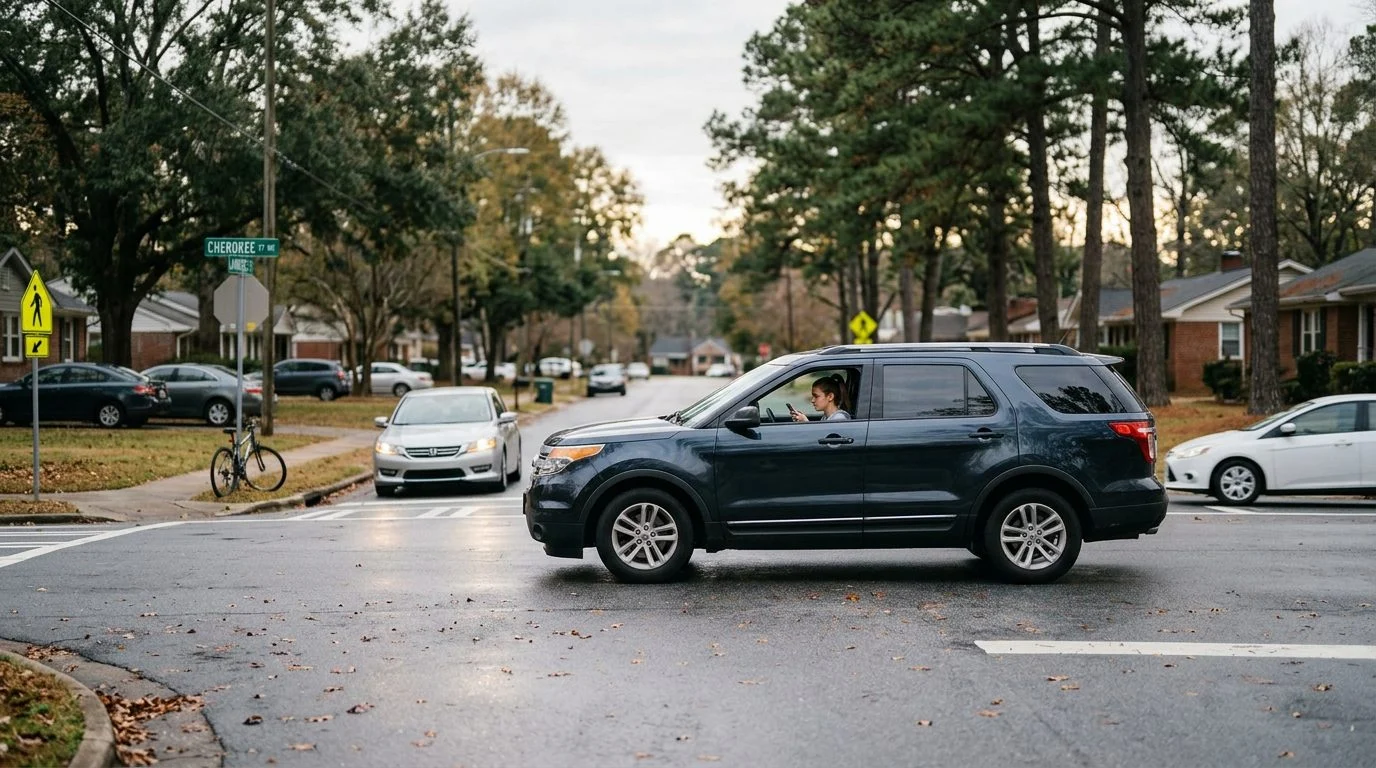
Accident Injury Guidance | Metro Atlanta and Georgia
Understanding the Top 5 Causes of Accidents
Knowing what typically leads to crashes and injuries can help you recognize risks on the road, at home, and on other people's property.
By Peter F. Jaraysi · Published November 23, 2026
If you were hurt in a crash, or you’re trying to understand one that hurt someone you love, you probably want a clear answer. The five causes most often cited in crash reports and safety writing are speeding, impaired driving, distracted driving, reckless and aggressive driving, and running red lights or failing to yield.
This guide explains each one in plain language. It also covers what Georgia law says about each cause and how it connects to the injuries people carry home.
How This List of Common Crash Causes Was Built
The five causes in this guide are driver behaviors that appear most often as contributing factors in crash reports and safety research. They are grouped for clarity, not ranked from most to least common. Driver behavior is widely recognized as a major factor in traffic crashes, so it gets close attention after a collision.
Most crashes have more than one cause. A driver may speed and get distracted at the same time, and both can show up in the reports. Looking at each cause on its own makes the picture easier to follow.
This page focuses on car, truck, and motorcycle crashes. People struck while walking face many of the same risks, and our pedestrian accidents guide covers those situations in more depth. Where a rule applies only to commercial trucks, this page says so.
If a crash has left you or someone you love hurt, our team at Slam Dunk Attorney can talk through what happened, and you don't have to sort it out alone. Talk it through with our team — the first consultation is free, confidential, and carries no obligation.
1. Speeding
Speeding means driving faster than the posted limit, or too fast for the conditions. Rain, heavy traffic, and construction zones call for slower speeds, even when the posted limit is higher. Higher speed leaves less time to react and adds force when a crash happens. That is why speed often affects how serious an injury becomes.
Federal rules for commercial trucks go further. A motor carrier may not schedule a run that would force a truck to exceed the speed limits of the places it drives, under the federal speed scheduling rule.
Speeding often appears on Georgia crash reports, and it can shift fault. How much it matters depends on the facts. Georgia reduces an injured person’s damages in proportion to that person’s own share of fault. Under the Georgia Supreme Court opinion in Quynn v. Hulsey, a plaintiff who is 50 percent or more responsible for the injury recovers no damages under O.C.G.A. § 51-12-33.
2. Impaired Driving
Impaired driving means operating a vehicle after using alcohol, illegal drugs, or medications that slow reactions or cloud judgment. Impairment makes it harder to stay in a lane, judge a gap in traffic, or stop in time. Some impaired drivers feel fine, which is part of the danger.
Georgia’s impaired-driving statute bars driving while under the influence of alcohol to the extent that it is less safe to drive. It also bars driving with any amount of marijuana or a controlled substance present in the blood or urine.
A prescription does not always protect a driver. Under the same statute, a drug a person is legally entitled to use is not a defense unless it leaves the person unable to drive safely.
Commercial drivers face stricter limits. Georgia makes it a misdemeanor to drive a commercial motor vehicle with 0.04 percent or more alcohol by weight in the blood, breath, or urine. Federal rules also bar a commercial driver from using alcohol within 4 hours before going on duty or driving a truck. A driver found in violation is placed out of service for 24 hours.
After an impaired-driving crash, the police report and any test results often become central evidence.
3. Distracted Driving
Distracted driving is any activity that pulls a driver’s attention from the road. Safety writers group distraction into three types. Visual distraction takes the eyes off the road. Manual distraction takes the hands off the wheel. Cognitive distraction takes the mind off the drive. A text message can involve all three.
A hands-free device does not remove cognitive distraction. A driver can talk through a headset and still miss a stopped car ahead. Eating, adjusting navigation, and turning to talk with passengers are common distractions too.
Federal rules for commercial drivers are direct. The federal texting rule says no driver may text while driving, except when necessary to communicate with law enforcement officials or other emergency services, and no motor carrier may allow or require it. The federal hand-held phone rule bars commercial drivers from using a hand-held mobile telephone while driving, with an exception for contacting emergency services.
Distracted drivers pose a real risk to people on foot. Our Atlanta pedestrian accidents page explains how these crashes affect people walking in the city.
4. Reckless and Aggressive Driving
Reckless driving means driving with a willful or wanton disregard for the safety of others. Common examples include weaving through traffic, tailgating at highway speed, and making sudden lane changes without checking. Each move leaves little room for error.
Aggressive driving is a broader pattern. It can combine speeding, road rage, and failing to yield. One driver’s aggression often forces others into sudden braking or swerving. These patterns can lead to multi-vehicle crashes, where one event causes several impacts.
How a crash happened is recorded in several places. Police reports, photographs, vehicle damage, and witness statements all help show the sequence of events. Those records are often the clearest account of what each driver was doing.
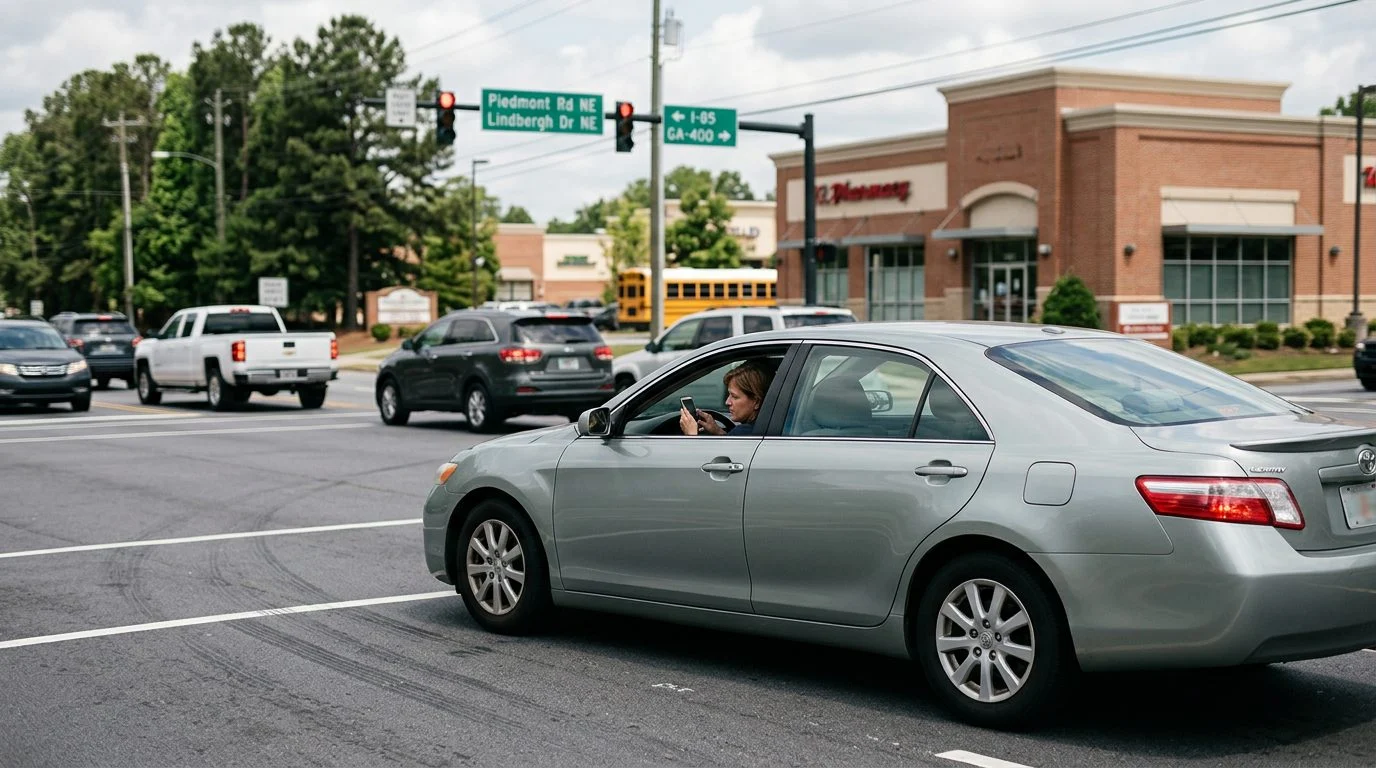
5. Running Red Lights and Failing to Yield at Intersections
Intersection crashes happen when a driver runs a red or stop sign, turns left in front of oncoming traffic, or fails to yield the right of way. Intersections are where drivers, motorcyclists, cyclists, and walkers all meet.
Side-impact crashes at intersections can cause serious injuries to the head, spine, and torso. Motorcyclists and people in smaller vehicles have less protection from that kind of force. Spinal cord injuries are among the most serious harms that can follow a crash, and the MedlinePlus spinal cord injury article explains their causes and symptoms.
Georgia drivers must stop for pedestrians in specified crosswalk locations, according to the Georgia Department of Transportation. The Georgia Department of Driver Services guide covers pedestrian duties at intersections and stop signs as well. For how these rules apply to people crossing on foot, see our Lawrenceville pedestrian accidents page.
Not sure what your next step is?
Talk it through with our team — the first consultation is free, confidential, and carries no obligation.
Other Factors That Raise Crash Risk
Weather, darkness, inexperience, and road conditions also raise crash risk. Rain, fog, and ice make stopping harder by cutting traction and visibility. Federal rules for commercial drivers require extreme caution when those conditions affect visibility or traction, and they say speed shall be reduced, under 49 C.F.R. § 392.14.
Darkness reduces what a driver can see, and it often comes with fatigue. Federal rules bar a commercial driver from operating a vehicle when fatigue, illness, or any other cause makes the driver’s alertness so impaired that it is unsafe, under 49 C.F.R. § 392.3.
New and teen drivers may not yet recognize hazards, such as a car slowing ahead or a pedestrian stepping off a curb. That awareness builds with experience.
Potholes, faded markings, poor lighting, and missing or blocked signs can also contribute to a crash. Those conditions may involve other parties, such as a property owner or a government agency.
How These Causes Apply to Pedestrian, Motorcycle, and Truck Crashes
The same behaviors put people on foot, on motorcycles, and in large trucks at risk. Pedestrians and motorcyclists have less protection from impact than people inside a car.
Georgia requires riders to wear protective headgear that meets state standards. A motorcycle without a windshield also requires an eye-protective device. Under O.C.G.A. § 40-6-315, no person may operate or ride upon a motorcycle unless wearing protective headgear that complies with standards established by the commissioner of public safety, and a motorcycle without a windshield also requires an eye-protective device of a type approved by the commissioner, except that the section does not apply to persons riding within an enclosed cab or motorized cart or to a person operating a three-wheeled motorcycle used only for agricultural purposes.
Commercial trucks take longer to stop than cars, and they have blind spots that can hide people nearby. Federal hours-of-service rules also limit driving time. Federal rules bar a commercial driver from using alcohol, or being under the influence of alcohol, within 4 hours before going on duty or operating a commercial motor vehicle.
For more detail on people struck on foot, see the Johns Creek pedestrian accidents page and the pedestrian accidents guide.
Talking With a Lawyer if You or Someone You Love Was Hurt
If a crash has hurt you or someone you love, the next steps can feel overwhelming. You may be reading this from a hospital room, from a recovery bed at home, or while helping a family member make sense of a loss.
Getting medical care promptly protects your health. It also creates a record of your injuries. Keep the crash report, medical visits, bills, and any time missed from work in one place. This is general information to help you organize, not advice about your case.
Georgia’s two-year deadline applies to suits for injuries to the person, except actions involving loss of consortium, which must be brought within four years after the right of action accrues, as quoted in a Georgia Court of Appeals opinion under O.C.G.A. § 9-3-33. If Medicare paid for care after a crash, Medicare’s conditional payment rules generally require repayment when a settlement or other payment is made.
If you’re weighing what happened to you or someone you love, our team at Slam Dunk Attorney, a personal injury firm based in Duluth, Georgia, can review the facts with you. The first consultation is free, confidential, and carries no obligation to continue. You can reach us through our contact page.
Common Questions
Is speeding a common cause of car accidents in Georgia?
Speeding is one of the five causes most often cited in crash reports. It can also affect fault under Georgia’s apportionment rules.
Can drugs other than alcohol lead to a charge in Georgia?
Yes. Georgia’s impaired-driving statute bars driving with any amount of marijuana or a controlled substance in the blood or urine.
How long do I have to file a personal injury lawsuit in Georgia?
Georgia’s two-year deadline applies to suits for injuries to the person. Raise timing questions early, because the deadline keeps running.
This page is general information, not legal advice. Responsible lawyer: Peter F. Jaraysi, Slam Dunk Attorney, Duluth, Georgia. Contact: https://slamdunkattorney.com/contact-us/.
Five Common Causes at a Glance
Speeding
Driving faster than conditions allow reduces the time available to stop or avoid a hazard.
Distracted Driving
Phones, eating, and other distractions take attention away from the road and surrounding traffic.
Impaired Driving
Alcohol, drugs, and some medications can slow reaction time and impair judgment behind the wheel.
Driver Fatigue
Exhaustion can reduce alertness and lead to delayed reactions or drifting out of a lane.
Unsafe Conditions
Poor maintenance, hazards on roads or property, and inadequate security can all create dangerous situations.
Get Checked Out Early
Some injuries, including head, neck, and spinal injuries, may not show symptoms right away. Seeing a doctor promptly protects your health and creates a record of what happened.
If You Have Been Hurt in an Accident
Get Medical Care
Your health comes first. Follow up with a doctor and keep every appointment and treatment record.
Document the Scene
Photos, witness names, and notes about weather, road, or property conditions can be valuable later.
Talk With Our Team
The first consultation is free, confidential, and comes with no obligation to continue. Our team is ready to listen and explain your options.