
Nursing Home Abuse
What to Do If You Suspect Nursing Home Abuse in Georgia
Recognize the signs, know your options, and take action to protect your loved one.
By Peter F. Jaraysi · Published September 28, 2026
What to Do If You Suspect Nursing Home Abuse in Georgia: A Step-by-Step Guide
If you suspect a loved one is being abused or neglected in a Georgia nursing home, take your concerns seriously and act quickly. You don’t need proof—suspicion alone is enough to warrant investigation and reporting. This guide walks you through the steps to protect your family member and preserve your legal options.
If you're worried a family member is being harmed in a Georgia nursing home, you don't have to figure this out alone—reach out to discuss what you've seen and what options exist. Talk it through with our team — the first consultation is free, confidential, and carries no obligation.
Recognize the Signs You May Be Witnessing Abuse
Common indicators of nursing home abuse include unexplained physical injuries, sudden behavioral changes, emotional withdrawal, poor hygiene or grooming, and unexplained financial transactions. A resident may also become fearful around certain staff members or refuse to talk about what happens during the day.
Neglect often shows up as bedsores, malnutrition, dehydration, or untreated medical conditions. Financial exploitation may appear as missing money, unauthorized charges, or sudden changes to a resident’s bank accounts or will.
You don’t need to be certain before you act. If something feels wrong, it probably warrants a closer look. For a deeper understanding of what abuse looks like in nursing homes, see our guide on types of nursing home abuse.
Document What You’ve Observed
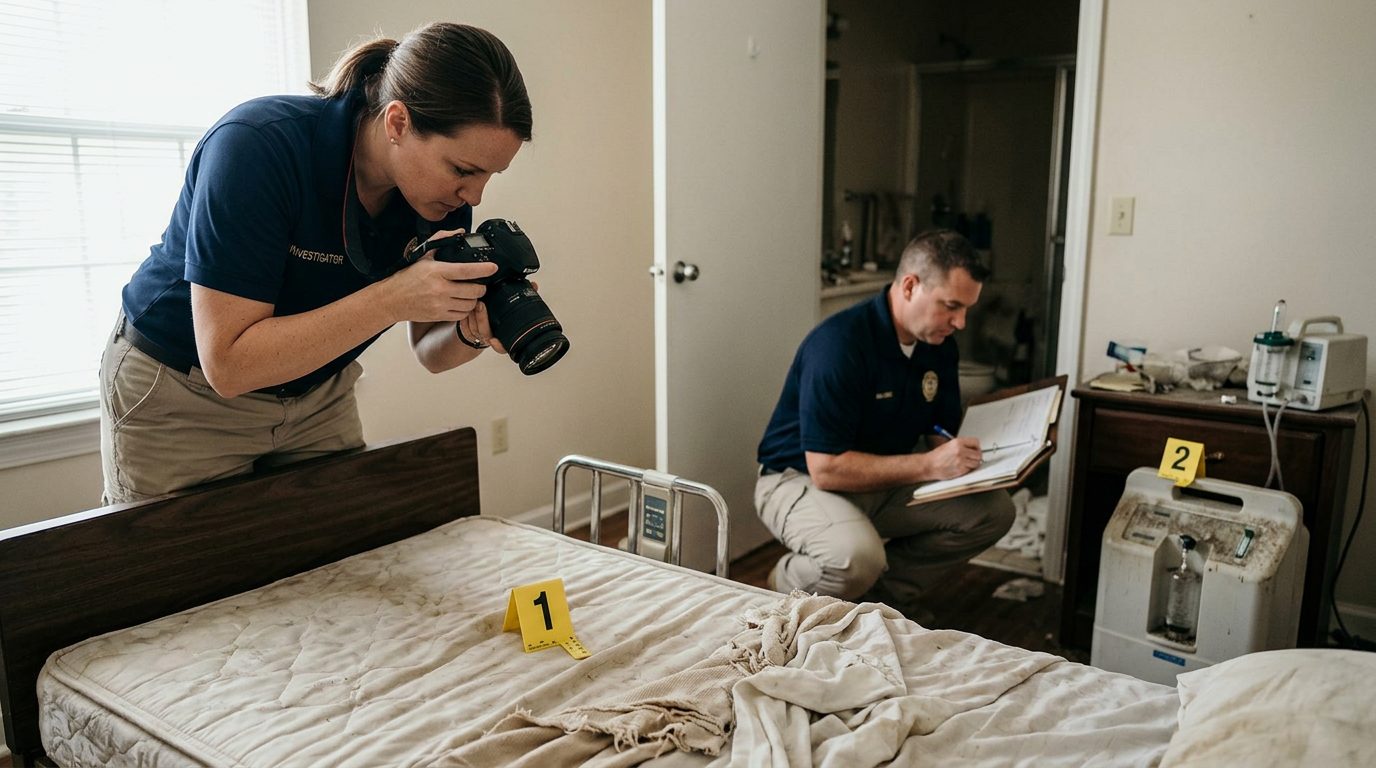
Documentation is your foundation—for both regulatory investigation and any future legal action. Keep a written record with specific dates, times, what happened, and names of staff members present.
Write down physical evidence: bruises, cuts, or other injuries. Take photos if it’s safe to do so. Collect medical records, billing statements, and any other paperwork that supports your concern. Record conversations you’ve had with staff or the resident about the incident.
Preserve all communications: emails, text messages, phone logs, and letters. If you’ve called the facility to raise concerns, note the date, time, and name of the person you spoke with. If they promised to investigate, keep that record.
This documentation serves two purposes. First, it helps regulatory agencies and law enforcement understand what happened. Second, it protects the resident’s legal rights if a civil claim becomes necessary. Detailed, contemporaneous records are far more credible than memories recalled months later.
Report to the Nursing Home Directly
Start by reporting your concerns to the facility’s management or administrator—in writing. Send an email or letter clearly stating what you’ve observed, and keep a copy for yourself.
Ask the facility to investigate and to provide you with a written response about what steps they will take. Request a timeline for their investigation and a summary of their findings.
This step may feel uncomfortable. You might worry about retaliation or making things worse. Those concerns are understandable, but facilities are legally required to investigate abuse allegations and are prohibited from retaliating against residents or family members who report suspected abuse. Document this initial report; it shows you acted promptly and in good faith.
File a Report with Georgia’s Regulatory Agency
The Georgia Department of Community Health (DCH) regulates nursing homes and investigates abuse complaints. You can file a complaint online, by phone, or in writing. DCH will conduct an independent investigation separate from the facility’s internal review.
In many cases, complaints can be filed anonymously. Even if you provide your name, DCH will investigate and take steps to protect the resident from retaliation.
When you contact DCH, have your documentation ready: dates, times, names, and a clear description of what you observed. The more specific you are, the more effectively DCH can investigate.
Contact Adult Protective Services (APS) if Applicable
Adult Protective Services (APS) investigates abuse, neglect, and exploitation of vulnerable adults age 60 and older. If your loved one is in this age group, you can file a report with your county’s APS office.
APS and DCH often coordinate their investigations, so reporting to one agency doesn’t replace the other. Each brings its own authority and investigative tools. When you call APS, explain the situation clearly and provide the same documentation you’ve gathered: dates, times, specific incidents, and names of staff.
Not sure what your next step is?
Talk it through with our team — the first consultation is free, confidential, and carries no obligation.
Notify Law Enforcement if Abuse Involves a Crime
Physical abuse, sexual abuse, financial theft, or other criminal conduct should be reported to local law enforcement. File a police report with your local police department or sheriff’s office.
Law enforcement and regulatory agencies work independently. A police investigation doesn’t replace a complaint to DCH or APS, and vice versa. All three pathways may move forward at the same time. Criminal investigation focuses on whether a crime occurred; regulatory investigation focuses on facility compliance and resident safety.
Ensure the Resident’s Immediate Safety
If abuse is ongoing and severe, consider whether your loved one needs immediate removal from the facility or increased supervision. You have the right to advocate for safety measures, including more frequent visits, additional monitoring, or transfer to a different facility.
Nursing homes have a legal duty to protect residents from harm. If the facility cannot or will not ensure safety, you may need to explore other options for your loved one’s care and living situation.
Understand Your Rights as a Family Member
Georgia residents in nursing homes have the right to access their medical records and facility records. You can request these documents to support your investigation and to understand what care your loved one is receiving.
You are also protected against retaliation for reporting suspected abuse. The facility cannot punish you or your loved one for making a complaint to DCH, APS, law enforcement, or the facility itself. If retaliation occurs, document it and report it immediately.
Reporting suspected abuse does not automatically mean your loved one must leave the facility. You can remain involved in their care and advocate for improvements while investigations proceed. For more on your rights, see our guide on nursing home resident rights in Georgia.
Know the Statute of Limitations for Legal Action
Abuse in a nursing home may give rise to a civil claim for damages. Georgia law sets time limits on how long you have to file a lawsuit. Early reporting and documentation preserve your legal options and ensure evidence is fresh.
For detailed information on deadlines and legal claims, see our guide on nursing home abuse statute of limitations in Georgia.
When to Seek Legal Counsel
Many families benefit from speaking with an attorney experienced in nursing home abuse. An attorney can review your documentation, explain your rights, advise on next steps, and represent your loved one’s interests.
Legal action is separate from regulatory reporting, but the two often work together. An attorney can help you understand whether a civil claim is appropriate based on what happened, what evidence you have, and what the law allows.
You don’t need to decide on legal action immediately. Focus first on protecting your loved one and reporting your concerns to the appropriate agencies. Once investigations are underway and you have more information, consulting with an attorney can clarify your options.
If you're worried a family member is being harmed in a Georgia nursing home, you don't have to figure this out alone—reach out to discuss what you've seen and what options exist. Talk it through with our team — the first consultation is free, confidential, and carries no obligation.
Frequently Asked Questions
What should I do if I’m afraid to report because I worry the facility will retaliate?
Nursing homes are prohibited by law from retaliating against residents or family members who report abuse. If retaliation occurs, document it and report it to DCH or law enforcement immediately.
Can I file an anonymous complaint about nursing home abuse?
Yes, in many cases you can file anonymously with DCH or APS, though providing your contact information helps agencies follow up if they need clarification.
What happens after I report nursing home abuse to Georgia’s regulatory agency?
DCH will investigate your complaint independently. They may inspect the facility, interview staff and residents, and review records. They will inform you of the outcome.
How long does a DCH investigation take?
Investigation timelines vary depending on the severity of the allegation and the complexity of the case. Serious allegations receive priority attention.
Do I have to report to the facility first, or can I go straight to DCH?
You can report directly to DCH without reporting to the facility first. However, many families report to both to ensure the facility is aware of the concern and to create a record of your initial report.
What if the facility says they investigated and found nothing wrong?
The facility’s conclusion doesn’t prevent you from filing a complaint with DCH or law enforcement. Regulatory and criminal agencies will conduct their own independent investigations.
If you’re in the middle of discovering or confirming abuse—or if you’ve already reported your concerns and want to understand what legal options exist for your loved one—reach out. Families in this situation reach out to us regularly, and we can help you understand what you’ve seen and what comes next.
Retaliation Is Illegal
Nursing homes are prohibited by law from retaliating against residents or family members who report abuse. If retaliation occurs, document it and report it immediately to the Georgia Department of Community Health or local law enforcement.
Steps to Take If You Suspect Abuse
Document Everything
Write down dates, times, specific incidents, injuries, and any witnesses. Take photographs of visible injuries if safe to do so. Keep detailed records of your observations and conversations.
Report to the Facility
Notify the nursing home's management and administrator in writing. Request a written response and keep copies of all correspondence. If the facility does not respond appropriately, escalate your concerns.
File an Official Complaint
Contact the Georgia Department of Community Health to file a formal abuse report. You may also report to local law enforcement if you believe a crime has occurred. Anonymous complaints are often accepted.
Seek Legal Guidance
Contact an attorney who handles nursing home abuse cases. An attorney can review your documentation, advise you on your options, and help protect your loved one's rights.
Why You May Need Legal Help
Protect Your Loved One
An attorney can help ensure the facility takes corrective action and that your family member receives proper care going forward.
Navigate Complex Claims
Nursing home abuse cases involve medical records, facility regulations, and liability law. An attorney handles the legal complexity so you can focus on your loved one's recovery.
Pursue Fair Compensation
If abuse has caused injury or harm, you may be entitled to compensation for medical expenses, pain and suffering, and other damages. An attorney can evaluate what your case may be worth.
Free Case Review
There is no fee to discuss your situation. We can explain your rights and options with no obligation.
Know Your Rights
Georgia law protects nursing home residents from abuse, neglect, and exploitation. Facilities must maintain safe conditions and report suspected abuse to authorities. You have the right to advocate for your loved one and to pursue legal action if harm has occurred.
We're Here to Help
Related practice areas
- Types of Nursing Home Abuse: Physical, Emotional, and Sexual