
Negligent Security | Duluth, Georgia
When a Property Fails to Protect Its Visitors
Some crimes happen because a property owner did not take reasonable steps to keep people safe. Here is how these cases are viewed and how our team can help you think through yours.
By Peter F. Jaraysi · Published November 12, 2026
If you were hurt in a crime on someone else’s property, you may be asking whether the owner had any responsibility for what happened. In Georgia, that question often falls under negligent security. It is a claim that an owner or manager failed to take reasonable steps to protect people from a crime that was reasonably foreseeable.
What Is Negligent Security?
Negligent security is a premises liability claim against an owner, occupier, or security contractor that focuses on failure to protect people from wrongful conduct by a third person. The claim is about the protection that was missing, not only the attacker’s act. Georgia law defines it as a claim for bodily injury or wrongful death that arises from a failure to keep the premises safe from third persons’ wrongful conduct (O.C.G.A. § 51-3-50).
The definition reaches a tort or nuisance claim against an owner or occupier, or a security contractor, that seeks damages for bodily injury or wrongful death and arises from an alleged failure to keep the premises and approaches safe from third persons’ wrongful conduct, which can include security that was in place but inadequate. That means some security was in place, but it wasn’t reasonable for the risks the property faced. An assault in a parking deck, a robbery at a motel, or a shooting near an apartment entrance can all raise these questions. Not sure whether your situation fits? That’s common. The answer turns on who controlled the property, what the owner knew, and what protections existed.
If a crime hurt you or someone you love on another person's property, our team is glad to talk through whether you may have a claim. Talk it through with our team — the first consultation is free, confidential, and carries no obligation.
The Property Owner’s Duty to People on the Premises
An owner or occupier must use ordinary care to keep its premises and approaches safe for people it invites there for a lawful purpose (O.C.G.A. § 51-3-1). Ordinary care is the care an ordinarily prudent person would use in similar circumstances (O.C.G.A. § 51-1-2).
The law treats an owner broadly. A landlord, a property manager, or a company running a rental can each fall within that group.
The duty has limits.
Proving the Criminal Act Was Foreseeable
Foreseeability is the central question. Could the owner reasonably expect this kind of crime on this property? The statute says it can rest on a particularized warning or on prior similar wrongful conduct that the owner knew about (O.C.G.A. § 51-3-51).
Prior incidents count when they happened on the premises, on adjoining property, or within 500 yards, and prior occurrences of substantially similar wrongful conduct by the same third person can count if the owner or occupier knew or should have known, by clear and convincing evidence, that such third person was or would be upon the premises. The owner must have had actual knowledge of them (O.C.G.A. § 51-3-51).
Evidence that often matters includes police reports, tenant or customer complaints, and known problems with locks, lighting, or gates. A general reputation for crime in an area is generally weaker evidence than specific incidents the owner knew about. Public data can help show patterns. The GBI crime statistics database collects crime and arrest reports from law enforcement agencies.
What Adequate Security Can Look Like
Adequate security is measured against the risks a particular property faces, not against a single checklist. The fact-finder looks at the security in place when the injury happened. It also considers whether more measures were needed, whether they were practical, and whether they would have prevented the injury (O.C.G.A. § 51-3-55). An owner does not have to use extraordinary care or take over law enforcement.
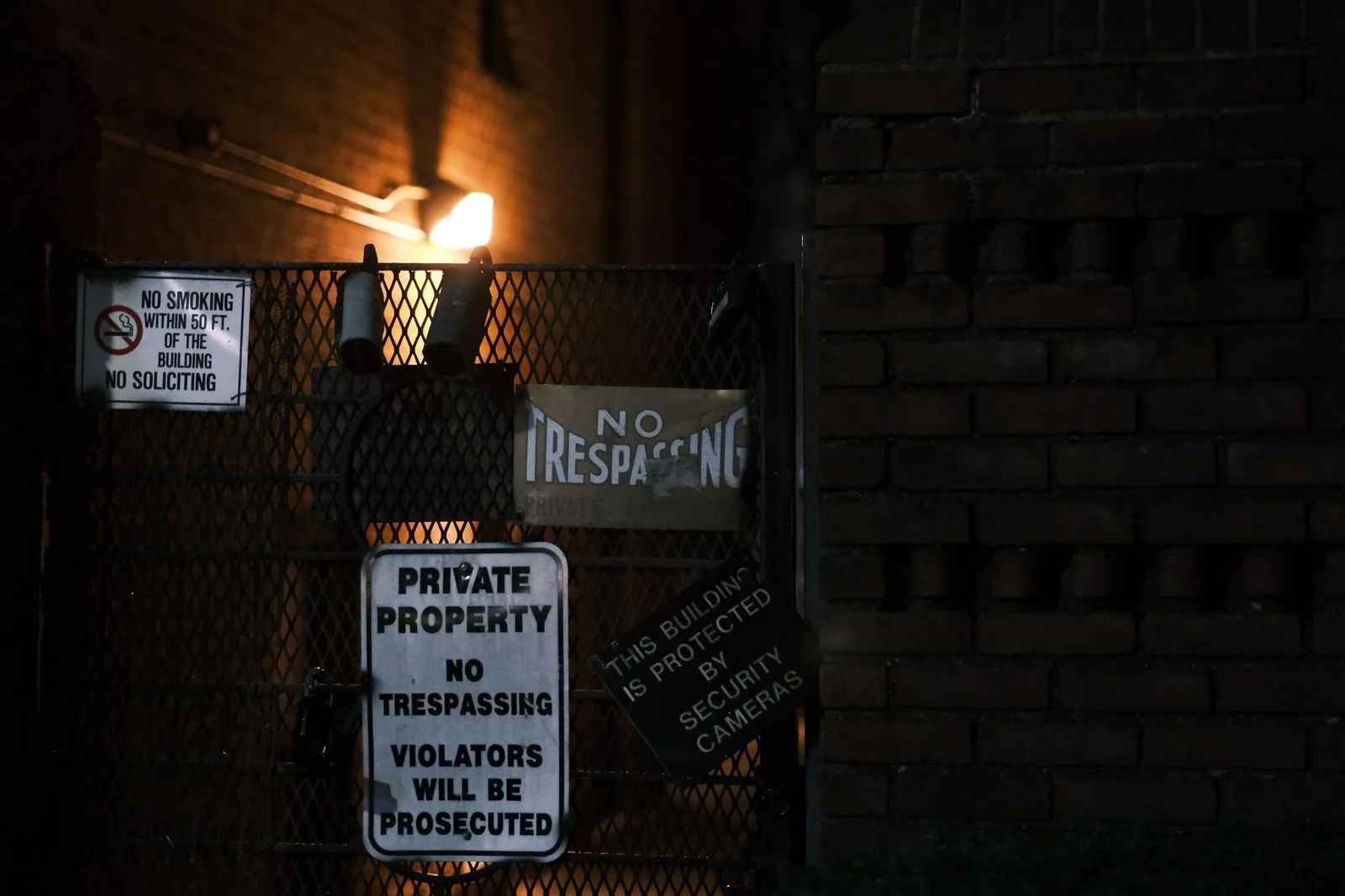
Common measures include working lighting in parking areas and walkways, functioning locks and access controls, gates or fencing where appropriate, cameras, and security staff or patrols. A Cartersville crime prevention guide lists reinforced locks, lighting, cameras, alarms, and staff training as measures that can reduce chances for crime.
Repairs matter as much as installation. A broken gate or a dark stairwell can be central, even if the property once had working security. How these measures are judged depends on the facts of the property and the incidents involved.
Common Places Where Negligent Security Leads to Injuries
These claims can involve apartment complexes, hotels and motels, shopping centers, bars, parking garages, office buildings, and short-term rentals. The key question is who controls the space.
Short-term and vacation rentals can raise separate issues. Who held the keys? Who maintained the locks and lighting? Who handled entry?
Injuries can happen to customers, tenants, guests, and visitors.
The Elements a Claimant Must Establish
A negligent security claim requires proof of several elements listed in O.C.G.A. § 51-3-51. The claimant must show that the third person’s wrongful conduct was reasonably foreseeable and that the injury was a reasonably foreseeable result of it. The owner must have failed to use ordinary care to fix or reduce a known risk, and that failure must be a proximate cause of the injury.
The statute also asks whether the criminal exploited a specific, known physical condition that created a risk substantially greater than the general risk nearby.
Causation is often a central fight. The criminal’s act sits between the owner’s failure and the harm.
Fault can also be shared. Under O.C.G.A. § 51-3-51, liability requires proof that the owner’s or occupier’s failure to exercise ordinary care was a proximate cause of the injury sustained by the invitee (O.C.G.A. § 51-3-51(5)). A plaintiff who is 50 percent or more responsible may not receive any damages (O.C.G.A. § 51-12-33).
Not sure what your next step is?
Talk it through with our team — the first consultation is free, confidential, and carries no obligation.
Examples of Negligent Security
These hypothetical examples show how the rules fit together.
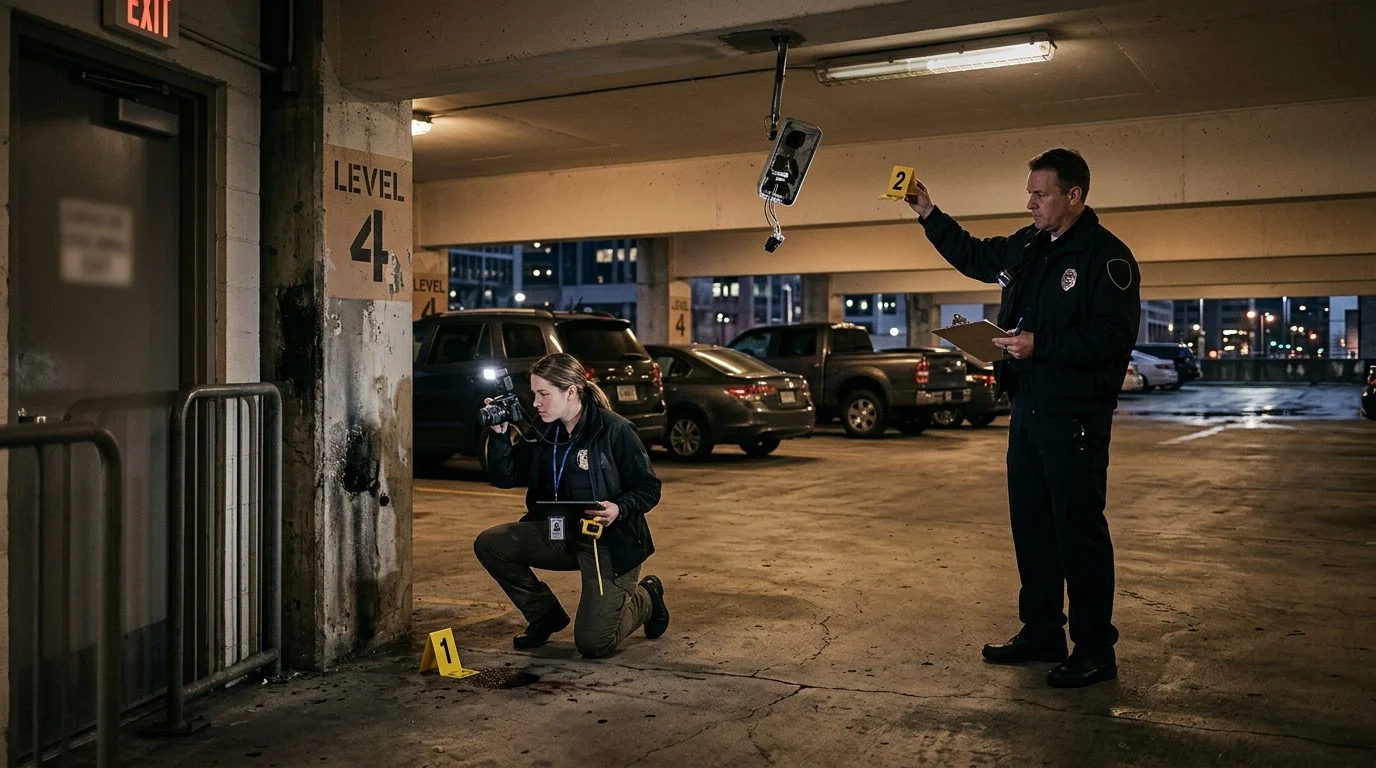
In the first, a parking garage has several reported robberies on one level over recent months. The owner knows the lighting and camera on that level are broken, and never repairs them. Under O.C.G.A. § 51-3-51, whether a third person’s wrongful conduct was reasonably foreseeable, and whether a specific physical condition of the premises was known to the owner or occupier, are among the questions the statute asks.
In the second, an apartment building’s access gate is known to stay propped open. Residents have complained in writing about strangers slipping inside.
In the third, a shop has no prior incidents, no warnings, and no known broken protections when a stranger attacks a customer. That example lacks the prior notice the statute asks about, so the analysis differs.
These are illustrations of legal concepts, not predictions about any real case.
Time Limits and Talking With a Lawyer
Georgia’s general deadline for personal injury lawsuits is two years after the right of action accrues (O.C.G.A. § 9-3-33). Wrongful death claims follow their own timing rules, which we can explain in a consultation.
Evidence can disappear quickly. Video is often overwritten, and witnesses move or forget details. Georgia’s Supreme Court has said the duty to preserve evidence can arise when litigation is reasonably foreseeable to the party controlling it (Phillips v. Harmon).
You may be dealing with pain, a hospital stay, or the loss of someone you love while you try to understand your options. That is a lot to carry.
How long do I have to file a negligent security claim in Georgia?
Georgia’s general deadline for personal injury claims is two years, except for injuries to reputation, which must be brought within one year (O.C.G.A. § 9-3-33; Kenneth B. Cameron v. Jmp Pizza, Inc (2026)). Loss of consortium claims have a four-year deadline under the same statute.
Does a high crime rate alone make an owner liable?
Can fault be shared in a negligent security case?
Yes. Fault can be assigned to the owner, the person who committed the crime, and others.
If a crime hurt you or someone you love on another person’s property, our team is glad to talk through whether you may have a claim. Slam Dunk Attorney offers a free, confidential initial consultation with no obligation to continue. You can reach out through our contact page.
Responsible lawyer: Peter F. Jaraysi, Slam Dunk Attorney, Duluth, Georgia.
How our team approaches negligent security matters
Focused on safety failures
We look at what the property did, and did not do, to protect the people who were on it.
Plain-language explanations
We explain each step of the process in clear terms so you know what to expect.
Attention to the person harmed
Physical, emotional and financial effects matter, and we take time to understand them.
Support for families
When a loved one has been hurt or lost, our team works with the family through every stage.
Preserve what you can, as soon as you can
Security video, incident reports, photos and the names of witnesses can be lost or overwritten over time. If you are able, write down what you remember while it is still fresh.
Questions we often review together
Prior incidents at the property
Were there earlier crimes or complaints that the owner knew about or should have known about?
Locks, lighting and gates
Were basic protections like working locks, lighting and access controls in place and maintained?
Staffing and monitoring
Was there security personnel, camera coverage or a way to respond when problems were reported?
Your injuries and records
Medical records, bills and documentation help show what happened and how it has affected you.
Your first consultation is free, confidential and comes with no obligation to continue.
Related practice areas
- Negligent Security Lawyer in Georgia
- Negligent Security Lawsuit Help in Georgia
- Negligent Security in Lawrenceville
- Who Is at Fault in a Car Accident in Georgia?