
Negligent Security | Duluth, Georgia
Hurt on Someone Else's Property? Understand How Negligent Security Cases Work
When an assault or break-in happens where safety was overlooked, you may be dealing with injuries, medical bills, and hard questions about who is responsible. Here is a plain-language look at the process from Slam Dunk Attorney.
By Peter F. Jaraysi · Published November 11, 2026
If someone was hurt or killed in a crime on another person’s property, you may be asking whether the owner could be responsible. Georgia law allows certain negligent security claims when an owner fails to take reasonable steps against foreseeable crimes by others.
This page explains how these claims work and how our team reviews a case, step by step. It is written for injured people and for family members who are still learning what happened.
What Negligent Security Means and Who It Affects
Negligent security is a claim that a property owner or manager failed to protect people on the property from wrongful conduct by someone else. Georgia’s negligent security statute sets limits on when an owner or occupier can be liable for negligent security.
The statute also lists situations in which an owner or occupier is not liable for negligent security, such as injuries sustained by a trespasser upon the premises.
These claims often arise at:
- Apartment complexes, hotels, and motels
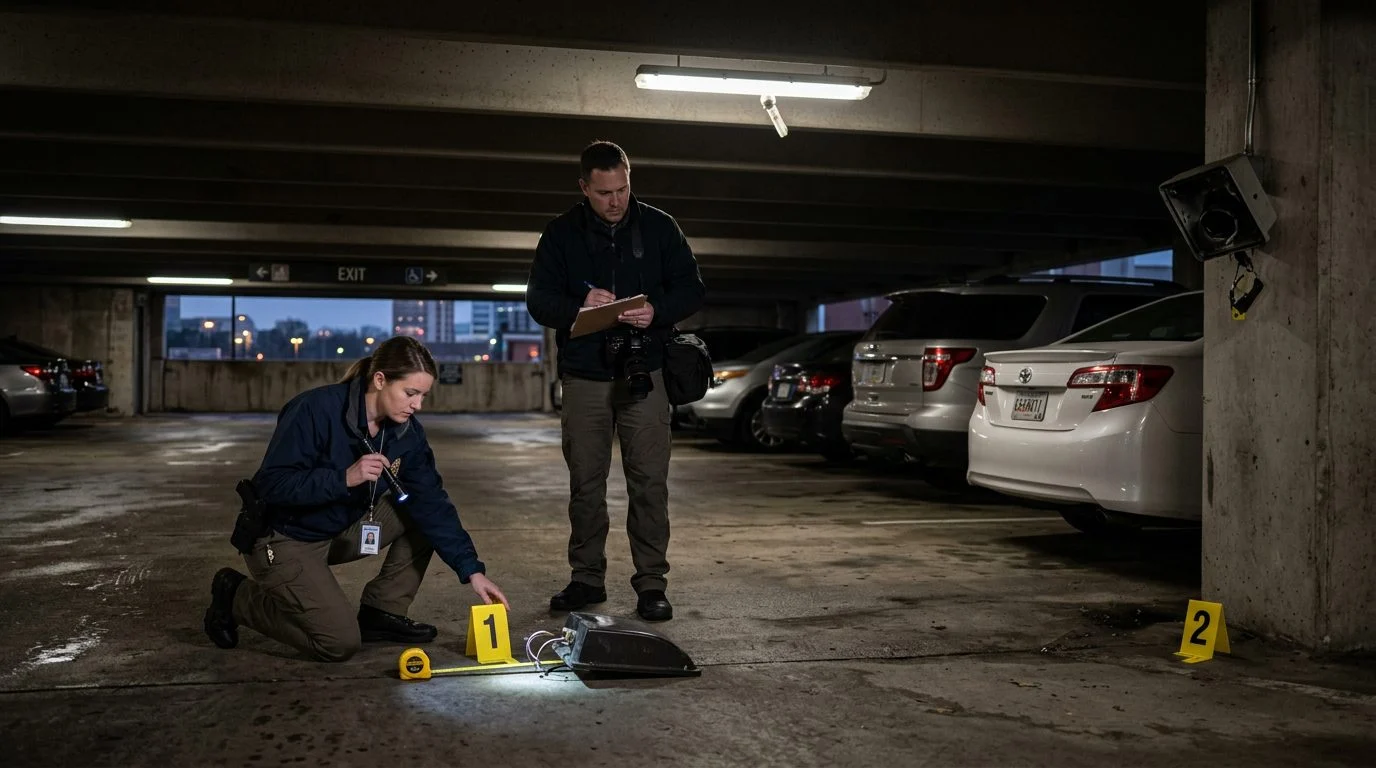
- Parking lots and parking garages
- Shopping centers and bars
- Short-term and vacation rentals, such as Airbnb or VRBO properties
Inadequate security often looks like broken or missing locks, poor lighting, open gates, no working cameras where crimes were foreseeable, or ignored complaints about earlier incidents. The City of Cartersville’s crime prevention guidance names reinforced locks, lighting, cameras, alarms, and staff security training as measures that reduce opportunities for crime.
Questions about who can bring a claim after an injury on someone else’s property are common, and the answer depends on the facts of each case. Family members may bring a wrongful death claim after a fatal attack.
If someone you love was hurt or killed in a crime on another person's property, our team can talk through what happened and whether a claim may be possible. Talk it through with our team — the first consultation is free, confidential, and carries no obligation.

What a Negligent Security Claim Covers
The injured person must prove that the owner’s failure to keep the property safe caused the harm. Georgia’s invitee liability rules are subject to the limits set out in Code Section 51-3-54.
- The third person’s crime was reasonably foreseeable to the owner.
- The injury was a reasonably foreseeable result of that crime.
- The owner failed to use ordinary care to fix that condition or keep people safe.
- That failure was a proximate cause of the injury, meaning a legal cause of the harm.
Foreseeability is often the central question. An owner may have received a particularized warning, which is credible and specific information about a person, conduct, danger, and place, but the owner is not liable based on a particularized warning of imminent wrongful conduct by a third person if the owner or occupier made any reasonable effort to provide such information to law enforcement personnel, and calling 9-1-1 or otherwise making a report about such information to law enforcement personnel is deemed a reasonable effort. Or the owner may have known about prior similar crimes on the premises, on adjoining property, or within 500 yards.
An owner does not have to use extraordinary care or act as law enforcement. The court looks at the security measures in place, whether more were practical, and whether they would have prevented the injury.
Medical bills and lost wages are special damages, which must be proved. General damages, which the law presumes flow from a wrongful act, may be recovered without proof of a specific amount (Georgia damages statute).
How Our Lawyers Evaluate Your Case, Step by Step
We review a negligent security case in six steps, starting with a free, confidential initial consultation.
- Consultation. We hear what happened, when, and where. The consultation is free and confidential, with no obligation to continue.
- Basic facts. We gather the police report number, the date and location, the owner or manager’s name, and any lease, rental agreement, or booking record.
- Security history. We look at prior police calls, reported incidents, tenant or guest complaints, and changes made after earlier crimes.
- Physical conditions. We review lighting, locks, gates, cameras, staffing, and maintenance records where they are available.
- Medical and wage records. We organize medical records, bills, and wage information, and track ongoing treatment.
- Responsible parties. We identify everyone who may share responsibility, including owners, management companies, and security contractors.
Evidence can disappear. Georgia courts have said the duty to preserve evidence can arise when litigation is reasonably foreseeable to the party controlling it (Phillips v. Harmon). That is one reason early review matters. The pace depends on how quickly records arrive and how injuries are treated.
What Shapes the Value of a Negligent Security Case
The facts of each case, not averages from other cases, drive how it is evaluated. Several factors matter most:
- Severity and permanence of injuries. Serious injuries usually involve longer treatment and more records.
- Documentation. Medical expenses are limited to the reasonable value of medically necessary care (medical expenses statute). Complete records and itemized bills help show that value.
- Foreseeability evidence. The law looks for prior similar incidents on or near the property, not a general crime rate for the area.
- Shared fault. The jury must apportion fault among the owner, the person who committed the crime, and others (fault apportionment statute).
- Comparative fault. If the injured person shares fault, the award is reduced by that percentage.
Averages from other cases involve different injuries, parties, and evidence. They do not predict how your case would be evaluated. Medical care should follow medical advice, and its records document the injury and its effects.
When a Negligent Security Incident Becomes a Wrongful Death Case
A crime on someone’s property that causes a death may lead to a wrongful death claim under Georgia law.
- Who may sue. A surviving spouse may bring a wrongful death claim for the death of a spouse. If there is no surviving spouse, a child or children may bring the claim for the death of a parent (wrongful death statute).
- Who acts if no one else can. If no one entitled under that section can bring the action, the administrator or executor may sue for the next of kin (wrongful death recovery statute).
- Losses. The recovery is the full value of the decedent’s life, as shown by evidence. Funeral, medical, and other necessary expenses may also be recovered.
- Deadline. Georgia gives two years to sue for injuries to the person (two-year limit statute). Because deadlines run, an early review helps.
- Key evidence. Police reports, medical examiner records, surveillance footage, and written messages with management often matter most.
Why Work With Slam Dunk Attorney and How to Reach Us
Slam Dunk Attorney is a personal injury law firm based in Duluth, Georgia. It represents injured people and families in negligent security matters across metro Atlanta and Georgia.
- Responsible lawyer. Peter F. Jaraysi is the responsible lawyer for this page. Brian D. Wright is also one of the firm’s lawyers.
- Support staff. Assistants and office staff support the lawyers’ work on each matter.
- Practice areas. The firm handles negligent security, premises liability, slip and fall, wrongful death, catastrophic injury, and short-term rental injury claims.
- Local reach. The firm serves people across metro Atlanta, including Lawrenceville and Johns Creek.
- First step. The first consultation is free and confidential, with no obligation to continue.
Not sure what your next step is?
Talk it through with our team — the first consultation is free, confidential, and carries no obligation.

Frequently Asked Questions About Negligent Security Claims in Georgia
Can I bring a claim if the attacker was never arrested?
Yes, Georgia’s definition of wrongful conduct does not require an arrest, citation, or conviction. The review focuses on the property and what the owner knew or should have known.
What should I bring to a consultation?
Bring the police report number, medical records and bills, photos, your lease or booking details, and any written messages with the property.
Is a settlement the same as a lawsuit?
No. A settlement resolves a claim by agreement, while a lawsuit is a case filed in court. Which path fits depends on the facts and the parties involved.
What if I was partly at fault?
Under Georgia law, a plaintiff who is 50 percent or more responsible may not recover damages. Smaller shares of fault reduce the award (comparative fault statute).
If a crime on someone else’s property left you or a loved one hurt, or took a life, you may be wondering whether a claim is possible. Our team can talk through what happened and which records matter. Request a free, confidential case review through our contact page, with no obligation to continue.
What to expect when you talk with our team
A confidential first conversation
Our initial consultation is free and confidential, with no obligation to continue. You can share what happened at your own pace.
Plain-language answers
We explain the process in everyday terms, so you know what each step involves before you decide what to do next.
Help organizing your records
We can walk you through the reports, photos, and medical documents that often matter in a negligent security matter.
Focused on your recovery
Our team focuses on protecting your rights while you concentrate on your health and your family.
Before you speak with the property owner or an insurer
Insurance adjusters and property representatives may ask for recorded statements or quick signatures. Talking with a lawyer first can help you avoid saying something that is later misunderstood.
How a negligent security case typically moves forward
1. Sharing what happened
We start with the basics: where and when the incident occurred, who was involved, and what injuries you have today.
2. Reviewing the property
We look at lighting, locks, cameras, security staffing, and prior incidents to understand what the property owner knew or should have known.
3. Gathering evidence
Police reports, medical records, bills, photos, and witness information are collected so the full picture is documented.
4. Evaluating options
We discuss possible paths, including negotiation with insurers or, when needed, filing a lawsuit. Every case is different, and we explain the options in plain terms.