
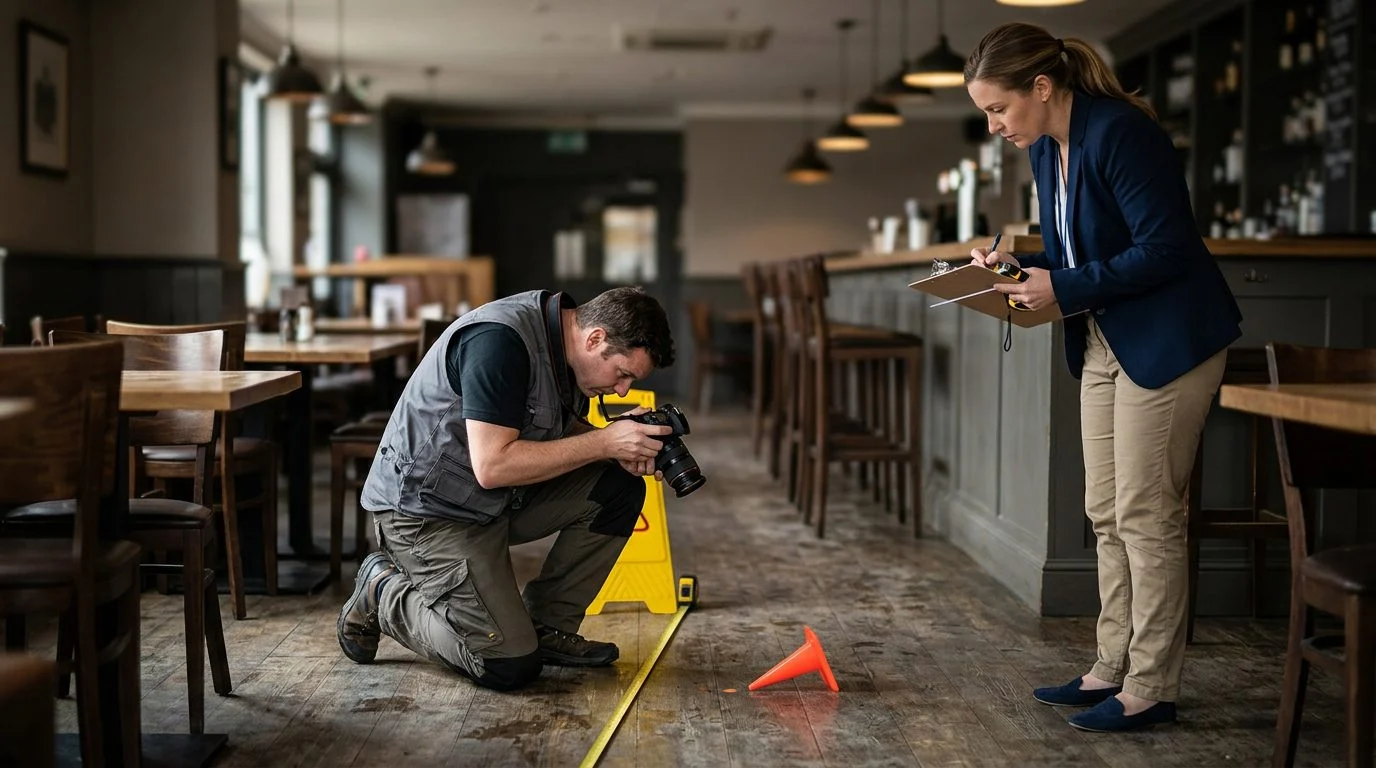
Restaurant & Bar Slip and Fall | Duluth, Georgia and Metro Atlanta
Hurt at a Restaurant or Bar? Talk With Slam Dunk About Your Slip and Fall
Slam Dunk Attorney, based in Duluth, Georgia, represents people injured in slip and fall accidents on restaurant and bar premises across metro Atlanta and Georgia. Every case depends on its own facts, so start with a conversation.
By Peter F. Jaraysi · Published October 11, 2026
If you slipped and fell at a restaurant or bar in Georgia, you may have a premises liability claim against the property owner. Under O.C.G.A. § 51-3-1, Georgia law generally holds owners to a duty of ordinary care toward invitees, meaning people invited onto the property for a lawful purpose. Licensees, such as people on the property with permission but not by invitation, are generally owed a lesser duty under O.C.G.A. § 51-3-2. How these duties apply depends on the facts, and exceptions may exist, so please consult a lawyer about your own situation. Whether a claim exists depends on the facts, so this guide explains how these cases work and what to do next.
What Is a Slip-and-Fall Claim in a Restaurant or Bar?
A restaurant or bar slip-and-fall claim is a premises liability claim. It argues that the owner’s failure to keep the space reasonably safe caused your fall and injuries.
A slip happens when your feet lose traction. A trip happens when something catches your foot. Common hazards in these venues include:
- A spilled drink or food left on the floor
- A wet floor near the kitchen, bar rail, or restroom
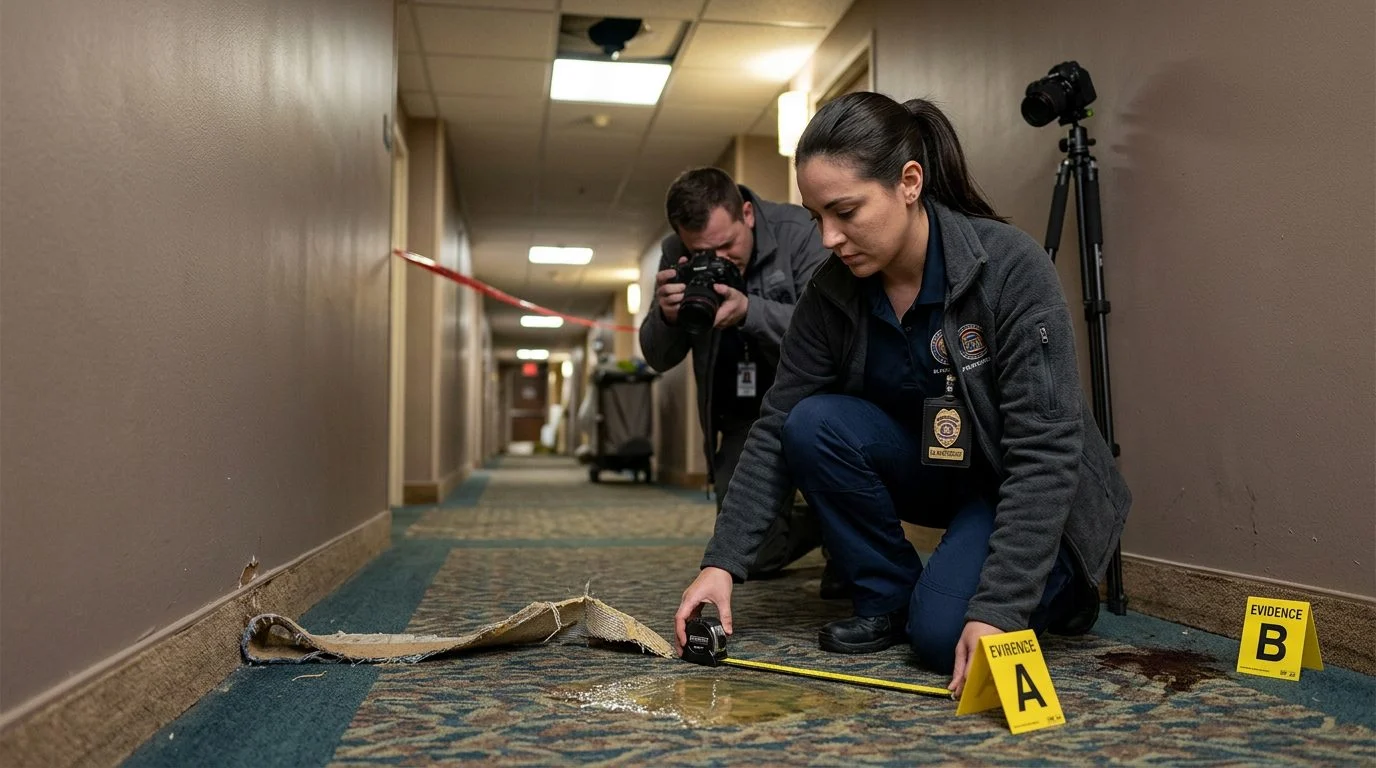
- Torn carpet, loose tile, or a raised threshold
- A broken step, worn stair edge, or loose handrail
- Cords, debris, or equipment left in a walkway
- Dim lighting in hallways, stairs, or patios
Restaurants and bars carry extra risk because food, drinks, crowds, and kitchen traffic all move across the same floors. Staff may be busy, and guests may not see a hazard in time.
People hurt at a restaurant can include customers, servers, cooks, delivery drivers, and others who were on the premises. Whether any particular person has a claim depends on the facts, so it is wise to talk with a lawyer about your own situation. Your role and reason for being there matter, so talk with a lawyer about your facts.
If a fall on a wet floor at a Georgia restaurant or bar left you hurt, the property owner may be responsible, and we can review your options for free. Talk it through with our team — the first consultation is free, confidential, and carries no obligation.
What Georgia Law Requires of Restaurant and Bar Owners
Georgia law requires owners to use ordinary care to keep their premises and approaches safe for people invited there for a lawful purpose. Georgia’s premises liability statute, O.C.G.A. § 51-3-1, provides that an owner or occupier may be liable for injuries caused by a failure to use ordinary care. Whether it applies depends on the facts, and exceptions may exist, so it is wise to talk with a lawyer about your own situation. The statute covers the premises and its approaches, such as entrances and walkways.
What ordinary care looks like depends on the facts. A lawyer may ask questions like these:
- How long was the hazard there before the fall?
- Did staff know about it, or should they have known?
- Was the area cleaned or inspected on a set schedule?
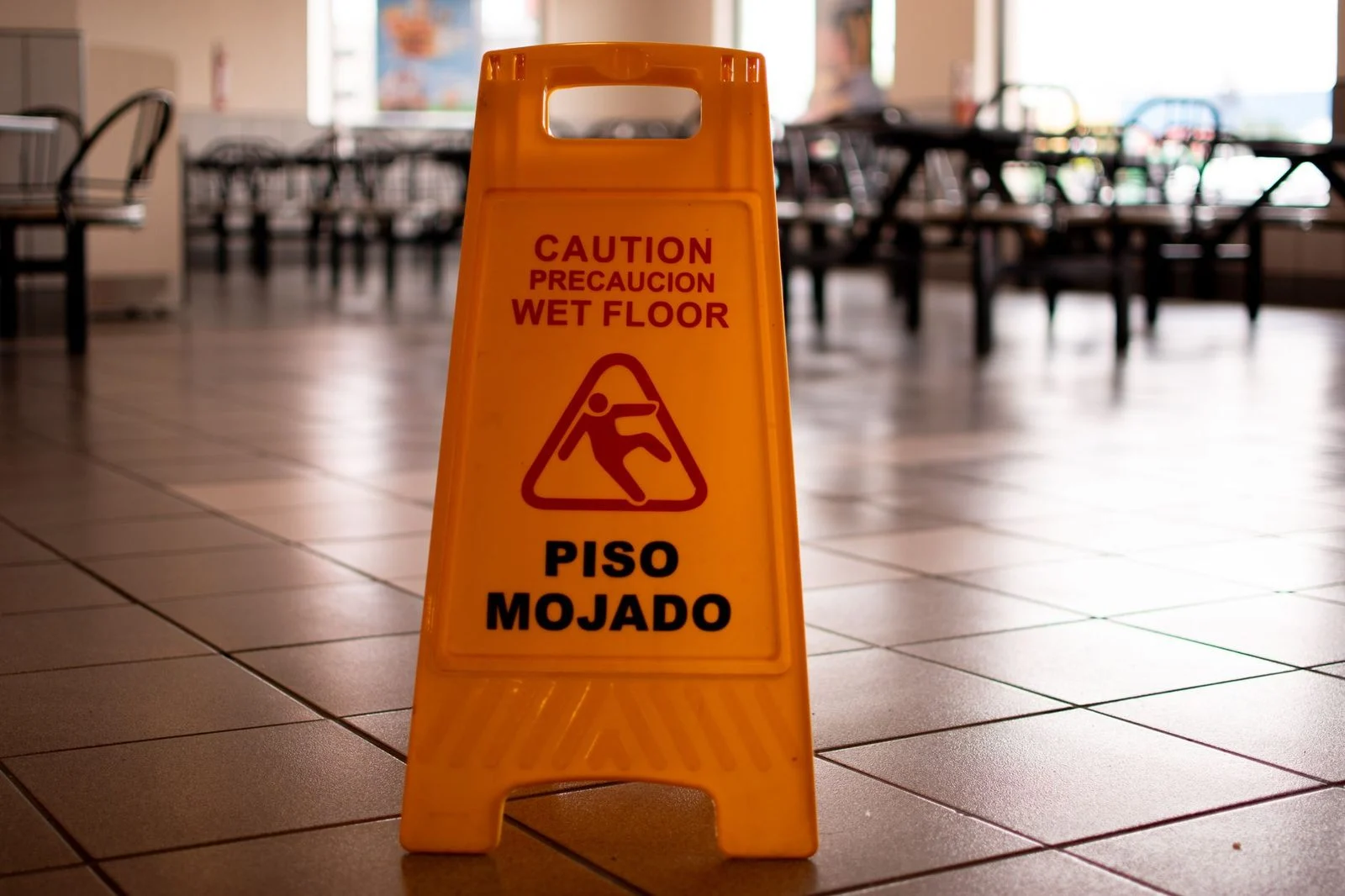
- Were warning signs or cones used while the hazard existed?
- Had anyone complained about the same spot before?
The answers shape how a claim is evaluated, and no outcome can be promised.
Georgia also cuts damages by the injured person’s share of fault. Georgia’s apportionment statute, O.C.G.A. § 51-12-33, generally provides that damages may be lowered in proportion to the injured person’s share of fault. How it applies depends on the facts, and exceptions may exist, so please consult a lawyer about your own case. That statute also says a plaintiff who is 50 percent or more responsible may not receive damages (O.C.G.A. § 51-12-33; Quynn v. Hulsey, 310 Ga. 473 (2020)). Exceptions may apply, so the result depends on the facts.
What Your Slip-and-Fall Claim May Cover
A slip-and-fall claim may seek compensation for losses caused by the fall. Examples of losses a person may experience after an injury like this include:
- Medical expenses: emergency care, imaging, hospital stays, surgery, therapy, and future care that your providers document.
- Lost wages: income you miss while you heal, including time away from work.
- Pain and suffering: physical pain and emotional distress.
- Permanent impairment or disfigurement: if the injury leaves lasting effects.
- Loss of enjoyment of life: activities you can no longer enjoy the way you did before.
Medical expense claims follow their own rule. Under O.C.G.A. § 51-12-1.1, medical expense damages are limited to the reasonable value of medically necessary care. Case costs, such as records and investigation fees, are a separate item. Which losses apply, and how much, depends on your facts. No amount can be promised.
How We Handle Your Slip-and-Fall Case: Step by Step
We move through six stages, starting with a free consultation and ending with resolution or a lawsuit when one is needed.
- Free consultation. You describe what happened, where, and how you were hurt. We explain your options with no obligation to hire us.
- Investigation. We request security footage, incident reports, and cleaning and inspection records. We also gather witness information and photos.
- Medical documentation. We work with your providers to collect records and explain how the fall relates to your treatment.
- Liability review. We look at what the owner knew or should have known, and whether ordinary care was used.
- Demand and negotiation. We send a written demand to the property’s insurer and discuss the claim with that insurer.
- Resolution or litigation. If the claim cannot be resolved, we explain filing suit and what the court process involves.
How long each stage takes depends on the facts, the insurer’s response, and court schedules. We can’t promise a timeline.
Why Choose Slam Dunk Attorney for Your Restaurant or Bar Slip-and-Fall Claim
Slam Dunk Attorney is based in Duluth, Georgia. We represent people hurt in personal injury cases across metro Atlanta and Georgia.
- Focused practice. We handle car, truck, motorcycle, pedestrian, and dog bite claims, plus premises liability, negligent security, nursing home abuse, and wrongful death.
- Independent investigation. We request footage, records, and witness information ourselves rather than relying only on what the business provides.
- Medical coordination. We help gather records from your providers in one place.
- Insurance communication. We handle contact with insurers so you can focus on your health.
- Court preparation. If talks stall, we prepare the claim for court.
We don’t advertise case results, and no past outcome predicts yours.
Common Questions About Restaurant and Bar Slip-and-Fall Claims
Can I still have a claim if I was partly at fault?
Georgia reduces damages by your share of fault. O.C.G.A. § 51-12-33 generally provides that a person found 50 percent or more at fault may be barred from recovering damages. This depends on the facts and exceptions may apply, so please consult a lawyer about your own case.
How long do I have to file?
O.C.G.A. § 9-3-33 sets a general two-year deadline for many injury-to-person claims in Georgia. Exceptions may apply depending on the facts, so please talk with a lawyer about the deadline that may apply to your own case. Exceptions exist, so talk with a lawyer about your deadline soon.
What if I didn’t report the fall right away?
Whether a delay matters depends on the facts. If you haven’t reported it yet, do so in writing now and keep a copy.
What if the owner says the hazard was obvious?
Whether a hazard was obvious is one fact a lawyer reviews, and the answer depends on the circumstances. The duty under O.C.G.A. § 51-3-1 is still framed around ordinary care.
Will I have to go to court?
Some claims resolve without a trial. We prepare every claim as if it could reach court, and no outcome can be promised.
Do I owe attorney fees?
Fees are explained in a written fee agreement, which we review with you before you sign. You may still be responsible for court costs and case expenses even if the claim does not result in a recovery.
Not sure what your next step is?
Talk it through with our team — the first consultation is free, confidential, and carries no obligation.
What to Do Right After a Slip-and-Fall at a Restaurant or Bar
Early steps help create a clear record of what happened. Start with your health, then document the scene.
- See a medical provider promptly, even if you feel okay. Some injuries show symptoms hours or days later.
- Report the fall to the manager in writing and ask for an incident report.
- Photograph the hazard, the area, your injuries, and any warning signs or missing signs.
- Get names and phone numbers from witnesses while memories are fresh.
- Keep medical bills, receipts, pay stubs, and notes on lost work time.
- Talk with a lawyer before giving a recorded statement or signing papers from an insurer.
Why Evidence Matters in Restaurant and Bar Cases
Evidence helps show what the hazard was, how long it existed, and what the owner knew. Each type answers a different question.
- Security footage may show the hazard, the people nearby, and how the fall happened. Video may be overwritten on a set schedule, so early requests matter.
- Maintenance and cleaning logs show which inspections and cleaning were recorded, and when.
- Prior complaints can show whether the owner knew about the same spot before your fall.
- Witness statements describe what people saw in their own words.
- Photos record lighting, signage, flooring, and layout at the time.
- Medical records document your diagnosis, your treatment, and how providers describe the fall.
In some cases, outside engineers or medical professionals may be consulted to explain a condition or an injury. Whether any of this applies depends on the facts of your case.
Get Your Free Case Review Today
If you were hurt in a fall at a Georgia restaurant or bar, the property owner may be responsible. You don’t have to sort out the next steps alone. Reach out through our contact page for a free case review, and we’ll explain your options.
This page provides general information, not legal advice. Results depend on the facts of each case, and no outcome can be promised. Slam Dunk Attorney, Duluth, Georgia.
How we approach a restaurant or bar slip and fall
Plain-language answers
We explain the legal questions in your case in clear terms, so you know what to expect before you decide on next steps.
Organized case review
We review the incident details, any photos, witness information, and medical records you have, and identify what still needs to be gathered.
Metro Atlanta focus
Slam Dunk Attorney serves Atlanta, Lawrenceville, Johns Creek, Alpharetta, Marietta, Norcross, Kennesaw, Dunwoody, and communities across Georgia.
Clear fee terms
Our written fee agreement explains how fees and case costs work. Please review it before you sign.
Keep your options open
Spills, weather tracked in on floors, and missing warning signs can be hard to document later. Consider speaking with a lawyer soon so questions about your case can be reviewed while details are still fresh. Outcomes depend on the facts, and no result is guaranteed.
Common settings for restaurant and bar slip and falls
Wet or slick floors
Spilled drinks, mopped floors without warning signs, rain tracked in at entrances, and freshly cleaned tile can all be part of a fall. Whether a business is responsible depends on the facts.
Uneven or damaged surfaces
Torn carpet, cracked tile, raised thresholds, and broken steps or patios may create hazards. Photos and the location of the hazard often matter in these reviews.
Lighting and layout
Dim dining rooms, unmarked steps, and cluttered walkways between tables, bars, and restrooms raise questions a lawyer can review with you.
Bar and nightlife venues
Crowded bars, outdoor patios, and late-night hours can add complexity to a claim. Each situation is different, so a review of the specific facts is important.