
Slip and Fall | Duluth, Georgia
Hurt at a Restaurant? Start With the Evidence.
A plain-language checklist of what to photograph, record and ask for after a slip and fall in a Georgia restaurant, from the team at Slam Dunk Attorney.
By Peter F. Jaraysi · Published October 26, 2026
A fall at a restaurant can leave you hurt, shaken and unsure what to do next. The evidence you gather early can matter later. This guide explains the restaurant slip and fall evidence to collect and why it helps under Georgia law.
What evidence should I collect at a restaurant right after a fall, such as photos of the hazard, witness names and an incident report?
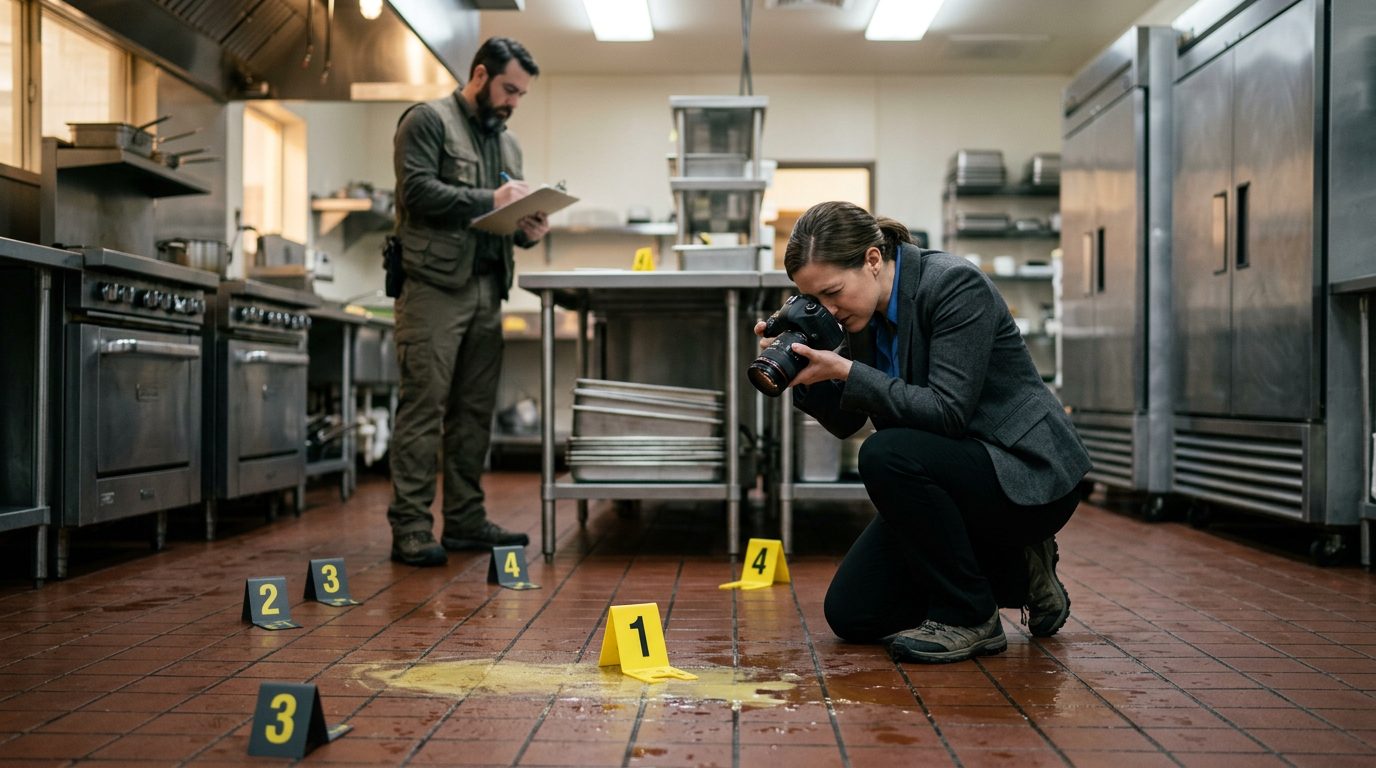
Take photos of the hazard, get the names of people who saw the fall, and ask for an incident report, all as soon as it is safe. Do this before the spill is wiped up or the area is changed.
Start with photos. Shoot the spill, debris, torn mat or damaged tile up close. Then take wider shots of the table layout, the lighting and nearby signs. Include the floor around your shoes.
Next, collect witness names and phone numbers. Include employees and other diners. Write down what each person saw while the details are fresh.
Ask the manager for an incident report. Note the employee’s name, the time and the exact spot, such as the kitchen door, drink station or restroom hallway. Ask for a copy. If staff won’t provide one, write down what was said and when.
If you or someone you love was hurt at a restaurant, our team offers a free, confidential first consultation with no obligation to continue, and you can bring the photos and reports you already have. Talk it through with our team — the first consultation is free, confidential, and carries no obligation.
Why Evidence Matters in a Georgia Restaurant Fall Claim
Georgia law requires a business that invites customers onto its property to use ordinary care in keeping the premises and approaches safe. Good restaurant slip and fall evidence shows what the hazard was, where it was and how the fall happened.
The duty comes from O.C.G.A. § 51-3-1. It applies to people whom the owner or occupier invites or leads onto the property, by express or implied invitation, for a lawful purpose.
Georgia also looks at the injured person’s own share of fault. Under O.C.G.A. § 51-12-33, damages are reduced in proportion to that share. A person who is 50 percent or more responsible for the injury or damages claimed is not entitled to receive any damages.
That’s why details like footwear, lighting and where you were walking can matter. Under O.C.G.A. § 51-11-7, a person who could have avoided the harm through ordinary care is not entitled to recover. O.C.G.A. § 51-11-7 reads: “If the plaintiff by ordinary care could have avoided the consequences to himself caused by the defendant’s negligence, he is not entitled to recover. In other cases the defendant is not relieved, although the plaintiff may in some way have contributed to the injury sustained.” Every claim turns on its own facts.
Common Restaurant Fall Hazards to Document: Walking Conditions and Take-Out Areas
Restaurant falls often involve wet or greasy floors, uneven steps and entryways where rain or snow gets tracked in. Photograph each spot so its position is clear.
- Wet or greasy floors near kitchen doors, drink stations, bussing carts and restroom entrances.
- Take-out and waiting areas where mats, cones or signs are missing or moved.
- Raised tile edges, loose carpet and worn steps between dining rooms and patios.
- Dim hallways, parking-lot walkways and restroom corridors that hide a hazard.
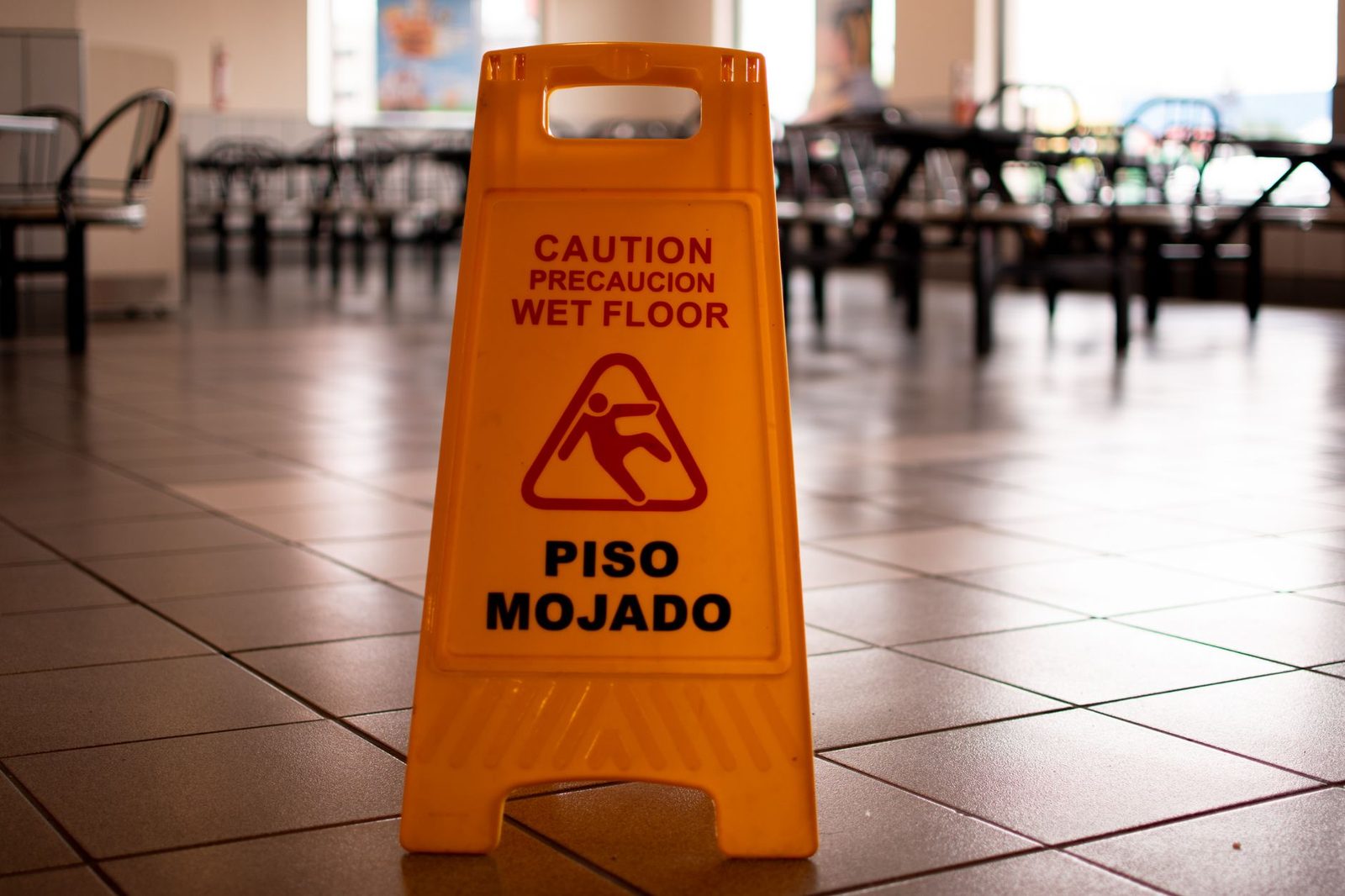
Note whether a wet-floor sign, mat or cone was in place. The Georgia Department of Administrative Services slip-and-fall guide lists housekeeping, removing obstructions, addressing spills and keeping walkways safe as prevention practices. Your photos can show whether those steps were visible on the day of the fall.
Preserving Restaurant Records, Video and Cleaning Logs
Ask the restaurant to keep any camera footage, cleaning logs and incident paperwork from the day of the fall. Ask early, since footage can be recorded over.
Write down the date, the time and the camera locations you remember. Cleaning and inspection logs show how often staff checked the area, so ask about them too.
Keep your receipt, reservation confirmation and any texts or emails with the restaurant about the fall. Save the shoes and clothes you wore in a bag, and don’t wash or repair them yet.
Avoid posting about the fall or your injuries on social media. Posts can be used to question your account of events.
Keeping Your Own Records Over the Following Weeks
Keep every medical record, bill and prescription receipt, plus a dated log of pain and daily limits. These records help show what care you needed and what it cost.
Georgia limits medical expense damages to the reasonable value of medically necessary care, as set out in O.C.G.A. § 51-12-1.1. Special damages, which actually flow from the fall, must be proved to be recovered, under O.C.G.A. § 51-12-2.
Track missed work, lost hours and household tasks you could not finish, with dates and paperwork. Write a short account of the fall while you remember it, and update it as details return.
Our team at Slam Dunk Attorney reviews this kind of documentation during a case review. The firm is based in Duluth, Georgia, and represents people hurt in accidents across metro Atlanta and Georgia.
Talk With Our Team About Your Restaurant Fall
If you were hurt at a restaurant, or you’re helping someone who was, you don’t need every document in order first. Even partial restaurant slip and fall evidence is worth sharing. Many people are still in pain, waiting on care, or juggling bills and missed work.
Frequently asked questions
How long do I have to file a restaurant slip and fall lawsuit in Georgia?
Georgia generally requires injury lawsuits to be brought within two years after the right of action accrues, under O.C.G.A. § 9-3-33.
Should I ask the restaurant for an incident report?
Yes. Asking for one and noting the employee’s name and the time creates a written record of the fall.
Can I recover if I was partly at fault?
Georgia reduces damages by your percentage of fault. You are not entitled to receive damages if you are 50 percent or more responsible, under O.C.G.A. § 51-12-33.
If you were hurt at a restaurant, our team offers a free, confidential first consultation with no obligation to continue. You can bring the photos, witness names and incident report you already have to our contact page.
Disclaimer: This page is general information, not legal advice. Responsible lawyer: Peter F. Jaraysi, Slam Dunk Attorney, Duluth, Georgia. Contact: our contact page.
What to Document at the Scene
Photograph the spot
Take clear photos of the floor, the substance or hazard, lighting, and any missing or damaged warning signs, from several angles.
Ask for an incident report
Request a written incident report and note the employee's name and the time you asked.
Collect witness details
Get names and phone numbers from anyone who saw the fall or the condition that caused it.
Keep your shoes and clothing
Do not wash or discard the shoes and clothes you wore. They can show what you slipped on.
Get medical care and keep records
Seek evaluation for your injuries and save every bill, prescription receipt and visit summary.
Be Careful Before You Sign Anything
Insurance adjusters may contact you soon after a fall. Before giving a recorded statement or signing a release or settlement form, talk with a lawyer about what you would be agreeing to.
Your Evidence Checklist, Step by Step
Right After the Fall
Report the fall to management, photograph the area, and write down what happened while your memory is fresh.
In the Days That Follow
Keep a simple journal of pain, missed work and daily limits, and save all messages with the restaurant or its insurer.
Over Time
Keep organized copies of medical records, bills and receipts, and note any follow-up care you need.
When an Insurer Calls
Share basic facts, but avoid guessing about fault or your injuries. Ask a lawyer to review any written request first.