
Slip and Fall | Duluth, Georgia
Restaurant Slip and Fall Lawsuit Process in Georgia
A plain-language guide to each stage, from your first call to a possible court case, written for guests hurt on a restaurant's floor.
By Peter F. Jaraysi · Published November 9, 2026
If you slipped on a wet floor or a spill at a restaurant, you may be dealing with pain, bills, and a lot of open questions. This page explains the restaurant slip and fall lawsuit process in Georgia, from the first conversation to a possible court case.
Each stage is described in plain language, with Georgia law where it applies.
What Does a Restaurant Slip and Fall Lawyer’s Process Look Like, From the Free Consultation Through Investigation, Demand Letter, and Settlement or Lawsuit?
The process usually starts with a free, confidential first consultation, and you have no obligation to continue. After that, the case moves through investigation, a demand letter to the restaurant’s insurer, and settlement talks. A lawsuit is filed only if a fair resolution can’t be reached.
Every claim is different, so timing varies. No particular result or timeline can be promised at any stage. Here is how the stages usually fit together.
- Consultation. You describe the fall, your injuries, your treatment so far, and any photos, incident reports, or receipts you have.
- Investigation. We look at how the hazard got on the floor and whether the restaurant created it, knew about it, or should have found it.
- Demand letter. We send the insurer a written summary of the fault facts, your medical records, and your bills.
- Settlement talks. The insurer responds, and negotiation often follows. You decide whether to accept any offer.
- Lawsuit. If talks stall, we can file suit in the proper Georgia court and move into the formal exchange of evidence called discovery.
If a fall at a restaurant left you hurt and unsure what comes next, our team can talk through your options with you, so you don't have to face it alone. Talk it through with our team — the first consultation is free, confidential, and carries no obligation.
What to Do After a Slip and Fall at a Restaurant in Georgia
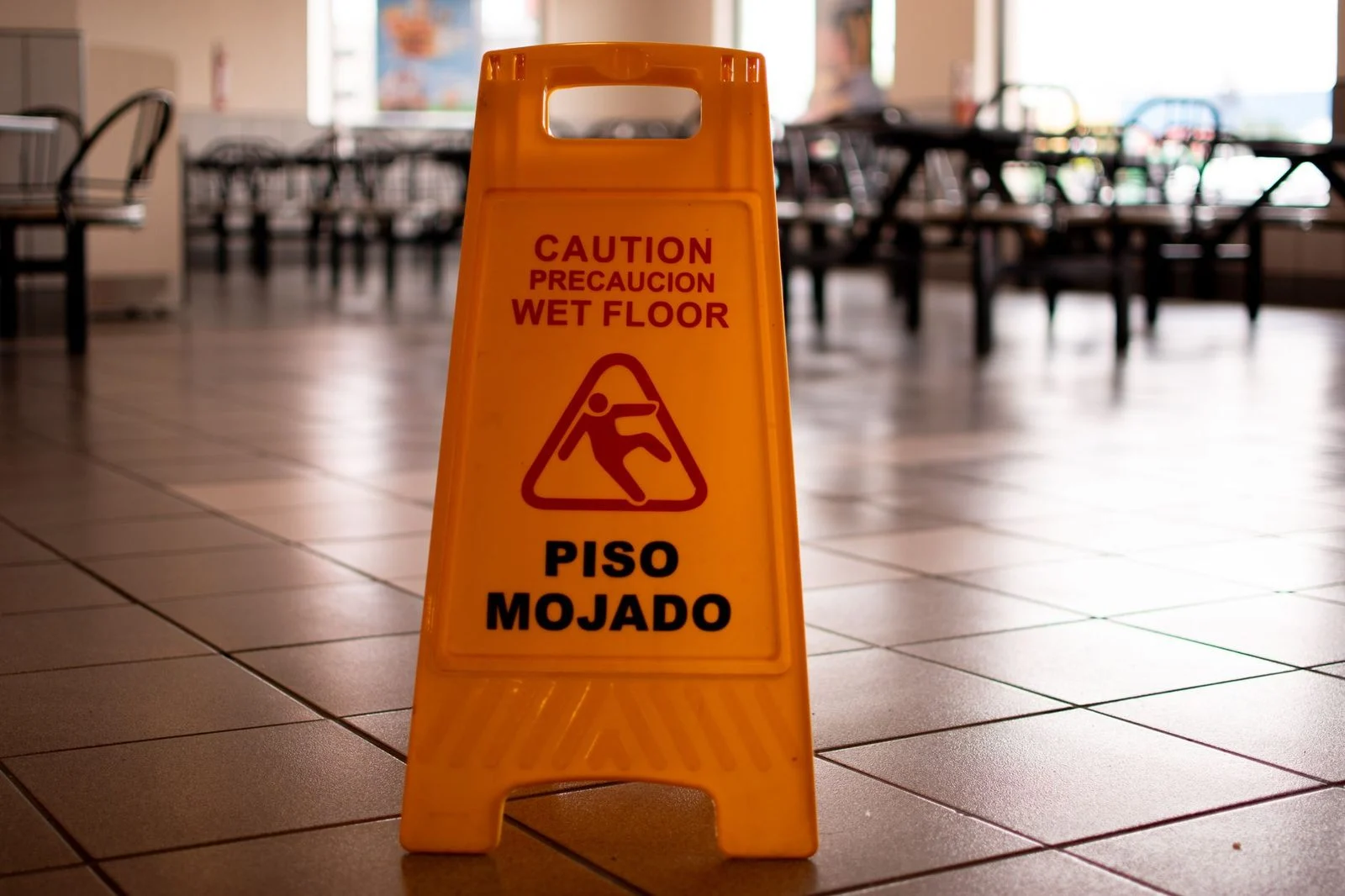
Get medical care first, then report the fall and document the scene while details are fresh. These early steps shape the evidence a claim depends on.
Medical care comes first, even if the injury seems minor at the time. Follow the treatment plan. Gaps in treatment give an insurer something to argue about.
Report the fall to a manager before you leave, and ask for a copy of the incident report. Write down the manager’s name and the time you spoke.
If it is safe, photograph the spot, the spill or hazard, the lighting, and the floor surface. Note whether any warning sign was present. Then write down what happened while you still remember it: the time of day, what you wore on your feet, and who was nearby.
Collect names and phone numbers of witnesses and staff who responded. Keep the shoes and clothing you wore, along with receipts, medical bills, and records of missed work. Think twice before posting detailed social media updates about the fall, since an insurer may review them.
How Georgia Premises Liability Applies to Restaurant Floors
Under Georgia law, a restaurant that invites customers in must use ordinary care to keep the premises and approaches safe. That duty sits at the center of most restaurant slip and fall claims (O.C.G.A. § 51-3-1).
Customers are generally treated as invitees, meaning people a business brings in for a lawful purpose. The key question is whether the restaurant failed to use that ordinary care. Injuries that happen on someone else’s property are often discussed under the heading premises liability.
Common restaurant hazards include spilled drinks or food, grease, wet floors near kitchens, restrooms, and entrances, torn or curled mats, uneven tile, and worn transitions between floor types. Parking lots and walkways leading to the entrance can also be part of the analysis, since the duty covers approaches to the premises.
Courts and insurers look at whether the hazard was foreseeable and what the restaurant did about it. A spill that sat for a long time, or a mat that stayed bunched up for weeks, raises harder questions for the owner. The facts decide how those questions come out. Our team reviews what happened, who controlled the area, and what the records show.
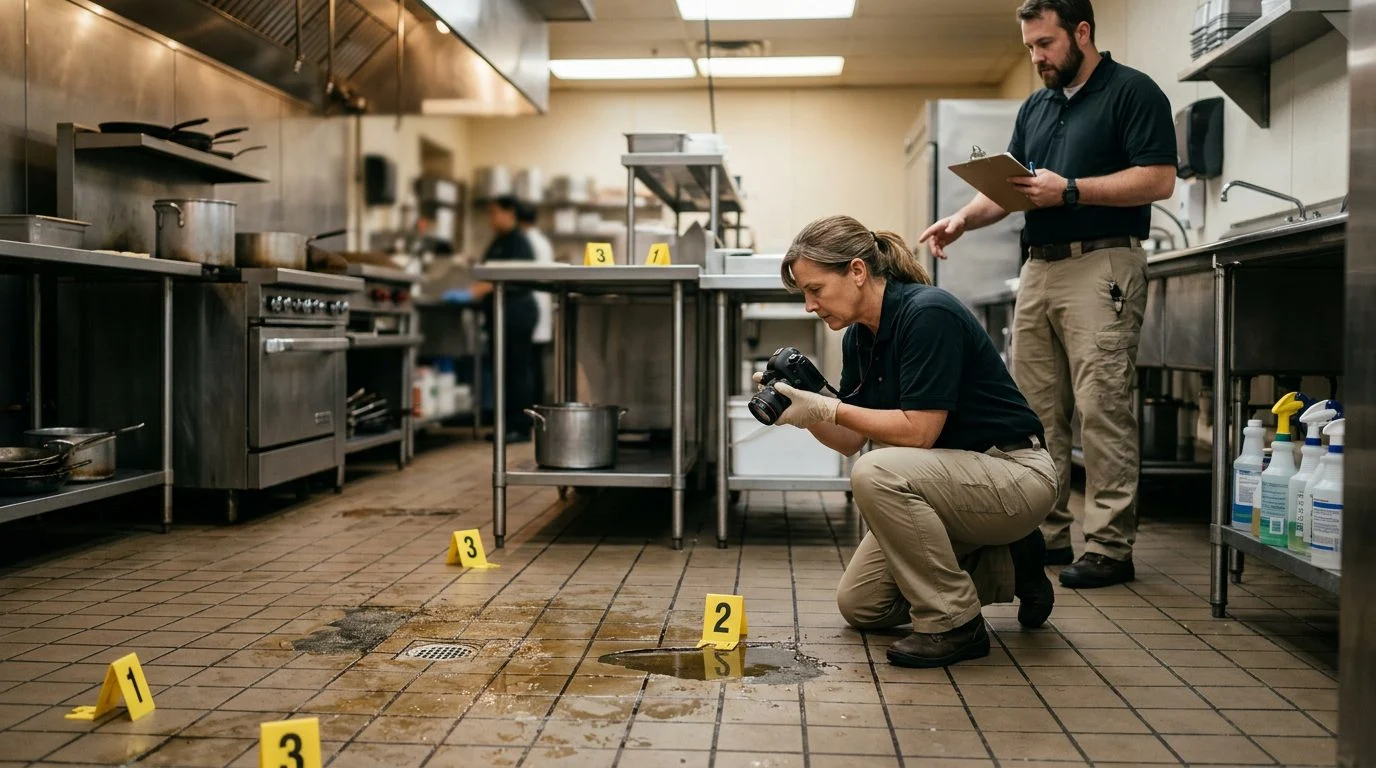
What a Restaurant Slip and Fall Investigation Looks For
The investigation mainly asks whether the restaurant knew about the hazard, or should have known, and whether it fixed the problem in time.
Notice is the central question. A restaurant may have created the hazard itself, such as a dropped drink that staff did not clean up. Or it may have had the hazard long enough that a reasonable check would have caught it.
Surveillance video is often one of the most time-sensitive pieces of evidence. Systems may record over older footage, so early requests to preserve it matter. Georgia’s Supreme Court has explained that the duty to preserve evidence can arise when litigation is reasonably foreseeable to the party that controls the evidence (Phillips v. Harmon).
Other records matter too. Cleaning and inspection logs, staffing schedules for the time of the fall, prior complaints about the same area, and maintenance records for flooring, mats, and lighting can show what the restaurant knew. Medical records tie the fall to the injuries, and witness accounts and scene photos fill in the picture.
The Demand Letter and Settlement Talks
A demand letter is a written summary sent to the restaurant’s insurance company that lays out fault, injuries, treatment, bills, and lost wages.
The letter puts the facts in one place. It usually covers how the fall happened, the evidence of notice, the medical treatment, and the bills and wage losses. The insurer reviews it and responds with its own position, which often starts a back-and-forth.
Medical bills get close attention. In a civil action for injury or death to a person, Georgia limits special damages for medical expenses to the reasonable value of medically necessary care; if the plaintiff has any public or private health insurance, the evidence shall include both the amounts charged for past, present, or future medical and healthcare expenses and the amounts actually necessary to satisfy such charges, whether or not the insurance has been or will be used (O.C.G.A. § 51-12-1.1). Losses like medical bills and lost wages are special damages, which must be proved (O.C.G.A. § 51-12-2). Itemized bills and wage records make that proof easier.
Any settlement is usually written up in a release. Read what it covers before you sign, including whether future treatment is still open to claim. You decide whether to accept an offer. Negotiations can take time, and the insurer sets its own response schedule.
When a Restaurant Slip and Fall Claim Becomes a Lawsuit
A claim becomes a lawsuit when the insurer does not offer a fair resolution and the case is filed in the proper Georgia court.
Once filed, the restaurant is formally served and responds through its own lawyer or an insurance-appointed attorney. Discovery follows. Both sides exchange written questions and document requests, and witnesses and parties give sworn depositions.
Mediation, a settlement conference, or trial may come later. A case can resolve at any of these stages. Whether it does depends on the facts and on how each side responds.
Case costs are separate from attorney fees. Filing fees, records fees, and deposition costs are case expenses, and the client may still be responsible for them. Ask how these costs are handled before you decide anything.
Not sure what your next step is?
Talk it through with our team — the first consultation is free, confidential, and carries no obligation.
Deadlines and Comparative Fault in Georgia Slip and Fall Claims
Georgia generally requires actions for injuries to the person to be brought within two years after the right of action accrues (O.C.G.A. § 9-3-33).
That two-year period runs from when the right of action accrues, so waiting can cost you options. Evidence also fades over time, which is why early action helps protect it.
Georgia uses a fault-sharing rule. If the injured person is partly responsible, the judge reduces the damages in proportion to that person’s percentage of fault (O.C.G.A. § 51-12-33). If the injured person is 50 percent or more responsible, the law bars recovery.
Insurers often argue that the person was not watching where they walked, wore unsafe footwear, or ignored a warning sign. Photos, witness names, and footwear records gathered early can answer those points. A missed deadline can bar the claim entirely, which is one reason to contact us early rather than waiting on the insurer.

Talk With Our Team About Your Restaurant Fall
If a fall at a restaurant left you or someone you care about hurt and unsure what to do, our team can walk through the process with you.
Many people reading this are gathering facts for someone else. You may be a spouse, an adult child, or a friend helping a family member who is still dealing with pain, bills, and calls from an adjuster. That is a hard position to be in, and you don’t have to sort it out alone.
Our team handles slip and fall and premises liability matters across metro Atlanta and Georgia from our office in Duluth, Georgia. We can’t predict how any particular claim will turn out, but we can review the facts and explain the steps. To ask about your situation, contact us for a free case review at our contact page.
Responsible lawyer: Peter F. Jaraysi, Slam Dunk Attorney, Duluth, Georgia.
What to Expect When You Contact Our Firm
A Free, Confidential First Consultation
Your first consultation is free and confidential, with no obligation to continue. You can ask questions and decide what makes sense for you.
Our Lawyers Review Your Account
Our lawyers listen to what happened, look at your injuries and the conditions at the restaurant, and explain the options in plain terms.
Clear Updates Along the Way
Our team keeps you informed about each stage of the claim, so you always know what comes next.
Attention to the Injured Person
We understand that a fall can mean pain, missed work and mounting bills. We focus on your recovery as well as the paperwork.
Before You Talk to an Insurance Adjuster
Insurance representatives may contact you soon after a fall. Think before giving a recorded statement or signing anything. Write down what happened while it is fresh, and speak with a lawyer first.
The Four Stages of a Restaurant Slip and Fall Claim
1. Free Consultation
We learn what happened, gather basic details about your injuries, and explain how the process works. The first consultation is free and confidential, with no obligation to continue.
2. Investigation
We collect evidence such as incident reports, photos, witness information and medical records to understand how the fall happened.
3. Demand Letter
If the facts support a claim, we send a written demand to the responsible party or its insurer, setting out your injuries and losses.
4. Settlement or Lawsuit
Many claims are resolved through negotiation. If a fair resolution cannot be reached, we discuss filing a lawsuit and what that would involve.