
Gwinnett County | Slip and Fall Claims
Hurt in a Restaurant in Gwinnett County? Start With the Right Steps
Plain answers on what to do after a fall, what to document, and how a claim is usually organized, so you can decide your next step with confidence.
By Peter F. Jaraysi · Published November 9, 2026
You fell in a restaurant, or someone you care about did, and now you’re wondering whether anyone is responsible. A restaurant slip and fall can lead to a lawsuit in Gwinnett County or elsewhere in Georgia. Where it’s filed depends on where the business is located and where the fall happened.
Does a Duluth, Georgia personal injury firm take restaurant slip and fall cases in Gwinnett County and other metro Atlanta counties, and where can such a lawsuit be filed?
Yes. Slam Dunk Attorney is a personal injury firm based in Duluth, Georgia. It handles slip and fall and premises liability matters across metro Atlanta and Georgia, and Gwinnett County is part of that area. Whether a specific restaurant fall is a matter the firm takes is decided after a free, confidential first consultation and a review of the facts.
Where a lawsuit is filed is a venue question. It turns on where the business is located and where the fall happened. Georgia’s venue rules are technical, so the right county is worked out case by case.
A fall at a restaurant in Lawrenceville, Norcross or Duluth may point toward Gwinnett County. A fall at a restaurant in Atlanta or Alpharetta may point toward a different metro county. The operating company’s address can matter as much as the fall location. Keep the business name shown on the receipt, menu or signage. A suit has to name the right defendant, so those details help.
For the wider framework, read our Georgia slip and fall guide.
If you or someone you care about fell at a restaurant in Gwinnett County, you don't have to figure out who is responsible alone. Talk it through with our team — the first consultation is free, confidential, and carries no obligation.
Why do restaurant slip and fall injuries happen in busy dining rooms?
Most restaurant falls come from ordinary hazards that are easy to miss. A spill can sit on a tile floor for minutes. A wet spot near the dish area can stay slick through a busy shift.
Common causes include:
- Drinks and food spilled near tables or the bar
- Wet floors from mopping, dishwashing or melted ice
- Rain tracked in through entrance doors during Georgia storms
- Worn or uneven thresholds between the dining room and kitchen
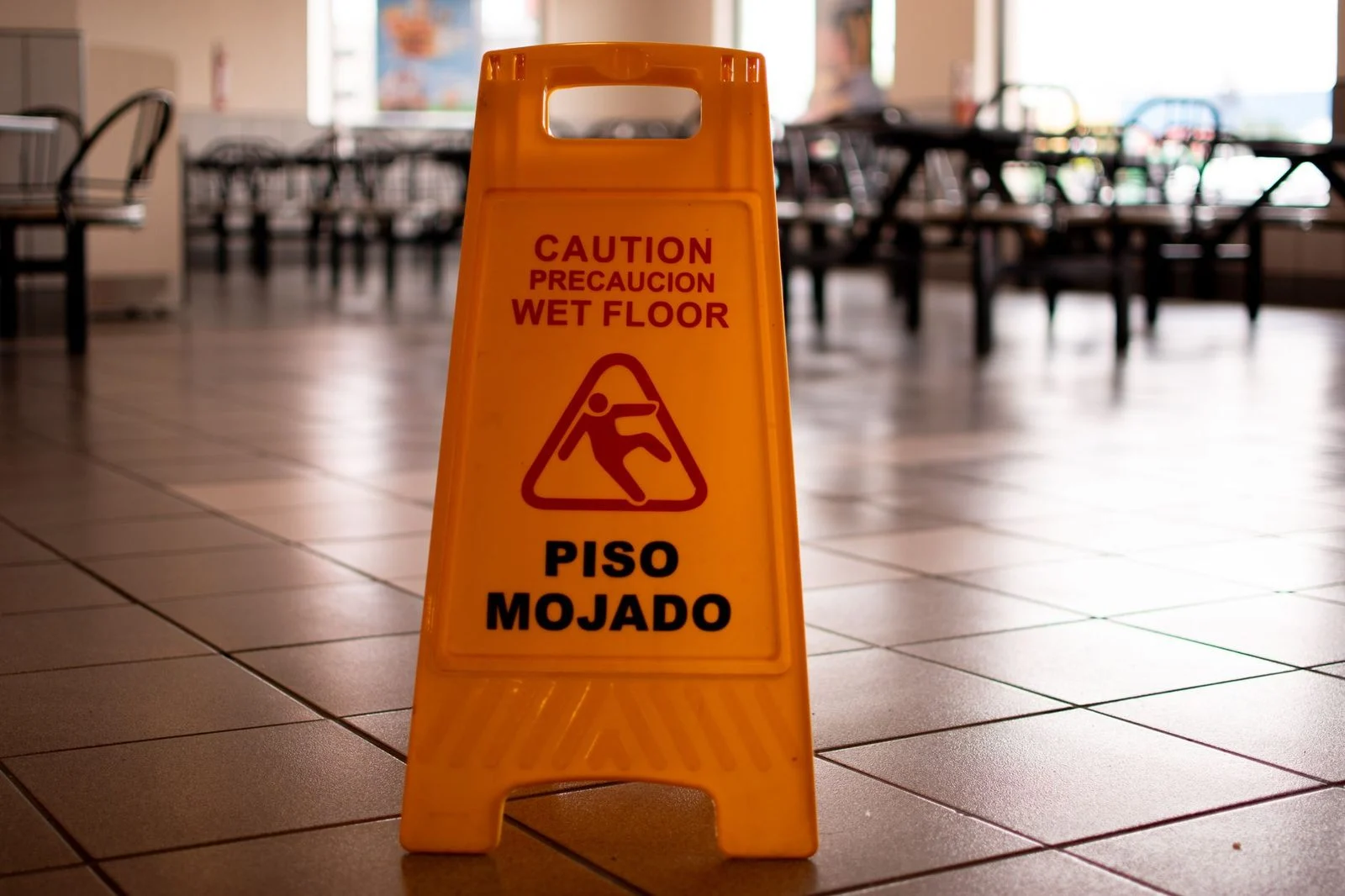
Busy restaurants add pressure. Staff carry trays and hot plates quickly. Customers look at menus, phones or children instead of the floor. A wet floor sign that is missing, moved or hidden behind a chair can leave a walking person with no warning.
These are the details a lawyer would want to document early. They help show what the restaurant knew and when.
What duty does a Georgia restaurant owe to customers?
A restaurant owes its customers ordinary care in keeping its premises and approaches safe. That duty comes from Georgia’s premises rules.
Under O.C.G.A. § 51-3-1, an owner or occupier that invites people onto its premises for a lawful purpose is liable for injuries caused by its failure to exercise ordinary care. A paying diner fits that description.
Georgia courts describe the owner as not an insurer of invitee safety. Every case depends on its own facts, and a lawyer can review the details of yours during a free consultation.
A spill that sat for a long time in a high-traffic aisle can raise that question. The answer depends on the facts of each fall.
Who may be responsible when a restaurant customer falls?
The business running the restaurant, the property owner, or a contractor may each be responsible.
Many restaurants are run by a franchisee or a separate operating company, while a landlord owns the building. The entity named on the lease, the business license and the incident report can show who ran the space.
A landlord is treated differently. Under O.C.G.A. § 44-7-14, a landlord that has fully parted with possession is generally not responsible to third persons for the tenant’s negligence. It remains responsible for failing to keep the premises in repair, and for defective construction.
Cleaning and maintenance vendors are another possibility. Under O.C.G.A. § 51-2-5, an employer can be liable for a contractor’s negligence in listed situations. One example is when the employer keeps the right to direct or control the time and manner of the work.
Georgia also reduces damages by a person’s share of fault. Under O.C.G.A. § 51-12-33, a person who is 50 percent or more at fault recovers nothing. The Quynn v. Hulsey decision explains how the rule works.
What should you do after a restaurant slip and fall?
Get medical attention promptly, report the fall, and write down what happened while the details are fresh.
- Get medical care soon, even if the injury seems minor. Keep every bill, record and prescription.
- Ask the manager for an incident report, and ask for a copy.
- Write down the time, the exact spot, and what was on the floor.
- Photograph the area, the floor surface, any warning sign or the lack of one, and your shoes.
- Collect names and phone numbers of anyone who saw the fall.
- Keep the clothing and shoes you wore.
Evidence matters because Georgia takes it seriously. In Phillips v. Harmon, the Georgia Supreme Court held that the duty to preserve evidence arises when litigation is reasonably foreseeable to the party that controls the evidence. A restaurant that expects a claim may need to keep its footage and reports. Think twice before posting about the fall online.
How long do you have to file a restaurant slip and fall claim in Georgia?
Under O.C.G.A. § 9-3-33, an action for injuries to the person must generally be brought within two years after the right of action accrues.
Some situations carry different timing rules. Have the date checked early rather than assuming you have time.
Waiting also makes proof harder. Witnesses move, footage can be erased, and memories fade. Start gathering records now.
Not sure what your next step is?
Talk it through with our team — the first consultation is free, confidential, and carries no obligation.
Talk with our team about a restaurant fall in Gwinnett County
Our team can review a restaurant fall in Gwinnett County and talk through whether a claim is possible and where it would be filed. Someone may be recovering from a fall right now, or you may be trying to decide what to do after your own. Either way, these early questions are hard to answer alone.
Can I file a lawsuit for a restaurant slip and fall in Georgia?
Yes, a restaurant customer may have a claim when the restaurant’s failure to use ordinary care caused the fall. Whether a particular fall supports a claim requires reviewing its facts.
Which county is a restaurant slip and fall lawsuit filed in?
The county is a venue question. It turns on where the business is located and where the fall happened.
Who can be responsible for a restaurant fall in Georgia?
The restaurant operator, the property owner, or a contractor may be responsible, depending on who controlled the area. The business entity listed on the lease or license can matter.
If you or someone you care about fell in a restaurant in Gwinnett County, you don’t have to sort out who is responsible on your own. Reach out for a free, confidential first consultation, with no obligation to continue.
Attorney advertising. Responsible lawyer: Peter F. Jaraysi, Slam Dunk Attorney, Duluth, Georgia. Contact details are on the firm’s contact page.
How Our Team Can Help
Free, Confidential First Consultation
Your first consultation is free, confidential, and comes with no obligation to continue. Talk through what happened and ask your questions.
Focused on Protecting Your Rights
Our team focuses on premises liability and slip and fall injuries, and we work to protect the rights of people hurt on someone else's property.
Help Organizing Your Records
We can help you gather incident reports, medical records, photos, and witness information so your story is clear from the start.
Clear Communication
Our team at Slam Dunk Attorney will explain your options in plain language and keep you informed as your matter moves forward.
Be Careful With Early Statements
The restaurant's insurance company may contact you soon after the fall. Before you give a recorded statement, sign any release, or accept an offer, talk with a lawyer about what you are being asked to agree to.
Steps to Take After a Restaurant Fall
Get Medical Care
See a doctor even if you feel you only have bruises or soreness. Some injuries, such as head and back injuries, may not show symptoms right away.
Report the Fall
Ask the manager or staff to make an incident report and request a copy. Note the name of the person you spoke with.
Document the Scene
Take photos of the floor, the spill or hazard, lighting, and footwear while details are fresh. Write down the time, location, and what you were doing.
Identify Witnesses
Get names and phone numbers from anyone who saw the fall, and keep copies of receipts or reservation details that show you were a customer.