
Short-Term Rental Injuries | Duluth, Georgia
Hurt at an Airbnb or VRBO? Learn Your Options in Georgia
Slam Dunk Attorney represents people injured in short-term and vacation rentals across metro Atlanta and Georgia. Here is how these cases work and how our team can help you understand your situation.
By Peter F. Jaraysi · Published October 27, 2026
Short Answer: Can You Sue Airbnb for an Injury?
Yes, you may be able to bring a claim against Airbnb or a host after an injury at a rental. Whether you can depends on the facts. The two questions that matter most are who controlled the hazard and what caused your injury.
A claim is not the same as a win. To recover, you must show that someone was at fault and that the fault caused real harm. If you’re asking whether you can sue Airbnb for injury after a bad stay, those two questions are where the answer starts.
This page explains who may be responsible, what must be proven, Georgia’s deadlines and fault rules, and what evidence to keep. Slam Dunk Attorney represents people hurt in short-term rentals, including Airbnb and VRBO stays, across metro Atlanta and Georgia.
If a fall or injury at a rental has turned your plans upside down, our team at Slam Dunk Attorney can talk it through with you in a free, confidential first consultation. Talk it through with our team — the first consultation is free, confidential, and carries no obligation.
Who Can Be Responsible for a Short-Term Rental Injury
The host or property owner is usually the first party to look at. Georgia law requires an owner or occupier who invites people onto property to use ordinary care in keeping the premises and approaches safe (O.C.G.A. § 51-3-1).
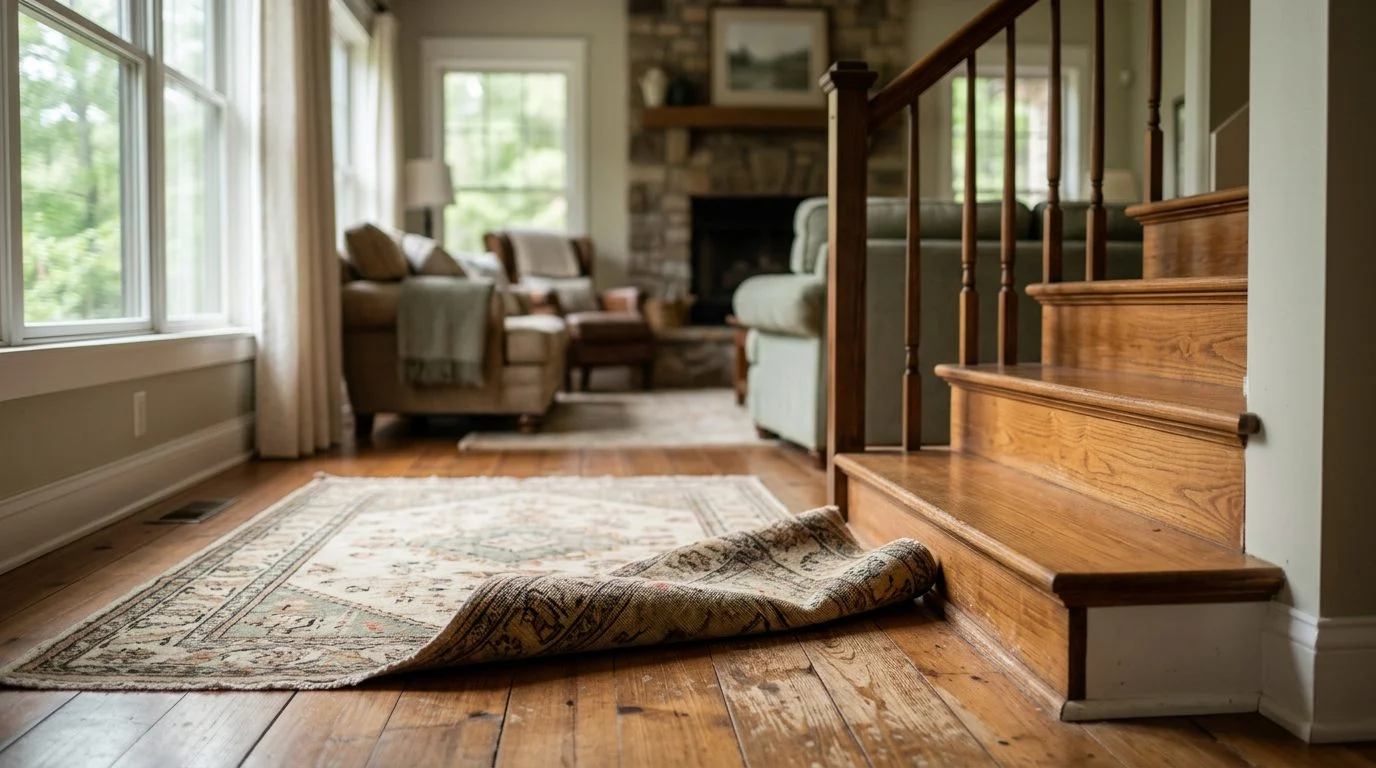
Hazards that often matter include loose stairs, broken railings, slick bathroom or pool areas, faulty wiring, and unstable furniture.
Other parties can share responsibility. Property managers, co-hosts, and maintenance contractors may be responsible if they controlled the condition that caused the injury.
Airbnb’s role is a separate question. Whether the platform can be responsible depends on its role and its written terms, which can change over time. A claim against the platform should be judged on its own facts, not assumed from a claim against the host.
Booking records help show who controlled what. Save the listing, the messages, and the booking confirmation. These show what the host promised and what the host knew.
What You Must Prove: The Elements of Negligence
Every element that must be proven needs evidence, not just a story.
Duty means the host owed you reasonable care as a guest. Georgia defines ordinary negligence as the absence of the care that ordinarily prudent people take under similar circumstances (O.C.G.A. § 51-1-2).
Causation means the hazard directly caused your injury. A loose rug you never stepped on did not cause your fall.
Damages means you suffered real losses, such as medical bills, lost pay, and pain.
Here is a simple example. A rental cabin has a rotting back porch step. The host got a guest complaint about it months earlier and never repaired it or posted a warning. A guest steps on it, falls, and breaks a wrist. The host owed reasonable care and knew of the risk. The step caused the fall, and the guest has medical bills and missed work.
Damages come in two main types. Records of bills and missed work matter for that reason. Emotional distress and physical pain can also be part of a claim (research on noneconomic damages).
Georgia Deadlines and Fault Rules
Georgia generally gives two years to bring an injury claim. Actions for injuries to the person must generally be brought within two years after the right of action accrues, but actions for injuries to the person involving loss of consortium must be brought within four years (O.C.G.A. § 9-3-33). The same statute sets different periods for some other claim types, so timing should be reviewed early.
Fault also matters. If you are 50 percent or more responsible, you cannot recover (O.C.G.A. § 51-12-33). Under Georgia law, where the plaintiff is to some degree responsible for the injury or damages claimed, the judge shall reduce the amount of damages otherwise awarded to the plaintiff in proportion to his or her percentage of fault (O.C.G.A. § 51-12-33).
Each liable party pays only its own share. Damages apportioned to each person are not joint liability among them. A host may argue that a manager, a contractor, or even the guest was more at fault. Under O.C.G.A. § 51-12-33, fault can be assigned to a person who is not named in the lawsuit only if the plaintiff has settled with that person or a defendant gives notice at least 120 days before trial, and that fault is used only to set the named parties’ shares, so the facts about everyone involved matter.
Waiting carries its own cost. Even when the deadline is still open, evidence fades. Photos get lost, repairs get made, listings change, and witnesses move on. Starting early keeps more proof within reach.
Evidence to Preserve After a Rental Injury
Preserving evidence early is one of the most practical steps you can take. Start with what you can safely capture.
- Photos and video of the hazard, the area around it, and any injury, taken as soon as it is safe.
- The booking confirmation, the listing description and photos as they looked when you booked, and the house rules.
- Messages with the host or platform about the problem, plus any written report of the incident.
- Names and contact details for witnesses, other guests, and anyone who responded to the scene.
- Medical records, bills, notes on missed work, and a daily log of symptoms and limits.
Keep originals where you can. Do not delete messages or posts, even ones that seem minor. Repairs can happen quickly, so pictures taken before the hazard is fixed often matter most.
Coping With the Injury While You Decide What to Do
Getting medical care is the first priority, even if the injury seems minor. Some injuries get worse over several days. Follow the care plan your doctor gives you, and keep copies of appointments, prescriptions, and out-of-pocket costs.
Be careful with public statements. Avoid posting detailed accounts of the incident or assigning blame on social media. Keep messages with the host short and factual.
Stress, pain, and disruption are normal after an unexpected injury. Support from family, friends, and your doctors can make the recovery period easier to handle.
Common Questions
Can you sue an Airbnb host for a slip and fall?
Possibly. A host may be responsible if they failed to use ordinary care and that failure caused the fall.
How long do you have to sue for an injury in Georgia?
Generally two years after the right of action accrues, under Georgia’s injury statute.
Does filing a claim mean you will win?
No. A claim must be proven, and no outcome can be promised or predicted.
Not sure what your next step is?
Talk it through with our team — the first consultation is free, confidential, and carries no obligation.

Talk Through Your Situation With Our Duluth Team
If you were hurt on a trip, or you are helping a family member who was hurt at a rental, you may be facing bills, missed work, and many open questions. You do not have to sort through them alone. Our team can review the booking, the hazard, and the medical timeline with you.
The first consultation is free, confidential, and carries no obligation to continue. To start that conversation, reach out through Slam Dunk Attorney’s contact page.
Responsible lawyer: Peter F. Jaraysi, Slam Dunk Attorney, Duluth, Georgia. This page is general information, not legal advice, and it promises no particular result. Attorney advertising.
What to Know About Rental Property Injury Claims
Every case turns on its facts
The property, the hazard, the way the injury happened and who controlled the space can all matter. Our team looks at the details of your situation.
Records help tell the story
Booking confirmations, messages with the host or platform, photos of the hazard and medical records can all help document what happened.
Guests and visitors both matter
Injuries can affect renters, their families and guests. We listen to who was hurt and how it affected their daily life.
Support during recovery
A serious injury brings medical appointments, time away from work and stress. We focus on clear communication so you know what to expect.
Save Evidence Early
Take photos of the hazard, the area around it and any visible injuries. Keep your booking details, receipts and every message with the host. Write down what happened while it is fresh. Then share these materials with a lawyer as soon as you can.
Common Injuries at Short-Term Rentals
Slips and falls
Wet floors, loose railings, broken stairs and uneven walkways can cause serious falls for guests.
Pool, hot tub and deck accidents
Drownings, near-drownings, slips on wet decks and injuries from broken or unsecured features can happen at vacation homes.
Fire, electrical and carbon monoxide hazards
Faulty wiring, malfunctioning appliances and gas or carbon monoxide problems can cause burns, poisoning and other harm.
Dog bites and animal attacks
Dogs kept on a rental property can injure guests, especially children and visitors who do not know the animal.