
Short-Term Rental Injuries | Duluth, Georgia and Metro Atlanta
Hurt at an Airbnb or VRBO? Find Out Who May Be Responsible
Our team represents people injured in vacation and short-term rentals across Georgia, including unsafe property conditions, negligent security and platform-booked stays. Your first consultation is free and confidential.
By Peter F. Jaraysi · Published October 26, 2026
If you were hurt at an Airbnb, VRBO, or other vacation rental in Georgia, the property’s owner or occupier may be responsible. Georgia generally gives injured people two years to file a personal injury lawsuit (O.C.G.A. § 9-3-33; Kenneth B. Cameron v. Jmp Pizza, Inc (2026)).
This guide offers general information about personal injury claims and some steps many people consider after an injury. Short-term rentals are common across metro Atlanta, from Duluth and Lawrenceville to Johns Creek and Alpharetta. Slam Dunk Attorney is a personal injury firm based in Duluth, Georgia. Our lawyers handle injury claims across metro Atlanta and throughout Georgia.
What Counts as a Short-Term Rental Injury in Georgia
A short-term rental injury is harm caused by a dangerous condition or careless act at a property booked for a short stay. Short stays usually last days or weeks.
These rentals include entire homes, condos, cabins, and private rooms. Many are listed on Airbnb or VRBO. A long-term lease is different. A tenant lives in the unit for months, and the landlord handles repairs under the lease. A guest stays briefly and often has no lease at all.
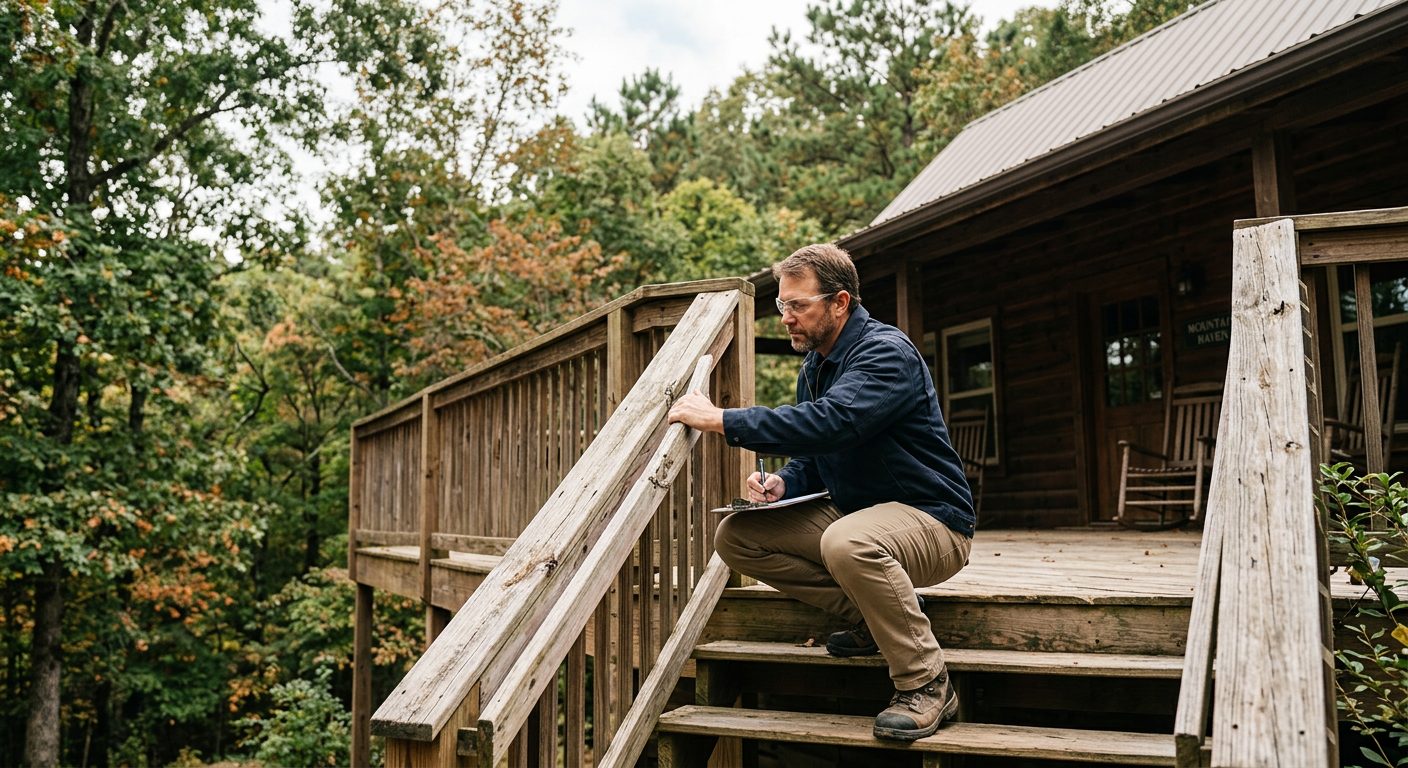
Most rental injuries come from a condition at the property. A loose railing, a broken stair, a slick bathroom floor, or an unsecured pool can all cause harm. The injury does not have to happen inside the unit. A parking area, shared walkway, or building common area can also count.
Your status as a guest matters. Georgia’s premises rule protects people who are invited onto land for a lawful purpose. A paying guest fits that description.
If you were hurt at an Airbnb or VRBO and are weighing a claim, our team can review your stay with you at no cost. Talk it through with our team — the first consultation is free, confidential, and carries no obligation.

Who May Be Held Liable When a Guest Is Hurt
The owner or occupier of the property may be liable for negligent security when a guest is hurt by a third person’s wrongful conduct on the premises, if the guest proves the required elements, including that the conduct was reasonably foreseeable and the owner failed to exercise ordinary care to remedy a known physical condition. Under O.C.G.A. § 51-3-1, an owner or occupier who invites people onto land must use ordinary care to keep the premises and approaches safe.
The owner is the first party people review. That includes an owner who lives on site and one who only lists the home online. Property managers and co-hosts also matter. They often clean, repair, or check guests in, so their role can overlap with the owner’s duty.
When more than one person is at fault, each liable person pays only its own share. O.C.G.A. § 51-12-33 says that share is not joint liability.
Whether a booking platform can be held responsible depends on the booking terms and who controlled the condition that caused the injury. We cover platforms separately below.
Common Injuries and Unsafe Conditions at Vacation Rentals
Most rental injuries involve falls, tip-overs, fire hazards, animal attacks, or crime. Each pattern raises different questions about who was responsible.
Falls from stairs, decks, balconies, and lofts show up often. So do slips in bathrooms and kitchens. Furniture and TV tip-overs can injure children and adults. Hot tub and pool accidents also happen. The Georgia Department of Public Health lists falls as an injury prevention topic that includes traumatic brain injuries. A head injury can seem minor at first, so get checked.
Fire, electrical, and carbon monoxide hazards can cause burns or serious harm. Missing detectors or faulty wiring raise the risk. Records showing what was missing can matter later.
Dog bites can happen on rental property too. Under O.C.G.A. § 51-2-7, an owner or keeper who is careless with a vicious or dangerous animal may be liable for injury to another person who does not provoke the injury by his own act. If a local leash ordinance required the animal to be on a leash, and it was not, that alone can show vicious propensity.
Assaults and break-ins may fall under negligent security. Under O.C.G.A. § 51-3-51, the injured guest must show the crime was reasonably foreseeable. The owner must also have failed to exercise ordinary care to remedy or mitigate a specific, known physical condition of the premises.
Catastrophic injuries such as spinal cord injury, traumatic brain injury, amputation, and severe burns can follow these events. Early medical records tie the injury to the incident.
Local Rules for Short-Term Rentals in Metro Atlanta
Cities and counties mostly set short-term rental rules, so requirements can change from one place to the next. Some places require registration or a permit. Others limit occupancy or require safety inspections. Fire safety and emergency exit rules also vary.
These rules matter in a claim. A permit, registration, or inspection record can show what the host was required to maintain. A missed inspection can become part of the story.
Save any permit or registration number shown on the listing. It can point you toward the right local records.
Metro Atlanta covers many jurisdictions. Duluth, Lawrenceville, Johns Creek, Alpharetta, Marietta, Norcross, Kennesaw, and Dunwoody each have their own setup. Check the property’s exact location, because a home on one side of a city line may follow different rules than one nearby.
Can You Sue Airbnb or VRBO After a Rental Injury?
You may be able to pursue a platform in some cases. The answer turns on the booking terms and the role the platform played in the stay.
Airbnb and VRBO have terms of service and insurance programs. Those documents can shape how a claim is handled and where it goes. Reviewing them is part of the work.
A host’s own insurance is often a main source of recovery. The Insurance Information Institute explains when short-term rental activity may fall under a homeowners or renters policy. It also says regular hosting is often treated as a business that needs separate coverage.
Claims are often pursued against both the host and any other responsible party. Identifying every party early keeps your options open.
How Liability Is Proven and What to Document Right Away
Start by saving proof of the hazard, the booking, and your injury. Photos and video of the hazard matter most. Take them before anyone repairs or removes the item.
Many people throw away a broken railing or let the host fix it before anyone takes a picture. That loss can make the case harder to prove.
Save the listing, your booking confirmation, and screenshots of house rules and amenities. Keep messages with the host or platform. Save repair requests, earlier complaints, and reviews that describe the same hazard. Any incident report to the host, platform, police, or fire department belongs in your file too.
Medical records support the damages part of a claim. Under O.C.G.A. § 51-12-2, general damages are presumed from a wrong. Special damages must be proven. Medical expenses are limited to the reasonable value of medically necessary care under O.C.G.A. § 51-12-1.1. Keep bills, notes about pain, missed work, and daily limits.
Under O.C.G.A. § 51-12-33 (Quynn v. Hulsey (2020))(a), your own conduct can affect recovery: if you are found partly at fault for your injury, your damages are reduced in proportion to your percentage of fault. If you are 50 percent or more responsible, you recover nothing.
Not sure what your next step is?
Talk it through with our team — the first consultation is free, confidential, and carries no obligation.
Georgia Time Limits for Short-Term Rental Injury Claims
Georgia generally requires a personal injury lawsuit within two years after the injury. O.C.G.A. § 9-3-33 sets two years for injuries to the person, but actions for injuries to the person involving loss of consortium must be brought within four years after the right of action accrues. Put the date on your calendar now.
Claims against a city follow a different path. Under O.C.G.A. § 36-33-5, a claim against a municipal corporation (a city) must be presented in writing within six months of the event. The governing authority must act on it within 30 days. O.C.G.A. § 36-33-5 reads: “(c) Upon the presentation of such claim, the governing authority shall consider and act upon the claim within 30 days from the presentation; and the action of the governing authority, unless it results in the settlement thereof, shall in no sense be a bar to an action therefor in the courts.” The limitations period is suspended while the demand is pending without action.
Families face a separate question after a death. Under O.C.G.A. § 51-4-5, the personal representative may recover funeral, medical, and other necessary expenses when death results from criminal or other negligence.
Waiting also hurts. Video gets overwritten, witnesses forget details, and the property gets repaired.

Talk With Slam Dunk Attorney About Your Rental Injury
If you were hurt at a rental, Slam Dunk Attorney can review who may be responsible and which deadline applies. Our team offers a free first consultation. It is confidential and carries no obligation to continue. The review covers the stay, your injury, and the evidence you have. No outcome can be promised before that review. To request a free consultation or call for a free case review, use our contact page while the booking records and the property are still available.
Frequently Asked Questions
Can you sue Airbnb for an injury in Georgia?
Sometimes. The answer turns on the booking terms and the role the platform played in the stay.
How long do I have to file a lawsuit?
Georgia generally allows two years from the injury for a personal injury lawsuit. Talk with a lawyer about your specific timing.
Does comparative fault apply in Georgia?
Yes. Your recovery drops by your share of fault, and you recover nothing at 50 percent or more (O.C.G.A. § 51-12-33; Quynn v. Hulsey (2020)).
Is the first consultation free?
Yes. The first consultation is free, confidential, and carries no obligation to continue.
Attorney advertising.
This page is general information, not legal advice. Responsible lawyer: Peter F. Jaraysi, Slam Dunk Attorney, Duluth, Georgia. Contact: contact page. The firm handles matters across Georgia.
How We Approach Your Case
We review the booking and the property
Booking terms, listing details, photos, repair requests and house rules can all shed light on what happened during your stay.
We look at who controlled the space
Hosts, property managers and platforms may each have a role in how a rental was maintained, marketed and secured.
We focus on safety failures
Broken railings, pool hazards, poor lighting and inadequate security are common issues we investigate in rental injury claims.
We keep you informed
We explain each step in plain language so you can focus on recovering while we work through the details.
Protect Your Claim Early
Get medical care right away, even if your injuries seem minor. Keep photos of the hazard, your booking confirmation, messages with the host or platform, and any receipts. Avoid posting about the incident on social media before speaking with a lawyer.
Common Short-Term Rental Injuries
Falls on stairs and balconies
Loose handrails, missing guardrails, slick steps and uneven decking can cause serious falls.
Pool and hot tub accidents
Drownings, near-drownings, slip injuries and chemical burns may occur when safety barriers or warnings are missing.
Security failures
Assaults and break-ins can happen when locks, gates, cameras or lighting are broken or never repaired.
Dog bites and animal incidents
Injuries from a host's or property's animal can require prompt medical care and a careful review of responsibility.
Talk With Our Team About Your Rental Injury. Your First Consultation Is Free, Confidential and Comes With No Obligation to Continue.
Related practice areas
- Johns Creek Short-Term Rental Injury Lawyer