
Premises Liability
What You Need to Know About Premises Liability Claims in Georgia
Property owners have a legal duty to keep their premises safe. If you were injured on someone else's property due to negligence, you may have a claim.
By Peter F. Jaraysi · Published September 29, 2026
Premises Liability Claim Requirements in Georgia: What You Must Prove
Under Georgia premises liability law, a claim generally requires you to establish four core elements: the property owner owed you a duty of care, they breached that duty, the breach caused your injury, and you suffered measurable damages. How these elements apply depends on the facts of your case, and no outcome is guaranteed. Each of these elements generally must be established, and how they apply depends on the facts of your case; consult a lawyer about your own situation. Understanding these requirements is essential groundwork before deciding whether to pursue a claim—and it helps you gather the right evidence from the start.
If you've been injured on someone else's property in Georgia and you're unsure whether you have a valid claim, reach out to discuss your specific situation. Talk it through with our team — the first consultation is free, confidential, and carries no obligation.
What Is a Premises Liability Claim in Georgia?
A premises liability claim is a legal case you file when you’re injured on someone else’s property because they failed to maintain safe conditions or warn of known dangers. This applies to residential homes, commercial buildings, retail stores, restaurants, apartment complexes, and public spaces. Unlike other personal injury claims, premises liability focuses specifically on the property owner’s or occupier’s duty to keep their premises reasonably safe.
Georgia law treats premises liability as a subset of negligence law. The framework is the same: you must prove that someone owed you a duty, breached it, caused your injury, and you suffered real harm. What makes it “premises liability” is that the breach involves the condition or management of the property itself—not, for example, a defective product or a car accident.
The Four Core Elements You Must Prove
Every premises liability claim in Georgia rests on four elements. Generally, a claim requires proof of all four of these elements. If any single element is not established, your claim may not succeed, and how the elements apply depends on the facts of your case; consult a lawyer about your own situation.
Element 1: Duty of Care
The property owner or occupier owed you a legal duty to maintain reasonably safe premises or warn you of known dangers. This duty exists because property owners have a responsibility to exercise reasonable care toward people lawfully on their property.
Element 2: Breach of Duty
The owner or occupier failed to fulfill that duty. Examples include failing to repair a hazard, failing to warn of a non-obvious risk, or failing to inspect the property regularly for unsafe conditions.
Element 3: Causation
The breach directly caused your injury. This means two things: your injury would not have happened “but for” the breach (actual cause), and the injury was a foreseeable result of the breach (proximate cause). The connection generally must be direct rather than remote or speculative, and whether it is depends on the facts of your case.
Element 4: Damages
You suffered actual, measurable harm. This may include categories such as medical bills, lost wages, pain and suffering, and permanent injury or disability, depending on the facts of your case. Damages generally must be quantifiable or reasonably estimable, and how this applies depends on the facts of your case; consult a lawyer about your own situation.
Understanding Duty of Care in Georgia
Property owners and occupiers in Georgia have a legal duty to exercise reasonable care to keep their premises safe. This duty includes inspecting for hazards, repairing known dangers, and warning visitors of risks that aren’t obvious.
The scope of this duty depends on your status as a visitor.
Importantly, Georgia recognizes that property owners cannot guarantee absolute safety. The standard is reasonable care—what a prudent property owner would do under similar circumstances. The duty generally extends to foreseeable hazards and foreseeable visitors, and how this applies depends on the facts of your case; consult a lawyer about your own situation.
What Constitutes a Breach of Duty?
A breach occurs when the property owner fails to exercise reasonable care. Common examples include:
- Failing to repair or remedy a known unsafe condition, such as broken stairs, cracked flooring, or a hole in the ground
- Failing to warn of a known hazard that is not obvious to visitors
- Failing to inspect the property regularly for hazards
- Failing to provide adequate lighting, security, or supervision where reasonably necessary
- Allowing a dangerous condition to persist for an unreasonable length of time
The key question is whether the owner’s conduct fell below the standard of reasonable care. Whether a breach exists depends on the facts, but it may be at issue if a reasonable property owner would have fixed the problem, warned of it, or inspected for it, and this owner did not; consult a lawyer about your own situation.
Proving Causation: Connecting the Breach to Your Injury
Causation is often the trickiest element to prove. You must show both actual cause and proximate cause.
Actual Cause (Cause-in-Fact)
Your injury would not have occurred “but for” the property owner’s breach. If the breach hadn’t happened, you wouldn’t have been hurt. For example, if a wet floor caused by the owner's failure to clean or warn is alleged to have caused you to slip and fracture your ankle, whether actual cause exists depends on the facts of your case.
Proximate Cause
The injury was a foreseeable result of the breach; it wasn’t too remote or indirect. Whether proximate cause exists depends on the facts of your case; consult a lawyer about your own situation.
You must draw a direct link between the unsafe condition and your specific injury. Vague or speculative connections won’t work.
Not sure what your next step is?
Talk it through with our team — the first consultation is free, confidential, and carries no obligation.
Documenting Your Damages
Damages are the financial and personal losses you've suffered. They include:
- Medical expenses: emergency care, hospitalization, surgery, ongoing treatment, rehabilitation, and medications
- Lost wages: income lost due to recovery time and medical appointments
- Pain and suffering: physical pain, emotional distress, and loss of enjoyment of life
- Permanent injury or disability: long-term or permanent effects on your quality of life and earning capacity
Keep detailed records: medical bills, receipts, pay stubs, photographs of the injury and the hazard, and any incident reports. Whether damages are quantifiable or reasonably estimable depends on the facts of your case, so consult a lawyer about your own situation.
Common Premises Liability Scenarios in Georgia
Understanding how the four elements apply to real-world situations helps clarify what you must prove.
Slip and Fall
You slip on a wet floor, debris, or an uneven surface. The owner knew or should have known of the hazard but failed to clean it, repair it, or warn you. You fell and suffered injury. You must prove the owner’s failure to maintain or warn caused your fall.
Stair Injuries
You’re injured on stairs due to broken or missing handrails, uneven steps, or inadequate lighting. The owner failed to repair or warn of the hazard. You must connect the specific defect to your injury.
Negligent Security
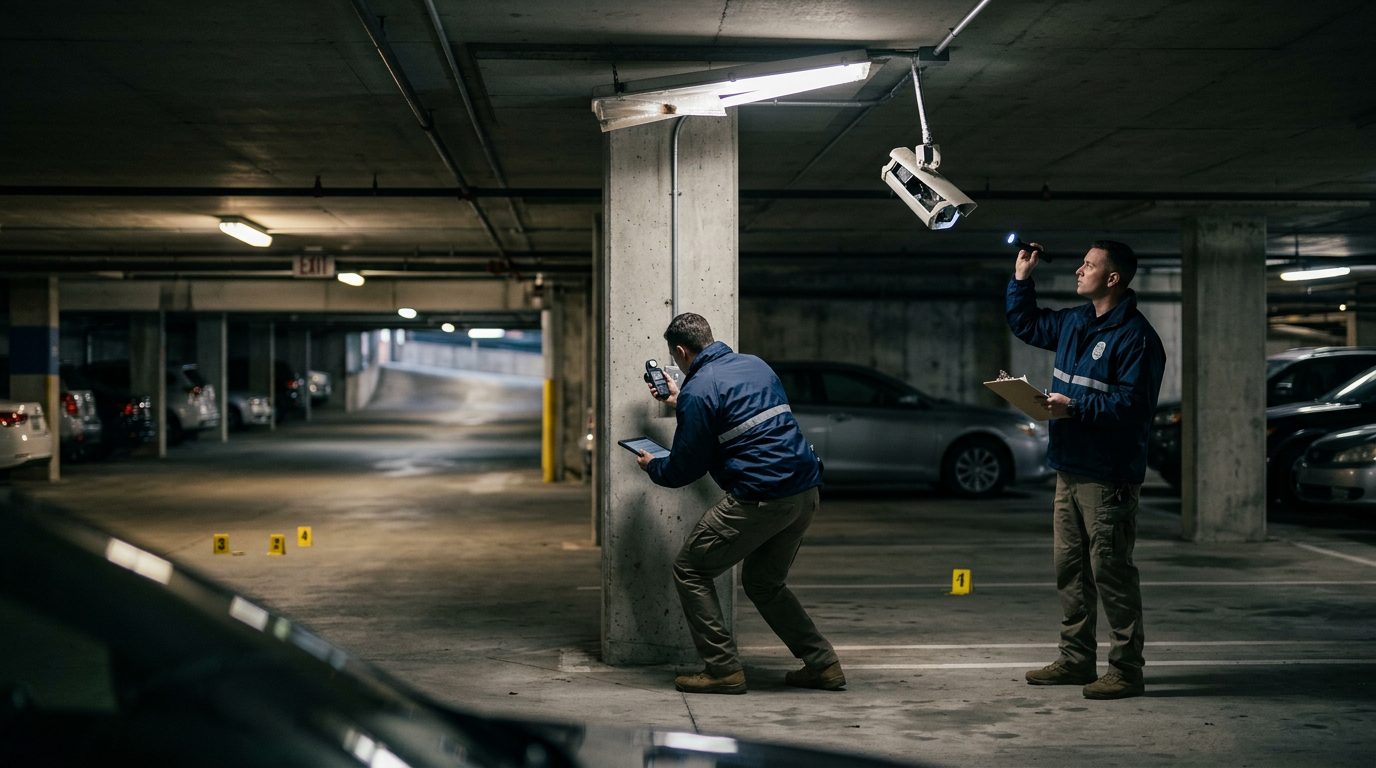
Inadequate locks, lighting, or surveillance allowed someone to assault you or steal from you on the premises. The owner failed to provide reasonable security. You must prove the owner should have foreseen the risk and taken steps to prevent it.
Dog Bites
The owner’s dog bites you on the premises. The owner knew or should have known the dog was dangerous but failed to restrain or warn you. Liability for dog bites depends on the facts of each case; consult a lawyer about your own situation.
Unsafe Property Conditions
Structural defects, exposed hazards, or code violations cause your injury. The owner failed to inspect, repair, or warn. You must prove the condition was unreasonably dangerous and the owner’s negligence caused your harm.
Each scenario requires proof of the same four elements, but the specific facts and evidence differ.
The Role of Comparative Fault in Georgia
Georgia applies a comparative fault rule, and how it affects your recovery depends on the facts of your case. This rule affects your recovery if you bear some responsibility for your injury.
The property owner may argue that you were negligent—for instance, that you weren’t paying attention, ignored warning signs, or were in an area you shouldn’t have been. Your own conduct is weighed against the owner’s breach of duty. Even if you share some fault, you may still have a valid claim.
Evidence You’ll Need to Gather
Strong evidence is critical to proving your claim. Gather as much as you can, as soon as safely possible:
- Photographs or video of the hazardous condition, taken from multiple angles if possible
- Incident report filed with the property owner, manager, or security
- Medical records documenting your injury, treatment, and prognosis
- Witness statements from people who saw the condition or your fall
- Maintenance records or evidence that the owner failed to maintain the property
- Prior complaints or incidents at the same location, showing the owner knew or should have known of the hazard
- Expert testimony (e.g., a safety expert or medical expert) may be needed to establish breach or causation
Don’t rely on memory alone. Document everything while details are fresh.
Georgia’s Statute of Limitations
You generally have two years from the date of injury to file a premises liability lawsuit under O.C.G.A. § 34-7-2. This deadline is strict; missing it bars your claim entirely, with few exceptions.
The clock starts on the date of injury, not the date you discover the injury. Certain narrow circumstances—such as minority or legal incapacity—may extend the deadline, but these exceptions are limited. Do not delay. Consult an attorney early to protect your rights and ensure you meet all deadlines.
If you've been injured on someone else's property in Georgia and you're unsure whether you have a valid claim, reach out to discuss your specific situation—people in your position contact us regularly. Talk it through with our team — the first consultation is free, confidential, and carries no obligation.
Why These Requirements Matter
Georgia law requires clear proof because property owners have a legitimate interest in not being held liable for every injury on their property. The four-element framework ensures that claims are based on genuine negligence, not accident or bad luck.
Understanding what you must prove helps you gather the right evidence and build a stronger claim. Many injured people don’t realize they have a valid premises liability claim because they don’t understand the legal requirements. An early consultation can clarify whether your situation meets these requirements and what your next steps should be.
Frequently Asked Questions
What’s the difference between a premises liability claim and a general negligence claim in Georgia?
Premises liability is a type of negligence claim; the difference is that it focuses on the property owner’s duty to maintain safe premises, rather than other duties like a driver’s duty to operate a vehicle safely.
Can I recover if I was partially at fault for my slip and fall?
Yes, under Georgia’s modified comparative fault rule, you can recover if you’re less than 50% at fault, though your award will be reduced by your percentage of fault; if you’re 50% or more at fault, you recover nothing.
How do I prove the property owner knew about a dangerous condition?
You can show maintenance records, prior complaints, how long the condition existed, or evidence that a reasonable inspection would have revealed it. Direct knowledge isn’t always required; constructive knowledge (what the owner should have known) may be enough.
What counts as “reasonable care” for a property owner?
Reasonable care means what a prudent property owner would do under similar circumstances: regular inspections, prompt repairs, adequate warnings, and appropriate security or supervision where foreseeable risks exist.
Do I need expert testimony to prove a premises liability claim?
Not always, but expert testimony (from a safety expert, engineer, or medical professional) can strengthen your case, especially on complex issues like breach or causation.
If you’ve been injured on someone else’s property in Georgia and you’re unsure whether the four elements apply to your situation, reach out to discuss what happened. People facing premises liability questions in Georgia contact our team regularly, and we’re here to help you understand your options.
Key Elements of a Premises Liability Claim
Property Owner's Duty
The property owner or occupant owed you a duty of care to maintain reasonably safe premises or warn of known dangers.
Breach of Duty
The owner failed to maintain safe conditions or failed to warn you of a hazard they knew about or should have known about.
Your Injury
You suffered actual injury or harm as a result of the unsafe condition on the property.
Causation
The unsafe condition directly caused your injury—there is a clear link between the breach and your harm.
Common Premises Liability Situations
Slip and Fall Accidents
Injuries from wet floors, debris, uneven surfaces, or poor lighting in stores, restaurants, apartments, or other properties.
Dog Bites
Injuries caused by a dog on the owner's property, or in some cases, when the owner knew the dog posed a danger.
Negligent Security
Injuries from criminal acts or assaults that occurred because the property lacked adequate security measures or lighting.
Nursing Home Abuse or Neglect
Harm to residents resulting from inadequate care, supervision, or unsafe conditions in long-term care facilities.
Unsafe Conditions
Injuries from broken stairs, falling objects, exposed hazards, or other dangerous conditions the owner failed to repair or warn about.
Comparative Fault in Georgia
Georgia follows a comparative negligence rule. If you were partially at fault for your injury, you may still recover damages, but your award will be reduced by your percentage of fault. However, if you are found to be 50% or more at fault, you cannot recover.
Questions to Consider About Your Claim
Did the owner know about the hazard?
Property owners are responsible for dangers they knew about or should have discovered through reasonable inspection.
Was there a warning?
If a hazard existed, did the owner post a warning sign or take steps to prevent injury?
How long had the condition existed?
The longer a dangerous condition remained, the stronger the argument that the owner should have known about it and fixed it.
Were you lawfully on the property?
Your legal status on the property (invited guest, customer, trespasser) affects the owner's duty of care toward you.
Why You Need Legal Guidance
Protect Your Rights
Property owners and their insurers often dispute liability. We help ensure your claim is properly documented and presented.
Gather Critical Evidence
Photos, witness statements, maintenance records, and security footage are often crucial—and can disappear if not preserved quickly.
Handle Communications
We manage all contact with insurers and defense attorneys so you can focus on recovery.
Understand Your Options
We explain what your claim may be worth, what damages you can pursue, and the best path forward for your situation.
Ready to Discuss Your Premises Liability Claim?
Related practice areas
- Premises Liability Lawyer in Georgia: Injured on Someone Else’s Property
- Comparative Fault in Premises Liability Claims | Georgia Law