
Premises Liability | Georgia
Parking Lot Security Negligence: Know Your Rights
Whether a property owner provided reasonable security depends on the facts of each case. If you were hurt in a parking lot, a lawyer can explain how Georgia law may apply to your situation, though no outcome can be guaranteed.
By Peter F. Jaraysi · Published September 25, 2026
Parking Lot Security Negligence: When a Property Owner May Be Liable
When you’re injured on a parking lot—whether by assault, robbery, or another crime—the property owner may be legally responsible if they failed to provide reasonable security measures. Under Georgia premises liability law, property owners owe lawful visitors a duty of reasonable care, which includes anticipating and guarding against foreseeable dangers. Negligent security in parking lots is a recognized claim when that duty is breached.
This guide explains what constitutes negligent security, what Georgia law requires of property owners, and whether a claim exists, which depends on the facts of your situation.
If you were injured on a parking lot due to poor lighting, broken security, or lack of protection, whether a claim exists depends on the facts of your situation. Talk it through with our team — the first consultation is free, confidential, and carries no obligation.

What Is Negligent Security in a Parking Lot?
Negligent security is a property owner’s or manager’s failure to provide reasonable security measures, resulting in foreseeable harm to a visitor. It’s different from a simple accident because it may involve a breach of the owner’s duty of reasonable care to guard against foreseeable criminal acts or known dangers, depending on the facts.
Parking lots are common sites for negligent security claims because they present unique vulnerabilities. High visitor volume, limited visibility, unattended vehicles, and cash transactions create opportunities for crime. Georgia courts may consider these risk factors when evaluating whether an owner’s security measures were adequate, depending on the facts of the case.
The key distinction is this: if you slip on ice, that’s typically an accident. If you’re assaulted in a dark, unmonitored parking lot where prior crimes occurred and the owner installed no lighting or cameras, that may be negligent security.
What Duty Does a Parking Lot Owner Owe to Visitors?
Under Georgia premises liability law, property owners generally owe a duty of reasonable care to lawful visitors on their property, and how that duty applies depends on the facts of each case. This duty generally includes taking reasonable steps to protect visitors from foreseeable harm, including criminal acts, though whether it applies in a given situation depends on the facts, and exceptions may apply.
The cornerstone of this duty is foreseeability. Whether a property owner must anticipate reasonably foreseeable criminal acts or dangers depends on the facts, including:
- Prior crimes or incidents at the location
- Crime rates in the surrounding area
- Industry standards for similar properties
- The nature and visibility of the business
Reasonable security measures typically include:
- Adequate lighting in parking areas, especially at night
- Functional security cameras and active monitoring of footage
- Security personnel when warranted by crime history or location
- Working locks, gates, and access controls to limit entry
- Prompt maintenance of hazards like potholes or debris
- Clear signage and directions, especially in confusing layouts
- Responsive action to prior complaints or known threats
Importantly, the law does not require an absolute guarantee of safety. Owners aren’t liable for every crime that occurs on their property. They may be liable when they breach their duty by failing to implement reasonable precautions given the specific circumstances, and whether that applies depends on the facts of each case.
Common Examples of Negligent Security in Parking Lots
Examples of conditions that are sometimes alleged in negligent security claims include:
- Broken or absent lighting in parking areas, creating dark zones where crimes are more likely
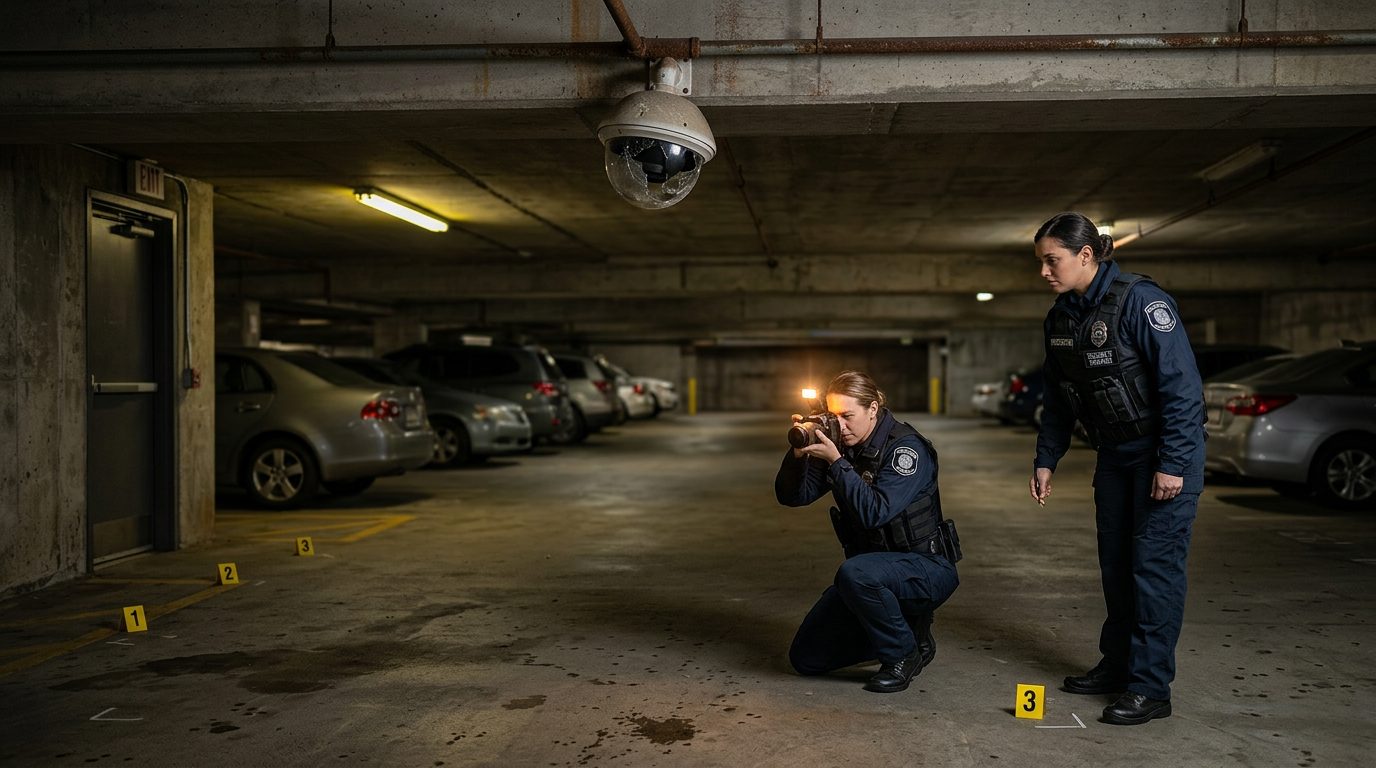
- Non-functional security cameras or failure to monitor and preserve footage
- Lack of security personnel despite documented crime history in the area
- Broken gates, locks, or access controls that allow unauthorized entry
- Failure to remove or warn of known hazards, such as potholes or debris that impede escape
- Inadequate signage or confusing layouts that leave visitors disoriented
- Failure to respond to prior incidents, complaints, or known threats from repeat offenders
Whether any of these conditions is a breach of the owner’s duty of reasonable care depends on the facts of each case.
When May a Parking Lot Owner Be Held Liable?
To establish liability for negligent security, you must generally show four elements:
1. Foreseeability
The owner knew or should have known that criminal activity or dangerous conditions were reasonably foreseeable. This may be shown through prior crimes, complaints, or known dangerous conditions on or near the property, depending on the facts of the case.
2. Breach of Duty
The owner failed to implement reasonable security measures given the circumstances. What’s “reasonable” depends on the totality of circumstances—the location, crime history, time of day, business type, and cost of security measures.
3. Causation
The negligent security directly contributed to your injury or the crime. Whether adequate lighting or hired security might have prevented the harm depends on the facts of the case.
4. Damages
You suffered actual harm—physical injury, medical costs, lost wages, emotional distress, or other quantifiable losses.
Georgia courts examine the totality of circumstances, not a single factor. How these factors apply to a particular parking lot depends on the facts of each case.
Factors Georgia Courts Consider
When evaluating negligent security claims, courts may consider factors such as the following, depending on the facts of the case:
- Nature and frequency of prior criminal activity at the location
- Crime rates in the surrounding area, based on police data
- Time of day and visibility conditions when the incident occurred
- Type of business and typical visitor patterns
- Cost and feasibility of implementing additional security measures
- Industry standards for similar properties in similar areas
This framework is called the “totality-of-circumstances” test. No single factor is dispositive. A parking lot with zero prior crimes in a safe neighborhood may have lower security duties than a downtown garage with a documented history of robberies.
Not sure what your next step is?
Talk it through with our team — the first consultation is free, confidential, and carries no obligation.
What Evidence Matters in a Negligent Security Claim?
Documentation of conditions and events may be relevant in a negligent security claim. Key documents and items include:
- Security camera footage (or evidence that cameras were absent or non-functional)
- Photographs of lighting conditions at the time of the incident
- Police reports documenting the crime or incident
- Crime statistics for the parking lot location and surrounding area
- Prior incident reports or complaints filed with the property owner
- Maintenance records showing neglected repairs or broken equipment
- Witness statements from other visitors or employees
- Medical records documenting your injuries
- Expert testimony on industry security standards for similar properties
Documenting the scene can help preserve a record of conditions as they were. Take photos of the scene, lighting, access points, and any broken equipment. Preserve security footage by requesting it in writing. Gather witness contact information before people leave.
Common Defenses Property Owners Raise
Property owners and their insurers may defend negligent security claims by arguing:
Lack of Foreseeability
They claim the crime or incident was unforeseeable and they had no duty to anticipate it.
Intervening Criminal Act
They argue that a third party’s criminal conduct breaks the chain of liability, making the owner not responsible.
Comparative Fault
They suggest you were partly responsible for your own safety—for example, by being in the lot alone at night.
Assumption of Risk
They claim you knowingly accepted the danger by entering the property.
Whether these defenses apply depends on the facts of each case. If prior crimes occurred at the location or in the surrounding area, whether the crime was unforeseeable may depend on the facts of the case.
Steps to Take If You’re Injured Due to Negligent Security
If you’re injured on a parking lot due to poor security, you may consider the following steps:
- Seek medical attention and keep all records, including emergency room reports and follow-up care.
- Report the incident to the property owner or manager in writing, creating a documented record.
- Document the scene with photos of lighting, security cameras, access points, signage, and any hazards.
- Gather witness contact information from anyone who saw what happened.
- Preserve evidence by requesting security footage in writing and instructing the owner not to alter or delete it.
- Request copies of prior incident reports and crime statistics for the location.
- Do not sign any waivers or settlement offers without legal review.
Some evidence, such as security footage, may be overwritten over time. Witnesses’ memories fade. Early legal review may help you understand your options and identify evidence that may be relevant to your case.
Why You Need Legal Guidance for Your Situation
Negligent security claims are fact-intensive and require careful investigation. Property owners and their insurers may take positions on liability that depend on the facts of your case. They may argue the crime was unforeseeable, that you were partly at fault, or that their security measures were adequate.
Georgia premises liability law is nuanced. What counts as “reasonable” security depends on your specific circumstances—the location, crime history, time of day, and industry standards. Without a clear understanding of how courts evaluate these factors, it may be harder to know your options, and deadlines may apply to your claim depending on the facts of your case.
Early legal review can:
- Identify whether foreseeability and breach are present in your case
- Preserve critical evidence before it’s lost or destroyed
- Evaluate the strength of common defenses
- Determine the scope of damages you may recover
- Protect your rights under Georgia’s statute of limitations

Frequently Asked Questions
What is considered “reasonable security” in a parking lot under Georgia law?
Reasonable security depends on the totality of circumstances—prior crime, location, time of day, business type, and industry standards. There’s no one-size-fits-all answer, which is why each case requires individual evaluation.
Can I sue a parking lot owner if I was assaulted on their property?
Yes, if the owner failed to provide reasonable security measures and the assault was foreseeable based on prior incidents or surrounding crime rates.
How long do I have to file a negligent security claim in Georgia?
Georgia’s statute of limitations for personal injury claims is generally two years from the date of injury. Missing this deadline bars your claim, so early legal review is essential.
What role does prior crime history play in a negligent security case?
Prior crimes are often the strongest evidence of foreseeability. If similar crimes occurred at the location before, the owner knew the risk and should have taken precautions.
Can a parking lot owner avoid liability by posting warning signs?
No. Warning signs alone don’t satisfy the duty of reasonable care. Owners must take affirmative steps like lighting, cameras, and security personnel—not just warn visitors of danger.
If you were injured on a parking lot and believe the owner’s failure to provide adequate security contributed to your harm, your situation deserves professional review. The facts, evidence, and applicable law are complex, and property owners’ insurers are prepared to defend aggressively. People in your position reach out to us regularly to understand whether they have a claim and what their next steps should be. Contact us for a free consultation to discuss what happened and explore your options.
Key Point: Reasonable Security Is Context-Dependent
Georgia law doesn't require perfect security everywhere. What counts as 'reasonable' depends on the location, prior crime history, time of day, business type, and industry standards. Each case is unique—that's why individual evaluation matters.
Common Parking Lot Security Failures
Inadequate Lighting
Dark or poorly lit parking areas make it easier for criminals to operate undetected. Owners have a duty to maintain adequate lighting, especially in high-crime areas or during evening hours.
Missing or Broken Cameras
Security cameras deter crime and provide evidence. When cameras are absent, broken, or not monitored, property owners may be liable for foreseeable criminal acts.
No Security Personnel
Depending on location and history, a property may require visible security presence. Failing to provide guards or patrols when circumstances warrant can constitute negligence.
Lack of Barriers or Access Control
Fencing, gates, or controlled access can prevent unauthorized entry and reduce criminal activity. Owners who fail to implement these measures may be liable for resulting injuries.
Why Parking Lot Security Matters
Foreseeability Is Central
Georgia courts examine whether the property owner knew or should have known that criminal activity was likely. Prior incidents, neighborhood crime rates, and industry standards all factor in.
Your Injury May Create Liability
If you were assaulted, robbed, or injured due to inadequate security, the property owner's failure to provide reasonable protection may make them responsible for your damages.
Evidence Matters Early
Security footage, incident reports, maintenance records, and crime statistics are critical. The sooner we gather this evidence, the stronger your case.
Time Is Limited
Georgia law sets strict deadlines for filing claims. Waiting too long can bar your right to recover. Contact us promptly to protect your claim.
Questions About Parking Lot Security Negligence
What is 'reasonable security' under Georgia law?
Reasonable security depends on the totality of circumstances—prior crime, location, time of day, business type, and industry standards. There's no one-size-fits-all answer, which is why each case requires individual evaluation.
Can I sue a parking lot owner if I was assaulted?
Yes, if the owner failed to provide reasonable security and that failure made the assault foreseeable. You must show the owner knew or should have known of the risk and failed to take appropriate steps.
What damages can I recover?
You may recover medical expenses, lost wages, pain and suffering, and other losses resulting from your injury. The specific amount depends on the facts of your case.
Do I need to prove the owner knew a crime would happen?
No. You must show the owner should have known, based on prior incidents, neighborhood crime, or industry standards, that criminal activity was reasonably foreseeable.