

Premises Liability | Duluth, Georgia
Premises vs. Property: What the Difference Means After an Injury
Knowing how these legal terms fit together can help you ask the right questions after a fall or injury on someone else's land.
By Peter F. Jaraysi · Published November 11, 2026
Is premises the same as property? Not exactly. Premises usually means a specific place, such as land and the buildings on it. Property is the wider idea of ownership, and it can cover things a person owns, like furniture or a car.
If you’re asking because someone was hurt on another person’s land, the difference matters. Georgia law uses the word premises to focus on a place and the people who controlled it.
The short answer: premises and property are related but not the same
So, is premises the same as property? No. Premises is a kind of property, but not all property is premises.
Think of property as the big category. It covers ownership of almost anything, from a house to a bank account. Premises is narrower. It points to a location, like a store’s floor, an apartment building’s stairs, or a parking lot.
Georgia’s negligent security article gives a clear definition. Under O.C.G.A. § 51-3-50, premises means the real property that an owner or occupier owns, leases, occupies, operates, maintains, or manages.
The overlap is mostly real estate. A building and the land under it can both be premises, meaning real property that is owned, leased, occupied, operated, maintained, or managed by an owner or occupier. That is why leases and insurance forms often use both words together.
If someone you love was hurt on another person's property, you don't have to sort out the legal questions alone, and our team offers a free, confidential first consultation with no obligation to continue. Talk it through with our team — the first consultation is free, confidential, and carries no obligation.
What ‘premises’ means and what other words people use for it
Premises means a specific place, such as a store, an apartment complex, or a parking lot. In an injury question, the word points to the exact spot where a dangerous condition existed.
Premise and premises are not the same word. A premise (singular) is an idea or starting point, like the premise of an argument. Premises (plural) is the place. People mix them up all the time.
Does premise mean property? No. A premise is an assumption. Premises can refer to property, but only a specific place.
What is another word for premises? Location, site, grounds, or place can fit some sentences. The legal meaning is narrower. It is the spot where the condition existed, such as a wet floor or a broken step.
Here are three sentences that use the words correctly:
- The fall happened on the store’s premises.
- The premise of her argument was wrong.
- The site of the dog bite was the back yard.
What ‘property’ covers and where the two words overlap
Property is anything a person can own. The law often splits it into two groups.
Real property is land and whatever is permanently attached to it, such as buildings and fences. Personal property is movable items, like a car, a lawn mower, or a phone.
Owner and occupier are different roles. A landlord may own a building while a tenant controls the shop inside it. Under O.C.G.A. § 51-3-50(2), an owner or occupier includes anyone who owns, leases, occupies, operates, maintains, or manages real property, or any director, officer, employee, or agent of such person.
That is where the two words overlap. A building and its land can both be property, and the building and land can both be premises, meaning real property that is owned, leased, occupied, operated, maintained, or managed by an owner or occupier. Lease and insurance papers often use both terms for that reason.
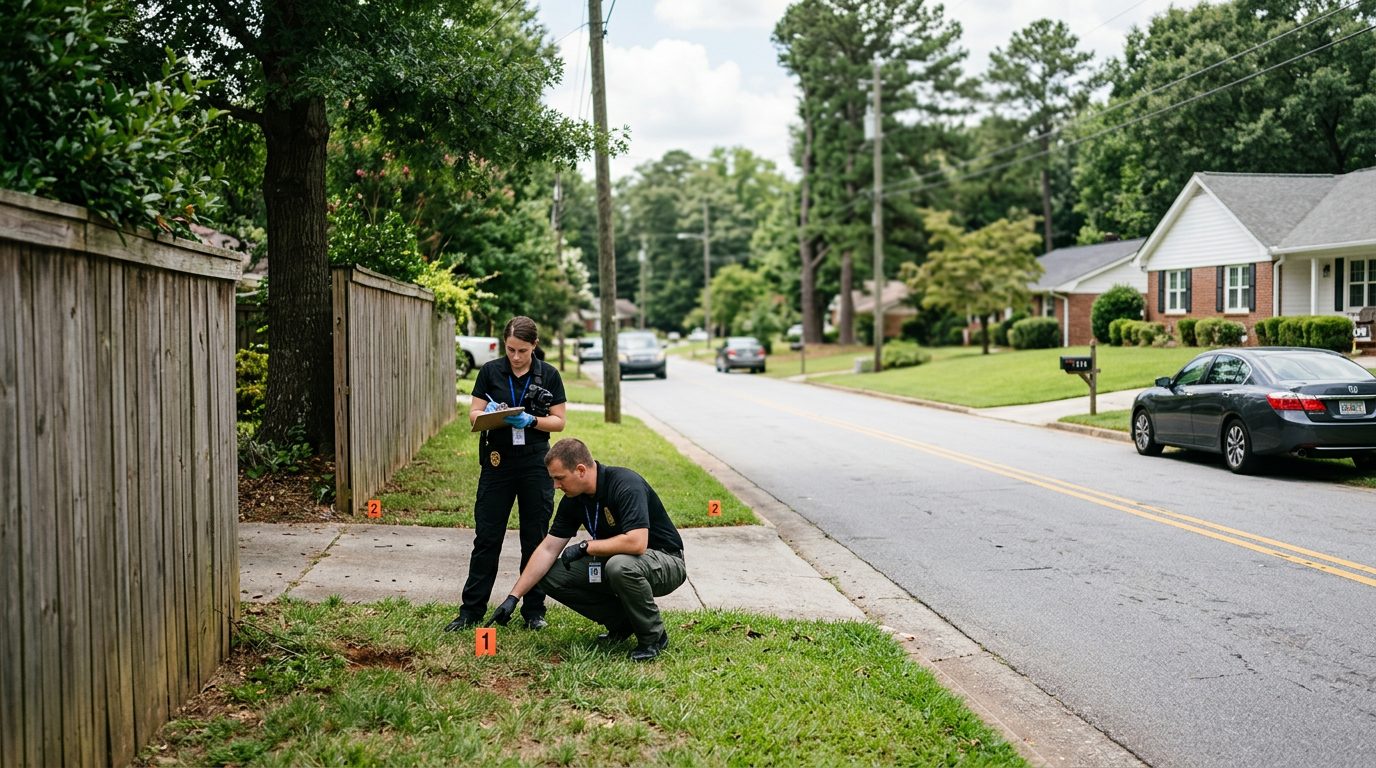
Why the difference matters after an injury on someone else’s land in Georgia
The difference matters because Georgia’s rule asks about the place, the people on it, and who controlled it. Under O.C.G.A. § 51-3-1, an owner or occupier who invites people onto the premises for a lawful purpose must use ordinary care. That care covers keeping the premises and approaches safe. Approaches are the paths in and out, such as walkways and steps.
Status matters too. A licensee is a person who is neither a customer, a servant, nor a trespasser, does not stand in any contractual relation with the owner of the premises, and is permitted, expressly or impliedly, to go on the premises merely for their own interests, convenience, or gratification, as described in O.C.G.A. § 51-3-2. An owner is liable to a licensee only for willful or wanton injury.
Dog bites raise the same questions. Under O.C.G.A. § 51-2-7, an owner or keeper of a vicious or dangerous animal who causes injury through careless management or by allowing the animal to go at liberty may be liable. The injured person must not have provoked the bite.
Injury claims depend on provocation. Under O.C.G.A. § 51-2-7, an owner or keeper of a vicious or dangerous animal who, by careless management or by allowing the animal to go at liberty, causes injury may be liable in damages to a person who does not provoke the injury by his own act. Under O.C.G.A. § 51-12-33, damages drop in proportion to the injured person’s share of fault. A person who is 50 percent or more responsible may not receive any damages.
Write down where it happened, who owned or ran the place, and what you saw. For a broader overview, see our premises liability guide for Georgia.
Premises liability and personal liability are not the same thing
Premises liability is a legal duty tied to a place. Personal liability is an insurance term for certain claims against the person named on a policy.
Premises liability asks what happened on the property and whether ordinary care was used. The focus is the condition of the place.
Personal liability coverage is about who is insured. It does not describe the condition of a location. A policy can use both terms in the same document, which is why readers mix them up.
The policy’s definitions section shows how that insurer uses each term. Coverage depends on the policy’s wording.
Talking with our team about what happened to you
Talking with our team is a good next step if you were hurt on someone else’s property. Maybe you’re reading this for a parent who slipped on a store’s wet floor. Maybe a friend was bitten in a yard, or a family member died after a property condition. Or a lease or policy used a word you didn’t understand.
Is premises the same as property?
No, not exactly. Premises is a specific place, usually land and buildings. Property is the broader idea of ownership.
Does premise mean property?
No. A premise is an idea or starting point. Premises can refer to property, but only a specific place.
What is another word for premises?
Location, site, or grounds can fit some sentences. In an injury question, the legal meaning is the exact spot where the condition existed.
Is premises liability the same as personal liability?
No. Premises liability concerns a duty tied to a place. Personal liability is an insurance term for certain claims against a person.
If a fall or bite left you or someone close to you hurt on another person’s property, contact our team for a free, confidential first consultation with no obligation to continue.
Disclaimer: This page is general information, not legal advice. Peter F. Jaraysi is the responsible lawyer for this page at Slam Dunk Attorney in Duluth, Georgia. Contact details are on our contact page.
Why start with a conversation
Confidential from the start
Your first conversation with our team is private, so you can share what happened openly.
A free first consultation
Your initial consultation is free, confidential, and comes with no obligation to continue.
Plain-language answers
We explain the legal terms and steps in everyday language, so you know what to expect.
Call for a free case review
Reach out by phone to talk through the facts of your situation with our team.
Key tip: preserve what you can
Conditions on a property can change quickly. If you are able, take photos of the spot and any hazard, note the names of witnesses, and keep copies of incident reports and medical records. Write down what you remember while it is still fresh.
Common places where premises claims arise
Retail stores and shopping centers
Wet floors, uneven flooring, and poorly marked hazards in busy public spaces.
Apartments and residential buildings
Broken stairs, railings, lighting, and other conditions in shared areas.
Short-term and vacation rentals
Unsafe features in rentals booked through platforms such as Airbnb and VRBO.
Parking lots and walkways
Potholes, icy surfaces, and obstacles on sidewalks and pathways around a property.