
Nursing Home Abuse Guide
Building a Strong Case: Evidence & Documentation for Nursing Home Abuse
Learn what to document, preserve, and gather if you suspect neglect or abuse at a care facility.
By Peter F. Jaraysi · Published September 23, 2026
Nursing Home Abuse Evidence & Documentation: What Matters and How to Preserve It
If you suspect a loved one is being abused or neglected at a nursing home, the evidence and documentation you gather now can be critical. Medical records, photographs, incident reports, witness statements, and written communications create a record that protects your loved one and supports any decisions you make about next steps. This guide explains what types of nursing home abuse evidence documentation matter most, why they matter, and how to preserve them.
If you're noticing unexplained injuries, behavioral changes, or signs of neglect in a loved one's care, documenting what you observe is your first step—and many families in your situation reach out to discuss what they've found. Talk it through with our team — the first consultation is free, confidential, and carries no obligation.
Why Documentation Matters in Nursing Home Abuse Cases
Abuse and neglect often leave a paper trail and physical evidence that tells a story. When you document what you see and observe, you create a contemporaneous record—one made at the time events happen—that is much harder to dispute later. Documentation supports complaints you file with the facility itself, with your state’s long-term care ombudsman, and with licensing agencies. It also preserves details that fade from memory and protects your loved one if legal action becomes necessary. Early, careful documentation can mean the difference between evidence that stands up under scrutiny and recollections that become fuzzy over time.
Medical Records and Physical Evidence
Medical records form the foundation of nursing home abuse evidence documentation. Request and keep copies of your loved one’s complete medical chart, including nursing notes that describe injuries, falls, medication errors, changes in condition, and any unexplained symptoms. These notes create a timestamped record written by staff at the time events occurred.
Photographs and videos with recorded dates and times provide objective visual proof that words alone cannot capture. Take photos of:
- Unexplained bruises, black eyes, or lacerations
- Pressure ulcers (bedsores), which can indicate prolonged neglect if the resident was not turned regularly or kept clean and dry
- Signs of malnutrition or dehydration (sunken eyes, weight loss, dry skin)
- Poor hygiene or soiled clothing
- Untreated wounds or infections
Medication records are equally important. Compare what the facility’s records say was given against what your loved one actually received. Missed doses, wrong medications, or incorrect dosages are evidence of negligence. Lab results, X-rays, and diagnostic reports showing new injuries or conditions also document harm.
If your loved one was transferred to a hospital or emergency room, obtain those records as well. ER notes often provide an objective, neutral account of injuries and the resident’s condition at the time of arrival.
Incident Reports and Facility Records
Nursing homes are required by federal regulations to maintain written incident or accident reports when residents are injured, fall, or experience concerning events. These reports must be filed and preserved by the facility. Request copies of all incident reports related to your loved one. Even if a report seems incomplete, minimizes what happened, or contains errors, it is discoverable evidence and can be compared against medical records and witness accounts to reveal inconsistencies.
Keep copies of any complaint or grievance forms you filed with the facility. These create a written record of when you raised concerns and what you reported.
Staffing schedules showing inadequate coverage during times when abuse occurred can establish negligent supervision. Training records—or the absence of training—for staff members involved in alleged abuse demonstrate whether the facility failed to properly prepare its employees. Disciplinary records for the accused staff member show whether the facility knew of prior misconduct and failed to act. Facility policies on abuse prevention and reporting are also relevant; they show what the facility was supposed to do and whether it did so.
Communication and Witness Records
Written communications create a timeline of your concerns and the facility’s response. Save all emails and text messages to facility staff about your loved one’s condition, injuries, or your requests for information. Dated notes of conversations with nurses, aides, or administrators—including what was said and when—document notice to the facility.
Statements from other residents, family members, or visitors who witnessed incidents are powerful evidence. Ask them to write down what they saw, sign and date it, and keep a copy. If a staff member makes an admission or statement about what happened, note the date, time, what was said, and who was present. In Georgia, you may legally record a conversation to which you are a party, but always verify the current law before recording anyone else.
Call logs or records showing when you contacted the facility and what you reported create additional documentation of notice.
Financial and Administrative Records
Billing records showing charges for services not provided (such as therapy sessions that never occurred) are evidence of both negligence and potential exploitation. Insurance claims or denials related to injuries or emergency treatment document the severity and cost of harm. Records of unauthorized charges, unusual transfers of funds, or financial exploitation are relevant to establishing the facility’s failure to protect your loved one’s assets.
Care plans or contracts that outline what services the facility promised to provide, compared against what actually happened, show breach of duty. State inspection reports and citations against the facility are public documents that can support your understanding of systemic problems or prior violations.
Not sure what your next step is?
Talk it through with our team — the first consultation is free, confidential, and carries no obligation.
Video Surveillance and Environmental Evidence
Security camera footage from common areas and hallways, when available and preserved, can corroborate witness accounts or contradict the facility’s explanation of how an injury occurred. Request video footage in writing and keep records of your requests and the facility’s response. If the facility refuses or claims footage was deleted, document that refusal in writing.
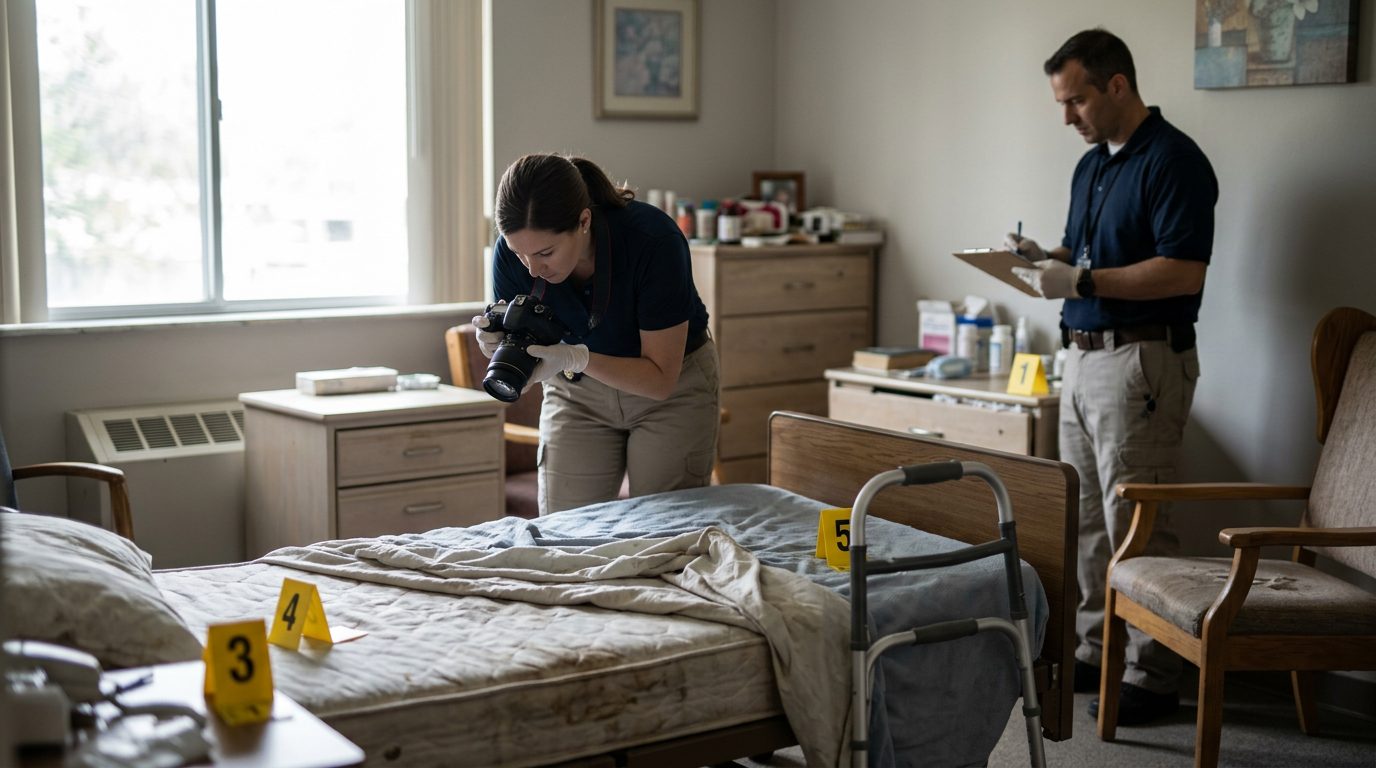
Photographs of unsafe conditions also matter: broken equipment, unsanitary areas, inadequate lighting, locked medication cabinets, or missing safety equipment. Photos of your loved one’s room showing neglect—such as soiled bedding, lack of hygiene supplies, or hazardous conditions—are environmental evidence of neglect.
How to Preserve and Organize Evidence
Start a dated journal now. Write down observations, injuries you notice, behavioral changes, incidents the facility reports, and your conversations with staff. Include the date, time, who was present, and what happened. This journal becomes a contemporaneous record of your concerns.
Request and retain copies of all medical records, facility documents, incident reports, and care plans. Ask for these in writing and keep the requests and responses.
Take photographs and videos with dates and times recorded. Most smartphones automatically timestamp images; verify this feature is enabled. If you take photos on another device, write the date and time on the back or in a separate log.
Save all written communications. Create a folder (digital or physical) for emails, text messages, letters, and notes. Do not alter or destroy any documents, even if they seem incomplete or unfavorable. Original documents are always preferable to copies.
Ask for incident reports in writing. When the facility provides them, keep originals and make backup copies. Store originals in a safe place and keep digital copies in a secure location or cloud backup.
What to Do If You Suspect Abuse
Report your concerns to facility management in writing and keep a copy for yourself. File a written complaint with your state’s long-term care ombudsman, who investigates abuse and neglect complaints independently. Contact your state’s health department or licensing agency to report violations.
Consult with an attorney who handles nursing home abuse cases. An attorney can review the evidence you’ve gathered, advise you on your options, and help you understand whether you may have a legal claim. Time matters in these situations: evidence can be lost or destroyed, and Georgia law imposes time limits on filing claims.
Frequently Asked Questions
What if the nursing home refuses to give me copies of incident reports or medical records?
Federal law gives you the right to access your loved one’s medical records. If the facility refuses, put your request in writing, reference the federal requirement, and consult an attorney if the facility continues to refuse.
Are text messages and emails admissible as evidence?
Yes. Text messages and emails are routinely admitted as evidence in legal proceedings if they are authentic and relevant.
Can medication errors prove nursing home abuse?
Medication errors can prove negligence. Repeated or serious errors, or errors that harm your loved one, may also suggest intentional misconduct or reckless disregard.
How do I know if bedsores indicate neglect?
Pressure ulcers develop when residents are not turned regularly, kept clean and dry, or provided adequate nutrition. They are often a sign of neglect, especially if they develop quickly or worsen despite your loved one being mobile or alert.
What should I do if I witness abuse directly?
Report it immediately to facility management in writing. Contact your state’s ombudsman and health department. Seek medical attention for your loved one if needed. Do not delay—early reporting and documentation are critical.
If you’re noticing unexplained injuries, behavioral changes, or signs of neglect in a loved one’s care at a nursing home in Georgia, the documentation you gather now becomes the foundation for understanding what happened and what options may be available. Many families in your situation have reached out to discuss the evidence they’ve collected and to learn what a potential claim might look like. Contact us for a free case review—we serve families across metro Atlanta and Georgia who are concerned about nursing home abuse and neglect.
Act Quickly on Documentation
Evidence can disappear or be altered. If you suspect abuse or neglect, start documenting immediately—photographs, dates, times, and witness names. Preserve any communications with the facility, and request medical records and incident reports in writing as soon as possible.
Key Evidence to Gather
Medical Records & Incident Reports
Request your loved one's complete medical file, including incident reports, medication logs, and care plans. Federal law gives you the right to these records. If the facility refuses, document the refusal in writing and note the date and staff member's name.
Photographs & Video
Take clear photos or video of injuries, living conditions, or safety hazards. Include the date, time, and location. Unexplained bruises, pressure sores, poor sanitation, or inadequate staffing are all relevant. Store copies in a safe place separate from the originals.
Written Communications
Save all emails, text messages, letters, and notes—both your requests to staff and their responses. Document conversations by writing down the date, time, who you spoke with, and what was said. These create a timeline of your concerns and the facility's response.
Witness Statements
Get names and contact information from other residents, family members, staff, or visitors who may have seen abuse or neglect. Ask them to write down what they observed, including dates and details. Witness accounts strengthen your documentation.
What to Document
Changes in Your Loved One's Condition
Note any sudden physical or behavioral changes—weight loss, new injuries, withdrawal, confusion, or emotional distress. Record when these changes began and any explanations (or lack thereof) from staff.
Dates, Times & Details
Specificity matters. Always record the exact date, time of day, location within the facility, and names of staff members involved. Vague recollections are harder to verify; precise details are more credible.
Staff Responses & Complaints
Document how staff reacted when you raised concerns. Did they dismiss you? Become defensive? Fail to follow up? Keep records of formal complaints filed with the facility and any responses you received.
Care Plan & Staffing Issues
Review the care plan and note any gaps between what was promised and what was delivered. Understaffing, lack of training, or failure to follow medical orders are red flags. Document these discrepancies.
Common Questions About Evidence
Are text messages and emails admissible?
Yes. Communications between you and the facility, or between staff members, can be powerful evidence. They show what was said, when, and by whom. Keep originals and back them up.
What if the facility won't release records?
Federal law gives you the right to your loved one's medical records. Submit your request in writing, reference the federal requirement, and keep a copy for your records. If the facility continues to refuse, that refusal itself is evidence of obstruction.
Can I record conversations with staff?
Georgia law allows you to record a conversation if you are a party to it. However, the rules are complex and context-dependent. Consult an attorney about what is permissible in your situation before recording.
How do I preserve evidence?
Make copies of all documents and store them in multiple safe locations—at home, in cloud storage, or with a trusted family member. Create a timeline document that organizes all evidence by date. This prevents loss and shows you've been thorough.
Don't Wait—Preserve Evidence Now
Nursing homes may alter, destroy, or hide records if they suspect a claim. The sooner you document and preserve evidence, the stronger your case. An attorney can advise you on what to gather and how to protect it.