
Nursing Home Abuse | Georgia
Understanding the Nursing Home Abuse Investigation Process in Georgia
When you suspect abuse or neglect at a care facility, Georgia's investigative system is designed to protect vulnerable residents. Here's how it works.
By Peter F. Jaraysi · Published September 24, 2026
How Nursing Home Abuse Cases Are Investigated: The Step-by-Step Process
When you suspect your loved one is being abused or neglected in a nursing home, understanding how investigations actually work can help you feel more confident about reporting your concerns and knowing what to expect next. The nursing home abuse investigation process in Georgia follows a structured path—from the initial report through evidence gathering, expert review, and regulatory findings—designed to uncover what happened and hold facilities accountable.
If you're concerned your loved one has been harmed in a nursing home, understanding this process is the first step—and many families in your situation reach out to discuss what they've observed and what comes next. Talk it through with our team — the first consultation is free, confidential, and carries no obligation.
What Triggers a Nursing Home Abuse Investigation
A nursing home abuse investigation begins when someone reports suspected harm to the right authority. Reports can come from family members, facility staff, medical professionals, state agencies, or any concerned person who witnesses or suspects abuse or neglect.
Not every concern triggers a formal investigation immediately. When a report is filed, investigators first assess whether it meets the threshold for a full investigation. They consider the type and severity of the alleged harm, the vulnerability of the resident, and whether there’s enough information to warrant an on-site visit.
Georgia’s Adult Protective Services (APS) and the Department of Community Health (DCH) are responsible for investigating reports of abuse, neglect, exploitation, and mistreatment in long-term care facilities. The types of harm that prompt investigation include:
- Physical abuse – hitting, pushing, or using excessive force
- Neglect – failure to provide food, medication, hygiene, or basic care
- Emotional abuse – threats, intimidation, or isolation
- Financial exploitation – unauthorized use of a resident’s money or property
- Sexual abuse – any unwanted sexual contact or coercion
The National Institute on Aging identifies these five categories as distinct forms of institutional harm that warrant investigation and intervention.
The Initial Report and Documentation Phase
When a report is filed, investigators begin documenting everything. They record the reporter’s name, the date and time of the report, the specific allegations, and any immediate observations or concerns. This documentation creates the foundation for the entire investigation.
The facility is notified that a report has been made and that an investigation will occur. By law, the facility must preserve evidence, prevent further harm to the resident, and cooperate with investigators. Facility staff are required to maintain all relevant records—incident reports, medical documentation, medication logs, and care plans—without alteration.
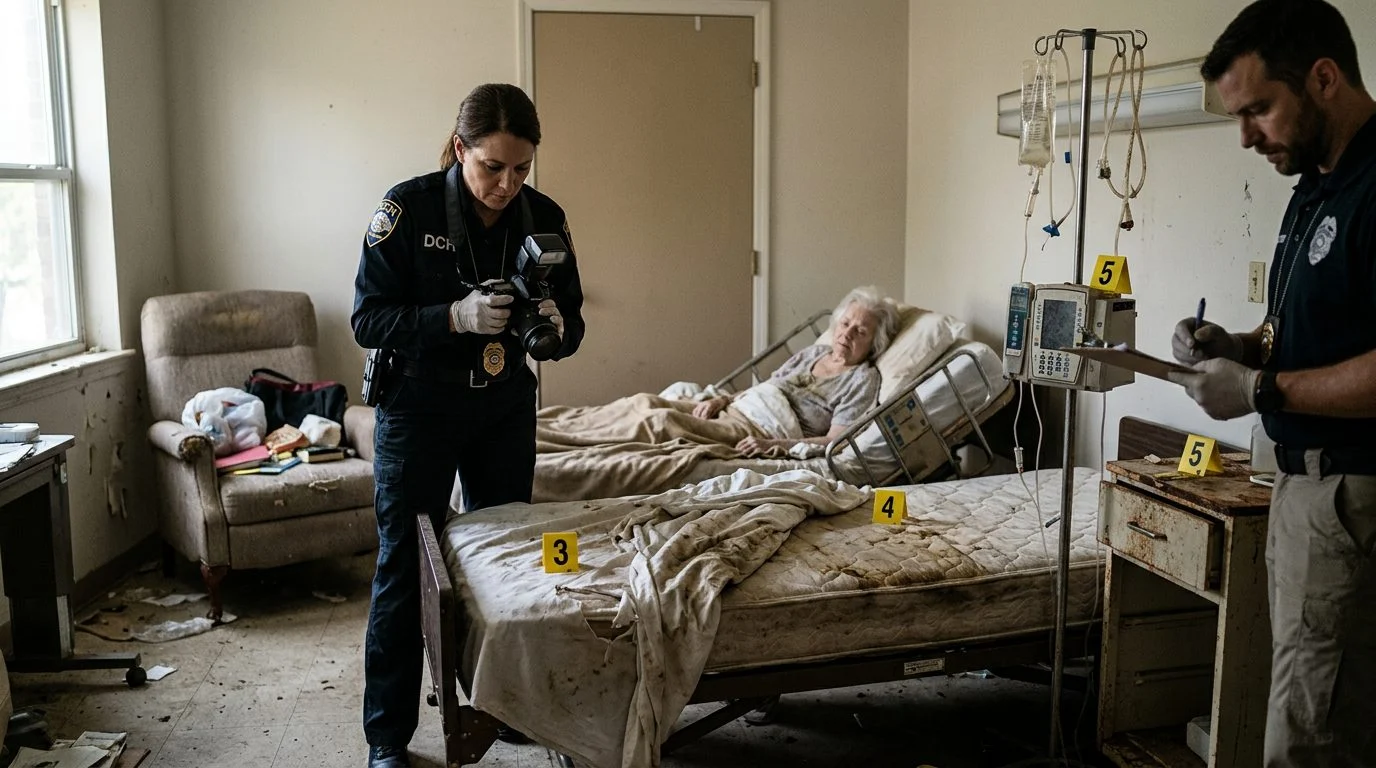
Investigators take steps to preserve physical evidence immediately. This might include photographing visible injuries, securing video footage from facility cameras, or ensuring that medical records and incident reports are not lost or destroyed. The goal is to capture the condition of the resident and the facility as they exist at the time of the report, before anything can be changed or removed.
On-Site Investigation and Interviews
Investigators then conduct an on-site visit to the facility. During this visit, they interview the alleged victim (if the resident is able to communicate), speak with staff members and administrators, observe the facility’s conditions and care practices, and examine medical records and documentation.
Interviews with residents are conducted privately, away from staff, to allow them to speak freely without fear of retaliation. Investigators ask detailed questions about what happened, when it occurred, who was involved, and whether the resident has reported concerns before.
Staff members and administrators are also interviewed. Investigators ask about the incident, the resident’s care plan, staffing levels, training records, and the facility’s policies for preventing and reporting abuse. Inconsistencies between what staff say and what evidence shows can be a significant red flag.
A medical examination of the alleged victim is a critical part of the investigation. A physician or nurse documents any injuries, their location and appearance, and whether the injuries are consistent with the resident’s explanation or the facility’s account of events. Medical professionals also review the resident’s health history, medications, and prior conditions to determine whether new injuries or changes in health are consistent with the alleged abuse or neglect.
Investigators observe the facility’s general conditions, hygiene, staffing presence, and care practices. They look for signs of poor maintenance, inadequate supervision, or systemic failures in care. They also review staffing records to determine whether the facility had enough trained staff on duty at the time of the alleged incident.
Evidence Collection and Medical Records Review
Investigators gather multiple types of evidence to build a complete picture of what occurred. This includes:
- Photographs and video of injuries, facility conditions, and relevant areas
- Medical records documenting the resident’s health, injuries, and treatment
- Incident reports filed by facility staff
- Medication administration records showing what medications were given, when, and by whom
- Care plans outlining the resident’s needs and how the facility agreed to meet them
- Staffing records showing who was working and their qualifications
- Prior complaints or reports involving the facility or staff member
- Financial records in cases of suspected exploitation
All physical evidence is handled using chain of custody procedures. This means each item is documented, labeled, and tracked to show who collected it, when, and how it was stored. Chain of custody is essential because it ensures that evidence remains admissible and credible if the case later moves to civil litigation or regulatory proceedings.
Medical records receive special attention. Investigators compare the resident’s documented medical history, current medications, and recent health changes against the facility’s account of events. If a resident has unexplained injuries, sudden weight loss, or signs of malnutrition despite being in the facility’s care, investigators ask why—and whether the facility’s explanation is supported by documentation.
Expert Review and Analysis
Once evidence is collected, medical professionals and nursing experts review it to assess whether the facility’s account is consistent with what the evidence shows. These experts evaluate injuries against nursing standards and the facility’s own care plans.
For example, if a facility reports that a resident fell and sustained a bruise, but the resident shows multiple injuries in different stages of healing, or the injuries don’t match a fall pattern, an expert may conclude that the facility’s explanation is inconsistent with the evidence. Similarly, if a resident developed severe pressure sores (bedsores) while in the facility’s care, experts assess whether the facility followed proper protocols for wound prevention and treatment.
Experts also reconstruct timelines from medical records, incident reports, and witness statements. They identify patterns—such as repeated injuries, consistent complaints about a particular staff member, or a pattern of neglect across multiple residents—that suggest systemic failure rather than isolated incident.
Not sure what your next step is?
Talk it through with our team — the first consultation is free, confidential, and carries no obligation.
Investigation Findings and Regulatory Action
After the investigation is complete, findings are documented in a formal report. The report concludes whether abuse or neglect occurred, identifies the responsible parties, and describes the specific violations of state regulations or facility policies.
If violations are substantiated, the facility may face regulatory sanctions. These can include:
- Citations documenting the violation
- Fines imposed by the state
- License restrictions limiting the facility’s operations or requiring corrective action
- Facility closure in cases of severe or repeated violations
Findings are reported to family members and, in many cases, made available to the public through CMS Care Compare, which displays nursing home inspection ratings and violation histories.
It’s important to understand that regulatory findings and civil legal liability are not the same thing. A facility can be cited for violations without automatically losing a civil lawsuit, and conversely, a civil case can succeed even if the regulatory investigation didn’t substantiate abuse. Regulatory investigators focus on whether violations occurred; civil attorneys must prove negligence, causation, and damages to a higher legal standard.
How a Personal Injury Attorney Uses Investigation Findings
When you work with a personal injury attorney on a nursing home abuse claim, the regulatory investigation becomes a starting point, not the finish line. Attorneys use investigation records to understand what happened, but they also conduct their own independent investigation.
Attorneys retain medical and nursing experts to review the same evidence and provide opinions on whether the facility breached its duty of care. They conduct depositions—formal interviews under oath—with facility staff, administrators, and other witnesses to uncover additional details and identify inconsistencies. Through discovery (the formal process of exchanging evidence before trial), they obtain internal communications, training records, prior complaints, and other documents that may not have been part of the regulatory investigation.
Attorneys use all of this evidence to establish negligence: that the facility owed your loved one a duty of care, breached that duty, and caused harm as a result. Investigation findings often provide strong support for this argument, but the attorney’s job is to build a complete civil case that meets the legal standard for liability.
What You Can Do If You Suspect Nursing Home Abuse
If you believe your loved one is being abused or neglected, take action immediately. First, ensure your loved one’s safety. If there’s immediate danger, contact emergency services. If your loved one is injured or showing signs of harm, seek medical attention and document what you observe—dates, times, descriptions of injuries, and any statements your loved one makes.
Document your own observations carefully. Write down what you see, when you see it, and any conversations with staff or your loved one. Take photographs of injuries or facility conditions if possible. Keep copies of medical records, incident reports, and any written communication with the facility.
Report your concerns to Georgia’s Adult Protective Services or the Department of Community Health. You can also report to facility administrators, but reporting to state authorities ensures an independent investigation.
Finally, consult with a personal injury attorney who handles nursing home abuse cases. An attorney can help you understand your legal options, review investigation findings, and determine whether you have a claim for damages. Many families find that having legal guidance early helps them navigate the investigation process and protect their loved one’s rights.

Frequently Asked Questions
How long does a nursing home abuse investigation take?
Investigations typically take 30 to 90 days, depending on the complexity of the allegations and the availability of evidence and witnesses.
Can I access the results of the investigation?
Yes, you can request investigation findings from Adult Protective Services or the Department of Community Health, and many findings are public record.
What if the investigation doesn’t substantiate abuse—does that mean I don’t have a legal claim?
No. Regulatory investigations and civil cases use different standards of proof. You may have a valid civil claim even if the regulatory investigation didn’t substantiate abuse, and an attorney can help you evaluate your options.
What should I do while the investigation is ongoing?
Continue documenting your observations, maintain copies of all medical records and communications, and keep your loved one safe. Avoid discussing the investigation with facility staff or other residents’ families, as this can compromise the investigation.
Do I need a lawyer to file a report with state authorities?
No. You can report suspected abuse directly to Adult Protective Services or the Department of Community Health without an attorney. However, consulting an attorney early can help you understand your full legal options.
If you’re concerned that your loved one has suffered abuse or neglect in a nursing home, you don’t have to navigate this process alone. Many families in Georgia face these difficult situations and reach out to understand what happened, what the investigation means, and what legal options are available to them. We’re here to listen, answer your questions, and help you determine the best path forward for your loved one’s safety and your family’s peace of mind.
How Georgia Investigates Nursing Home Abuse
Who Investigates
Adult Protective Services (APS) and the Department of Community Health (DCH) are the primary agencies responsible for investigating reports of abuse, neglect, exploitation, and mistreatment in nursing homes and long-term care facilities across Georgia.
How to Report
Reports can be made to APS, DCH, or directly to local law enforcement. You can report suspected abuse anonymously. Facilities are required by law to report suspected abuse internally and to state authorities.
Investigation Timeline
Investigations typically take 30 to 90 days, depending on the complexity of the allegations, the number of witnesses, and the availability of evidence. Urgent cases involving immediate danger may be prioritized.
Access to Results
You can request investigation findings from APS or DCH. These reports are public record in many cases, though some details may be redacted to protect privacy or ongoing legal proceedings.
What Happens During an Investigation
Initial Assessment
Investigators review the report, gather basic information about the allegation, and determine the urgency. High-risk situations receive immediate attention.
Interviews and Evidence
Investigators interview the resident, family members, facility staff, and witnesses. They review medical records, care plans, incident reports, and facility documentation.
Medical Evaluation
If physical or sexual abuse is suspected, the resident may receive a medical examination to document injuries and gather evidence.
Facility Review
Investigators inspect the facility for safety violations, staffing issues, and compliance with care standards that may have contributed to the abuse.
Findings and Report
The investigator prepares a report with findings: substantiated, unsubstantiated, or inconclusive. The facility and family are notified of the outcome.
Next Steps
Substantiated findings may lead to facility sanctions, corrective action plans, criminal charges, or civil liability depending on the severity and nature of the abuse.
Important: Your Rights as a Family Member
You have the right to report suspected abuse without fear of retaliation. Facilities are prohibited from punishing residents or families for reporting concerns. If you believe a facility is retaliating, report it immediately to the investigating agency or law enforcement.
Common Types of Nursing Home Abuse
Physical Abuse
Hitting, pushing, restraining, or any use of force that causes injury or pain to a resident.
Neglect
Failure to provide adequate food, water, medication, hygiene, medical care, or supervision.
Emotional Abuse
Verbal harassment, intimidation, humiliation, or isolation intended to cause psychological harm.
Financial Exploitation
Unauthorized use of a resident's money, property, or assets, or coercion to sign documents or change a will.
Sexual Abuse
Any non-consensual sexual contact or activity involving a resident who cannot consent.
Medication Errors
Administering wrong medications, wrong doses, or failing to administer prescribed medications, resulting in harm.
What You Should Do If You Suspect Abuse
Report Immediately
Contact Adult Protective Services, the Department of Community Health, or local law enforcement as soon as you suspect abuse. Do not delay—early reporting protects the resident.
Document Everything
Write down dates, times, what you observed, injuries, behavioral changes, and names of witnesses. Take photos of visible injuries if safe to do so. Keep records of all communications with the facility.
Talk to the Resident
If the resident is able to communicate, ask them directly about their care and any concerning incidents. Listen carefully and take their concerns seriously.
Preserve Evidence
Keep medical records, facility documents, incident reports, and any correspondence. Do not allow the facility to destroy or alter records.
Seek Legal Guidance
A personal injury attorney can help you understand your rights, navigate the investigation process, and pursue compensation if your loved one has been harmed.
Beyond the Investigation: Your Legal Options
A state investigation protects the resident and may result in facility sanctions, but it does not automatically compensate your family for harm, medical expenses, or suffering. You may have the right to pursue a civil claim against the facility or responsible parties.