
Nursing Home Abuse | Georgia
How Hard Is It to Sue a Nursing Home for Neglect?
Every case is different. Here is what makes these claims difficult, what families often ask first, and how a free consultation can help you understand your options.
By Peter F. Jaraysi · Published November 8, 2026
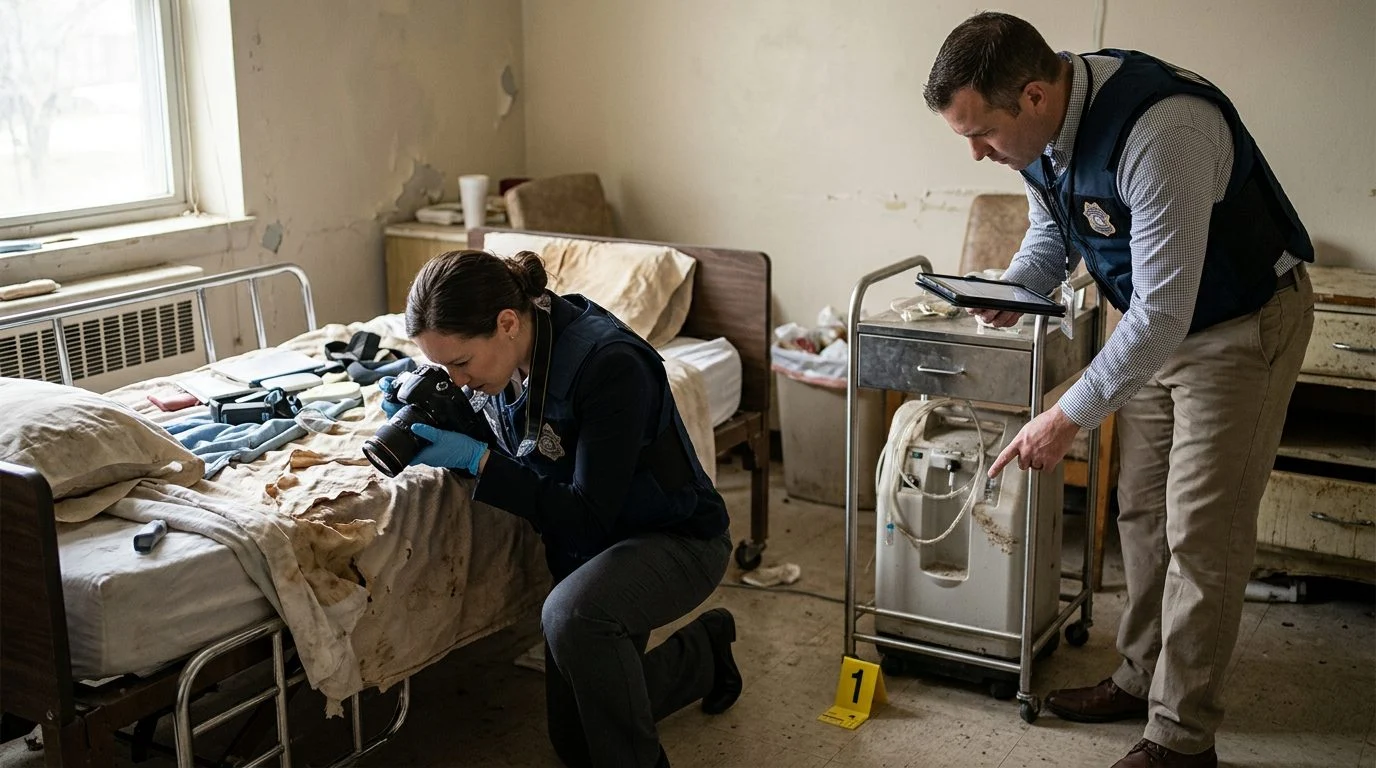
It can be hard to sue a nursing home for neglect, and how hard depends on the facts of each case. Most of the work is proof. You need the records, you need to show the facility’s care fell short, and you need to meet strict procedural steps. A difficult case is not the same as a weak one.
If you’re asking this question, you may be worried about a parent or loved one who lives in a facility. Something may have changed. The explanations you’ve heard may not add up. This page explains what makes these claims harder, what proof usually matters, the deadlines that apply in Georgia, and what a claim can involve.
Why Suing a Nursing Home Feels Different From Other Injury Claims
Suing a nursing home is different because the person who was hurt often can’t easily explain what happened. Many residents are frail, have memory problems, or can’t speak clearly about their care.
That puts the burden on others. Family members, visitors, and staff often become the first witnesses. A daughter who sees new bruises on a visit, or a son who notices his father’s weight dropping, may be the first to raise a concern. Those observations matter, but they work best when records back them up.
Set your expectations early. How hard a case is depends on the injury, the records available, and how the facility responds. Learning the common steps and hurdles can help you ask better questions.
If your loved one's condition has changed and the explanations don't add up, you don't have to sort out your options alone, so reach out to our team for a free, confidential first consultation. Talk it through with our team — the first consultation is free, confidential, and carries no obligation.
What Counts as Nursing Home Neglect
Nursing home neglect is a failure to give a resident the care, supervision, or safety they need, and that failure causes harm. Georgia law sets the baseline. Under O.C.G.A. § 31-8-108, each resident must receive care that is adequate and appropriate. That care must be given with reasonable care and skill and in line with applicable laws. The resident also has a right to personal dignity and privacy.
Neglect usually falls into three groups.
Neglect of basic needs. This includes not enough food or fluids, poor hygiene, untreated bedsores, and not helping a resident to the bathroom or with safe movement.
Neglect of safety. Falls, wandering out of the building, unsafe equipment, and hazards such as wet floors or broken handrails all fall here.
Medical neglect. Missed or late medications, ignored changes in condition, and a failure to call a physician are common examples.
A single incident can count. So can a pattern that builds over months. A bad outcome alone, though, does not prove neglect. The real question is whether the facility’s care fell below what was reasonable for that resident.
Why These Cases Take More Work Than Many People Expect
These cases take more work because the key records sit with the facility. The facility also holds its own staff statements and internal reports. Getting early access to those documents can take time and persistence.
Causation is often disputed. The facility may argue that a resident’s decline came from an existing illness, not from neglect. Connecting the care failure to the harm is a central task.
Several parties may also be involved. The facility, its owner or management company, staffing contractors, and individual employees can each play a role. Georgia’s apportionment rule matters here. If the injured person was partly at fault, their damages are reduced by that share. They recover nothing if they are 50 percent or more responsible (O.C.G.A. § 51-12-33; Quynn v. Hulsey (2020)). Each liable person pays only its own share.
Some cases are well documented from the start. Others need a longer investigation before anyone can judge them.
Evidence Commonly Needed to Prove a Nursing Home Claim
The strongest cases usually rest on medical records, the resident’s care plan, and dated observations from people who visited. Georgia law gives residents real access to their records. Under O.C.G.A. § 31-8-108, a resident may inspect and receive a copy of their medical records unless medically contraindicated. The facility may charge only a reasonable fee, not more than its actual cost.
Useful evidence often includes:
- Medical records from before and after the incident, including nursing notes, physician orders, and hospital discharge summaries.
- The care plan and every change made to it. A resident or guardian has a right to take part in the overall planning of the resident’s care and treatment, and shall be informed of this right each time a substantial change in the treatment plan is made.
- Incident reports and falls logs.
- Photos and dated notes from family visits, showing changes in weight, skin condition, hygiene, or mood.
- State inspection and survey reports about the facility.
- Names and contact details of other families, visitors, or staff who saw conditions.
Dated notes carry weight because memory fades. A note written the same day is far easier to rely on than a recollection months later.
Deadlines, Admission Agreements, and Other Procedural Hurdles
Georgia’s general deadline for injury claims is two years. Under O.C.G.A. § 9-3-33, actions for injuries to the person must generally be brought within two years after the right of action accrues, except for actions involving loss of consortium, which must be brought within four years after the right of action accrues. That is why early action matters.
Some residents face different timing. Under O.C.G.A. § 9-3-90, a person who was legally incompetent because of intellectual disability or mental illness when the claim arose gets the same time after the disability is removed. Timing questions like this are case-specific, so review them promptly.
Admission paperwork is another hurdle. Some facilities use admission agreements with an arbitration clause, which can move a dispute out of court. Whether a clause applies and is enforceable depends on the facts, so raise the question early.
Claims against licensed health care facilities can also require an early sworn statement. Under O.C.G.A. § 9-11-9.1, in a professional malpractice action against a licensed health care facility based on the action or inaction of a listed licensed health care professional, the plaintiff must file with the complaint an affidavit from a qualified person competent to testify. That affidavit must come from a qualified professional and set out at least one negligent act or omission and the factual basis for it. The statute has a limited exception for cases where the limitation period will expire, or there is a good faith basis to believe it will expire, within ten days of filing the complaint and the plaintiff has alleged that an affidavit from a qualified person could not be prepared; the plaintiff must then file with the complaint an attorney’s affidavit swearing that the law firm was not retained more than 90 days before the limitation period expires, and must file the affidavit from a qualified person within 45 days after filing the complaint, or the complaint shall be dismissed. These steps add time, so plan for them.
Who Can Bring a Claim When Neglect Leads to Injury or Death
A resident who was harmed can bring their own claim while they are able to. Under O.C.G.A. § 31-8-126, a person who was harmed because a long-term care facility violated or failed to provide a right has a cause of action against the facility for damages. That person does not have to exhaust administrative relief first.
When a resident has died, the rules change. Under O.C.G.A. § 51-4-2, a surviving spouse, or if there is no surviving spouse, a child or children, may recover for the homicide of the spouse or parent the full value of the life of the decedent, as shown by the evidence. If there is no surviving spouse, a child or children may bring it. If no one in those groups is entitled to sue, the administrator or executor of the estate may bring the action for the next of kin under O.C.G.A. § 51-4-5.
A family member acting for a resident may need legal authority, such as a power of attorney or a court appointment. The right person to bring a claim turns on the family relationship and the situation.
Not sure what your next step is?
Talk it through with our team — the first consultation is free, confidential, and carries no obligation.
What Compensation May Cover and What Affects It
A claim may seek damages for losses the law recognizes. Georgia separates general damages from special damages. Under O.C.G.A. § 51-12-2, general damages are presumed to flow from a wrong and need no proof of amount. Special damages actually flow from the wrong and must be proved.
Medical costs are a common special damage. Under O.C.G.A. § 51-12-1.1, medical and healthcare expenses are limited to the reasonable value of medically necessary care. In a wrongful death case, the law looks to the full value of the decedent’s life, as shown by the evidence.
Punitive damages work differently. Under O.C.G.A. § 51-12-5.1, they can be awarded only in tort actions where clear and convincing evidence shows willful misconduct, malice, fraud, wantonness, oppression, or that entire want of care which would raise the presumption of conscious indifference to consequences. They exist to punish or deter a defendant, not to compensate the person harmed.
There is no standard payment for neglect. The value of a claim turns on the injury, the treatment needed, the resident’s circumstances, and the proof. Be cautious with settlement averages you see online. They describe other cases, not yours.
Ask how case costs are handled before you agree to anything.
The Typical Stages of a Nursing Home Lawsuit
Most nursing home cases move through the same general stages, though timing varies. A claim usually starts with a review and moves toward a formal lawsuit only when the facts support one.
- Initial review. The lawyer gathers the resident’s records, reviews the incident, and identifies the parties who may be responsible.
- Investigation and demand. Records are requested. Where it makes sense, a claim is presented to the facility or its insurer.
- Filing and discovery. A formal complaint is filed. Both sides exchange written questions, take depositions from staff and administrators, and review internal documents.
- Resolution. Settlement talks, mediation, or trial are the possible endings. Not every case reaches the same stage.
The length of each stage can differ widely. It depends on how much records-gathering takes, how the parties respond, and the court’s schedule.

Next Steps If You Suspect Neglect at a Georgia Facility
If you suspect neglect, start by writing things down. Note dates, what you saw, staff names, and what you were told. Keep copies of records and letters you receive.
You can also report concerns to the state. See the Georgia DCH complaint process. A regulatory complaint is separate from a damages claim.
Is it hard to win a lawsuit against a nursing home?
Some cases are harder than others. Proof, records, and causation questions drive most of the difficulty. No one can predict a result from general information.
What is the time limit to sue a nursing home in Georgia?
For most injury claims, Georgia’s general deadline is two years. Other rules can apply, so review your situation promptly.
What qualifies as nursing home neglect?
Neglect is a failure to provide needed care, supervision, or safety that causes harm. Untreated bedsores, preventable falls, and missed medications are common examples.
Our team at Slam Dunk Attorney understands that a loved one’s care is a hard thing to face. If your family’s concerns are growing, you don’t have to figure out the next steps alone. Contact us for a free, confidential first consultation, which carries no obligation to continue, through the Slam Dunk Attorney contact page.
Attorney advertising. This page is general information and does not promise or predict any outcome. Responsible lawyer: Peter F. Jaraysi, Slam Dunk Attorney, Duluth, Georgia. Contact: Slam Dunk Attorney contact page.
What Usually Makes These Cases Harder
Records
Medical charts, staffing logs, and care plans are often needed to show what happened. Facilities control much of this paperwork, and obtaining it can take time.
Proving cause
Connecting a resident's injury or decline to a specific failure of care can require medical review and careful analysis of the timeline.
Timing of evidence
Bedsores, falls, and changes in health can be hard to document after the fact, which is why early review of the facts matters.
Residents who cannot speak for themselves
Many residents have dementia, cognitive impairment, or medical conditions that make it hard to describe what happened to them.
Important to Know
No one can predict the result of a claim from general information. Every situation depends on its own facts, records, and medical history. Acting early helps preserve evidence, but waiting can make it harder to gather what is needed.
Questions Families Often Ask
What is neglect in a nursing home?
Neglect can include failure to prevent falls, bedsores, dehydration, malnutrition, medication errors, or failure to respond to a resident's changing medical needs.
Do I need to prove the facility was careless?
A claim generally requires showing that the care fell short and that the shortfall caused harm. Medical and facility records often play a central role.
Can a family member bring a claim?
Depending on the circumstances, a family member or representative may be able to pursue a claim on a resident's behalf. Whether that applies to your situation depends on the facts.
What does a free consultation involve?
Our firm offers a free initial consultation that is confidential and without obligation to continue. We can review the situation and explain the questions to consider.