

Motorcycle Accidents | Duluth, Georgia
Hurt in a Lane-Splitting Crash? Start With the Facts
Fault after a motorcycle crash often turns on small details that are easy to lose. Here is how to think through them.
By Peter F. Jaraysi · Published November 11, 2026
Who’s at fault if a motorcycle is lane splitting? The answer depends on the facts of each crash, not on the label alone. Lane splitting doesn’t automatically put blame on the rider or on the driver. In Georgia, fault looks at what each person did, whether they used reasonable care, and how shared fault may affect a claim.
If you were riding, or you’re trying to understand a crash that involved someone you love, the questions can feel urgent. This guide explains how fault is commonly examined, which Georgia rules matter, and where the answers depend on your specific facts. It is general information, not legal advice about your case.
What Lane Splitting Means and Why Fault Questions Come Up
Lane splitting means riding a motorcycle between lanes of traffic moving in the same direction. It often happens between stopped or slow cars.
It’s different from lane sharing, where two motorcycles ride side by side in one lane. Filtering usually means moving forward past stopped traffic, such as at a red light or in a jam. People mix these terms up, so the exact movement matters.
Fault questions come up because drivers may not expect a motorcycle in the space beside them. Traffic moves fast. A lane change, a car door opening, or a sudden stop can happen within seconds.
A label doesn’t decide fault. Courts and insurers may look at where the rider was, how fast they were moving, how the car moved, and whether each person used ordinary care.
If a car moved over while you were riding between lanes, you don't have to sort out who is responsible on your own. Talk with our team about your facts. Talk it through with our team — the first consultation is free, confidential, and carries no obligation.

Is Lane Splitting Legal in Georgia?
This guide doesn’t give a yes-or-no answer on whether lane splitting is legal in Georgia. The rules on lane use and safe driving can change over time. How they apply often depends on the road, the traffic, and what each rider and driver did.
Rules from another state may not match Georgia’s. Be careful with articles written for other states, since their rules may not apply to a Georgia crash.
Even when a rule is clear on paper, the rule alone doesn’t settle fault. Courts look at whether each person acted with reasonable care under the conditions at the time. Because of that, ask a lawyer to check the current Georgia rules against your facts. Write down what you remember about the road, the traffic, and the order of events while it’s still fresh.
How Fault Is Usually Examined After a Crash
Did a person fail to use reasonable care? And did that failure contribute to the crash?
Several kinds of facts often get reviewed:
- The police crash report and any diagram in it
- Witness statements
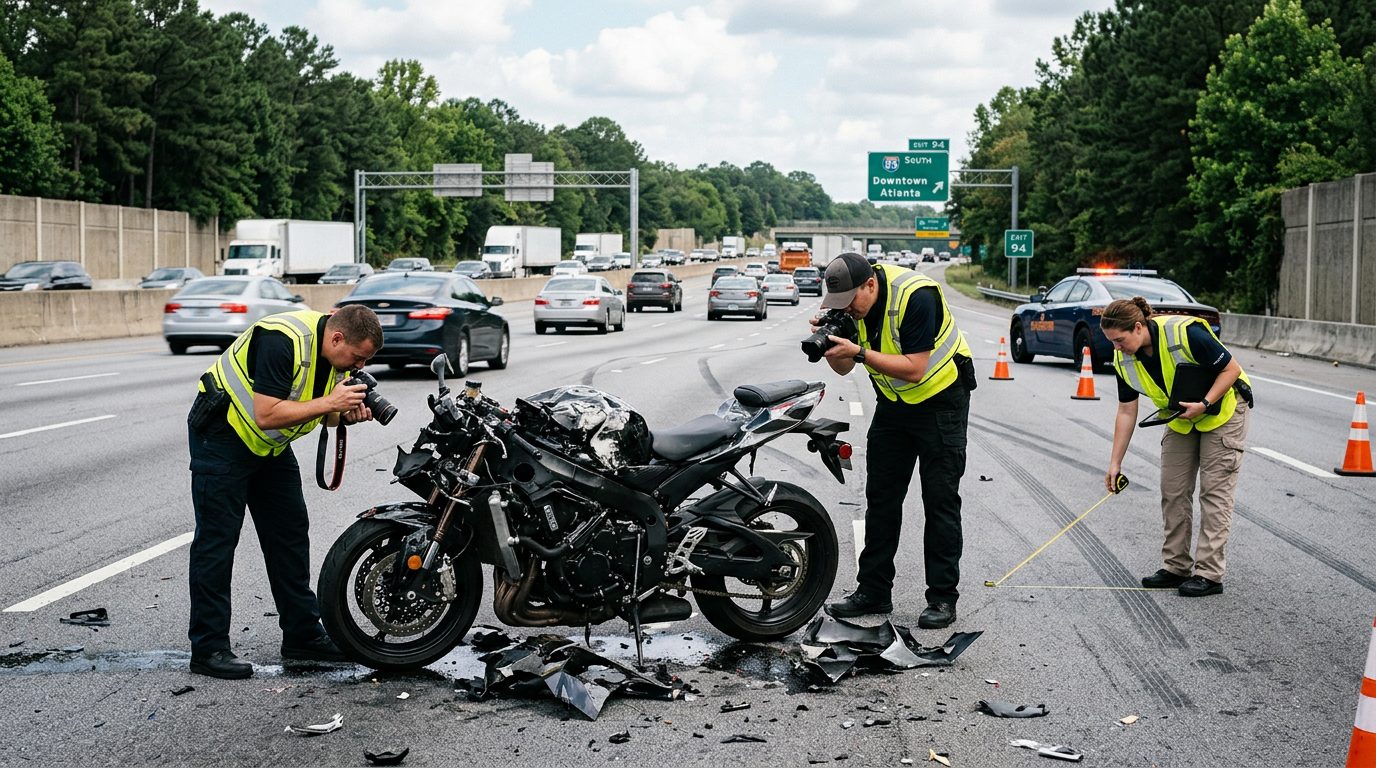
- Where each vehicle was before and after impact, and where the damage sits
- Speed, lane changes, and signals
- Video from dash cameras, nearby businesses, or traffic cameras, if any exists
Each item raises a question. None of them is a final verdict. A police report records what the officer found and what people told the officer, so it may not be the final word on fault. Whether any item matters depends on what it shows and how it fits with everything else.
A common mistake is assuming the other driver saw what you saw. Mirror angles, sightlines, and glare may differ from one position to another.
When a Car Turns, Merges, or Changes Lanes Into a Lane-Splitting Motorcycle
These crashes turn on what each driver could see and did in the seconds before impact. The answer depends on the facts. Questions that often come up include:
- Did the driver check mirrors and blind spots before moving over?
- Was there enough room for the motorcycle to pass safely?
- Was the rider’s speed reasonable for the traffic around them?
- Did either person signal, and was the signal given in time?
- Was the car pulling from a stop, merging from a ramp, or turning at an intersection?
The same facts can lead to different conclusions. Road layout, traffic density, weather, and the available evidence all matter. Two crashes that look alike on the surface can turn out differently after a full review.
Be cautious with blanket rules. Statements such as “the car is always to blame” or “the rider is always to blame” don’t reliably fit a specific crash.
Shared Fault and Georgia’s Comparative Fault Rule
Georgia generally reduces an injured person’s damages by their share of fault. The statute also says that a plaintiff who is 50 percent or more responsible for the injury or damages claimed is not entitled to receive any damages (O.C.G.A. § 51-12-33(g)).
That rule comes from O.C.G.A. § 51-12-33. Under subsection (a), the judge reduces the award in proportion to the injured person’s fault. Under subsection (g), the bar applies at 50 percent or more.
When more than one person contributed, the statute addresses how each share is handled. Under subsection (b), each liable person’s share is generally their own rather than joint.
Georgia also has a separate rule, O.C.G.A. § 51-11-7. In other cases, the defendant is not relieved just because the injured person contributed in some way.
These rules depend on the facts, and exceptions may apply. Before relying on any percentage, talk with a lawyer about your own situation.
Insurance, Deadlines, and Questions to Ask Early
Georgia generally gives two years to file most injury lawsuits, but exceptions exist. The general rule appears in O.C.G.A. § 9-3-33, which also sets a four-year period for certain loss of consortium claims. Your exact deadline depends on your facts, so ask a lawyer promptly.
Insurance claims are handled under the terms of the policies involved. Coverage depends on those policies and the facts of the crash. Uninsured and underinsured motorist coverage may come into play in some crashes, depending on the policies.
Family members should also ask about any deadlines that may apply to their own situation. Bring a short list of questions to a lawyer:
- How might fault be examined based on the facts I can describe?
- Which insurance policies may apply to this crash?
- What deadlines may apply to my situation?
- Which records should I keep so I can answer questions later?
Not sure what your next step is?
Talk it through with our team — the first consultation is free, confidential, and carries no obligation.
Talking Through Your Own Crash
If you’re reading this after a crash, you may be dealing with injuries, a damaged motorcycle, and hard questions about who is responsible. Maybe you were the rider between lanes when a car moved over. Maybe you’re a family member trying to understand how a crash happened to someone you love. Either way, researching this while recovering or grieving is hard.
Our firm is based in Duluth, Georgia, and represents people hurt in motorcycle crashes across metro Atlanta and the rest of Georgia. We can’t promise how your case will turn out. We can talk through your facts in a free consultation. Reach out to our team through the contact page when you’re ready.
Frequently Asked Questions
Is lane splitting legal in Georgia?
This guide doesn’t give a yes-or-no answer. The rules on lane use can change, so ask a lawyer to check them against your facts.
How it applies depends on the facts.
Who is at fault if a car opens its door on a lane-splitting rider?
That depends on the facts, including what each person could see and did before the impact.
How long do you have to sue after a motorcycle crash in Georgia?
Georgia generally sets two years for injury claims, but exceptions exist. Ask a lawyer about your specific deadline.
How Our Team Approaches Your Case
We listen first
Tell us what happened in your own words. Our lawyers will answer your questions in plain language.
We review the evidence
We look at crash reports, photos, witness details, and medical records to understand the facts.
You stay informed
We explain the next steps as we go, so you always know where your case stands.
We focus on injured riders
Our firm has represented people hurt in motorcycle, car, truck, and other accidents across metro Atlanta and Georgia.
Before You Speak With an Insurer
Adjusters may ask for a recorded statement soon after a crash. Consider talking with a lawyer before you give one, and avoid posting details about the crash online.
Steps to Take After a Motorcycle Crash
Get medical care
Even if your injuries seem minor, a medical evaluation creates an important record of what happened.
Document the scene
If you can, photograph the vehicles, the road, traffic signs, and any visible damage.
Gather witness details
Names and phone numbers of people who saw the crash can help clarify how it happened.
Talk with our team
A confidential conversation can help you understand the facts and the next steps for your situation.