
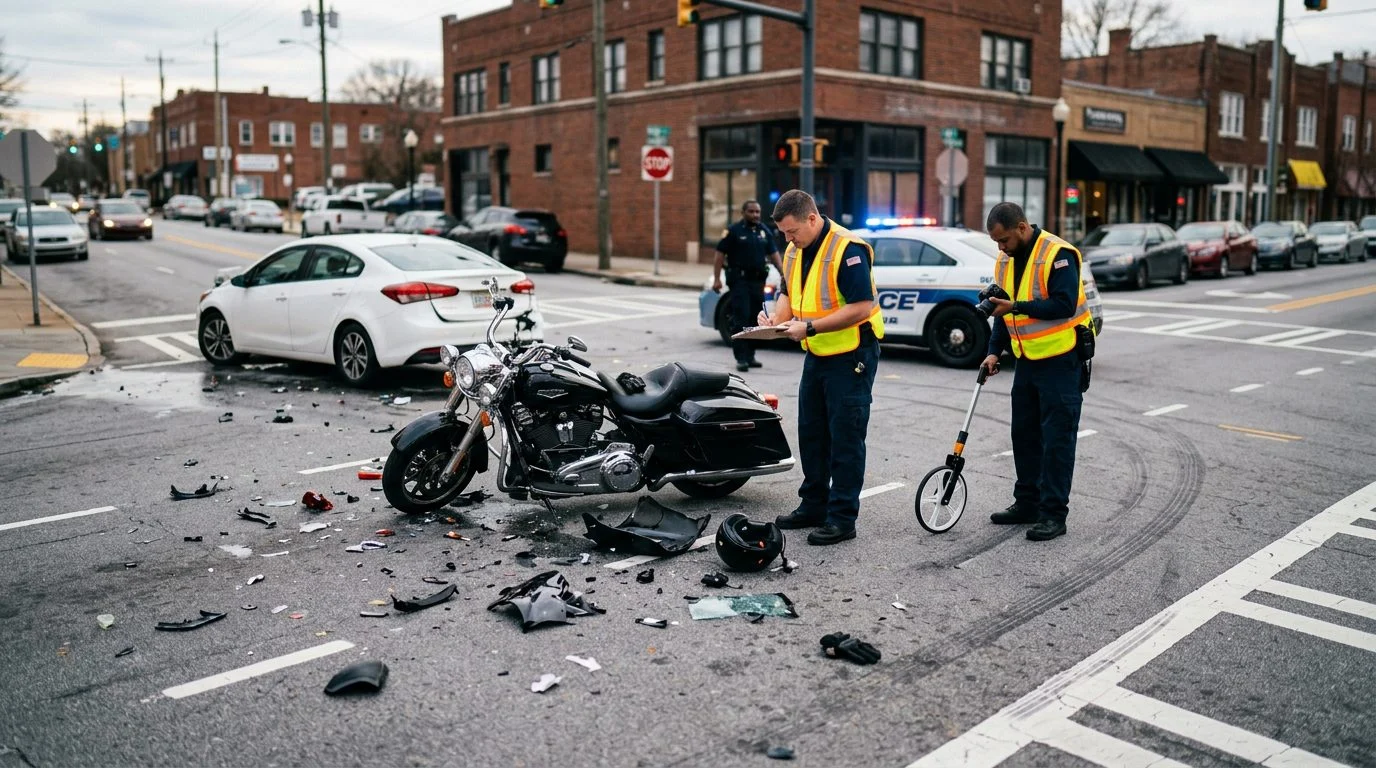
Motorcycle Accidents | Georgia
Common Causes of Motorcycle Accidents in Georgia
Understanding what leads to motorcycle crashes can help riders and their families recognize everyday risks. Slam Dunk Attorney, based in Duluth, Georgia, represents people injured in motorcycle accidents across metro Atlanta and the state.
By Peter F. Jaraysi · Published October 19, 2026
Motorcycle accidents happen for specific reasons—and understanding what caused yours matters. Motorcycles are smaller, less stable, and harder to see than four-wheeled vehicles, which makes them vulnerable to crashes that cars often avoid. After a crash, riders and their families naturally ask: What happened? Who was at fault? That question is the foundation for determining liability and what you may be able to recover.
Why Motorcycle Accidents Happen: The Most Common Causes in Georgia
Motorcycles face distinct hazards on Georgia roads. A driver’s blind spot, a pothole, a moment of distraction—any of these can trigger a serious crash. Understanding the most common causes helps explain how accidents occur and why liability investigation matters.
The causes fall into patterns. Some involve other drivers’ actions: failing to see a motorcycle, turning without checking, or merging without looking. Others involve road conditions: debris, uneven pavement, or poor maintenance. Still others involve the rider’s own speed or choices—but even then, another driver’s negligence may have contributed to the crash.
Georgia follows comparative fault law, which means liability can be shared. A rider who was speeding doesn’t automatically lose the right to recover; the court looks at what each party did and apportions fault accordingly. This is why accident investigation and evidence collection are critical.
Not sure what your next step is?
Talk it through with our team — the first consultation is free, confidential, and carries no obligation.
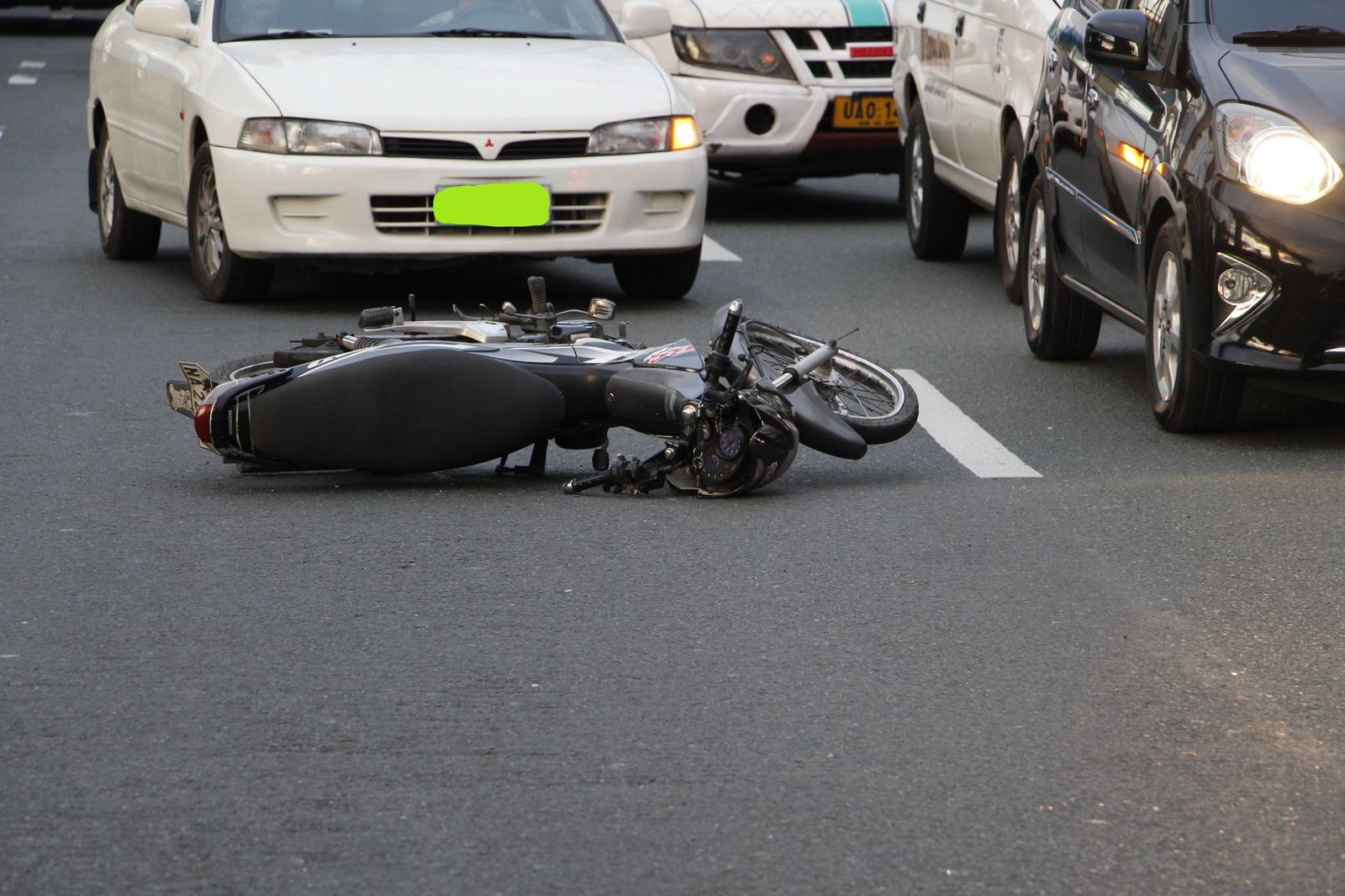
Left-Turn Collisions and Intersection Accidents
Left-turn collisions are among the leading causes of motorcycle accidents. A driver turning left across traffic often fails to see an oncoming motorcycle or misjudges its speed. Motorcycles are smaller and harder to spot, especially in blind spots or at dusk. These crashes typically happen at traffic lights or busy intersections where multiple vehicles converge.
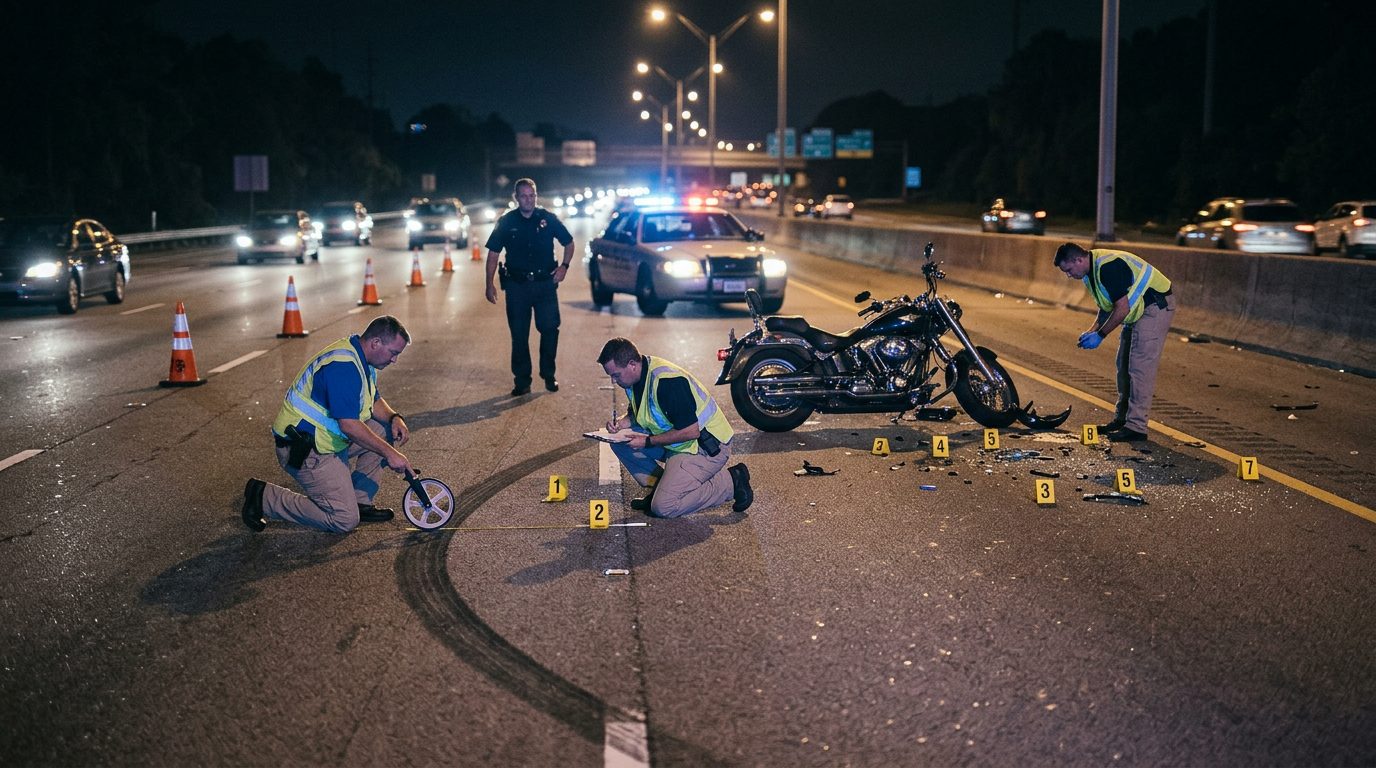
But proving it requires careful documentation: witness statements, traffic camera footage, police reports, and photos of the scene. Insurance companies may dispute who had the right of way, making evidence collection essential.
Lane-Change and Merging Accidents
Highway and interstate accidents during lane changes or merges can be catastrophic. A driver changing lanes or merging onto a highway may not check blind spots thoroughly. A motorcycle in that blind spot is easily missed. These accidents often occur at high speed, which amplifies injury severity.
The fault typically lies with the driver who changed lanes or merged without ensuring the lane was clear. However, proving what the driver saw or should have seen requires evidence: dashcam footage, witness testimony, vehicle data, and accident reconstruction. Speed, lighting conditions, and the motorcycle’s position all matter.
Rear-End Collisions
A vehicle striking a motorcycle from behind often causes severe or catastrophic injury. Riders have minimal protection and may be thrown from the bike. Causes include distracted driving, following too closely, or sudden stops by the motorcycle.
Rear-end collisions are often clearly the fault of the following driver. These cases are frequently straightforward liability-wise, but medical documentation of injuries is crucial for determining compensation.
Road Hazards and Surface Defects
Potholes, gravel, debris, and uneven pavement affect motorcycles far more severely than cars. A hazard a car driver barely notices can cause a motorcycle to lose traction and crash. The rider may be thrown over the handlebars or slide across the pavement with little protection.
Responsibility may lie with the property owner, municipality, or a contractor who failed to maintain the road. If a private property owner failed to clear debris from a parking lot, they may bear responsibility. These cases require documentation of the road condition, evidence that the owner knew or should have known about it, and proof that it caused the crash.
Speeding and Aggressive Riding
Some accidents involve the rider’s own speed or aggressive maneuvers. A rider may have been going too fast for conditions or taking a curve too aggressively. However, even when a rider is speeding, another driver’s negligence may still have caused or contributed to the crash.
Under Georgia’s comparative fault rules, liability can be shared. If a rider was speeding but a driver turned left into their path without looking, both parties may bear some fault. The court reduces damages based on the rider’s percentage of fault, but recovery is still possible—unless the rider is found 50 percent or more responsible.
Not sure what your next step is?
Talk it through with our team — the first consultation is free, confidential, and carries no obligation.
Impaired or Distracted Drivers
Drivers under the influence or distracted by phones are less likely to see a motorcycle. An impaired driver may swerve into a rider’s lane or fail to yield at an intersection. A distracted driver texting or adjusting a GPS may drift across the center line.
Police reports and toxicology results can establish fault in these cases. If the other driver was cited for DUI or reckless driving, that strengthens your claim. These accidents often involve clear negligence and may support a claim for punitive damages—additional damages meant to punish and deter serious misconduct—under Georgia law.
Defective Motorcycles or Parts
Rarely, a motorcycle accident results from a manufacturing defect or failure of brakes, steering, or tires. These cases may involve the manufacturer or seller, not just another driver. A defective part that fails during normal use could be the root cause.
Investigation and technical analysis are needed to prove a defect caused the crash. Maintenance records, technical testimony, and the bike’s history all matter. These cases are more complex than typical accidents but are worth pursuing if evidence supports them.
What Happens After a Motorcycle Accident?
If you’ve been injured in a crash, the immediate steps matter:
- Seek medical attention right away, even if injuries seem minor. Some injuries appear hours or days later.
- Report the accident to police and obtain a copy of the police report. This document is crucial for any claim.
- Document the scene with photos if it’s safe to do so. Capture the vehicles, road conditions, traffic signals, and any debris.
- Collect witness contact information. Eyewitness statements are valuable evidence.
- Notify your insurance company, but be cautious about recorded statements. Stick to the facts and avoid admitting fault.
- Do not accept a settlement offer from the other driver’s insurer without consulting a lawyer. Early offers are often far below what your injuries warrant.
How Long Do I Have to File a Lawsuit?
Under Georgia law, a personal-injury lawsuit for a motorcycle accident must generally be filed within two years after the right of action accrues. Georgia law sets filing deadlines for injury and wrongful death claims, and exceptions and tolling rules can change when the deadline starts or stops. Claims against a city, county, or other government entity, such as those involving a road hazard, can require a formal written notice within a shorter period, so timing should be reviewed as early as possible.
If you’ve been injured, don’t wait. Contact a lawyer early so your claim is filed in time and evidence is preserved.
Frequently Asked Questions
Can I recover compensation if I was partially at fault for a motorcycle accident?
Yes. Under Georgia’s comparative fault law, you can recover even if you were partially responsible—as long as you’re less than 50 percent at fault (O.C.G.A. § 51-12-33; Quynn v. Hulsey, 310 Ga. 473 (2020)). Your recovery is reduced by your percentage of fault (O.C.G.A. § 51-12-33; Quynn v. Hulsey, 310 Ga. 473 (2020)).
What damages can I recover in a motorcycle accident claim?
You may recover economic damages (medical bills, lost wages, rehabilitation costs) and non-economic damages (pain and suffering, emotional distress). In cases of gross negligence or impaired driving, punitive damages may be available.
How do I prove fault in a motorcycle accident?
Evidence includes the police report, witness statements, photos of the scene and vehicles, dashcam footage, traffic camera recordings, medical records, and technical analysis. A lawyer can gather and organize this evidence.
What should I do if the other driver’s insurance company contacts me?
Be polite but cautious. Provide only basic information (names, policy numbers, accident date and location). Do not discuss fault, injuries, or damages. Let a lawyer handle further communication.
If you’ve been injured in a motorcycle accident in Lawrenceville, Alpharetta, Johns Creek, or elsewhere in the Atlanta area, you may have a claim for compensation. Understanding what caused the crash—and who bears responsibility—is the first step. Slam Dunk Attorney handles motorcycle accident cases across metro Atlanta and Georgia. If you’d like to discuss what happened and explore your options, contact us for a free case review.
Common Causes at a Glance
Left-Turn and Right-of-Way Errors
Many motorcycle crashes happen when a driver turning left or pulling out fails to see an approaching motorcycle, which can be smaller and harder to spot in traffic.
Distracted and Impaired Driving
Phones, eating, adjusting controls, and driving under the influence all pull a driver's attention away from the road and from riders sharing it.
Lane Changes and Blind Spots
Vehicles that merge or change lanes without checking mirrors or blind spots can strike a motorcycle that is positioned in the space they did not see.
Road Hazards and Poor Conditions
Potholes, loose gravel, wet pavement, debris, and poorly maintained roadways can cause a rider to lose control with little warning.
How We Can Help
Clear Explanations
We walk you through what happened and what your options look like in plain language, so you can make informed decisions.
Compassionate Support
Injuries and losses can be overwhelming. Our team takes the time to listen and understand what you are facing.
Straightforward Conversations
You will always know who you are speaking with and what the next step is, with no pressure and no surprises.
Free First Consultation
Our initial consultation is free, confidential, and without obligation to continue.
Do Not Wait to Get Checked
Some injuries, including internal bleeding and head trauma, may not show symptoms right away. Seek medical attention promptly after any crash, even if you feel fine, and keep records of your visits.