
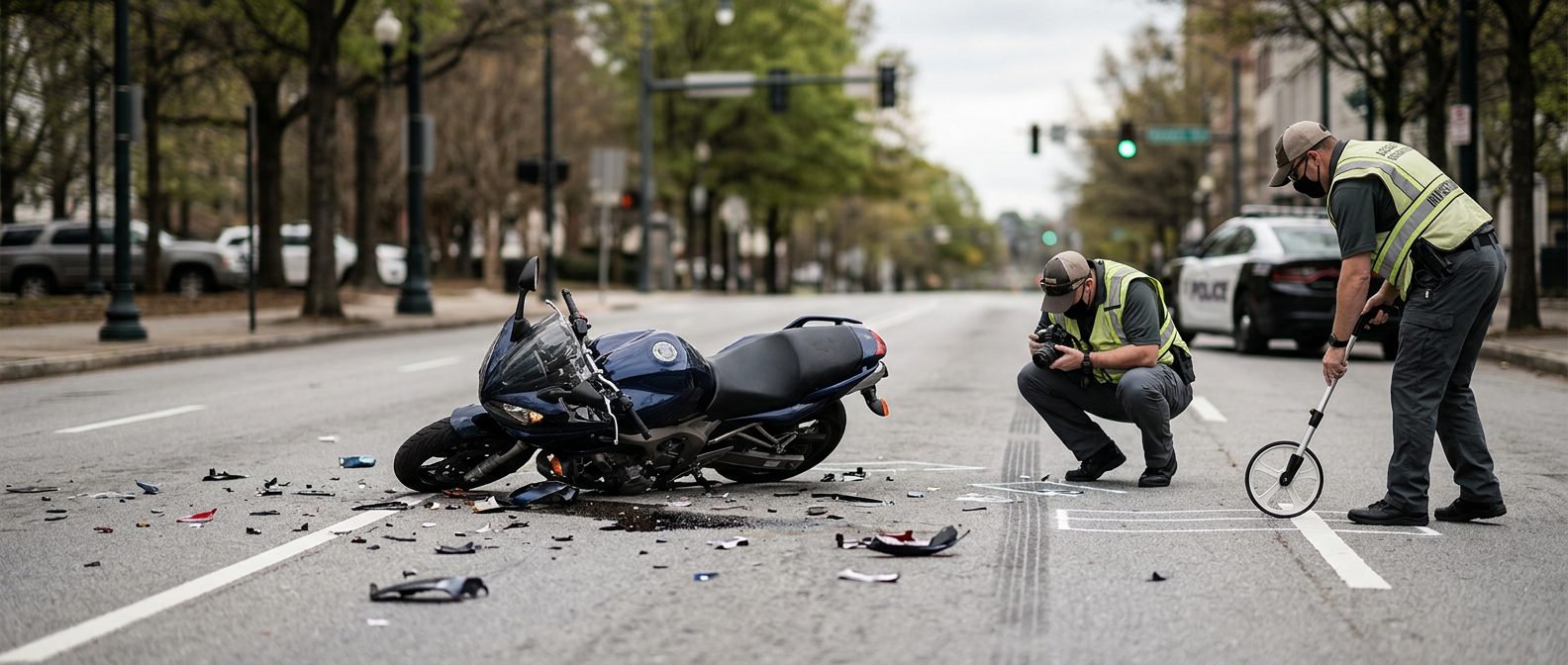
Motorcycle Accidents
Understanding Motorcycle Accident Causes & Liability in Georgia
Motorcyclists face unique risks on Georgia roads. Learn what causes these accidents and how liability is determined.
By Peter F. Jaraysi · Published September 29, 2026
Common Causes of Motorcycle Accidents & Liability in Georgia
Motorcycle accidents often result from other drivers’ failure to see riders, unsafe lane changes, or violations of traffic laws—and Georgia law allows you to pursue damages if negligence by another party caused the crash. Understanding what happened and who bears responsibility is the first step toward protecting your rights.
If another driver's actions caused your motorcycle crash, you may have a claim for your injuries and damages—and many riders in your situation reach out to discuss what happened. Talk it through with our team — the first consultation is free, confidential, and carries no obligation.
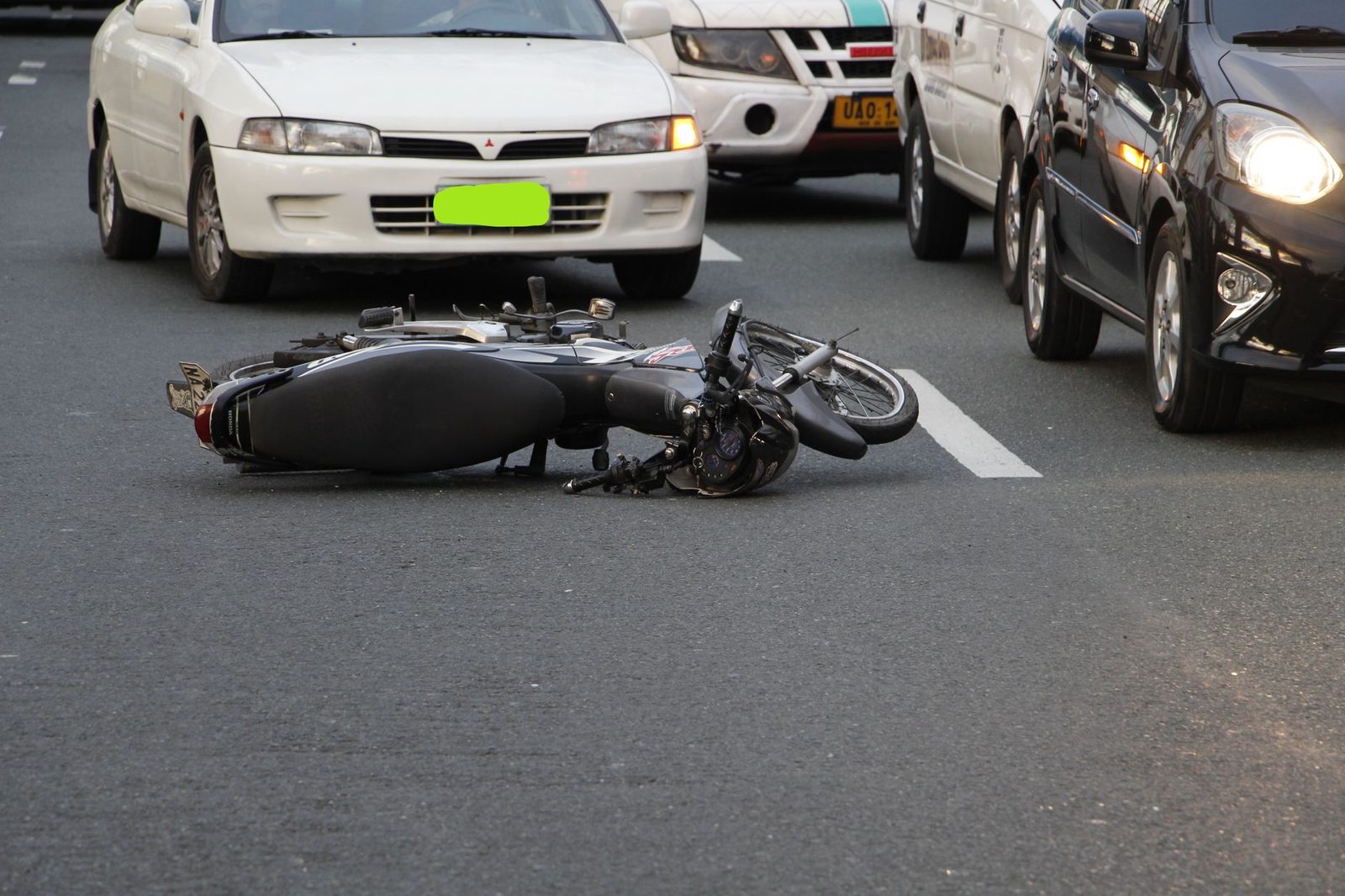
Why Motorcycle Accidents Happen: The Most Common Causes in Georgia
The most common motorcycle accidents in Georgia stem from other drivers’ negligence rather than rider error alone. Left-turn violations rank among the leading causes: a driver turning left across an intersection fails to see an oncoming motorcycle or misjudges its speed, resulting in a collision. Unsafe lane changes—drivers switching lanes without checking blind spots or signaling—strike motorcyclists who occupy the space the vehicle is moving into. Distracted driving (texting, phone use, eating) causes drivers to drift into motorcycle lanes or fail to yield at intersections. Speeding and excessive speed for road conditions reduce a driver’s ability to stop or swerve, leaving no time to avoid a motorcycle. Tailgating and following too closely means a driver cannot brake in time if a motorcycle slows suddenly.
Failure to yield at stop signs and traffic lights remains a frequent violation in motorcycle accidents. Driving under the influence impairs judgment and reaction time, making DUI drivers more likely to collide with motorcycles. Visibility issues—such as riding in a vehicle’s blind spot or poor lighting conditions—contribute when drivers don’t conduct proper mirror checks. Road hazards like potholes, debris, or poor road maintenance can destabilize a motorcycle, and in some cases, negligent maintenance by a city or county creates liability. Defective motorcycle parts or manufacturing defects can also cause accidents independent of driver conduct, establishing a separate liability claim against the manufacturer or seller.
Understanding Liability in Georgia Motorcycle Accidents
Georgia courts apply a negligence standard to determine liability in motorcycle accidents. To establish negligence, you must prove four elements: (1) the defendant owed you a duty of care (all drivers owe a duty to operate vehicles safely); (2) the defendant breached that duty (violated a traffic law, drove recklessly, or acted carelessly); (3) the breach caused your accident and injuries (causation); and (4) you suffered damages (medical bills, lost wages, pain and suffering).
Georgia’s comparative fault rule is critical in motorcycle cases. Under O.C.G.A. § 51-12-33, you can recover damages even if you were partially at fault, as long as you are less than 50 percent responsible; if you are 50 percent or more at fault, you recover nothing. When you do recover, your recovery is reduced by your percentage of fault. For example, if you were 20% at fault and the other driver was 80% at fault, and your damages total $100,000, you would recover $80,000. This rule recognizes that many accidents involve shared responsibility but protects riders whose share of fault remains below that threshold.
The burden of proof rests on you (or your attorney) to establish that another party caused the accident. Evidence used to determine liability includes police accident reports, witness statements, vehicle damage patterns, road conditions at the time of the crash, traffic citations issued to the other driver, and expert accident reconstruction analysis. Police reports, while important and often obtained through Georgia’s civil procedure rules, are not conclusive proof of liability—they’re one piece of evidence among many.
When Another Driver Is Liable for Your Motorcycle Accident
A driver is liable when their negligent conduct directly caused your accident. Common scenarios include failing to see a motorcycle at an intersection and turning left into its path, switching lanes without checking mirrors and striking a motorcycle in the adjacent lane, running a red light or stop sign and colliding with a motorcycle with the right of way, or tailgating and rear-ending a motorcycle that brakes suddenly. Commercial vehicle operators and their employers can be held liable if the driver’s negligence caused the accident; employers may face additional liability under vicarious liability principles if the driver was acting within the scope of employment.
Defective vehicle parts or poor vehicle maintenance by another party—for example, a truck with failed brakes that strikes your motorcycle—can establish liability independent of the driver’s conduct. Road defects caused by negligent maintenance or construction, such as a pothole left unrepaired by a city or county, may create liability against the government entity responsible for road upkeep (though government immunity rules apply in Georgia). Hit-and-run situations allow you to file an uninsured motorist claim against your own insurance if the other driver flees the scene.
How Georgia Courts Determine Fault and Liability
Georgia courts examine multiple forms of evidence to determine who is at fault. Police accident reports document the officer’s observations, statements from both drivers, witness accounts, and sometimes the officer’s preliminary assessment of fault—but courts recognize that officers don’t always have complete information and may not assign fault correctly. Witness testimony from people who saw the accident is often powerful evidence; credible, independent witnesses strengthen your case.
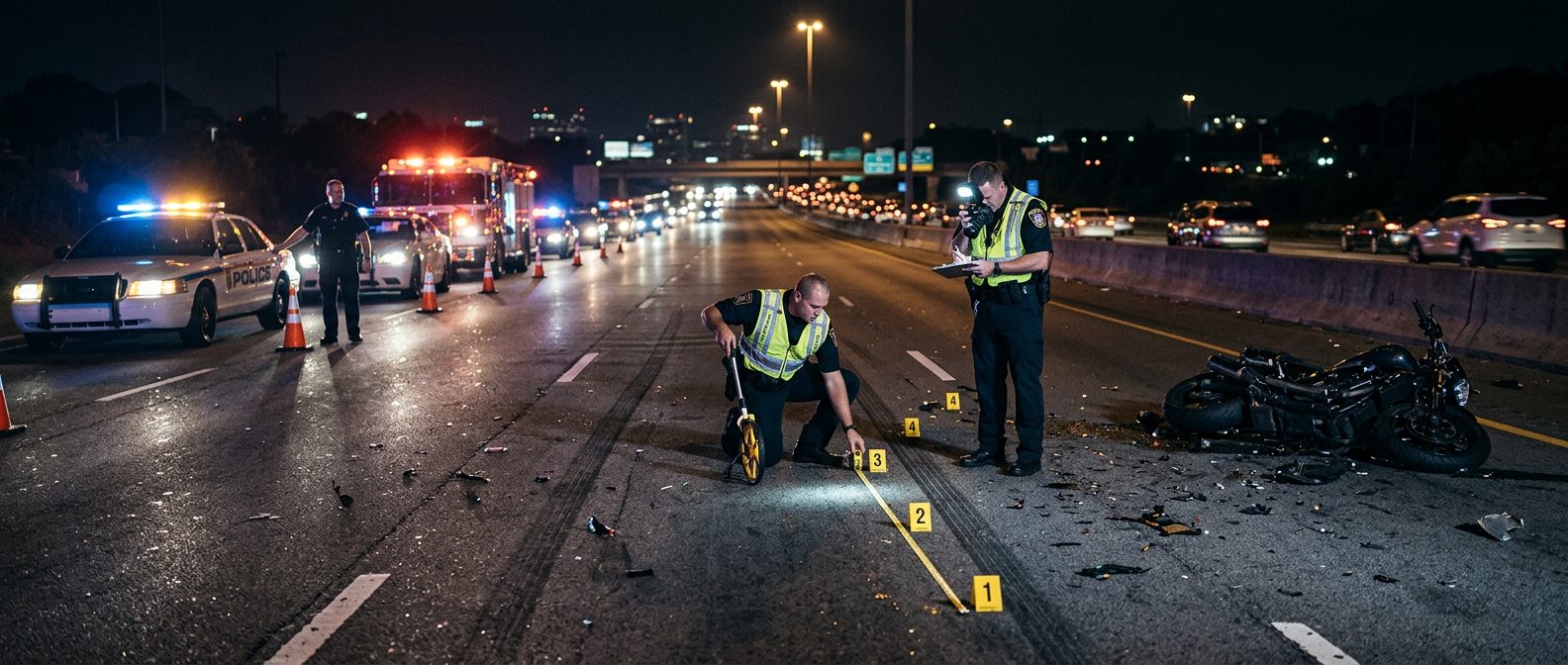
Accident reconstruction experts analyze vehicle damage, skid marks, road conditions, and physics to determine how the accident occurred and who likely caused it. These experts are especially valuable in complex multi-vehicle accidents or when liability is disputed. Traffic violation citations issued to the other driver serve as evidence of negligence; for instance, a citation for unsafe lane change or failure to yield supports your claim that the driver breached their duty of care. Insurance company investigations gather evidence and may support or dispute liability; however, the insurance company’s conclusion is not binding on a court.
If you were partially at fault—for example, you were speeding or riding in a blind spot—comparative negligence reduces your recovery but does not eliminate it, provided your fault is less than the other driver’s. Courts weigh the conduct of all parties to determine each person’s percentage of responsibility.
What to Do After a Motorcycle Accident in Georgia
Immediately after a motorcycle accident, seek medical attention even if injuries seem minor; some injuries develop over hours or days, and medical records document your condition and establish the link between the accident and your harm. Call police and obtain the accident report number; this report becomes a key piece of evidence. Document the scene with photos and video of vehicle damage, road conditions, traffic signals, and any visible hazards. Collect contact information and statements from witnesses; their accounts corroborate your version of events.
Report the accident to your insurance company as required by your policy. Preserve evidence: keep the damaged motorcycle, your clothing, medical records, and any other materials related to the accident. Avoid discussing fault or signing any documents—including settlement offers or liability waivers—without legal review. Statements you make can be used against you later, so it’s wise to consult an attorney before speaking with the other driver’s insurance company.
Not sure what your next step is?
Talk it through with our team — the first consultation is free, confidential, and carries no obligation.
When You May Have a Claim for Damages
If another party’s negligence caused your motorcycle accident, you may recover damages for medical expenses (emergency care, ongoing treatment, rehabilitation, and future medical needs), lost wages and lost earning capacity if injuries prevent you from working, motorcycle repair or replacement, pain and suffering, and permanent disability or disfigurement. If a loved one was killed in a motorcycle accident, Georgia law recognizes wrongful death claims, allowing surviving family members to pursue damages.
Georgia law sets a two-year deadline to file a lawsuit for personal injury claims and wrongful death claims stemming from a motorcycle accident. This deadline, known as the statute of limitations, is strict; if you miss it, you typically lose the right to sue. Consulting an attorney early ensures you don’t miss critical deadlines and helps preserve evidence while memories and physical evidence are fresh.
FAQ
What is the most common cause of motorcycle accidents in Georgia?
Left-turn violations by other drivers are among the most common causes; drivers turning left across an intersection fail to see or misjudge the speed of an approaching motorcycle.
Can I recover damages if I was partially at fault in a Georgia motorcycle accident?
Yes, under Georgia’s comparative fault law, you can recover damages as long as your negligence is not greater than the other party’s; your recovery is reduced by your percentage of fault.
How long do I have to file a motorcycle accident claim in Georgia?
Georgia law gives you two years from the date of the accident to file a lawsuit for personal injury or wrongful death.
What evidence proves liability in a motorcycle accident?
Police reports, witness testimony, vehicle damage, traffic citations, accident reconstruction analysis, and road conditions all help establish who caused the accident.
Is a driver liable if they fail to see a motorcycle at an intersection?
Yes; drivers have a duty to keep a proper lookout and yield the right of way. Failure to see a motorcycle and causing a collision can establish negligence and liability.
Can I sue if a defective motorcycle part caused my accident?
Yes; if a manufacturing defect or poor maintenance by a third party caused the accident, you may have a product liability or negligence claim against the manufacturer or responsible party.
If you’re trying to understand what caused your motorcycle crash and whether another driver bears responsibility, the details matter—and so does the evidence you preserve right now. Riders and their families in Georgia who’ve been through this reach out to discuss their accident, the circumstances, and whether they have a claim. Contact us for a free case review to talk through what happened.
Common Causes of Motorcycle Accidents in Georgia
Left-Turn Violations
Drivers turning left across an intersection often fail to see or misjudge the speed of an approaching motorcycle, leading to serious collisions.
Lane-Change Accidents
Motorcycles are smaller and harder to spot in blind spots. Drivers changing lanes without checking can strike a rider with devastating results.
Road Hazards & Debris
Potholes, gravel, oil slicks, and debris that a car might safely cross can cause a motorcycle to lose traction and crash.
Speeding & Reckless Driving
Excessive speed by either the motorcycle or other vehicles reduces reaction time and increases the severity of any collision.
Georgia's Comparative Fault Rule
You may still recover damages even if you were partially at fault in a motorcycle accident. Georgia law allows recovery as long as you are not found to be more than 50% responsible for the accident. Your recovery is reduced by your percentage of fault.
How We Approach Your Motorcycle Accident Case
Thorough Liability Investigation
We examine police reports, witness statements, traffic camera footage, and the accident scene to establish who was responsible.
Evidence-Based Claims
We gather medical records, repair estimates, and expert testimony to build a strong case for your damages.
Empathetic Representation
We understand the physical and emotional toll of a motorcycle accident and fight for fair compensation on your behalf.
Direct Communication
You'll work directly with our team throughout your case, with clear updates and honest guidance every step of the way.
What Happens After a Motorcycle Accident
Seek Medical Care First
Even if injuries seem minor, get evaluated by a doctor. Some injuries appear hours or days later, and medical records are essential for your claim.
Document the Scene
If safe, take photos of vehicle damage, road conditions, traffic signs, and the accident location. Get contact information from witnesses.
Report to Police
File a police report and obtain a copy. This official record is critical evidence in determining liability.
Contact Our Office
Call us for a free case review. We'll explain your rights, evaluate your claim, and discuss the next steps with no obligation.
Injured in a Motorcycle Accident? We're Here to Help.
Related practice areas
- Unsafe Property Conditions & Liability in Georgia