
Motorcycle Accidents | Duluth and Metro Atlanta
What Share of Accidents Really Involve Motorcycles?
A plain-language look at motorcycle crash numbers, why the percentage changes depending on how it is measured, and what riders and their families should know.
By Peter F. Jaraysi · Published October 25, 2026
What percentage of accidents are caused by motorcycles? There’s no single number, because the answer depends on how you count. Crash data can measure all crashes, injury crashes, or fatal crashes, and each measure gives a different share. A motorcycle in a crash record also doesn’t show who caused it.
The Short Answer: Motorcycles Are a Small Share of Crashes but a Large Share of Deaths
The direct answer is that the percentage changes with the question. Crash totals are often split into all crashes, injury crashes, and fatal crashes. A motorcycle’s share can look very different in each group, so one headline number can mislead.
Georgia numbers give useful local context. The Insurance Institute for Highway Safety reports that Georgia recorded 1,403 motor-vehicle crash deaths in 2024, a rate of 12.5 deaths per 100,000 people. That figure covers all vehicles, so it sets the scene rather than answering the motorcycle question alone.
The Georgia Department of Public Health publishes state data on crash deaths, hospital stays, emergency room visits, and traffic fatalities. Those tables break the picture down further than a single headline can.
If a motorcycle crash has left you or a loved one facing hard decisions, our team offers a free, confidential first consultation with no obligation to continue. Talk it through with our team — the first consultation is free, confidential, and carries no obligation.

Involved in a Crash Is Not the Same as Causing One
Many people ask what percentage of accidents are caused by motorcycles. The better question is who was at fault. Being involved in a crash means a motorcycle was one of the vehicles in it. It does not mean the rider caused the crash.
A crash count shows who was in the collision. It does not show who made the error that led to it. Statistics can’t settle fault for any single crash.
In Georgia, fault is a separate question. Under Georgia’s fault apportionment law, the trier of fact (the person or group that decides the facts) sets each party’s percentage of fault. The judge then reduces damages in proportion to the injured person’s share of fault.
Georgia also divides damages among those who are liable. Each person pays only its own share, not a joint amount.
Shared fault matters a great deal. Under the same law, a plaintiff who is 50 percent or more responsible for the injury or damages claimed receives no damages (O.C.G.A. § 51-12-33; Quynn v. Hulsey (2020)).
Motorcycle Deaths Per Mile Traveled Compared With Cars
Comparing risk fairly means looking past raw crash counts. Counts don’t show how many miles each type of vehicle travels. A rate per mile or per registered vehicle gives a clearer picture of how risky each way of traveling is.
Speed changes how bad a crash becomes. The Insurance Institute speed research reports that higher speeds increase crash severity and the chance of serious injury.
Riders also have less protection than people inside a car. Georgia requires every rider to wear protective headgear that meets state standards. If a motorcycle has no windshield, the rider must wear an approved eye-protective device. The rule does not apply to people inside an enclosed cab or motorized cart. See the Georgia motorcycle helmet law for the full text.
Common Crash Patterns Between Motorcycles and Cars
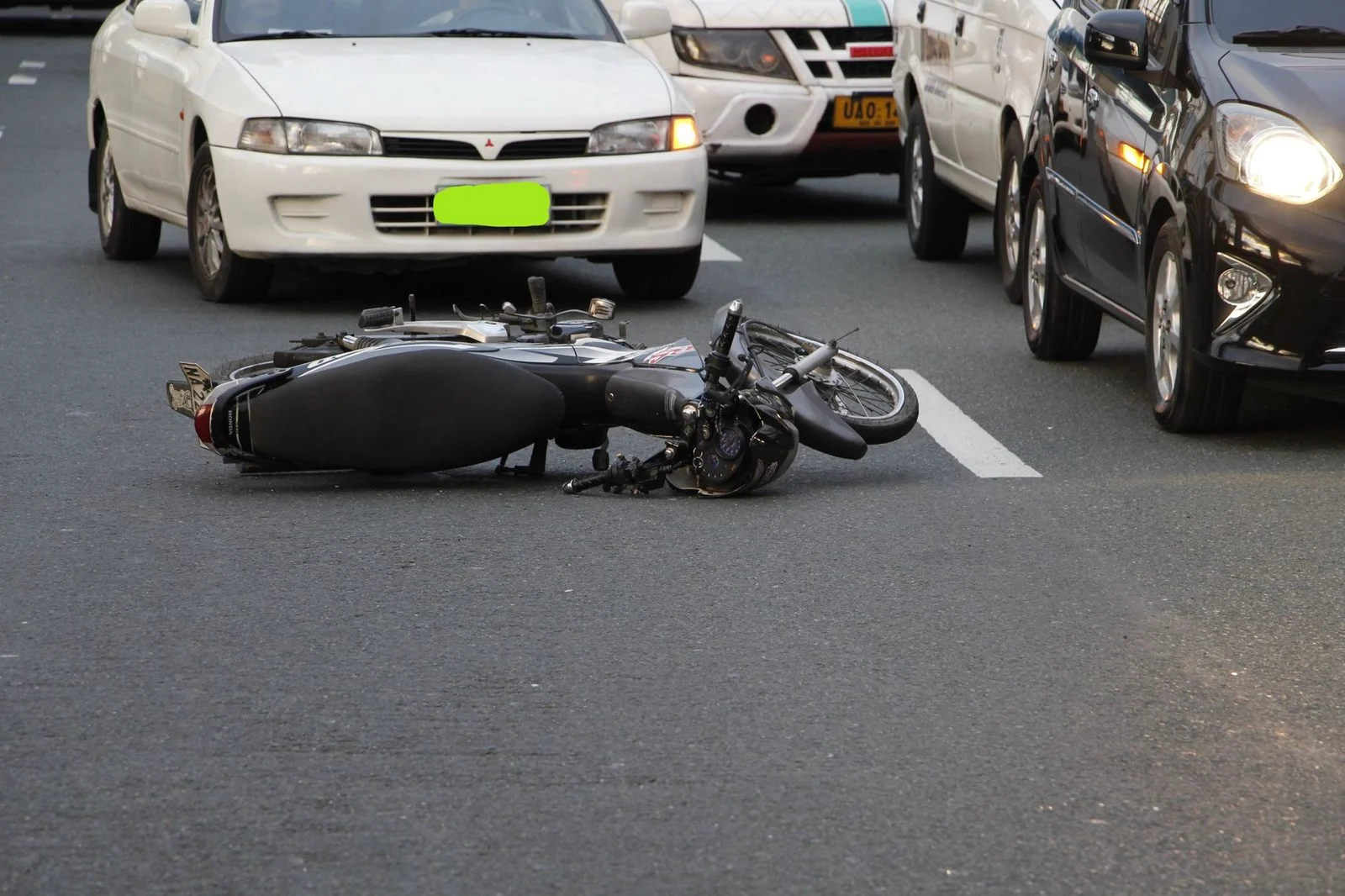
A motorcycle is smaller than a car, which makes it easier to miss in traffic. Drivers often don’t see a motorcycle in time, especially at intersections. One common pattern is a driver turning left in front of an oncoming rider.
Limited visibility means a driver may misjudge how far away a motorcycle is. A rider can look like a small, distant object that is closer than it seems.
Closing speed matters too. When a car and a motorcycle move toward each other, or the car pulls across the rider’s path, the time to react is short. Higher speeds leave even less time, and they raise how severe the crash can become.
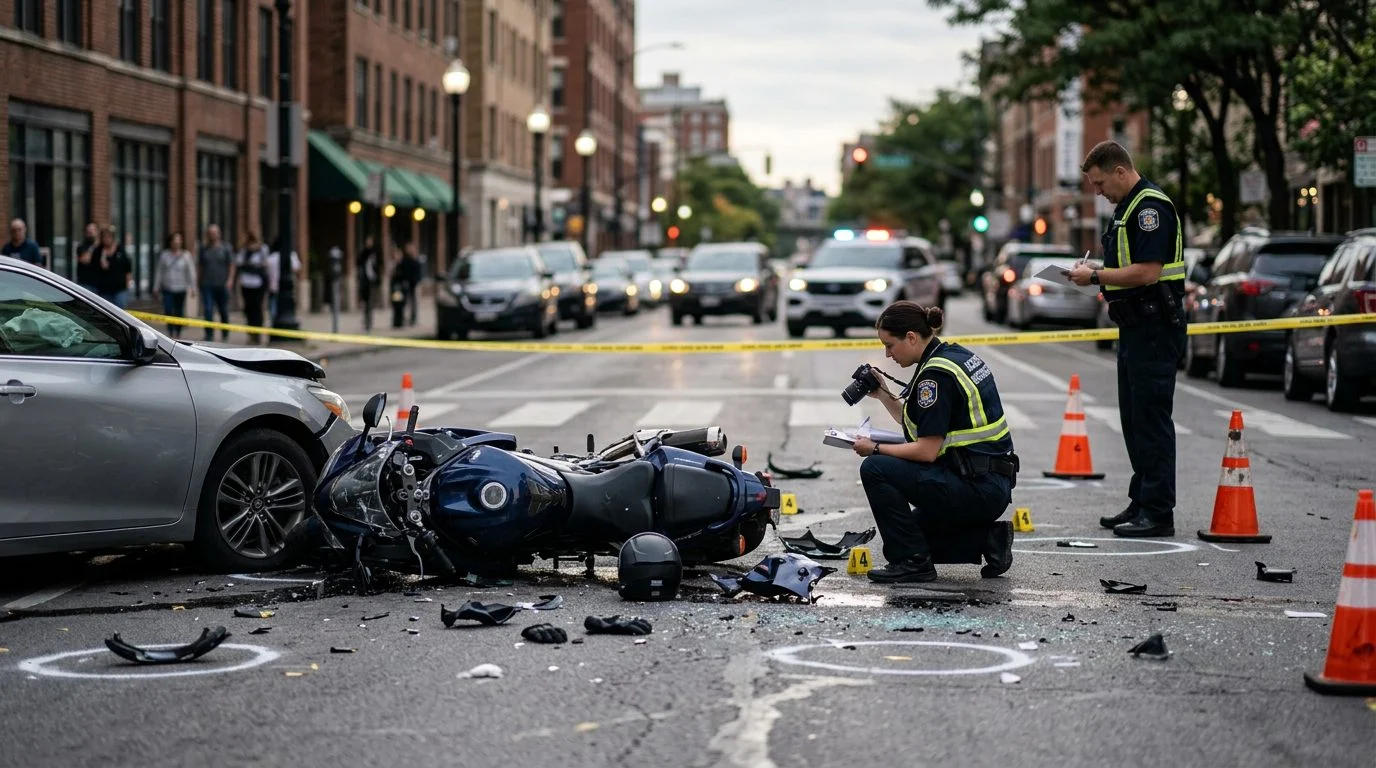
Crash reports record the vehicles, the road, and the conditions at the scene. Those details help investigators work out what happened. They often shape later questions about fault.
These are general patterns, not a description of any particular crash. Each crash has its own facts, and the details decide what happened.
Why Severity Is Higher for Riders: Injuries That Often Follow
Riders have less protection than car occupants. In a crash, the body can end up in direct contact with the road or another vehicle.
The Georgia Brain and Spinal Injury Trust Fund Commission publishes facts on spinal cord injuries linked to motor vehicle accidents. Spinal cord injury is one of the serious harms that can follow a crash.
Head injuries are another serious concern for riders. Georgia requires protective headgear for every rider, which is one reason the helmet rule matters.
If you were hurt, prompt medical care and clear records matter. Keep track of every doctor visit, bill, and symptom. Write down the date each one started. These notes can help show how the injury developed over time.
What the Statistics Mean for You If You or Someone You Love Was Hurt
If you’re reading these numbers because someone you love was hurt, timing matters most. Georgia generally allows two years from when the right to sue arises to file a personal injury lawsuit, under Georgia’s two-year filing deadline.
Statistics describe groups of crashes. Your situation is one crash, with its own facts about fault, injuries, and timing.
For practical next steps, read the firm’s motorcycle accident guide and its Georgia guide on what to do after a motorcycle accident. Local context for riders in Atlanta and Lawrenceville is covered in the firm’s local pages.
What percentage of accidents are caused by motorcycles?
No single percentage answers this for every measure. The share changes with whether you count all crashes, injury crashes, or fatal crashes.
Does a motorcycle in a crash mean the rider was at fault?
No. Being involved in a crash is not the same as being at fault. Georgia assigns fault through apportionment.
How long do I have to file a motorcycle accident claim in Georgia?
Georgia generally allows two years from when the right to sue arises for injuries to the person, except for injuries to the reputation, which must be brought within one year, and actions for injuries to the person involving loss of consortium, which must be brought within four years (O.C.G.A. § 9-3-33; Kenneth B. Cameron v. Jmp Pizza, Inc (2026)). Confirm your own dates early. Confirm your own dates early.
Do I need a helmet to ride a motorcycle in Georgia?
Yes. Georgia law requires riders to wear protective headgear that meets state standards.
If a motorcycle crash has left you or a loved one facing hard decisions, you don’t have to sort them out alone. Our team offers a free, confidential first consultation, with no obligation to continue. Contact Slam Dunk Attorney.
Responsible lawyer: Peter F. Jaraysi, Slam Dunk Attorney, Duluth, Georgia. This page is general information, not legal advice.
Why the Percentage Changes by Measure
All reported crashes
Motorcycles make up a small share of registered vehicles, so their share of all crashes is usually smaller than the share of crashes involving cars or trucks.
Injury crashes
Riders are far more exposed than occupants of enclosed vehicles, so motorcycles account for a larger share of injury crashes than their share of traffic would suggest.
Fatal crashes
Motorcycle crashes are a much larger share of traffic deaths than of total crashes. Per mile traveled, motorcyclists face a much higher risk of dying than passenger vehicle occupants.
Local and state data
Counts for a single county or state can differ from national totals. Check which dataset and year a figure comes from before drawing conclusions.
A Crash Involving a Motorcycle Is Not Proof of Fault
Being involved in a crash does not, by itself, show who caused it. Statistics describe groups of crashes, not the facts of any one collision. Who is responsible depends on the specific circumstances and the evidence.
What Riders and Families Should Keep in Mind
Numbers are a starting point
Percentages help explain risk, but they do not decide what happened in a particular crash or who is responsible for it.
Look at the source
Government traffic safety agencies publish crash data. Note the year, the geographic area and whether the figure covers all crashes, injury crashes or fatal crashes.
Protect the evidence
Photos, police report numbers, witness names and medical records can matter later. Keep copies of everything related to the crash.
Focus on recovery first
Getting medical care comes first. Questions about fault and compensation can be answered once you are able to look at them.