
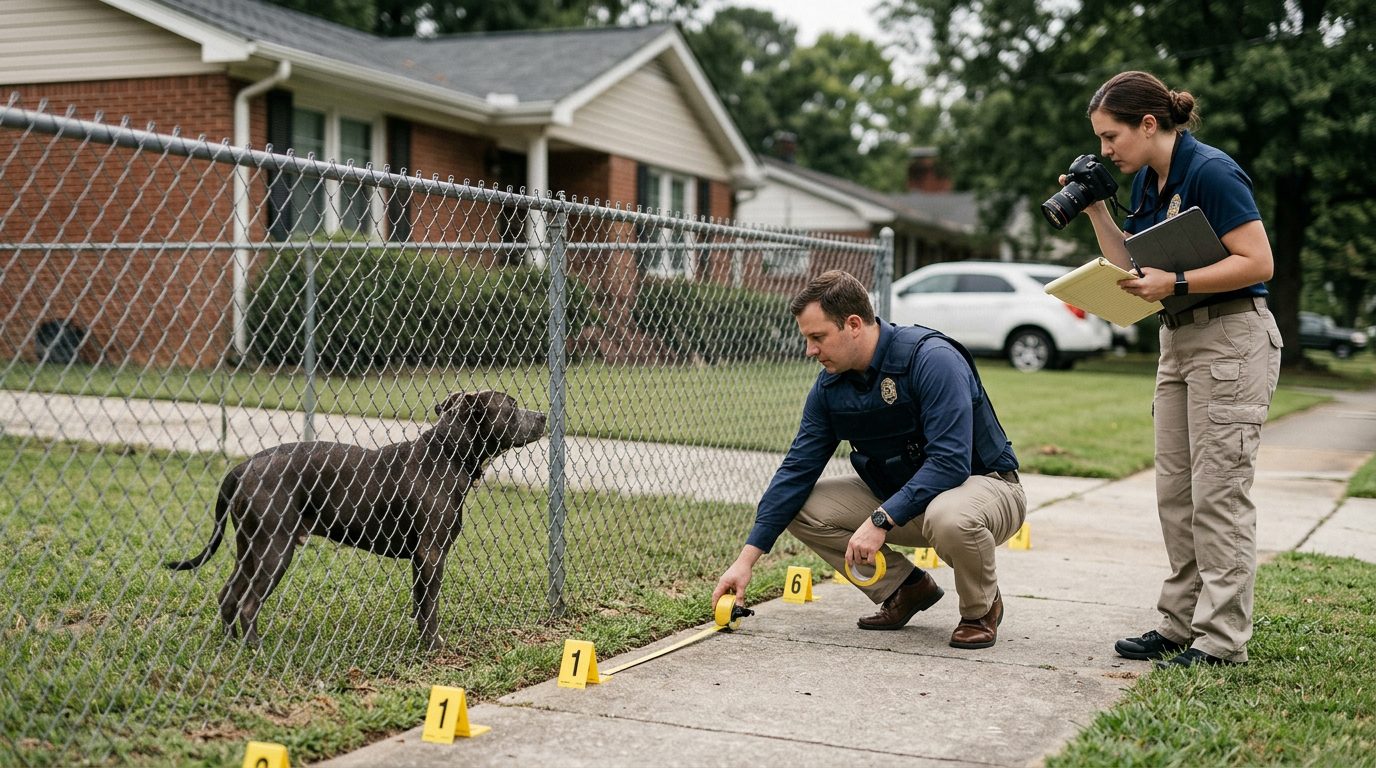
Dog Bite Claims | Duluth, Georgia
Georgia Dog Bite Legal Consequences, Explained in Plain Language
Confused about what a dog bite can mean for your health, your finances and your options? Our Duluth personal injury firm walks you through the basics for people across metro Atlanta and Georgia.
By Peter F. Jaraysi · Published October 25, 2026
Where Things Stand After a Dog Bite in Georgia
The legal consequences of a dog bite in Georgia fall into three groups.
If you were bitten, you may be dealing with pain, medical visits, and a dog you still see around the neighborhood. If you are a parent, you may be asking what a bite means for your child. If you own the dog, you may have just received a claim letter or a notice from animal control.
Each of these situations is stressful, and most of them were never planned. This page gives general information about Georgia law. It is not advice about any particular bite. The facts of each case decide how the law applies.
The sections below walk through each part in order. We start with the rule that shapes almost every claim: Georgia’s dog bite statute.
If a dog bite has left you, or someone you love, facing medical bills and hard questions, you don't have to sort it out alone. Our team can talk it through with you. Talk it through with our team — the first consultation is free, confidential, and carries no obligation.
Georgia Does Not Give Dogs One Free Bite
Under O.C.G.A. § 51-2-7, a person who owns or keeps a vicious or dangerous animal may be liable in damages. That applies when, by careless management or by letting the animal go at liberty, the animal injures someone who did not provoke the injury.
Was the animal vicious or dangerous? Did the owner handle it carelessly, or let it roam free?
The dog’s history and the owner’s conduct both matter.
When a Dog Owner Can Be Held Liable
A dog owner can be held liable when a dangerous dog’s careless keeping leads to an injury. Several common situations can meet that test.
Prior warning signs. Earlier aggression, bites, threats, or complaints from neighbors can show the dog had a dangerous tendency. Warnings from others can matter as much as the owner’s own observations.
Careless keeping. A gate left open, a dog running loose, or a dog kept outside a secure yard can all be careless management. So can a dog that was not restrained where the rules required it.
Someone other than the registered owner. Liability can reach the person who actually controlled the dog at the time. That might be a house-sitter, a relative, or a dog walker. The answer depends on the facts of who had control and what they did.
The statute has limits. The leash-ordinance sentence does not apply to domesticated fowl, including roosters with spurs, or to domesticated livestock. That exception covers only that one sentence in O.C.G.A. § 51-2-7 and does not limit the rest of the statute.
Leash Laws and Local Ordinances Across Metro Atlanta
A leash rule violation can help prove a dog was dangerous.
The statute states that the animal must have been “required to be at heel or on a leash by an ordinance of a city, county, or consolidated government,” and not at heel or on a leash when the injury happened (O.C.G.A. § 51-2-7).
Cities and counties set their own rules. This includes Atlanta, Duluth, Lawrenceville, Johns Creek, Alpharetta, Marietta, Norcross, Kennesaw, and Dunwoody.
Local animal control can act after a bite. DeKalb County’s animal ordinances page describes local enforcement for dangerous or vicious animals, including steps that can follow an attack.
What an Injured Person Can Seek
An injured person can seek compensation for the harm the bite caused. Georgia law separates losses into two kinds.
General damages are losses the law presumes come from a wrongful act. They can be recovered without proving a specific dollar amount. Special damages are losses that actually flow from the act, and they must be proved (O.C.G.A. § 51-12-2).
Medical costs are usually special damages. The law limits them to the reasonable value of medically necessary care, as the trier of fact determines (O.C.G.A. § 51-12-1.1). Necessary expenses from the injury are a legitimate part of the damage estimate (O.C.G.A. § 51-12-7).
Dog bites can bring long-term effects. Child injuries, facial wounds, infections, surgery, and scarring can all change the losses a claim includes. We do not estimate what any claim is worth.
How the Injured Person’s Own Conduct Can Affect a Claim
Shared fault can reduce what an injured person recovers. Georgia uses a comparative fault system (O.C.G.A. § 51-12-33; Quynn v. Hulsey (2020)). If the injured person is 50 percent or more responsible, recovery is barred.
The statute says that when the plaintiff “is to some degree responsible for the injury or damages claimed,” the judge reduces the damages in proportion to the plaintiff’s share of fault (O.C.G.A. § 51-12-33). A plaintiff who is 50 percent or more responsible for the injury or damages claimed is not entitled to receive any damages under the same statute (O.C.G.A. § 51-12-33; Quynn v. Hulsey (2020)).
A related rule applies to avoidable harm. If the injured person could have avoided the harm by using ordinary care, they cannot recover; in other cases, the defendant is not relieved even if the plaintiff contributed in some way (O.C.G.A. § 51-11-7).
Fault in dog bite cases often turns on simple facts. Did the person provoke the dog, tease it, or hit it? Did they enter a fenced yard with a clear warning sign? Those facts shape how fault is weighed.
Not sure what your next step is?
Talk it through with our team — the first consultation is free, confidential, and carries no obligation.
Evidence That Matters in a Dog Bite Claim
The most useful evidence shows the injury, the dog’s history, and how the dog was kept. Start collecting it early.
- Medical records and bills from the first visit forward, plus photos of wounds at each stage of healing.
- Photos of the scene, the dog, the fence or gate, and any warning signs.
- Witness names and contact details, and any statements the owner made at the time.
- Animal control or police reports, vaccination records, and any prior complaints about the dog.
- Texts, social media posts, or emails that show what the owner knew about the dog’s behavior.
Keep these records together in one place. Do not alter or delete anything, even messages that seem unhelpful. Veterinary groups also publish general guidance on dog bite prevention, such as the AVMA dog bite prevention guidance, which can help explain how bites happen.
How Long Injured People Have to File
Georgia generally allows two years from the injury to file a lawsuit for injuries to the person (O.C.G.A. § 9-3-33; Kenneth B. Cameron v. Jmp Pizza, Inc (2026)). Loss of consortium claims have a four-year window (O.C.G.A. § 9-3-33).
Claims against a city follow a separate process. Within six months of the event, the claim must be presented in writing to the city’s governing authority, stating the time, place, and extent of the injury (including the specific amount of damages sought) and the negligence that caused it, before a suit can proceed (O.C.G.A. § 36-33-5).
The governing authority must act on the claim within 30 days. O.C.G.A. § 36-33-5 reads: “(c) Upon the presentation of such claim, the governing authority shall consider and act upon the claim within 30 days from the presentation; and the action of the governing authority, unless it results in the settlement thereof, shall in no sense be a bar to an action therefor in the courts.” The statute of limitations is also suspended while a demand is pending without action by the authorities (O.C.G.A. § 36-33-5). A missed deadline can put a claim at serious risk, so timing matters early.
Frequently Asked Questions About Dog Bite Law in Georgia
What are the legal consequences of a dog bite in Georgia?
Liability turns on the dog’s dangerous tendency and how it was kept.
Do I have to report a minor dog bite?
DeKalb County’s animal ordinances page explains local enforcement for dangerous animals.
Can a dog be trusted after it bites?
Animal control can review a dog after a bite and may place conditions on keeping it. The local ordinance and the facts of the bite decide what happens next.
What proof is needed for a dog bite?
Medical records, photos, witness details, and official reports form the core proof. Evidence that the owner knew about the dog’s dangerous tendency or kept it carelessly is also important.
Talking Through Your Situation With Our Team
If a bite is still healing, a child is now afraid of dogs, or a claim letter is on the kitchen table, you don’t have to work through it alone. Talking through the facts with a lawyer can help you see your options clearly.
The first consultation is free, confidential, and comes with no obligation to continue. You can contact our team to start the conversation.
Disclaimer: Peter F. Jaraysi is the responsible lawyer for this page. Slam Dunk Attorney is based in Duluth, Georgia. This page is general information about Georgia law, not legal advice for any specific situation. Reading it does not create an attorney-client relationship. You can reach the firm through our contact page.
How our team approaches dog bite questions
Plain-language answers
We explain the legal terms and steps in everyday words, so you know what to expect before you decide anything.
Confidential conversations
Your first consultation is free, confidential and comes with no obligation to continue.
Attention to records
We help you think through medical records, photos, witness details and other information that may matter later.
Serving Georgia communities
Our firm is based in Duluth and works with people injured in Gwinnett, Fulton, Cobb, DeKalb and communities across Georgia.
Get medical care first
Even a bite that looks minor can lead to infection or complications. See a doctor promptly, follow treatment instructions and keep copies of every bill and record.
Questions people often ask after a dog bite
Who owned or controlled the dog?
The dog's owner, keeper or the person responsible for the animal at the time of the bite is often a central question in these matters.
Did the dog have a history of aggression?
Prior incidents, complaints or warnings can shape how a dog bite situation is reviewed.
Where did the bite happen?
Whether the bite occurred on private property, in a public place or at a rental property can affect the facts that need to be reviewed.
What should I keep?
Save photos of injuries, the location, contact details for the owner and any witnesses, plus all medical and billing records.