
Dog Bite Claims in Georgia | Duluth, Georgia
Your Georgia Dog Bite Case, Step by Step
A plain-language guide to what usually happens after a dog bite, from getting medical care to working through the claim, and how our team can help you at each stage.
By Peter F. Jaraysi · Published November 2, 2026
The Georgia dog bite case process usually moves through a few stages: a first consultation, an investigation, a claim with the owner’s insurer, negotiation, and a lawsuit only if the claim does not resolve. Many people read about this process while a child or family member is still recovering. This guide explains each stage in plain words.
What happens step by step between the first consultation and a settlement or trial in a Georgia dog bite case?
Most Georgia dog bite cases move from intake and investigation to a claim with the owner’s insurer, then to negotiation. A lawsuit usually comes only if the claim does not settle. The stages often overlap, and you don’t need legal terms to follow along.
Every case is different. The path and timing depend on the facts, including how the bite happened, what injuries resulted, and what the records show. Treat the steps below as a map, not a schedule. For broader background, read our Georgia dog bite lawyer guide.
If a dog bite has left you or someone you love hurt and unsure what comes next, our team in Duluth is ready to talk through your situation with you. Talk it through with our team — the first consultation is free, confidential, and carries no obligation.
Step 1: What happens at the first consultation?
The first consultation is where a lawyer learns the basic facts and you learn how the process works. It is free, confidential, and comes with no obligation to continue.
Expect questions about the date and place of the bite, who owned the dog, who was present, and what injuries and treatment followed. If you are a parent or caregiver speaking for a child or an adult family member, say so at the start. The injured person’s own account and medical details matter most.
Bring what you have. That can include photos of injuries and the scene, medical paperwork, any animal control report number, and messages with the owner or insurer. Missing items are fine. The consultation helps sort out what to gather next.
Step 2: How is the dog owner’s liability investigated?
The investigation checks whether the owner or keeper is legally responsible under Georgia’s animal liability statute. O.C.G.A. § 51-2-7 says an owner or keeper of a vicious or dangerous animal may be liable when careless management, or letting the animal go at liberty, causes injury to a person who did not provoke it.
There is also a leash route. If a city, county or consolidated government ordinance required the dog to be at heel or on a leash, and the dog was not, that alone can be enough to prove vicious propensity.
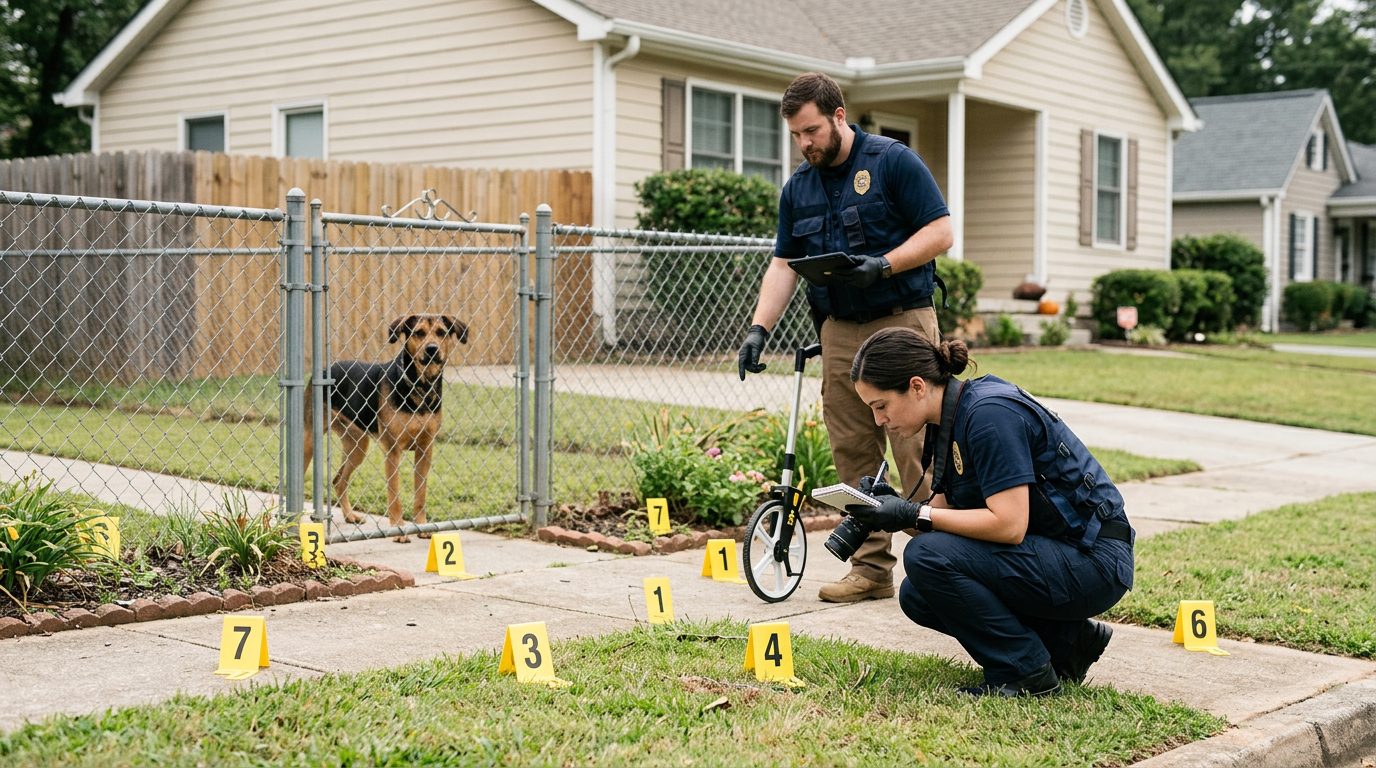
Evidence often includes animal control or police records, any earlier bite or aggression history, witness statements, and the location of the attack. Local rules add detail. DeKalb County Animal Services covers its rules for dangerous or vicious animals, including measures that may follow an attack.
Two timing and fault rules matter early. Georgia’s injury filing deadline generally requires injury lawsuits to be brought within two years after the right of action accrues. Georgia also reduces damages by the injured person’s share of fault. Under Georgia’s apportionment statute, a plaintiff who is 50 percent or more responsible for the injury or damages claimed is not entitled to receive any damages. Waiting can cost time and evidence, so early action helps.
Step 3: What happens with medical records and the insurance claim?
Medical records and bills form the core of the claim. Under Georgia’s medical expense statute, medical charges are limited to the reasonable value of medically necessary care. If you have health insurance, the amounts the insurer actually pays can also be part of the evidence.
Keep every follow-up appointment and record. That includes treatment for scarring, infection, or emotional effects after the attack. Keep a simple log of costs and missed work. Medical bills are a type of special damages.
Many dog bite claims are presented to the owner’s liability insurer, often under a homeowner’s or renter’s policy. The insurer opens a claim file and assigns an adjuster. A demand letter then sets out the facts, injuries, treatment and the damages being sought. Before you give a recorded statement, ask what it covers and why it is being requested.
Step 4: How does negotiation lead to a settlement?
Negotiation is the back-and-forth between the injured person’s side and the insurer, usually through offers and counteroffers. Each side presents its records and its view of the facts. Progress can be slow, and it depends on how clear the medical picture is.
A settlement is a voluntary agreement to resolve the claim. It usually includes a release of further claims against the owner. Once signed, it generally ends the case. Read every term closely, and ask about anything unclear before you sign.
One common mistake is signing before treatment is finished. Later medical costs may then go unaddressed. Another is posting details about the bite or the dog on social media while the claim is open, since the insurer can see those posts.
Step 5: When do a lawsuit, discovery and mediation come in?
If a fair resolution is not reached, a complaint is filed in the appropriate Georgia court and served on the owner. The case then enters discovery, the stage where each side learns what the other side has.
Discovery uses written questions called interrogatories, requests for documents, and depositions. A deposition is a recorded question-and-answer session held under oath, usually outside the courtroom.
Many cases are referred to mediation. Mediation is a meeting with a neutral third party who helps both sides try to reach agreement before trial. Mediation can resolve a case without a trial.
Costs deserve attention too. Court filing fees, records fees and other case expenses are separate from attorney fees. You may still be responsible for certain case costs, so ask how they work during your first consultation.
Not sure what your next step is?
Talk it through with our team — the first consultation is free, confidential, and carries no obligation.
Step 6: How long can a trial and the full process take?
Trial happens only when a case is not resolved. A judge or jury then decides fault and the amount of damages. Timelines vary widely with court schedules, the complexity of the injuries, and whether the case settles. No single timeline fits every case.
Knowing the Georgia dog bite case process helps you ask better questions and plan your next steps. The stages overlap, and each one builds on the records gathered in the earlier ones.
Frequently asked questions
How long do I have to sue over a dog bite in Georgia?
Georgia generally requires actions for injuries to the person to be brought within two years after the right of action accrues, except for loss of consortium actions, which have four years (O.C.G.A. § 9-3-33; Kenneth B. Cameron v. Jmp Pizza, Inc (2026)). Talk with a lawyer early so deadlines are tracked.
Can a dog owner be liable in Georgia?
Yes.
Does comparative fault affect a dog bite claim?
Yes. Under O.C.G.A. § 51-12-33, if the plaintiff is to some degree responsible for the injury or damages claimed, the judge reduces the damages otherwise awarded in proportion to the plaintiff’s percentage of fault, and the plaintiff is not entitled to receive any damages if the plaintiff is 50 percent or more responsible for the injury or damages claimed (O.C.G.A. § 51-12-33).
If a dog bite has left you or someone you love hurt and unsure what comes next, our team at Slam Dunk Attorney in Duluth is glad to talk through your situation. You can reach us through our contact page.
Disclaimer: This page gives general information about Georgia law. It is not legal advice. Responsible lawyer: Peter F. Jaraysi, Slam Dunk Attorney, Duluth, Georgia. Contact: slamdunkattorney.com/contact-us.
The Dog Bite Claim Process at a Glance
Step 1: Get Medical Care
Your health comes first. Seek medical attention for every bite and scratch, even if the wound looks minor. Follow your doctor's treatment plan and keep copies of all records and bills.
Step 2: Document What Happened
Write down the date, time and place of the incident. Note the dog's owner, the dog's description and the names of any witnesses. Photograph your injuries and the scene while you still can.
Step 3: Talk With Our Team
Share the details of your situation with our lawyers. We will review the facts, explain the options in plain language and answer your questions with no pressure.
Step 4: Investigation and Claim Work
If you choose to move forward, our team gathers records, reviews the evidence and communicates with the other side. We keep you informed at each stage of the process.
What to Expect When You Reach Out
A Free First Consultation
Your first consultation is free, confidential and comes with no obligation to continue.
Plain-Language Answers
We explain the legal process without jargon so you can make informed decisions about your case.
Careful Handling of Your Information
The details you share with our team are kept confidential as you consider your next steps.
Support for You and Your Family
Our team understands that a dog bite can affect your daily life, your family and your sense of safety.
Keep Your Evidence Safe
Photos, witness names, medical records and messages can be hard to recover later. Reaching out early helps our team review what is still available before it is lost.
Ready to Talk About Your Dog Bite Case? Our Free, Confidential Consultation Comes With No Obligation to Continue.
Related practice areas
- Dog Bite Evidence to Preserve in Georgia: Checklist